Author: Admin-0Hmjt

  • How to Start Crochet as a Complete Beginner

    How to Start Crochet as a Complete Beginner

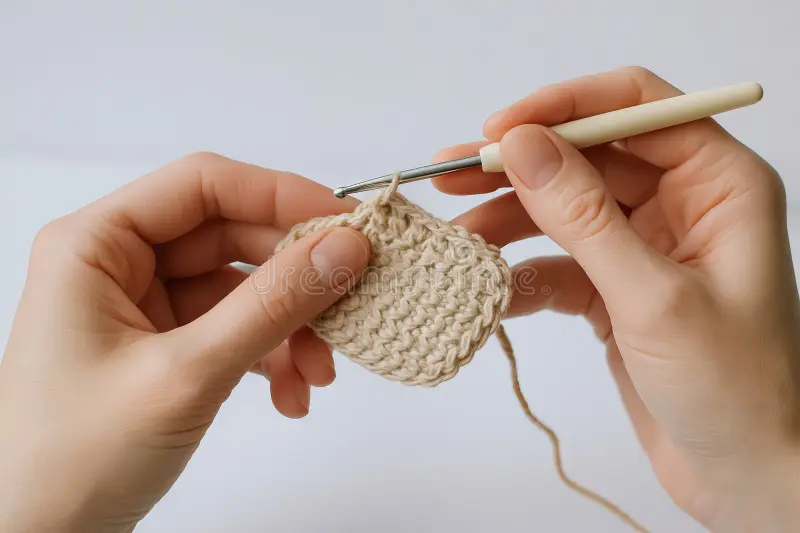
    Hands Crocheting Pattern with Beige Yarn Using Crochet Hook. Concept of Diy  Craft, Handicraft Skill  This post contains an affiliate link. If you click, you can check out and purchase theπŸ‘‰ Crochet Pattern Plush Granny Square PDF on Creative Fabrica. New users get 10 free downloads.”

    What if the most complicated thing about crochet isn’t the stitches β€” but the decision to begin?
    We’ve been trained to believe that making things requires permission. A certificate. A course. A grandmother who passed down the secret knowledge on a rainy Sunday while the smell of soup filled the kitchen. We look at a crocheted blanket and see skill, patience, a lifetime of practice. We see the finished object and assume the journey must have been equally complex β€” months of frustration, tangled yarn, thrown hooks, abandoned projects hidden in shame at the back of a closet.
    But here’s the plot twist that changes everything: crochet has only one stitch more than tying your shoes.
    Everything else β€” the blankets, the sweaters, the intricate lace that looks like it was made by fairies with engineering degrees β€” is just that one stitch, repeated, varied, and combined. The magic isn’t in the complexity. It’s in the accumulation.
    And the only thing standing between you and your first finished piece is the belief that you need to be good at this before you start.

    The Permission Problem

    Let’s start with the reversal.
    Open any craft store and the crochet aisle looks like a foreign country. Hooks in sizes from 2mm to 20mm, labeled with letters and numbers that don’t correspond to anything logical. Yarn weights with names like “worsted,” “aran,” “fingering” β€” words that sound like weather reports from 1850. Patterns written in a code of abbreviations: sc, hdc, dc, tr, sl st. It looks like a language. It looks like a club with a password.
    And that appearance is the first trap.
    Because crochet isn’t a language you need to learn before speaking. It’s a language you learn by speaking. You don’t study grammar. You make a chain. You don’t memorize vocabulary. You make a row. And by the time you’ve made ten rows, you realize you’ve been fluent all along β€” you just didn’t know the words for what your hands already knew
    The hands above understand this. They’re not expert hands. They’re just hands β€” holding a hook, wrapping yarn, making a circle that will become a coaster, then a square, then a blanket. The grip isn’t perfect. The tension wobbles. But the loop is there. And the loop is everything.
    Because crochet, at its core, is just pulling one loop through another. That’s it. The entire history of textile art β€” from Victorian doilies to modern chunky throws β€” rests on that single mechanical action. Your hands already know how to do this. They do it every time they button a coat or tie a knot in a grocery bag.
    The hook is just a finger that never gets tired.

    What You Actually Need (It’s Less Than You Think)

    Here’s the counterintuitive truth that changes everything: you can start crochet tonight with two objects and zero preparation.
    Not ten hooks. Not a pattern book. Not a YouTube tutorial that lasts forty-five minutes and tells you to “relax your shoulders” seventeen times.
    Two things:
    1. One hook (size 5mm, also called H/8 β€” the middle child of hooks, forgiving and versatile)
    2. One ball of yarn (medium weight, also called “worsted” or “aran” β€” pick a color that makes you want to touch it)
    That’s it. The rest is optional. The stitch markers, the row counters, the fancy ergonomic hooks with rubber grips shaped like flowers β€” they’re lovely. But they’re not necessary. They’re the equivalent of buying a chef’s knife set before you’ve boiled your first egg.
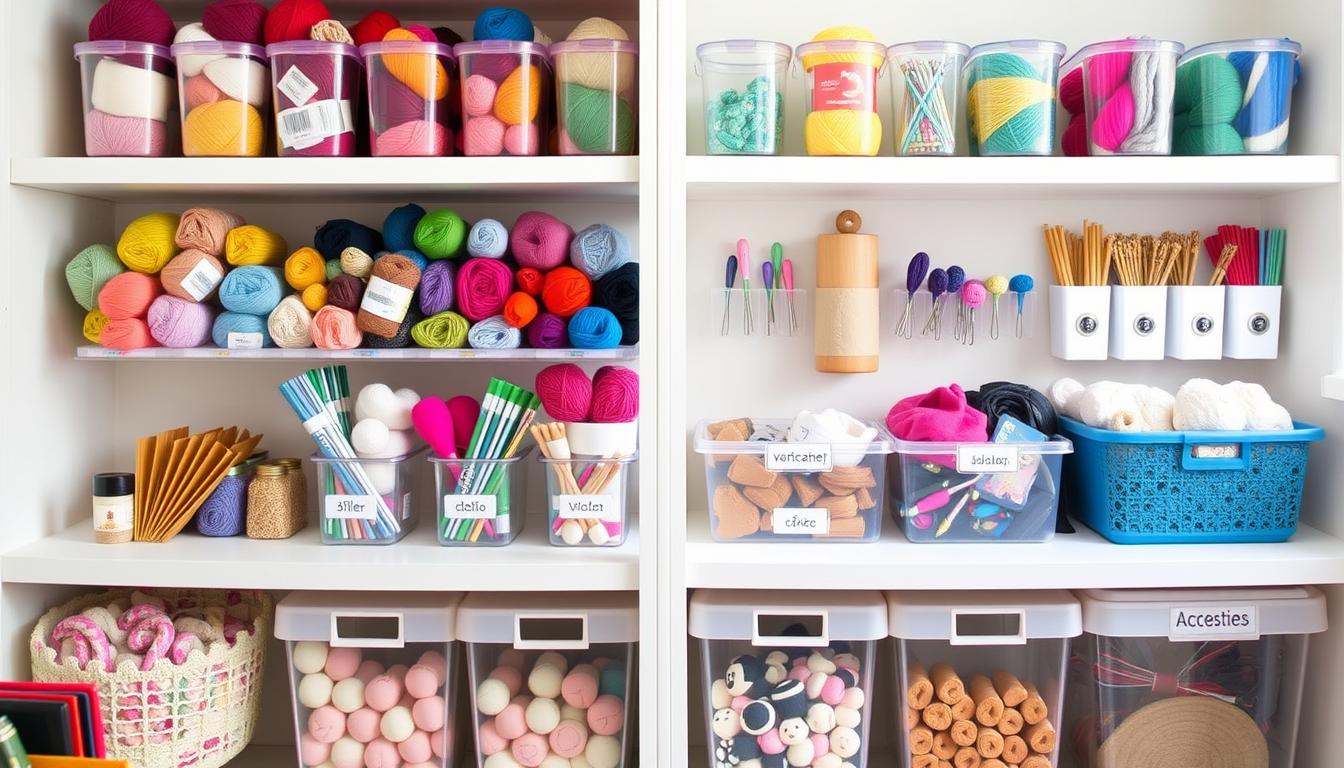
    10 Clever Crochet Storage Solutions That Won't Break the Bank
    The shelves above show what happens when the bug bites. Hooks in every size. Yarn sorted by color like a painter’s palette. But this isn’t the starting line. This is the finish line, five years later. The starting line is one hook, one ball, and the courage to make something ugly on purpose.
    Because your first piece will be ugly. And that’s not a prediction β€” it’s a requirement.

    The First Ugly Thing

    Let’s talk about the first thing you’ll make. Not because it’s important in itself, but because your relationship with it determines everything that comes after.
    It will be a rectangle that isn’t rectangular. The edges will curve like a smile or frown depending on whether you accidentally added or dropped stitches. The tension will be uneven β€” tight where you were concentrating, loose where you got comfortable and started watching Netflix. It will look, to your critical eye, like a mistake.
    But to the eye of experience, it looks like a beginning.
    That uneven edge is evidence that your hands were learning. The tight sections show where you cared too much. The loose sections show where you relaxed into the rhythm. The whole misshapen object is a map of your first hour with a hook β€” and maps of first hours are always more interesting than maps of perfect journeys.
    Keep it. Don’t unravel it. In five years, when you’re making sweaters that fit and blankets that lie flat, that first wobbly rectangle will remind you that expertise isn’t a destination. It’s just the accumulation of wobbly rectangles.

    5 Stitches That Build Everything

    Ready to learn the actual mechanics? Here are the five stitches that contain the entire universe of crochet. Master these, and you can make anything.
    1. The Chain (ch)
    The foundation of everything. Yarn over, pull through. Repeat. It looks like a braid. It feels like knitting’s simpler cousin. Every project starts here.
    2. The Single Crochet (sc)
    Insert hook into chain, yarn over, pull through, yarn over, pull through both loops. Two motions. That’s it. This stitch is dense, warm, and slow β€” the meditation stitch.
    3. The Half Double Crochet (hdc)
    Yarn over, insert hook, yarn over, pull through, yarn over, pull through all three loops. Taller than single, shorter than double. The Goldilocks stitch β€” just right for blankets and scarves.
    4. The Double Crochet (dc)
    Yarn over, insert hook, yarn over, pull through, yarn over, pull through two, yarn over, pull through two. Tall, airy, fast. This is the stitch that makes projects grow while you watch.
    5. The Slip Stitch (sl st)
    Insert hook, yarn over, pull through everything. No height. Just movement. Used for joining, edging, and sneaking across the row when you need to get somewhere else without being noticed.
    Table
    Table

    Stitch Height Speed Best For
    Chain None Fast Foundation, lace
    Single Crochet Short Slow Amigurumi, dense fabric
    Half Double Medium Medium Blankets, scarves, everything
    Double Crochet Tall Fast Shawls, openwork, quick gifts
    Slip Stitch None Fastest Joining, edging, texture
    This table isn’t just reference. It’s a roadmap. Start with single crochet. Get comfortable. Then add half double. Then double. Within a week, you’ll be combining them without thinking β€” and that’s when crochet stops being craft and starts being conversation.

    Your First Real Project

    Now look at the image below. This is where you’re headed.
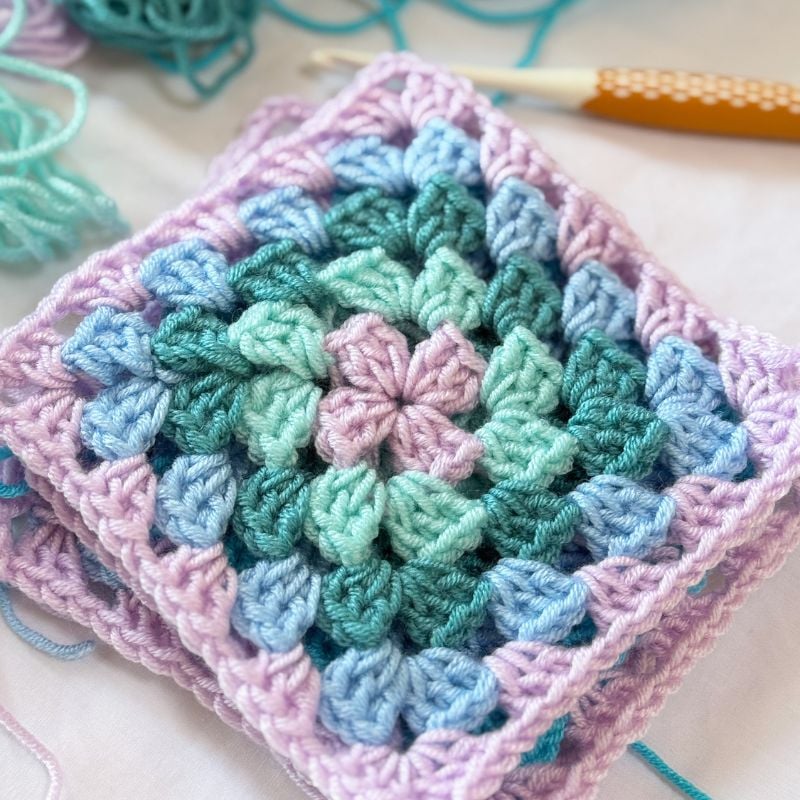
    Crochet Granny Square - Handy Little Me
    The granny square above is the beginner’s graduation ceremony. It’s not one stitch β€” it’s all of them, dancing together. Chains form the corners. Double crochets cluster in groups of three. Slip stitches sneak between them, holding everything in place. And the color changes β€” oh, the color changes β€” turn a simple square into a stained-glass window.
    The granny square is crochet’s greatest gift to beginners because it teaches rhythm. You don’t count every stitch. You count clusters. You count corners. The pattern repeats like a heartbeat: cluster, chain, cluster, chain, corner. After three rounds, your hands know the dance. Your eyes stop reading the pattern. Your fingers take over.
    And then β€” this is the moment β€” you realize you’ve been crocheting for an hour without looking up. Without checking your phone. Without thinking about tomorrow’s meeting or yesterday’s argument. You’ve been in a state that neuroscientists call “flow” and grandmothers call “Tuesday.”
    That’s not a hobby. That’s therapy with a hook.

    The Meditation Nobody Talks About

    Here’s the secret that crochet pattern books never mention: the finished object is the least important part.
    Yes, the blanket is warm. Yes, the scarf keeps your neck cozy. Yes, the baby booties make people cry at baby showers. But the real product β€” the thing you carry with you when the project is done β€” is the state of mind that crochet creates.
    The repetitive motion of the hook. The slight resistance of yarn against fiber. The predictable rhythm: insert, yarn over, pull through, yarn over, pull through. It’s a mantra made physical. And like any mantra, it quiets the part of your brain that generates anxiety.
    Studies have shown that repetitive handcrafts lower cortisol levels, reduce rumination, and activate the parasympathetic nervous system β€” the “rest and digest” mode that modern life has almost eliminated. Crochet doesn’t just make things. It makes calm.
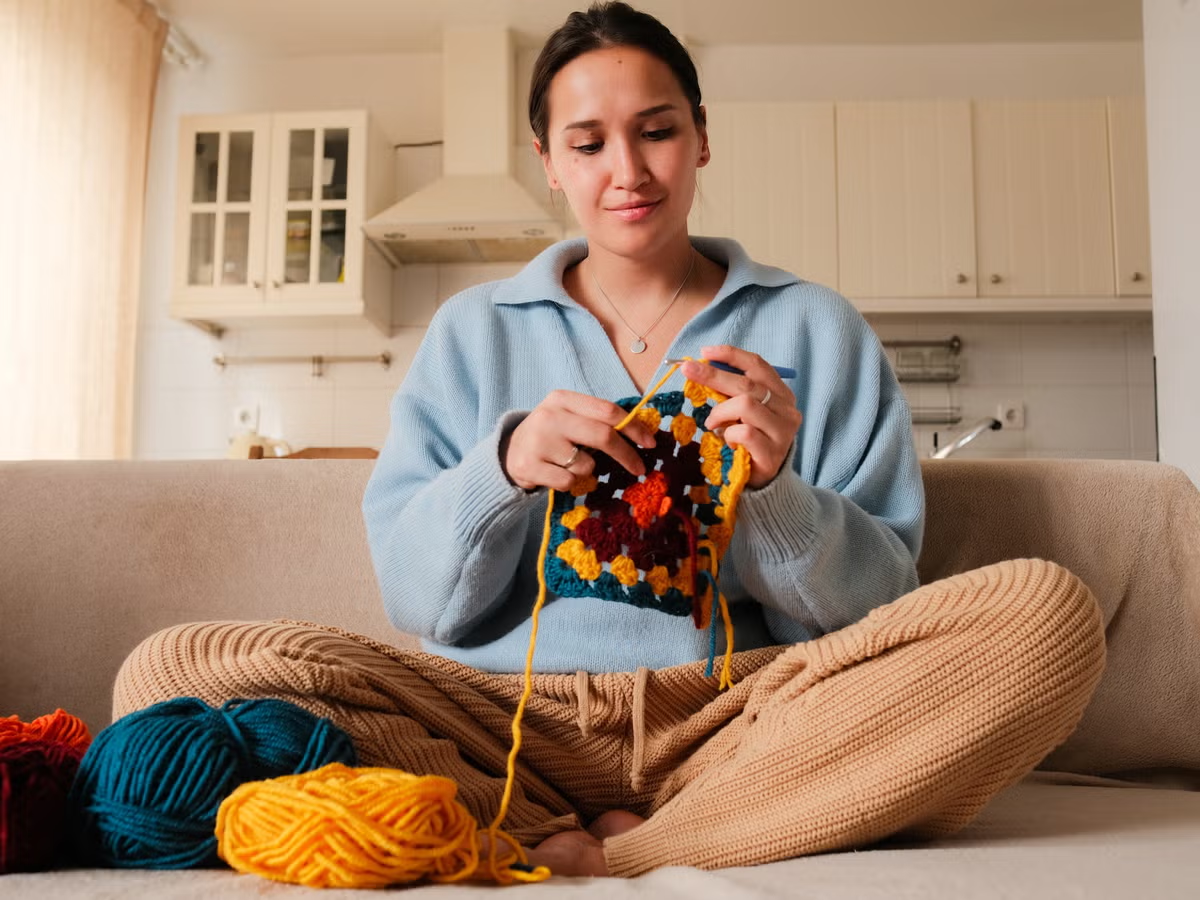
    This light-up crochet hook is a must-have for easy evening stitching
    The woman above isn’t making a blanket. She’s making peace. The sofa is soft. The light is low. The yarn is bright and alive in her hands. She isn’t performing productivity. She isn’t optimizing her time. She’s simply present β€” loop by loop, breath by breath, minute by minute.
    This is why crochet is having a renaissance among people who have never held a hook before. Not because they need another blanket. Because they need another way to be still.

    The 30-Day Beginner Roadmap

    Ready to start? Here’s a realistic path from “I’ve never held a hook” to “I made this.”
    Week 1: The Chain and the Rectangle
    Make chains. Lots of them. Then practice single crochet back and forth until you have a rectangle that resembles a very small, very ugly dishcloth. Celebrate it.
    Week 2: The Granny Square
    Learn double crochet. Make a granny square. It will curl at the corners. It will have holes where there shouldn’t be holes. Make another. The third one will lie flat. That’s your magic number.
    Week 3: The Scarf
    Chain 25. Half double crochet back and forth until it’s long enough to wrap around your neck twice. Use a color you love. Wear it even if the edges wave like a flag.
    Week 4: The Blanket Decision
    Either make twelve more granny squares and join them, or start a simple blanket in half double crochet. The key decision: do you want a quick win (granny squares) or a long journey (one big piece)? There’s no wrong answer.
    Month 2: The First Gift
    Make something for someone else. A coaster. A washcloth. A simple beanie. The moment you give away something your hands made, crochet stops being a hobby and becomes a language β€” a way of saying I thought of you without words.

    Your Crochet Manifesto

    So here’s your homework. Not a shopping list. A shift in attention.
    Buy one hook and one ball of yarn. Not tomorrow. Not when you “have time.” Tonight. On the way home. The yarn should be a color that makes you feel something. The hook should feel comfortable in your hand β€” not too light, not too heavy.
    Make the first ugly thing. Expect it to be uneven. Expect to lose stitches. Expect to Google “why is my crochet getting wider” at 11 p.m. This is the tuition. Everyone pays it.
    Protect the rhythm. The evening hour when the house is quiet. The Sunday morning when the coffee is hot. The waiting room where you’d otherwise scroll through news that makes you anxious. These are your crochet hours. Defend them like appointments with a therapist β€” because functionally, they are.
    Give away the first good thing. The scarf. The coaster. The granny square that finally lies flat. Give it to someone who will use it. Watch them hold something your hands made. That feeling β€” that specific, irreplaceable feeling β€” is why people crochet for fifty years.
    May your chains be loose. May your tension be even. May your first ugly rectangle become your most treasured artifact. And may you discover that the hook doesn’t just make blankets β€” it makes peace, one loop at a time.
  • The Sweater Trend Everyone Over 40 Is Quietly Falling in Love With

    The Sweater Trend Everyone Over 40 Is Quietly Falling in Love With

    7 Elegant Cream-Jumper Outfits I'll Be Copying This Winter | Who What Wear

     Somewhere around your fortieth birthday, fashion stops being a conversation and starts being a decision.

    You realize that the clothes you loved at thirty now feel like costumes. The bodycon dresses. The statement sleeves that knock over wine glasses. The heels that turn a grocery run into a podiatry appointment. You open your closet and see a museum of someone you used to be β€” or worse, someone you pretended to be.
    And then, one October morning, you pull on an oversized hand-knit sweater. Cream. Cable-knit. Heavy enough to feel like armor, soft enough to feel like permission.
    You catch your reflection in a shop window. And for the first time in years, you don’t see an outfit. You see yourself.
    This is the trend nobody’s talking about on TikTok because it doesn’t need neon lights or a viral sound. It’s the quiet migration of women over forty away from fashion-as-performance and toward texture-as-identity. The oversized knit. The neutral palette. The deliberate, luxurious refusal to try too hard.
    And it’s happening everywhere β€” just quietly.

    The Age When Fashion Finally Makes Sense

    Let’s start with the reversal.
    We’ve been told that style peaks in your twenties. That youth is the currency, and every decade after is a depreciation. The industry sells us anti-aging serums, body-shaping undergarments, and the implicit message that the best-dressed version of you is the one who most successfully pretends to still be twenty-nine.
    But here’s the plot twist: women over forty aren’t dressing worse. They’re dressing truer. And truth, in fashion, is always more interesting than youth.
    At twenty, you wear what the culture tells you to wear. At thirty, you wear what your ambition tells you to wear. At forty, you wear what your nervous system tells you to wear. And your nervous system, it turns out, craves weight, warmth, and texture. It craves garments that don’t pinch, don’t shout, don’t require constant adjustment. It craves the sartorial equivalent of a deep exhale.
    The oversized hand-knit sweater is the answer to a question most women don’t realize they’ve been asking: What if I stopped dressing to be seen, and started dressing to be comfortable in my own skin?

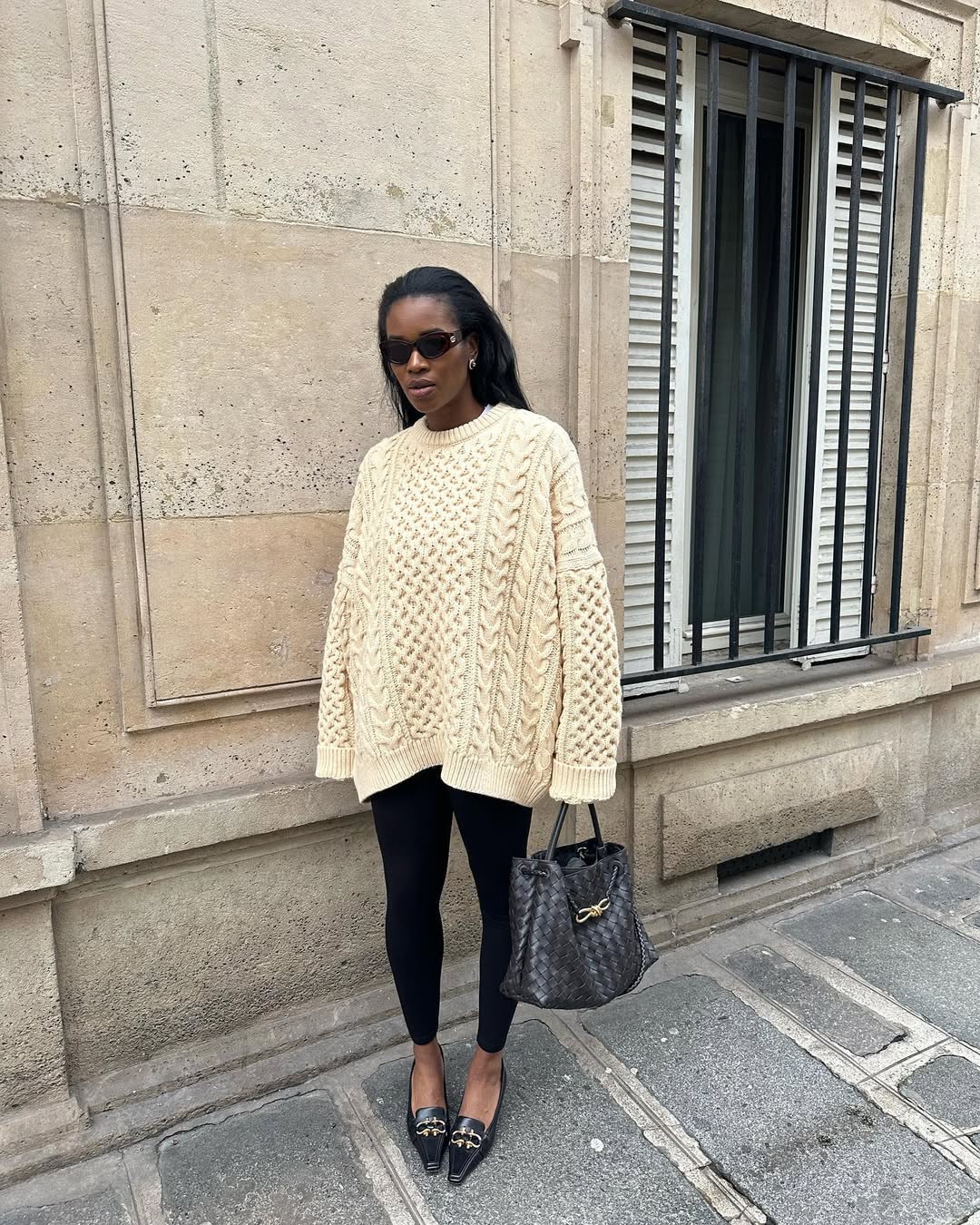
    The woman above understands this perfectly. A cream cable-knit sweater that doesn’t cling β€” it shelters. Dark jeans that don’t perform β€” they accompany. A canvas bag that holds actual things, not just the illusion of minimalism. She isn’t dressed for Instagram. She’s dressed for a Tuesday that might involve a bookstore, a coffee shop, and a conversation that lasts until the light changes.
    This is the trend. Not a color. Not a silhouette. A philosophy.

    Why the Oversized Knit Is the New Power Suit

    Here’s the counterintuitive truth that changes everything: the most powerful thing a woman over forty can wear isn’t a blazer with shoulder pads. It’s a sweater that swallows her hands.
    We’ve spent decades conflating power with sharpness. Angles. Structure. Armor that says don’t touch me. But women over forty are quietly discovering a different kind of power β€” the power of softness as authority. The power of showing up in a room not to compete, but to occupy.
    An oversized knit sweater does something no tailored jacket can: it creates space. Around the body. Around the gesture. Around the voice. It says: I am here, and I do not need to be smaller to be taken seriously.
    Cozy Cottage Moss Stitch Sweater Knitting Pattern (Women's) - Handy Little  Me
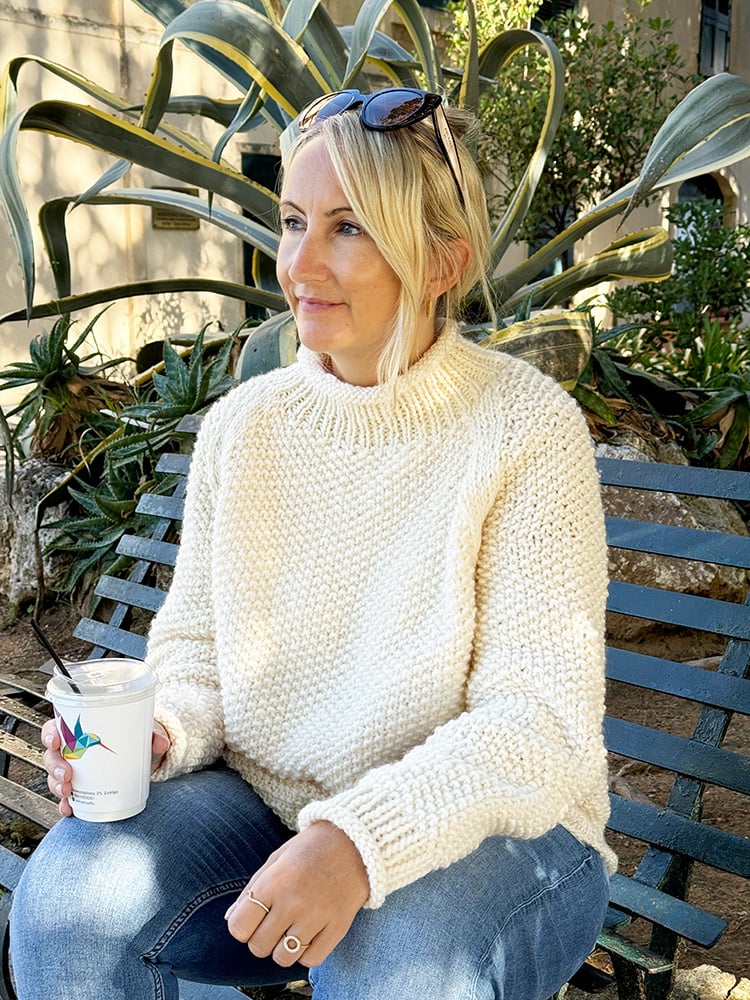
    The sweater above carries this philosophy in every stitch. A moss-stitch turtleneck in undyed wool, worn by someone who has stopped apologizing for taking up space. The texture is irregular β€” moss stitch always is β€” and that irregularity is the point. It catches light differently than machine-knit fabric. It creates shadows where a smooth surface would create none. It moves like water, not like architecture.
    Your forties are when you realize that authority doesn’t come from constriction. It comes from presence. And nothing creates presence like a garment that requires you to move differently β€” slower, more deliberately, with the kind of grace that only weight can teach.

    5 Reasons Women Over 40 Are Choosing Hand-Knit Sweaters

    Ready to understand why your closet is quietly reorganizing itself? Here’s the real playbook:
    1. They Don’t Date
    A hand-knit cable sweater in oatmeal or cream doesn’t belong to a season. It doesn’t read 2023 or 2026. It reads timeless β€” which means you stop participating in the exhausting cycle of trend obsolescence. Buy one beautiful knit, wear it for fifteen years.
    2. They Camouflage Without Hiding
    The oversized silhouette doesn’t conceal the body β€” it contextualizes it. Your shape is still there, but it’s no longer the headline. The texture is the headline. The craftsmanship is the headline. You become a person who wears beautiful things, not a body that wears a trend.
    3. They Age in Reverse
    Machine-knit sweaters pill, stretch, and look tired after two seasons. Hand-knit wool develops a patina β€” the fibers bloom, the texture softens, the garment becomes more itself with every wear. Like you.
    4. They Travel Light
    One chunky knit, one pair of good jeans, one pair of boots. That’s a weekend. That’s a dinner. That’s a museum afternoon. The simplicity isn’t deprivation β€” it’s liberation from decision fatigue.
    5. They Connect You to Something Slower
    In a world of same-day delivery, wearing something that took forty hours to create is a political act. It says: I value slowness. I value the human hand. I value the thing that cannot be rushed.

    How to Choose the Perfect Sweater After 40

    Not all knits are created equal. Here’s how to find the one that will live in your closet for the next decade.
    Table
    Table

    Feature What to Look For What to Avoid
    Fiber Merino, alpaca, cashmere, or high-quality wool blend Acrylic, polyester, anything that squeaks
    Weight Chunky to super-chunky (bulky yarn) Fine-gauge that clings or shows lines
    Color Cream, oatmeal, sand, charcoal, heather grey, dusty rose Neon, high-contrast patterns, logos
    Stitch Cable, moss, rib, brioche β€” textured and dimensional Stockinette only; flat and uninteresting
    Fit Oversized; shoulders drop, sleeves cover part of hand Cropped, tight, or “fitted” silhouettes
    Neckline Crew, turtleneck, or wide boat neck Deep V, off-shoulder, anything that requires adjusting
    Length Hip-length or longer; covers the seat Cropped above the waist
    This table isn’t just shopping advice. It’s a manifesto. Each choice is a vote for how you want to move through the world β€” covered, grounded, unhurried.

    4 Ways to Wear the Trend

    The Bookstore Uniform
    Oatmeal cable-knit + dark straight-leg jeans + leather ankle boots + canvas tote. No jewelry except maybe a single gold ring. The look says: I have nowhere to be, and I’m exactly where I want to be.
    The Dinner That Starts at 7
    Cream turtleneck knit + wide-leg wool trousers + pointed flats + structured bag. The sweater softens the trousers; the trousers elevate the sweater. Power without aggression.
    The Sunday That Lasts All Day
    Charcoal moss-stitch sweater + leggings + shearling-lined boots + oversized scarf. This isn’t an outfit. This is a habitat. Wear it to the farmer’s market, then straight to the sofa with a novel.
    The Unexpected Elegant
    Sand-colored chunky knit + silk midi skirt + knee-high boots. The contrast between rough wool and smooth silk creates the kind of tension that makes people look twice β€” not because you’re trying, but because you understand texture in a way they haven’t learned yet.

    The Forest Test

    Now look at the image below and notice what happens to your breathing.
    Women's Oatmeal Chunky Knit Sweater – Oat Co
    A woman in a cream Aran sweater, walking through autumn woods. The sweater is the same color as the birch bark. The cables echo the branches. She isn’t wearing a costume for the forest β€” she looks like she grew there. Like the sweater and the trees share a language.
    This is what happens when you stop dressing for the city and start dressing for the world. The neutral palette doesn’t disappear into nature β€” it agrees with it. The oversized shape doesn’t fight the wind β€” it moves with it. The weight doesn’t slow her down β€” it grounds her on uneven ground.
    Women over forty are discovering that the best fashion doesn’t stand out. It belongs. It finds its place in the landscape of real life β€” coffee shops, forests, kitchens, galleries β€” and settles in like it was always meant to be there.

    The Quiet Luxury of Not Caring

    Here’s the final secret, and it’s the one that contradicts everything the fashion industry wants you to believe:
    The most stylish women over forty aren’t following trends. They’ve transcended them.
    They’ve realized that the game was rigged β€” that “staying current” is a treadmill designed to keep you buying, adjusting, apologizing for last year’s hemline. And they’ve quietly stepped off.The woman above has stepped off. Cream knit. Cream trousers. Structured bag. Sunglasses that hide nothing because there’s nothing to hide. She isn’t trying to look younger. She isn’t trying to look expensive. She’s trying to look like herself β€” and she’s succeeding.
    The hand-knit sweater is the uniform of this transcendence. It says: I have better things to do than chase trends. I have books to read. I have people to feed. I have walks to take. I have a life to live β€” and I need a sweater that can keep up.

    Your Sweater Manifesto

    So here’s your homework. Not a shopping list. A shift in attention.
    Remove one tight thing. The dress that requires Spanx. The blazer that restricts your reach. The jeans that leave marks. Replace it with something that gives you room to breathe.
    Add one hand-knit thing. Not expensive. Just made. A cable-knit from a craft market. A chunky wool sweater from a friend. Something with uneven cables and the faint smell of lanolin.
    Protect the slouch. The dropped shoulder. The sleeve that covers your thumb. The hem that hits mid-hip. These aren’t sloppy. They’re spacious. And spaciousness, after forty, is the ultimate luxury.
    May your knits be chunky. May your colors be quiet. May your closet become a sanctuary β€” not because you bought it, but because you finally let yourself take up space.

  • Why Handmade Blankets Feel More Luxurious Than Expensive Throws

    Why Handmade Blankets Feel More Luxurious Than Expensive Throws


    Taupe Chunky Knit Merino Wool Blanket - Handmade Cozy Throw
    We’ve been trained to believe that luxury is a transaction. Swipe a card, acquire a feeling. The cashmere throw from the heritage brand. The merino blanket with the Italian label. The limited-edition collaborative piece that arrives in a box you feel guilty throwing away.
    And they are beautiful. Soft. Impressive.
    But here’s the plot twist that changes how you experience every evening on the sofa: a handmade blanket feels more luxurious than any of them. Not because it cost more. Not because it looks better in a photograph. Because of something no factory can weave into fiber β€” intention made tangible.

    The Weight of Warmth

    Let’s start with physics.
    Pick up a machine-made luxury throw. It’s light. Engineered to be invisible. Designed to add color without adding gravity. It drapes like a suggestion β€” there if you need it, forgettable if you don’t.
    Now pick up a handmade blanket. It’s heavy. Dense. The kind of weight that settles on your shoulders like a hand on your back after a long day. That weight isn’t accidental. It’s the accumulation of thousands of decisions: this stitch, this tension, this row, this hour.
    The bed above understands this perfectly. A chunky knit blanket in warm taupe, folded at the foot of a dark, quiet bed. The scale is enormous β€” each loop the size of a fist. The weight is palpable even in a photograph. This isn’t a blanket that decorates a room. It’s a blanket that grounds it.
    Expensive throws are optimized for shipping weight. Handmade blankets are optimized for emotional weight. And when you’re under one at midnight, reading by the light of a single lamp, your nervous system knows the difference.
    Your body doesn’t check the label. It checks whether the blanket will stay where you put it. Whether it will warm you gradually, like a slow exhale. Whether it feels like it was made for this moment.
    Machine-made blankets cover you. Handmade blankets hold you.

    The Invisible Architecture

    Here’s the counterintuitive truth: luxury isn’t felt by the eyes. It’s felt by the skin.
    A $600 throw from a designer house is chemically treated to be uniform. Every fiber is the same diameter. Every row is the same height. The texture is mathematically smoothed until it becomes a sealed surface β€” beautiful to look at, strangely dead to touch.
    A handmade blanket is the opposite. The stitch that’s slightly tighter where the maker paused to answer the door. The loop that loosened when the yarn ran low and tension changed. The edge that waves instead of cutting straight. These aren’t flaws. They’re events.
    CREVENT Crochet Throw Blanket for Couch Sofa Bed Light Weight Soft Warm  50x60 inches Turquoise
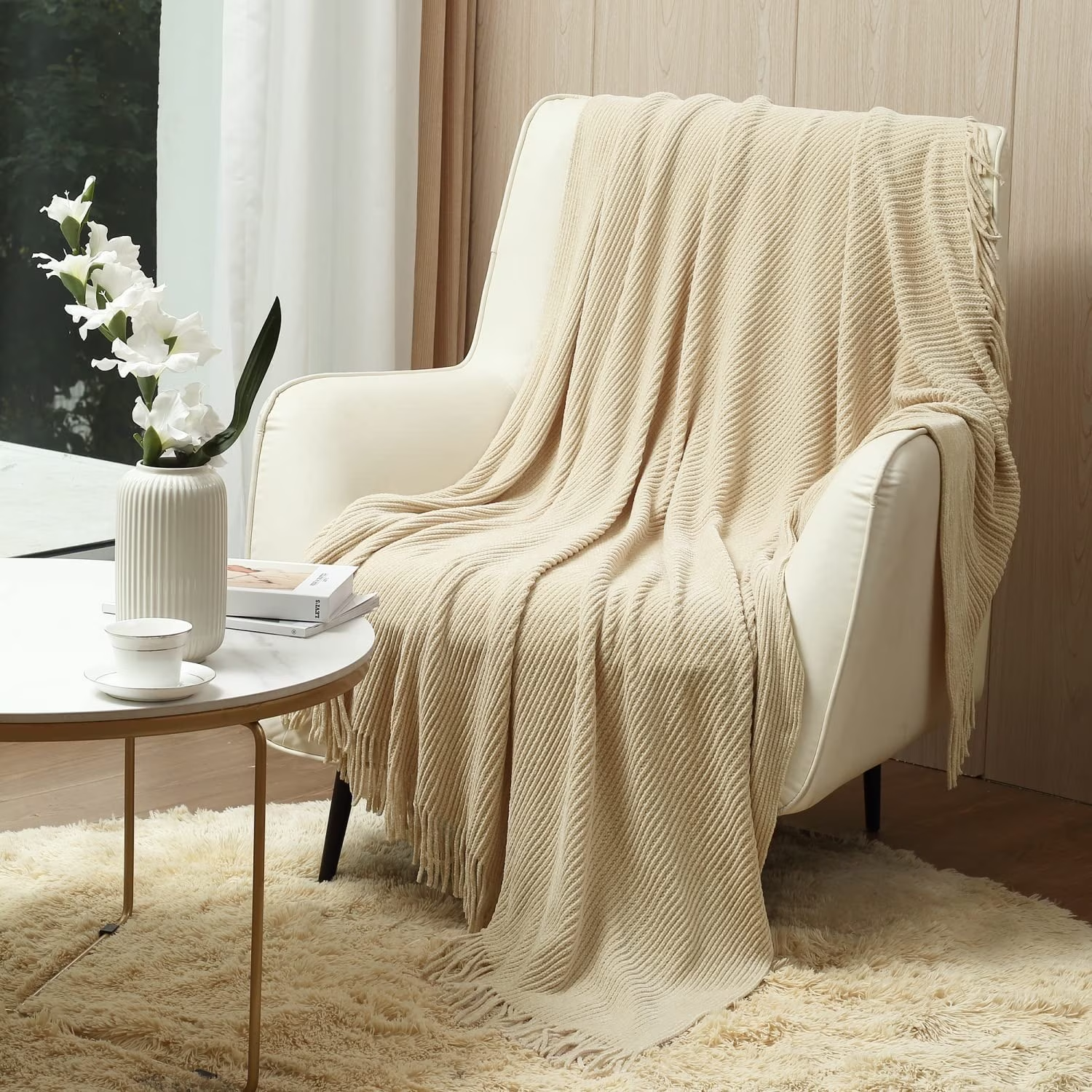
    The throw above carries this philosophy. Cream wool in a subtle rib, draped over a white armchair like it was tossed there by someone who lives here. The fringe isn’t factory-cut to identical lengths. The drape isn’t styled. It simply fell that way β€” because handmade textiles have a relationship with gravity that machine textiles don’t.
    Your fingers know the difference. They find the ridges. They follow the channels between stitches. They encounter variation, and that variation keeps them interested. A machine blanket is a wall. A handmade blanket is a conversation.

    7 Reasons Handmade Blankets Are Better Than Luxury Throws

    Ready to understand why your grandmother’s afghan outperforms the department store throw? Here’s the real playbook:
    1. Thermal Intelligence
    Machine blankets insulate. Handmade blankets breathe. The slight irregularity in hand-tension creates micro-channels of air. You warm up without overheating. You cool down without getting cold. It’s the difference between a sealed room and a room with the window cracked.
    2. The Drape Doctrine
    Expensive throws are stiffened with sizing to survive retail display. Handmade blankets are softened by use. The first time you drape one over a sofa, it doesn’t hold the shape. The tenth time, it remembers. It learns your furniture. It becomes custom-fit to your life.
    3. Acoustic Absorption
    Handmade textiles absorb sound differently. The open structure of crochet or the dense loops of knitting trap echo. A room with a handmade blanket is quieter. More intimate. The sound dies where the fibers begin.
    4. Biophilic Response
    Your brain is wired to respond to irregular, natural textures. Neuroscientists call it “tactile nourishment.” When your skin encounters the uneven surface of a handmade blanket, it triggers the same parasympathetic response as walking barefoot on grass or sand. Machine perfection can’t replicate this.
    5. The Patina of Use
    A cashmere throw pills and looks worn out. A handmade blanket pills and looks worn in. The spot where the cat kneads. The corner that fades where the sun hits. The edge that softens first. These aren’t damages. They’re the blanket’s autobiography.
    6. Emotional Weight
    Expensive throws impress guests. Handmade blankets comfort you. The weight of a chunky knit has been shown to reduce cortisol levels β€” the same science behind weighted blankets, but achieved through density and scale rather than artificial filling.
    7. Uniqueness
    No two handmade blankets are identical. Even the same maker, using the same pattern, will produce slightly different tension on different days. You own something that exists exactly once in the universe. No luxury brand can offer that.

    How to Choose the Perfect Handmade Blanket

    Google loves specificity. So do your cold feet at 2 a.m. Here’s how to pick the right handmade blanket for your space, your climate, and your life.
    Chunky Knit Blankets
    Best for: Modern bedrooms, Scandinavian interiors, statement pieces.
    Yarn: Super-bulky merino wool or vegan acrylic blends.
    Feel: Heavy, cloud-like, dramatic visual presence.
    Care: Spot-clean preferred; some merino felts if washed aggressively.
    Where to use: Draped at the foot of a bed, folded over a wide armchair.
    Crochet Throws
    Best for: Cottage style, farmhouse interiors, boho living rooms.
    Yarn: Cotton, cotton-linen blends, or light wool.
    Feel: Airy, breathable, structured patterns (granny squares, shells, ripples).
    Care: Machine-washable if cotton; gets softer with every wash.
    Where to use: Sofa back, reading nook, guest room layering.
    Wool Blankets
    Best for: Cold climates, rustic cabins, fall decorating.
    Yarn: Pure sheep’s wool, alpaca, or merino.
    Feel: Warm, slightly coarse, naturally water-resistant.
    Care: Air out regularly; dry-clean only.
    Where to use: Bed top layer, outdoor firepit seating, camping luxury.
    Cotton Blankets
    Best for: Warm climates, minimalist homes, all-season use.
    Yarn: Organic cotton, pima cotton, or recycled cotton blends.
    Feel: Light, crisp, breathable, gets better with age.
    Care: Machine washable; tumble low.
    Where to use: Summer bed cover, living room everyday throw, children’s rooms.
    Merino Wool Throws
    Best for: Quiet luxury homes, neutral color palettes, gift-worthy pieces.
    Yarn: Fine merino (21 micron or finer).
    Feel: Soft as cashmere, warm as wool, no itch.
    Care: Hand-wash cold; lay flat to dry.
    Where to use: Master bedroom, reading chair, anywhere skin touches fiber.
    Oversized Handmade Throws
    Best for: Large sectionals, king beds, cozy layering.
    Size: 60Γ—80 inches or larger.
    Feel: Generous, enveloping, shareable.
    Where to use: Family movie nights, guest bedding, window seat cushions.
    Neutral Colors for Modern Homes
    Best palette: Oatmeal, sand, stone, cream, warm grey, undyed natural.
    Why it works: Neutrals don’t compete with furniture. They adapt to seasonal decor. They photograph beautifully for Pinterest. And they age gracefully β€” a cream blanket in year five looks vintage, not dirty.
    Table
    Table

    Blanket Type Best Room Best Season Care Level
    Chunky knit Bedroom Winter Low
    Crochet throw Living room All year Easy
    Wool blanket Cabin/rustic Fall/winter Medium
    Cotton blanket Any room Spring/summer Easy
    Merino throw Master bedroom All year High
    Oversized Family room All year Low

    Handmade Blanket Styling Ideas

    Pinterest loves a styled throw. But real life loves a throw that’s actually used. Here’s how to achieve both.
    Bedroom
    Drape a chunky knit blanket across the foot of a white linen bed. Let it fall asymmetrically β€” one side longer than the other. Add a single textured pillow in a tone-on-tone shade. The result reads boutique hotel, not craft fair.
    Living Room
    Fold a crochet throw in thirds and lay it over the back of a neutral sofa. Don’t tuck the ends. Let them hang. Place a wooden tray with a candle and a book on the coffee table. The blanket invites sitting. The tray invites staying.
    Reading Nook
    Layer two blankets: a solid wool base and a patterned crochet top. Add a floor lamp with a warm bulb (2700K). A small side table for tea. The nook isn’t decorated β€” it’s equipped for disappearance.
    Fall Decorating
    Switch to warmer tones: rust, mustard, olive, chocolate. Replace lightweight summer cotton with dense wool or chunky knits. Add dried grasses in a ceramic vase. The blanket becomes the color anchor of the entire room.
    Cottage Style
    Choose openwork crochet in cream or pale grey. Pair with floral prints, painted wood furniture, and vintage ceramics. The blanket should look like it was inherited β€” even if you made it last Tuesday.
    Farmhouse Interiors
    Use a thick, nubby wool throw in oatmeal or grey. Pair with raw wood, galvanized metal, and linen slipcovers. The blanket adds softness where architecture is hard. Drape it over a ladder-back chair or a wire basket.
    Scandinavian Homes
    Go monochrome. A white-on-white bedroom with a single cream chunky knit. Or a grey sofa with a slightly lighter grey handmade throw. The key is restraint: one texture, one color family, maximum calm. Hygge isn’t clutter. It’s intention.

    The Science of Cozy

    Why do these details work so powerfully? Because your body is older than capitalism.
    Table
    Table

    Element Machine-Made Luxury Handmade Blanket
    Weight Light, optimized for shipping Heavy, grounding, pressure-calming
    Texture Sealed, uniform surface Open, variable, engages touch receptors
    Temperature Synthetic fibers trap heat Natural fibers breathe, regulate
    Sound Flat acoustic signature Absorbs echo, softens room
    Aging Pills, looks worn out Develops patina, looks lived-in
    Emotional effect Impressive Comforting
    This table isn’t just theory. It’s a diagnostic tool. Next time you’re under a blanket, check: does it impress you, or does it comfort you? If the answer is only the first, you own a decoration. If it’s the second, you own a companion.

    The Bedroom as Sanctuary

    Now look at the image below and notice what happens to your breathing.
    Cozy Chunky Knit Blanket Texture Warm Home Interior Detail
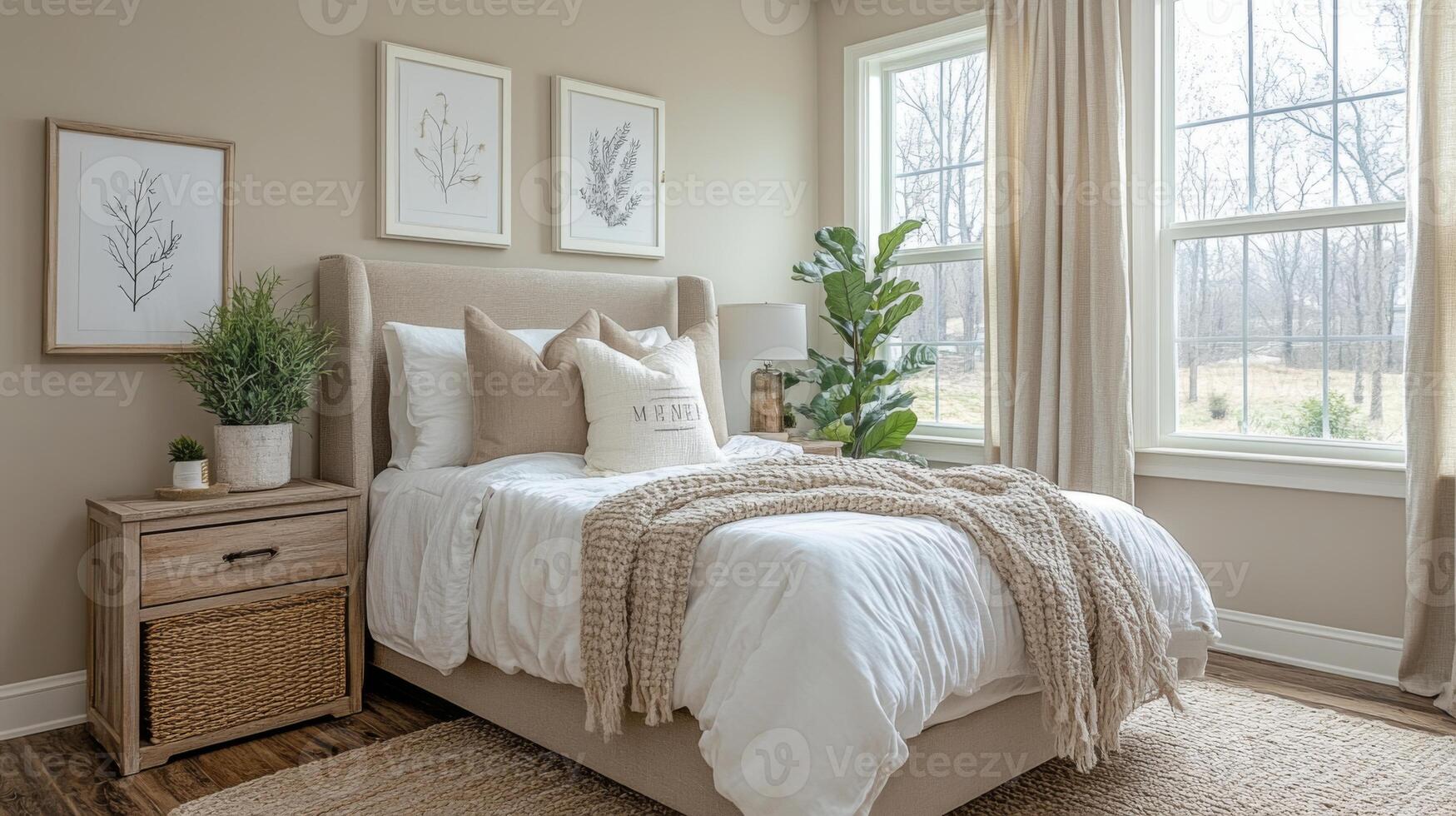
    A neutral bedroom. White linens. A chunky knit throw in oatmeal, draped across the foot of the bed with the kind of casualness that takes years to perfect. Botanical prints on the wall. A single plant. Nothing shouts. Everything whispers.
    This is the opposite of a styled photograph. This is a lived photograph. And the blanket is the reason it works. Remove it, and the room is a hotel. Add it, and the room is a sanctuary.
    The blanket doesn’t match the room. It agrees with it. The slight unevenness of the hand-knit texture echoes the imperfection of the linen sheets. The weight of it anchors the visual lightness of the white bedding. The color β€” neither cream nor grey, but something in between β€” bridges every other tone in the room.
    This is what handmade textiles do that expensive throws don’t: they mediate. They negotiate between the hard and the soft, the cold and the warm, the perfect and the human.

    The Living Room Lie

    We’ve been sold a lie about living rooms.
    The lie is that they should look like magazine spreads. That the throw on the sofa should be color-coordinated to the pillows. That the blanket should be folded at a perfect 45-degree angle, waiting for a photographer.
    50 Cozy Living Room Ideas That Make Your Home Look Expensive in 2026
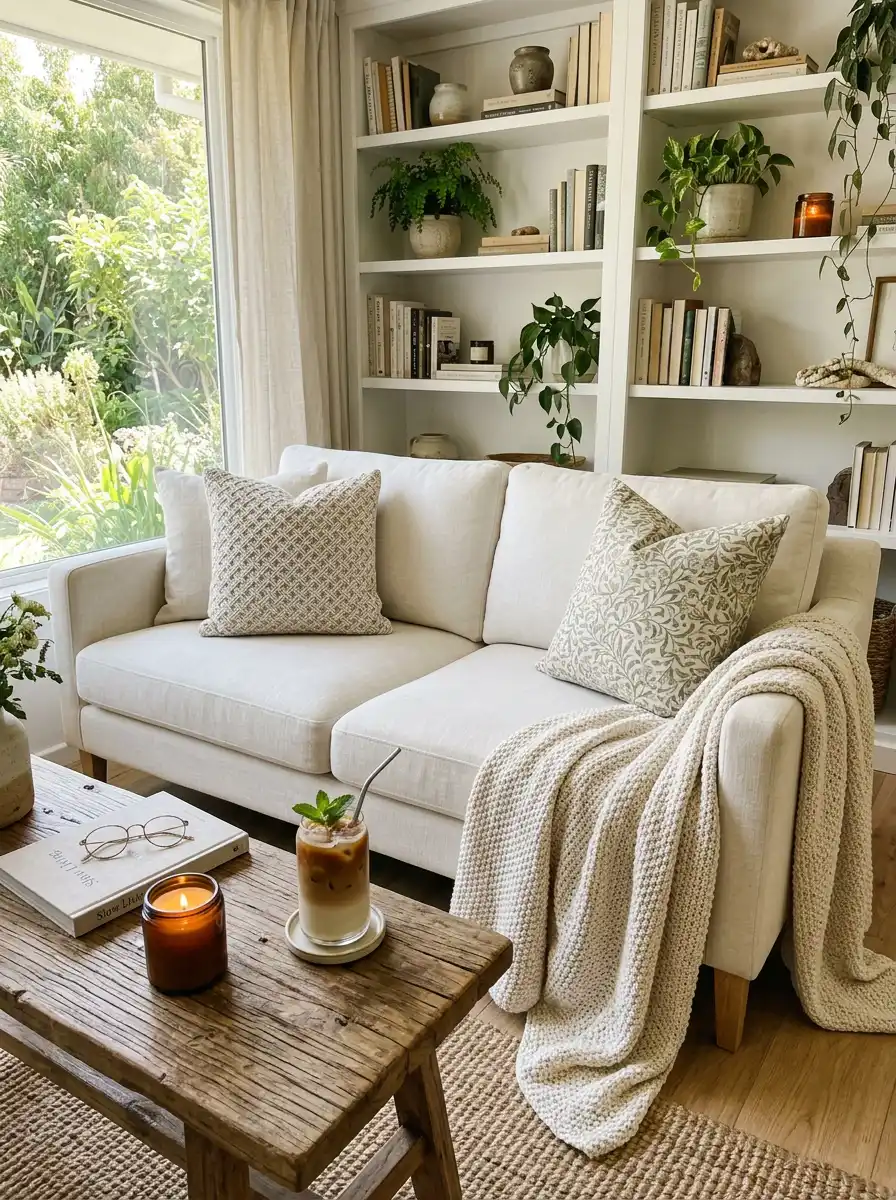
    The room above tells a different story. A cream crochet blanket draped over the arm of a white sofa, not because it was styled that way, but because someone was reading there an hour ago and left it. A candle burning. Coffee cooling. Books stacked unevenly. The blanket isn’t performing. It’s resting.
    And that rest is contagious. When you enter a room where textiles are allowed to be tired, you feel permission to be tired too. You don’t have to perform perfection. You can simply sit. Simply be. Simply pull the blanket over your knees and let the afternoon dissolve.
    Expensive throws demand attention. Handmade blankets give permission.

    Your Blanket Manifesto

    So here’s your homework. Not a shopping list. A shift in attention.
    Remove one machine-made throw. The one that came in a gift box. The one with the label you still haven’t cut off. The one that looks beautiful in daylight but feels like plastic at midnight.
    Add one handmade blanket. Not expensive. Just made. A crochet afghan from a market. A knit throw from a friend. Something with uneven edges and the faint smell of wool.
    Protect the imperfection. The loop that’s looser than the others. The spot where the color changes slightly. The fringe that tangled in the wash. These aren’t flaws. They’re evidence.
    May your evenings be heavy. May your blankets be uneven. May your home feel like the most luxurious place in the world β€” not because you bought it, but because someone, somewhere, made it with hands that knew the weight of time.

    You Might Also Love

  • Crochet Decor That Looks Like Restoration Hardware

    Crochet Decor That Looks Like Restoration Hardware


    Buy CTRAFTED RUGS Round Pet Wool Crochet Area Rug 4x4 Feet, Natural Beige  Hand Woven Carpet with Fringe, Boho Style Floor Rug for Living Room, Bedroom,  Entryway, Pet Wool Online at Low

    Walk into any Restoration Hardware. The air smells like sandalwood and money. Everything is oversized, underlit, and draped in Belgian linen that costs more per yard than your monthly grocery bill. The sofas are deep enough to lose a small dog in. The tables look like they were carved from trees that witnessed the signing of the Magna Carta.

    It’s beautiful. It’s also a performance.
    And here’s the plot twist that changes everything: crochet decor can create the exact same emotional effect β€” the same hush, the same weight, the same sense that someone with impeccable taste lives here β€” for roughly the price of a single RH throw pillow.
    Not cheaper. Not a substitute. The same feeling, achieved through a different door.

    The $4,000 Sofa Rule

    Let’s start with the lie we’ve all accepted.
    We’ve been trained to believe that luxury lives in price tags. That a living room only feels expensive when the sofa required financing. But the truth is far more interesting: luxury lives in contrast. In the tension between rough and smooth. Between heavy and light. Between the cold geometry of architecture and the warm irregularity of something made by hand.
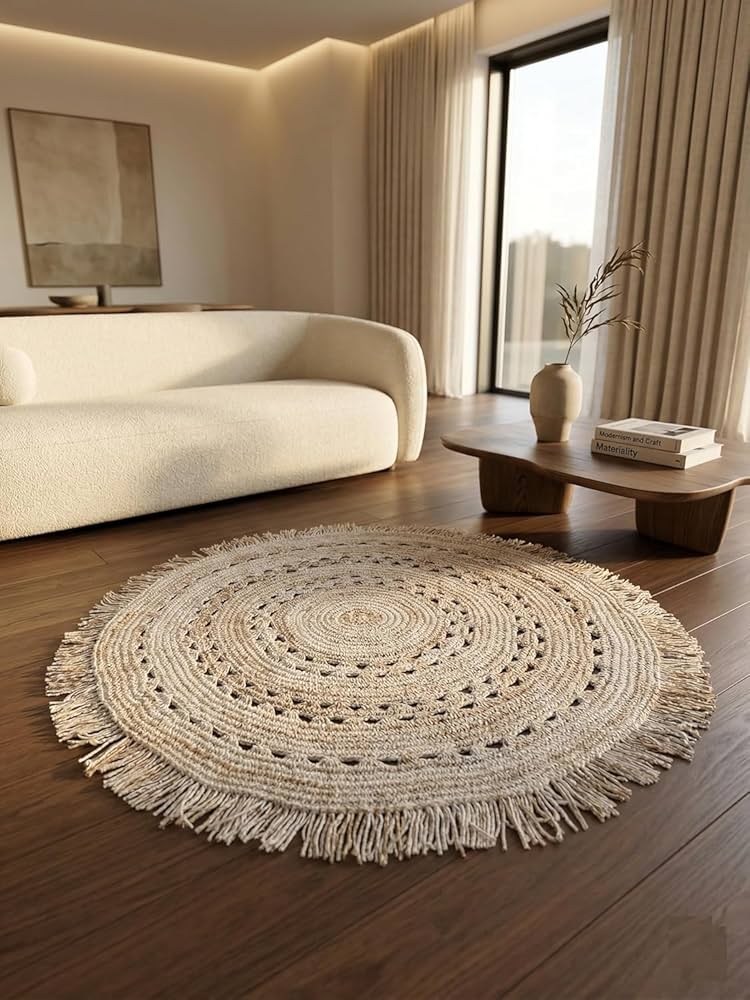
    Look at the room below. A curved white sofa that looks like a cloud. Dark wood floors with the kind of grain that suggests old growth. Natural light filtering through linen curtains. And on the floor β€” a round crochet rug in undyed wool, its spiral pattern radiating from the center like a fingerprint.
    The rug didn’t cost $4,000. It cost evenings. It cost the decision to use undyed yarn instead of something brighter. It cost the patience to work in a spiral without losing tension. And when your bare feet hit those fibers on a Sunday morning, the sensation is identical to what you’d feel stepping onto a $400-per-square-yard hand-knotted carpet.
    Because your nervous system doesn’t check receipts. It checks texture.
    Restoration Hardware knows this. They sell “vintage” rugs that are artificially distressed to look like they survived a century. But a crochet rug actually carries the memory of its making. The spot where the hook paused. The row that tightened because the phone rang. These aren’t imperfections. They’re authenticity that money can’t manufacture.

    Texture as Currency

    Here’s the counterintuitive truth: in a world of mass production, irregularity has become the ultimate luxury.
    Machine-made decor is perfect. Uniform pile. Mathematical symmetry. Colors mixed by algorithms to offend no one and inspire no one. This perfection is impressive for exactly three seconds. Then your brain files it under “background” and moves on.
    Crochet does the opposite. It demands attention through its very humanity. The stitch that’s slightly tighter than its neighbor. The edge that waves instead of cutting straight. The thickness that varies because human hands tire, pause, adjust.
    The blanket above understands this perfectly. Cream wool in a honeycomb stitch, draped over a neutral sofa like it landed there by accident β€” but landed exactly right. The fringe isn’t factory-cut. It’s worn. The texture catches afternoon light and turns it into something sculptural. Next to it: a stack of books and a single plant. Nothing else.
    This is the Restoration Hardware formula, decoded: one dominant texture + neutral palette + negative space = expensive. They charge $300 for a linen throw that achieves this. You can achieve it with yarn, a hook, and the understanding that luxury isn’t bought β€” it’s built, stitch by stitch.
    The difference? Their blanket was distressed by a machine in a factory. Yours was distressed by your cat kneading it while you watched Netflix. One comes with a certificate of authenticity. The other is authentic.

    5 Ways to Fake a $50K Living Room (Without Faking Anything)

    Ready to transform your space without transforming your bank account? Here’s the real playbook:
    1. Go Monochrome, Not Boring
    Choose one neutral and stay in it. Cream, oatmeal, sand, stone. The RH palette isn’t about color β€” it’s about the absence of color. A cream crochet blanket on a cream sofa doesn’t disappear. It glows. The texture becomes the only language the room needs.
    2. Scale Up Without Fear
    Small crochet reads “craft fair.” Large crochet reads “gallery.” A chunky throw in super-bulky yarn. A rug that covers the entire conversation area. Oversized is the secret handshake of expensive spaces.
    3. Pair With Cold Materials
    Crochet is warm, soft, organic. Place it next to something that isn’t: marble, metal, raw wood, glass. The contrast is what makes both elements feel intentional. A crochet basket on a concrete floor. A wool pillow on a leather chair. Tension creates interest.
    4. Leave It Imperfect
    Don’t block your pieces into submission. Let the blanket drape unevenly. Let the pillow sit slightly askew. Restoration Hardware spends millions distressing furniture to look lived-in. Your crochet is already there. Don’t iron out the soul.
    5. Light It Low
    Overhead lighting kills texture. Crochet comes alive in warm, sidelong light β€” floor lamps, candles, late-afternoon sun. The shadows between stitches become part of the pattern. RH stores are dim for a reason. Mimic the light, mimic the feeling.

    The Pillow Test

    Now look at the image below and notice what your eye does first.
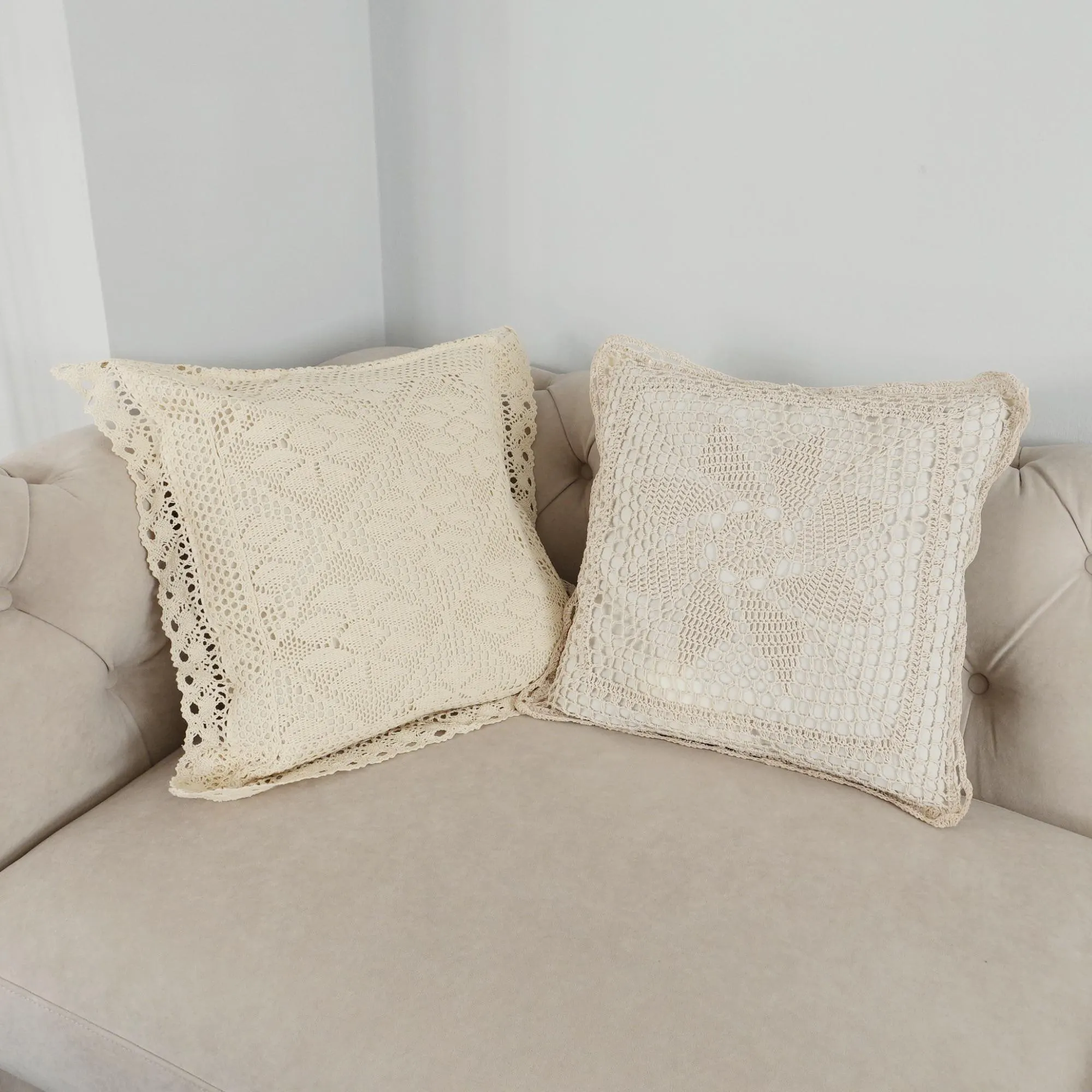
    Ivory Crochet Cushion Cover, Bolster Pillow Case Square, Sofa and Bed
    It doesn’t go to the sofa. It goes to the pillows. Two cream crochet cushions, side by side, each with a different openwork pattern. One is dense and geometric. The other is lacy and floral. They don’t match β€” they rhyme. And that rhyme is the sound of intention.
    A machine would have made them identical. A machine would have optimized for efficiency. But these were made by someone who decided: this pillow will be solid, and this one will breathe. This one will anchor, and this one will whisper.
    That decision-making process β€” visible in the final object β€” is what separates decor from design. Restoration Hardware hires designers to make these decisions for you. Crochet lets you make them yourself. The result is the same: a room that feels curated rather than purchased.

    The Organization Illusion

    Here’s the final secret, and it’s the one that contradicts everything Instagram wants you to believe:
    Expensive-looking homes aren’t empty. They’re contained.
    The clutter doesn’t disappear. It gets organized into vessels that make it look like art. Open shelves with identical glass jars. Woven baskets that hold the chaos of daily life. Trays that corral the small objects into compositions.
    Easy Crochet Basket Pattern Set, Beginner Home Decor PDF, Organize Storage  Tutorial, Modern Square Round Trinket Tray
    The baskets above carry this philosophy. Chunky crochet in soft neutrals β€” cream, stone, warm grey. Some hold yarn, some hold towels, one holds a single succulent like a sculpture. They don’t hide the mess. They elevate it. The texture of the crochet turns storage into display.
    Restoration Hardware sells seagrass baskets for $80 each. These cost the price of cotton yarn and an afternoon of mindless stitching. But the effect is identical: the room looks like someone with restraint lives here. Someone who chooses what to show and what to tuck away. Someone who understands that organization is the highest form of decoration.

    The Science of Neutral

    Let’s get technical for a moment. Because the physics of why this works are fascinating.
    A brightly colored room is a shouting match. Red fights with blue. Pattern fights with pattern. The eye has nowhere to rest, so it rests nowhere. The result is visual exhaustion β€” the same feeling you get from a day in a casino.
    A neutral room with handmade texture is a conversation. The eye moves slowly. It lingers. It notices the way light changes a cream blanket from ivory at noon to amber at dusk. It registers the shadow of a crochet basket against a white wall. It finds the slight variation in tone between two undyed yarns.
    Table
    Table

    Element Machine-Made Effect Handmade Crochet Effect
    Visual calm Uniform, predictable Slight irregularity engages without overwhelming
    Light interaction Consistent reflection Shadows between stitches create depth
    Temperature Synthetic fibers trap heat Natural wool breathes, regulates
    Sound Silent, flat Textile absorbs echo, softens acoustics
    Touch Smooth, sealed Micro-massage, biophilic response
    This table isn’t theory. It’s a diagnostic tool. Walk through your home and check: does each room have at least three of these handmade elements? If not, you know where to start.

    Your RH Manifesto

    So here’s the reframe. Not a shopping list. A philosophy.
    Restoration Hardware sells the feeling of a life well-lived. But they sell it as a product. You can buy the feeling β€” or you can make it. And making it doesn’t just save money. It changes the frequency of the room.
    A crochet rug underfoot reminds you that patience exists. A handwoven blanket on the sofa reminds you that warmth can be built. A basket on the shelf reminds you that chaos, properly contained, becomes beautiful.
    Remove one machine-made thing. The synthetic throw that pills. The plastic storage bin. The decorative object that came with a barcode.
    Add one handmade thing. Not expensive. Just made. A crochet pillow. A wool basket. A single coaster worked in cotton while you listened to rain.
    Protect the imperfection. The slight unevenness of the rim. The spot where the dye didn’t take perfectly. The edge that curls no matter how many times you block it. These aren’t flaws. They’re the evidence that a human was here.
    May your home feel like a Restoration Hardware catalog. May your hands be the ones who made it that way.
  • Why Everyone Is Falling in Love with Crochet Rugs Again

    Why Everyone Is Falling in Love with Crochet Rugs Again

    Buy Handmade Crochet Rug | Boho Floor Mat | Chunky Yarn Carpet | Living Room  Decor | Round Crochet Rug Online
    Disclosure: This post contains affiliate links to Creative Fabrica. I only recommend products I genuinely love
    Why Everyone Is Falling in Love with Crochet Rugs Again
    What if the most important piece of furniture in your home isn’t furniture at all β€” but something you walk on?
    The Forgotten Canvas
    Let’s start with a confession.
    For years, I treated my floor like a stage. A neutral backdrop. A place for sofas and coffee tables to perform while the floor itself stayed silent. I bought rugs the way I bought insurance β€” functional, necessary, and completely forgettable. Beige rectangles that disappeared under furniture. Synthetic fibers that felt like office carpet. Designs so safe they could put a caffeinated squirrel to sleep.
    Then I visited a cottage in Cornwall. The kind with low ceilings and a cat that owns the armchair. And the rug? The rug stopped me mid-step.
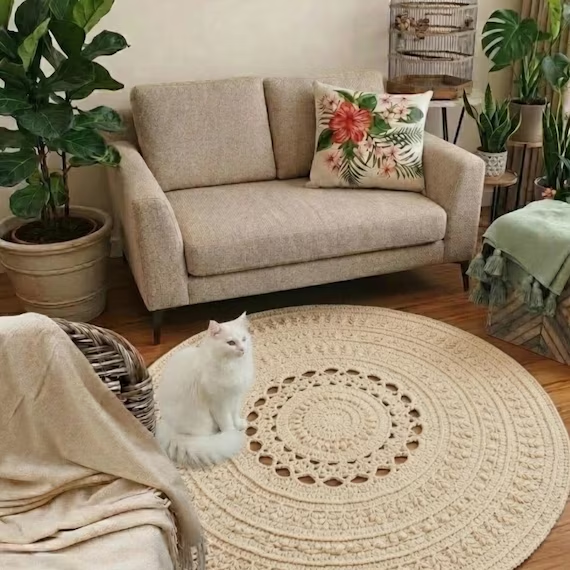
    It wasn’t large. It wasn’t expensive. But it was alive. A round crochet rug in undyed cotton, its spiral pattern radiating from the center like a fingerprint. A white cat sat on it like a queen on a throne. The fibers had compressed in some places, fluffed in others, creating a topography of touch that no machine could replicate. I kicked off my shoes without thinking. And I realized: we’ve been decorating every surface in our homes except the one that carries our entire weight.
    The living room above understands this perfectly. The creamy round crochet rug doesn’t just occupy floor space β€” it claims it. The openwork pattern creates negative space that lets the wood breathe. The natural cotton catches afternoon light like parchment. And that cat? She knows what every interior designer forgets: the best rug in the room is the one that makes you want to lie down on it.
    This is the power of crochet rugs. Not decoration. Invitation. A tactile whisper that says: stay awhile. Take off your shoes. Be here, fully.
    Why Crochet Rugs Feel Like Hugs
    Here’s the counterintuitive truth that changes everything: the most luxurious thing a rug can do isn’t look expensive. It’s feel human.
    Machine-made rugs are perfect. Uniform pile. Mathematical symmetry. Colors that match exactly because they were chosen by algorithms. This perfection is impressive β€” for about three seconds. Then your brain files it under “background noise” and moves on.
    Crochet rugs do the opposite. They demand attention through their very irregularity. The stitch that’s slightly tighter than its neighbor. The edge that waves instead of cutting straight. The thickness that varies because human hands tire, pause, adjust. These aren’t flaws. They’re fingerprints.
    Round Boho Crochet Rug, Handmade Style Circular Area Rug, Fringe Floor  Carpet, Rustic Scandinavian Home Decor
    The boho crochet rug above takes this to its logical extreme. Concentric circles of terracotta, sage, cream, and navy β€” colors that argue and harmonize like a family at dinner. The fringe that trembles when someone walks past. The texture that changes underfoot depending on whether you step on a solid row or an open chain.
    Your feet know the difference. They always know. A machine rug says: walk on me. A crochet rug says: feel me. And in a world where most of our sensory input comes through screens, the chance to feel something handmade under your bare feet is no longer decoration. It’s therapy.
    The Shape That Changes Everything
    Now let’s talk about geometry. Because not all crochet rugs are created equal β€” and the shape you choose sends a message you might not realize.
    Rectangular rugs divide. They create zones. They say: this is the living area, that is the dining area, and never the twain shall meet. They’re the urban planners of floor decor β€” efficient, organized, and slightly authoritarian.
    Round rugs unify. They create gathering points. They say: sit here. Talk here. Put your coffee table here and let conversation orbit it like planets around a sun. A round crochet rug turns a corner of a room into a destination.
    But oval rugs? Oval rugs are the secret weapon. They combine the unity of a circle with the direction of a rectangle. They guide the eye along a path. They fit under tables better than circles and soften hallways better than rectangles. An oval rug doesn’t just occupy space β€” it flows through it.
    Oval Rug
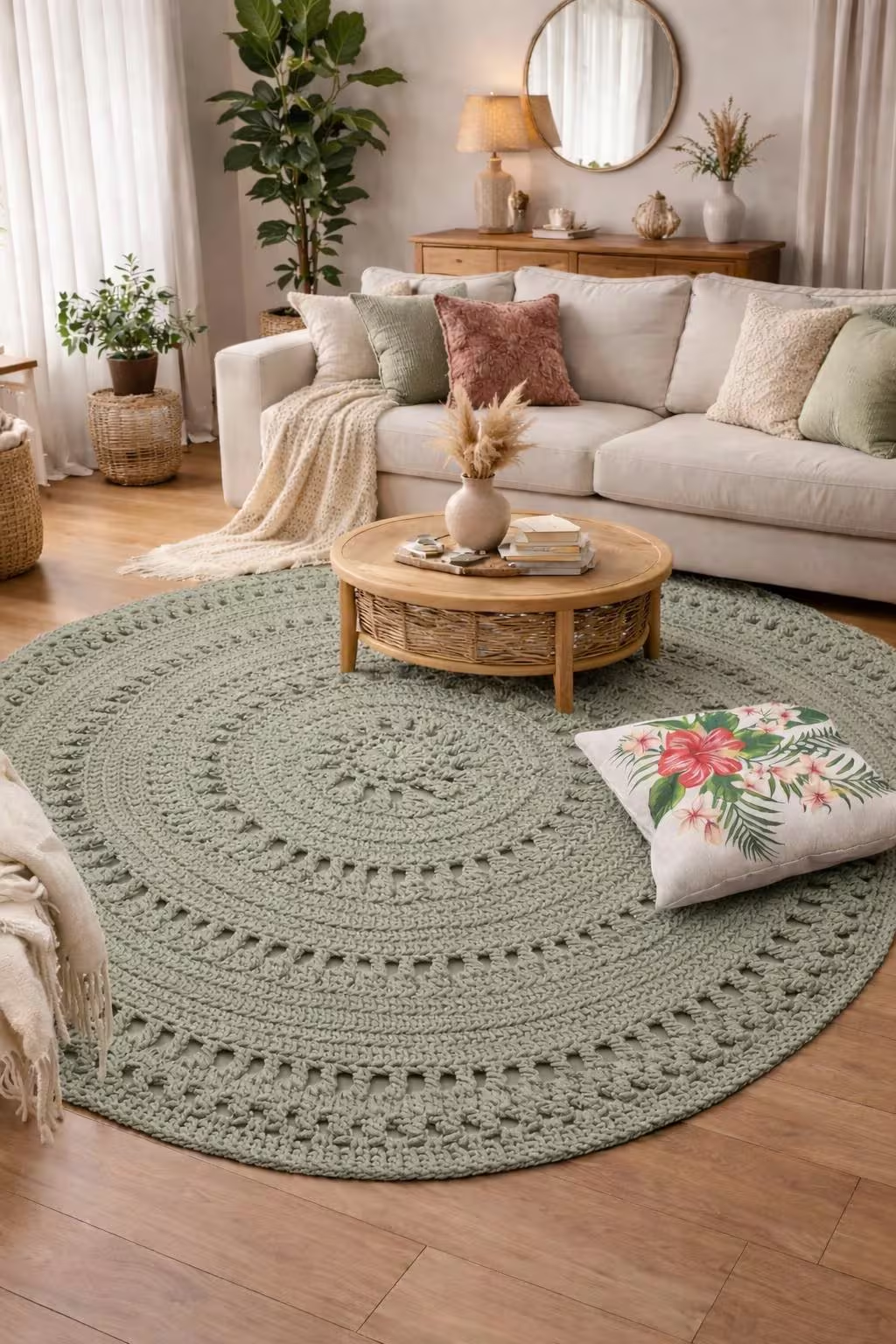
    The sage green crochet rug above, with its delicate openwork and generous scale, demonstrates this perfectly. Placed in a light-filled living room, it doesn’t compete with the furniture β€” it cradles it. The oval shape echoes the curves of the coffee table, the roundness of the mirror, the organic lines of the plants. Everything in the room agrees with everything else because the rug established the visual language first.
    This is why oval crochet rugs are having a moment. They solve problems rectangles create. They add softness where architecture is hard. They make small rooms feel bigger and big rooms feel intimate.
    The Return of Slow Decor
    Here’s where logic gets flipped. We’re told that good design is fast. Order today, deliver tomorrow, trend next week. But the most beautiful homes I’ve ever visited β€” the ones that felt like exhales β€” all had one thing in common: they were slow.
    Slow decor is the opposite of fast fashion for your home. It’s choosing pieces that took time to make, that will take time to age, that ask you to slow down in return. A crochet rug is the ultimate slow decor object. Someone β€” maybe across the world, maybe down the street β€” sat with yarn and hook and made a series of decisions that resulted in this exact object under your feet.
    The vintage oval rag rug below carries this philosophy in every loop. Pastel stripes of pink, blue, cream, and grey β€” colors that look like they were chosen from leftover fabric with love rather than from a Pantone chart with strategy. The scalloped edge that required extra rows, extra time, extra patience. This rug wasn’t produced. It was composed.
    Vintage Oval Rag Rug Crochet Pattern | Retro Home Decor
    And here’s the plot twist: slow decor is fast becoming the ultimate luxury. Not because it’s expensive, but because it’s rare. In a world of same-day delivery and algorithmic recommendations, owning something that took forty hours to create is a radical act. It’s a declaration that your home isn’t a backdrop for your life β€” it’s a participant in it.
    5 Ways to Style a Crochet Rug (Without Making It Look Like Grandma’s House)
    Ready to bring this philosophy home? Here’s your roadmap:
    1. Let It Breathe
      Don’t hide your crochet rug under furniture. Give it at least 18 inches of visible border. The pattern is the point β€” let it be seen.
    2. Contrast the Texture
      Pair a chunky crochet rug with smooth leather furniture. Or place a delicate openwork rug on rough-hewn wood floors. The tension between textures creates interest.
    3. Go Monochrome
      A cream or natural cotton crochet rug in a white room doesn’t disappear β€” it glows. It adds warmth without adding color. It’s the design equivalent of a whisper.
    4. Layer It
      Place a smaller crochet rug on top of a larger jute or sisal rug. The natural fibers talk to each other. The layers add depth. And your feet get to choose their texture.
    5. Light It Low
      Crochet rugs come alive in warm, low light. A floor lamp casting sideways shadows across the stitches turns texture into art. Overhead lighting kills the magic β€” always light from the side.
    The Science of Softness: Why Your Nervous System Craves Crochet
    Let’s get technical for a moment. Because the physics of crochet create something no woven rug can replicate.
    A machine-woven rug is a barrier. It covers. It protects the floor from you. A crochet rug is a conversation. The negative space between stitches allows air to move. The natural fibers regulate temperature β€” cool in summer, warm in winter. The slight unevenness creates micro-massage points for your feet that stimulate circulation without you noticing.
    Neuroscientists call this “tactile nourishment.” When your feet encounter irregular, natural textures, your brain releases dopamine. It’s the same response you get from walking on a beach or grass. Crochet rugs bring that biophilic response indoors.
    Table

    Element Effect
    Natural cotton Temperature regulation β€” cool when hot, warm when cold
    Openwork stitches Air circulation β€” prevents that “stuffy rug” feeling
    Hand-tension variation Micro-massage β€” stimulates foot receptors
    Organic shapes Visual calm β€” curves reduce cognitive load
    Natural dyes Color harmony β€” earth tones soothe the nervous system
    This table isn’t just theory. It’s a diagnostic tool. Walk through your home barefoot. Does your floor nourish you or merely support you? If the answer is the latter, you know where to start.
    Your Rug Manifesto
    So here’s the reframe. Not a shopping list. A philosophy.
    Start with your feet. Before you choose a rug for how it looks, choose it for how it feels. Stand on it barefoot. Close your eyes. Does your body relax? Good. That’s the only review that matters.
    Choose natural over perfect. A cotton rug that sheds slightly is better than a synthetic rug that sheds microplastics. Imperfection is the price of authenticity.
    Let it age. The spot where you stand to drink coffee. The corner where your dog curls up. The edge that fades where the sun hits. These aren’t damages. They’re the rug’s autobiography.
    Go oval. Not because it’s trendy. Because it flows. Because it fits life better than right angles. Because it reminds you that beauty doesn’t have to be sharp to be powerful.
    May your floors be soft. May your stitches be even. May your home feel like the hug you’ve been needing.
  • Elegant Women Always Come Back to Handmade Fashion

    Elegant Women Always Come Back to Handmade Fashion

    Grenada Crochet Dress Champagne - S

     What if the most sophisticated thing you can wear isn’t from a runway β€” but from someone’s living room?

    The Return Journey

    Let’s start with a pattern that repeats across every elegant woman’s life.
    She begins young, dazzled by logos. The recognizable brands, the glossy bags, the status symbols that announce themselves before she enters a room. She collects them. She learns their language. She believes, as we’re all taught to believe, that elegance is purchased, that sophistication is priced, that beauty arrives by courier in a branded box.
    Then something shifts. Maybe it’s her thirties. Maybe it’s a trip to a village in Italy where she sees a woman in a hand-knitted cardigan that looks more alive than anything in her closet. Maybe it’s simply the exhaustion of chasing something that always moves faster than she can.
    Whatever the catalyst, she finds herself returning. Not to a trend. Not to a movement. But to something older, quieter, truer: handmade.
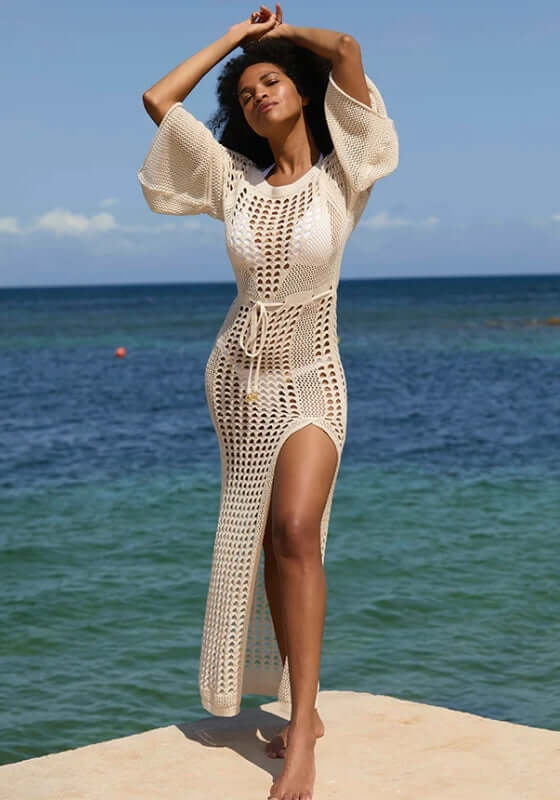
    The cream crochet dress below β€” with its intricate openwork, flared sleeves, and the quiet confidence of a woman standing barefoot by the sea β€” embodies this return. She isn’t trying to impress. She’s trying to feel. And handmade, with its human irregularities and its patient construction, is the only fashion that delivers feeling instead of just image.

    Why Elegance Is a Circle, Not a Line
    Here’s the counterintuitive truth that takes years to learn: elegance isn’t about moving forward. It’s about circling back.
    The fashion industry sells linearity. New season, new collection, new you. But elegant women eventually realize that the most beautiful things in their wardrobes aren’t the newest β€” they’re the ones they’ve returned to again and again. The cashmere that softened over a decade. The pearls that absorbed her skin’s oils until they glowed. The handmade dress that fit better after the third wash than the first.
    This is why elegant women always come back to handmade. Because handmade understands time. It doesn’t demand to be replaced. It invites to be revisited.
    The granny square beach dress below β€” with its pastel motifs, open back, and the freedom of a woman walking barefoot on sand β€” proves this circularity. This isn’t a dress for one summer. It’s a dress for every summer. The colors won’t fade to ugliness; they’ll fade to memory. The cotton won’t wear out; it will wear in. And each time she puts it on, she won’t be wearing something new. She’ll be wearing something known. Something that has become part of her story.
    Elegance, at its core, is familiarity with beauty. And nothing becomes familiar like something made by hand.

    The Invisible Architecture of Handmade

    Let’s talk about what handmade does that machines cannot.
    A factory dress is engineered for the average. The average body, the average movement, the average lifespan of a trend. It fits adequately on many, perfectly on none. It moves adequately for most, beautifully for few. It lasts adequately for a season, rarely for a decade.
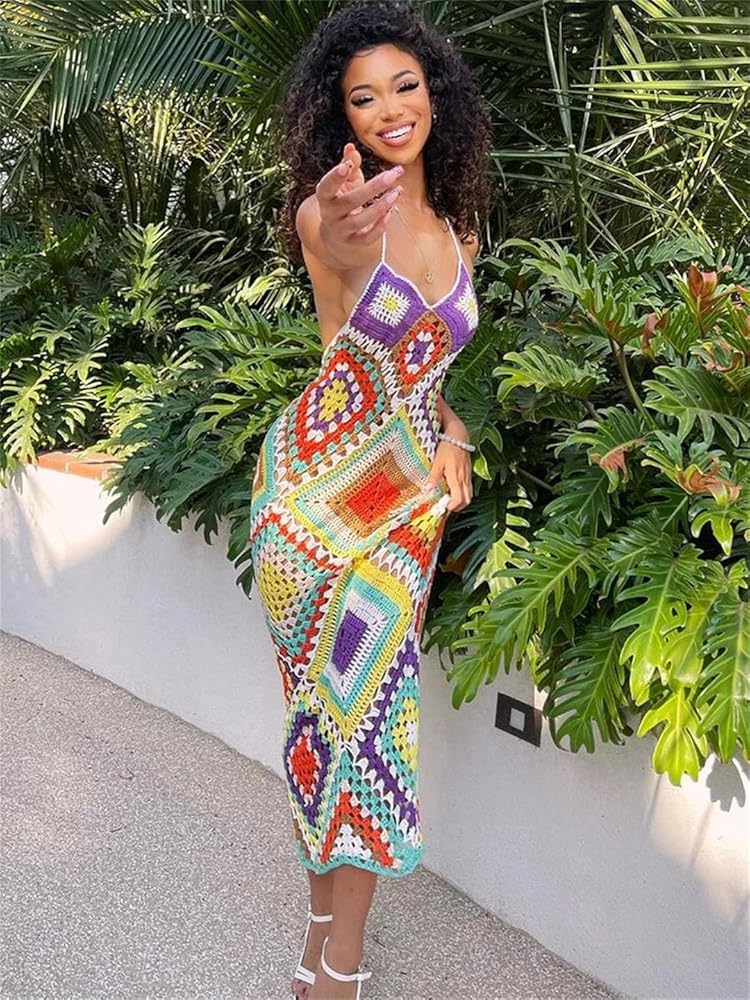
    Handmade is the opposite. It’s engineered for specificity. The crochet dress below β€” with its fitted bodice, geometric patterns, and tassel details β€” wasn’t made for a mannequin. It was made for a body. For movement. For the way fabric falls when a real woman walks, sits, reaches for a glass of wine.
    The openwork creates ventilation where the body heats. The fitted waist creates shape where the body curves. The natural cotton creates breathability where the body sweats. These aren’t design choices made by a committee in a boardroom. They’re decisions made by a maker who understood that clothing’s first job is to serve the body, not to impress the eye.
    Elegant women understand this architecture. They know that true luxury isn’t about what others can see. It’s about what you can feel. The way a sleeve falls. The way a hem moves. The way a neckline sits without tugging, without adjusting, without the constant, low-grade anxiety of wearing something that wasn’t made for you.
    Handmade is made for you. Even when it wasn’t made by you. Because the hands that made it were human hands, working with human understanding of what a body needs.

    The Patina of Presence

    Here’s the secret that separates handmade from everything else: it records your life.
    A machine-made garment remains what it was on the day of purchase. A handmade garment becomes what you make it through wearing. The slight stretch where your shoulder rests. The gentle fade where the sun hits. The softening where your hands have touched, again and again, the same button, the same cuff, the same hem.
    The striped crochet cover-up below β€” with its shell-patterned hem and ocean backdrop β€” carries this potential. The first time she wears it, it’s beautiful. The tenth time, it’s hers. The cotton has absorbed her sunscreen, her salt, her laughter. The colors have shifted subtly where she sits, where she stands, where the sun finds her. It has become a map of her summer.
    Elegant women come back to handmade because they understand that patina isn’t damage. It’s presence. Proof that the garment has lived, that it has been chosen, that it has mattered. A dress with a small mend is more elegant than a dress with a perfect seam because the mend tells a story. The seam tells only of a factory.
    And in a world of disposable perfection, a story is the ultimate luxury.
    Women Handmade Crochet Knit Maxi Dress Backless Beach Fashion Summer Dress  Bohemian Dress, multicoloured
    The Confidence of the Unrepeatable
    Let’s talk about the invisible thing handmade gives you in a room full of designer labels: the confidence of knowing no one else has what you have.
    When you wear a brand, you’re joining a club. When you wear handmade, you’re creating one. The woman in the white embroidered dress below β€” walking through a garden with the ease of someone who knows she cannot be replicated β€” carries this confidence. Her dress wasn’t produced in thousands. It was created in ones. The embroidery follows a pattern, yes, but each stitch is slightly different. Each flower slightly unique. Each leaf slightly its own.
    This is the confidence of the unrepeatable. Not “I have something expensive.” But “I have something singular.” And singular, in a world of algorithmic sameness, is the most elegant statement of all.
    Elegant women don’t need logos because they understand that true status isn’t about being recognized. It’s about being remembered. And a handmade dress, with its human irregularities and its patient construction, is always more memorable than a perfect machine.

    The Return That Never Ends

    So here’s the final truth: the return to handmade isn’t a phase. It’s not a trend to try and abandon. It’s a permanent migration. Once you understand what handmade offers β€” the specificity, the patina, the singularity, the soul β€” you can’t un-know it. You can still wear other things. You can still appreciate other things. But you’ll always come back.
    The woman in the white lace wedding dress below β€” standing in a formal garden with a bouquet of white roses β€” represents this return at its most ceremonial. This isn’t fast fashion. This isn’t a rental. This is a commitment. A choice to be wrapped in something made by hands, something that took time, something that will outlast the day and become an heirloom.
    Elegant women always come back to handmade because handmade is where elegance lives. Not in the new. Not in the loud. Not in the branded. But in the patient, the imperfect, the singular, the true.
    The return isn’t backward. It’s homeward.

    Your Handmade Manifesto

    So here’s the invitation. Not a shopping list. A philosophy.
    1. Start with one piece. One handmade dress. One crochet top. One knitted cardigan. Let it teach you what machine-made never could.
    2. Wear it until it knows you. Not until it’s worn out. Until it’s worn in. Until it fits your life the way it fits your body.
    3. Notice the differences. The way it breathes. The way it moves. The way it makes you feel seen rather than styled.
    4. Return again and again. Not because it’s a rule. Because it’s a relief. Because in a world of constant newness, handmade offers the deepest luxury of all: familiarity.
    May your returns be gentle. May your pieces be patient. May your elegance be unmistakably, irreplaceably yours.
  • Beautiful Women Never Stop Wearing Handmade Fashion

    Beautiful Women Never Stop Wearing Handmade Fashion


    Handmade Crochet Summer Night Dress | Elegant Knit Evening Wear, Elegant  Crochet Evening Wear
    What if the secret to timeless beauty isn’t in a bottle β€” but in a ball of yarn?

    The Anti-Trend Manifesto

    Let’s start with a rebellion.
    Open any fashion magazine. Scroll any style feed. The message is the same: this season, wear this. Next season, wear that. Last season? Burn it. Forget it. It never happened.
    We’ve built an entire industry on the fear of being outdated. Of wearing something that signals the “wrong” year, the “wrong” trend, the “wrong” version of ourselves. And in that frenzy of constant replacement, we’ve forgotten something ancient, something radical, something that beautiful women have known for centuries:
    True style doesn’t expire.
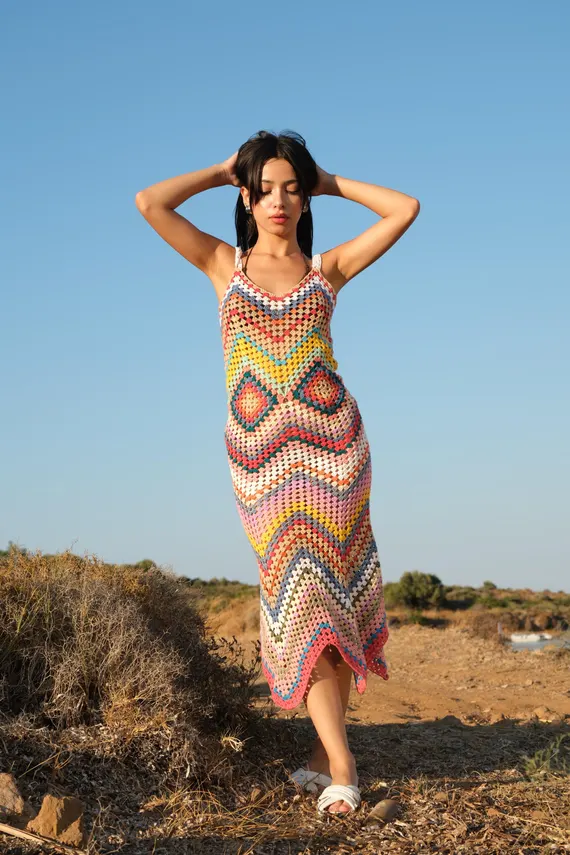
    The woman in the multicolored crochet dress below β€” standing in golden sunlight against an empty landscape, her hands in her hair like she’s posing for no one and everyone at once β€” isn’t following a trend. She’s following a thread. A lineage of makers and wearers that stretches back through generations. The zigzag pattern of her dress, the diamond motifs, the riot of sunset colors β€” these aren’t from a runway. They’re from someone’s imagination. Someone’s patience. Someone’s hands.
    This is the first secret of women who never stop wearing handmade: they understand that fashion is temporary, but craft is eternal. A machine-made dress has a season. A handmade dress has a soul.

    Why Handmade Ages Backward

    Here’s the paradox that luxury brands don’t want you to discover: handmade clothing gets more beautiful with time, not less.
    Think about it. A silk blouse from a boutique arrives perfect β€” and then immediately begins its decline. The first snag. The first stain. The first moment you realize the fabric is thinner than it looked in the store. Its best day is its first day. Everything after is a slow goodbye.
    A handmade crochet dress? It arrives with potential. The stitches are slightly uneven β€” not because of poor quality, but because of human hands. The yarn is natural β€” cotton, linen, wool β€” fibers that soften with washing, that mold to your body, that record your movements like a diary. The first time you wear it, it’s good. The tenth time, it’s better. The hundredth time, it’s yours in a way no store-bought garment ever could be.
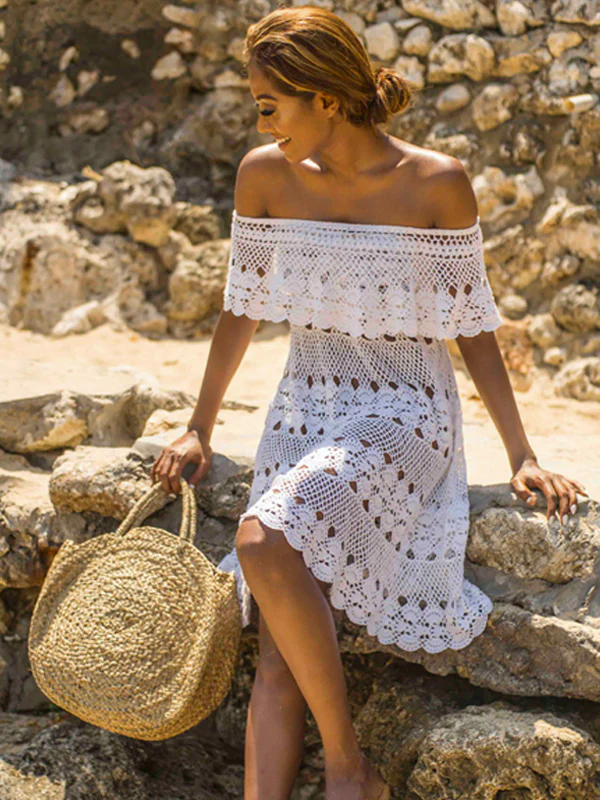
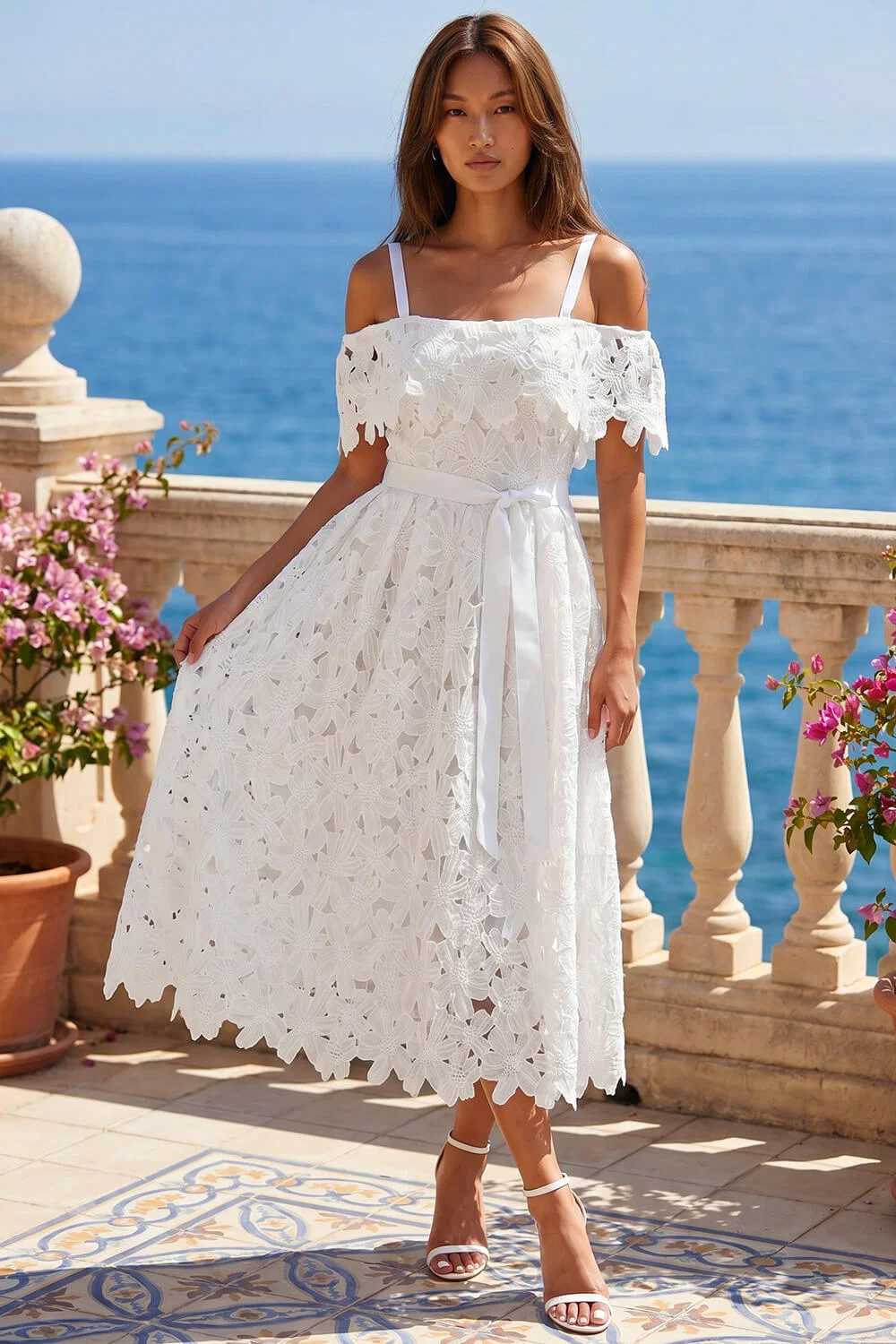
    The white lace crochet dress below β€” with its off-shoulder ruffle, intricate floral openwork, and the quiet confidence of a woman sitting on sun-bleached rocks β€” proves this point. This isn’t a dress for one occasion. It’s a dress for a life. For gallery openings and grocery runs. For dates where you want to feel unforgettable and mornings where you want to feel like yourself.
    Crochet Marianne Dress - White - annakosturova
    Handmade ages backward because it starts with imperfection and grows into intimacy. The loose thread you tuck back in. The slight stretch where your shoulder rests. The color that fades not to ugliness, but to memory. These aren’t flaws. They’re the garment’s autobiography. And beautiful women know that a story is always more interesting than a blank page.

    The Confidence Equation: Why Craft Wears Better Than Couture

    Let’s talk about the invisible thing that handmade gives you: confidence that doesn’t depend on a label.
    When you wear designer fashion, you’re borrowing confidence. It comes from the price tag, the logo, the recognition. Will they know this brand? Will they know what I spent? It’s external validation wearing the mask of self-assurance.
    When you wear handmade, the confidence is internal. It comes from knowing that your dress is one of a kind. That no algorithm generated it. That no factory produced ten thousand copies. That someone β€” maybe you, maybe a stranger on Etsy, maybe your grandmother β€” sat with yarn and time and made a series of decisions that resulted in this exact object on your body.
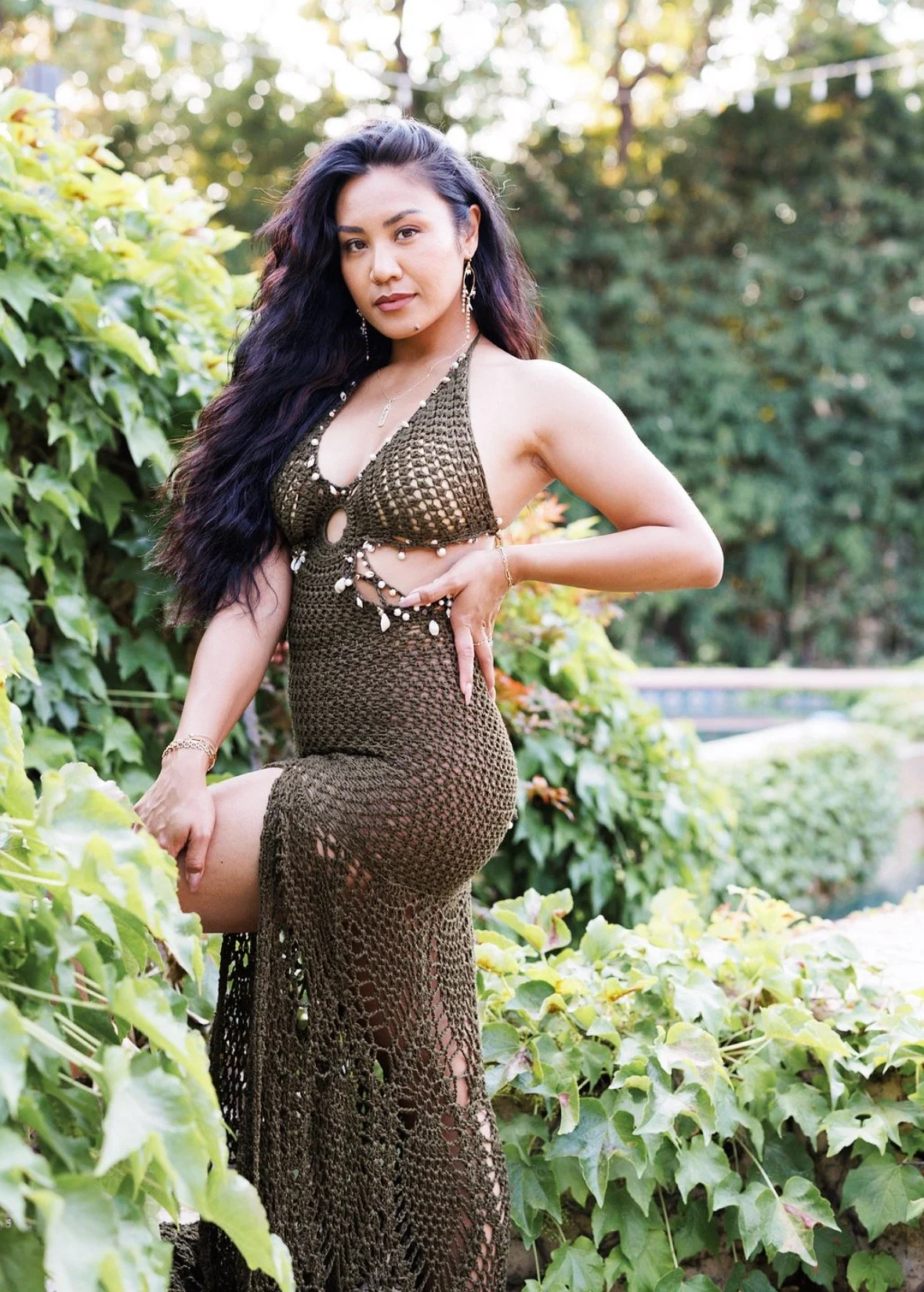
    The olive green beaded crochet dress below β€” worn in a lush garden, the halter neckline adorned with shell details, the woman posing like she owns the natural world around her β€” carries this energy. She doesn’t need a logo to prove her taste. The craftsmanship speaks. The uniqueness whispers. And the overall effect is unmistakable: this is a woman who understands that the most expensive thing she can wear is intention.
    The Halo Dress Design Diary | A Beaded Crochet Dress Pattern β€” Namaste &  Crochet Makers
    Beautiful women never stop wearing handmade because handmade never stops giving them this feeling. The feeling of being chosen, not marketed to. Of being seen, not advertised at. Of wearing something that carries a story rather than a strategy.

    The Sustainability Plot Twist

    Here’s where logic gets flipped. We’re told that sustainable fashion is about buying less, choosing better, investing in pieces that last. And then we’re shown “sustainable” brands with $400 t-shirts made in the same factories as fast fashion.
    Handmade is the real sustainability β€” and not just because it’s better for the planet (though it is). It’s sustainable because it’s emotional. Because you don’t get tired of it. Because you don’t want to replace it. Because every time you put it on, you feel something that no new purchase can replicate.
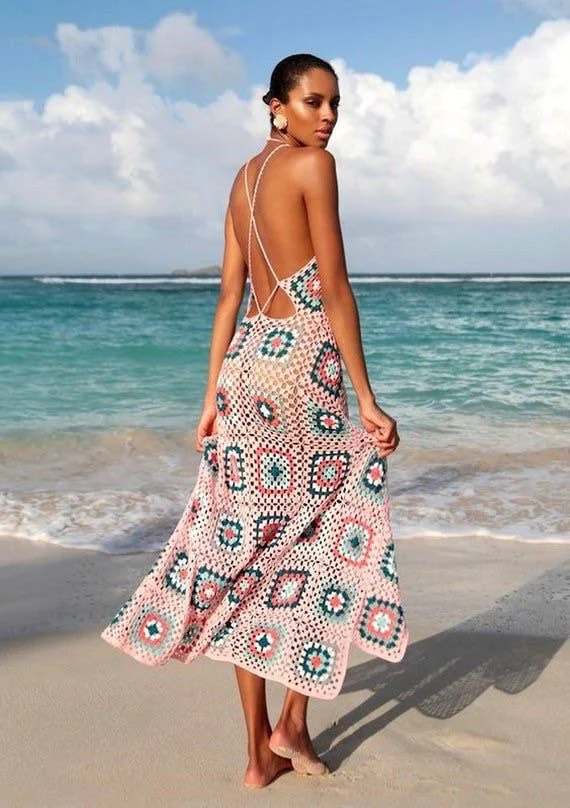
    The granny square beach dress below β€” with its pastel pink and turquoise motifs, open back, and the freedom of a woman walking barefoot on sand β€” embodies this sustainability. This dress isn’t just eco-friendly. It’s ego-friendly. It doesn’t demand attention. It invites it. It doesn’t shout status. It radiates calm.
    Summer Crochet Dress. Simple Wedding Dress Color , Beach Dress Women, Dress  Tunic
    Beautiful women understand this math: one handmade dress that you love for ten years is worth more than twenty fast-fashion dresses that you forget in two weeks. Not because of the money saved. Because of the decisions unmade. The mental energy not spent on shopping. The closet space not cluttered with almost-rights. The peace that comes from knowing exactly what you own and exactly why you own it.

    The Maker’s Mark: Why Imperfection Is the Ultimate Luxury

    Let’s get technical for a moment. Because the physics of handmade create something no machine can replicate.
    A factory garment is uniform. Every stitch identical. Every seam mathematically precise. This perfection is comforting β€” until you realize it’s also anonymous. That same dress was made in thousands. Worn by hundreds. Belonged to no one.
    Handmade carries the maker’s mark. The loop that’s slightly tighter. The edge that curves where a machine would force it straight. The color variation that comes from hand-dyeing rather than chemical consistency. These aren’t errors. They’re fingerprints. Proof that a human being, with all their fallibility and grace, decided this object should exist.
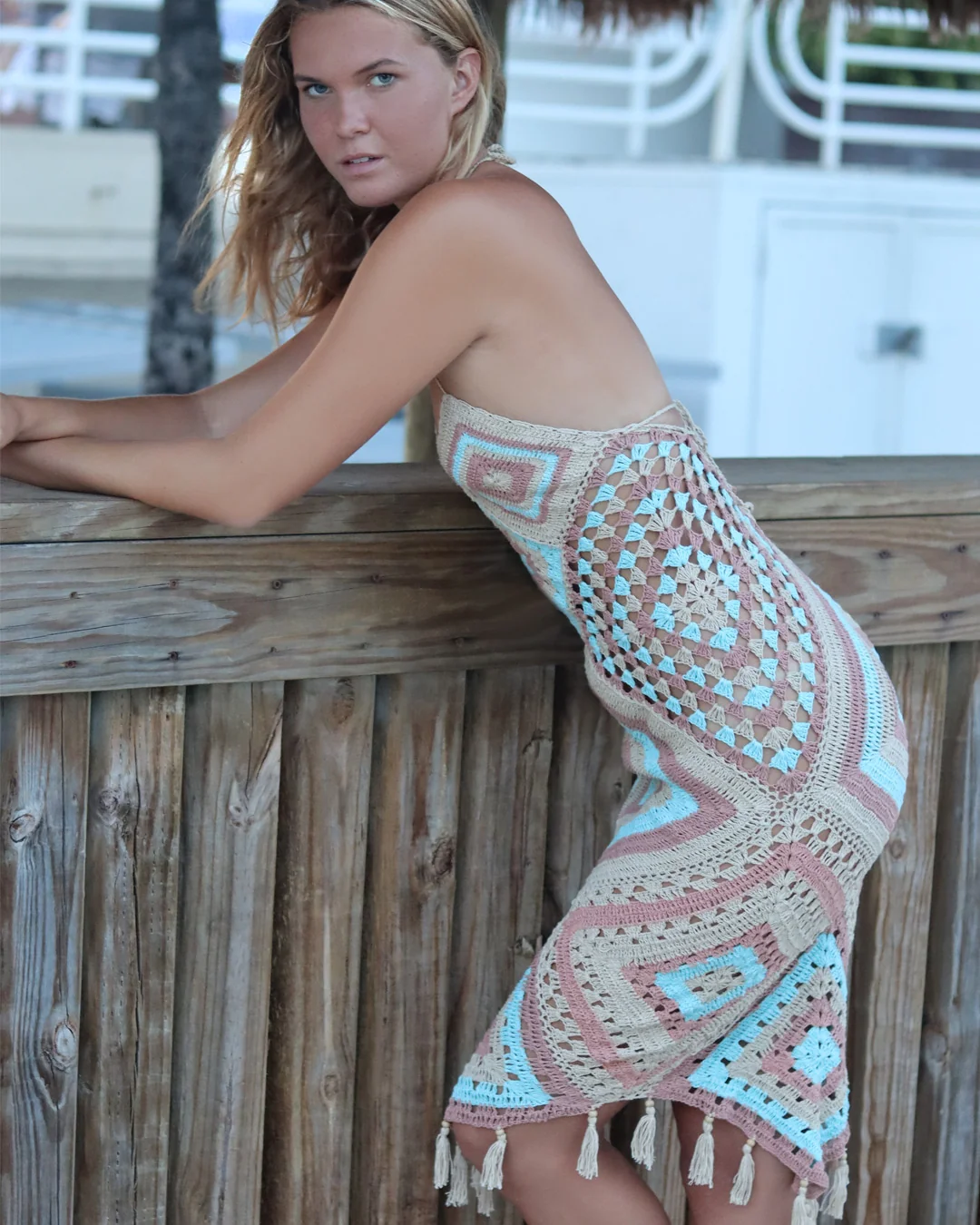
    The baby blue and cream crochet dress below β€” with its geometric patterns, tassel hem, and the relaxed posture of a woman leaning against a wooden railing β€” carries this mark. Look closely at the diamonds. The hand-formed shapes. The slight irregularity of the tension. These are the credentials of craft. The proof that this dress wasn’t produced β€” it was created.
    TIKIYOGI Baby Blue and Creme Crochet Dress, Handmade Beach Dress
    Beautiful women never stop wearing handmade because they understand that luxury isn’t perfection. Luxury is personality. The kind that comes from knowing your dress has a history, a maker, a soul. The kind that makes you feel not just dressed, but chosen.

    The Everyday Magic: Handmade Beyond Special Occasions

    Here’s the final secret, and it’s the one that surprises people most: beautiful women wear handmade not just for weddings and vacations, but for Tuesdays.
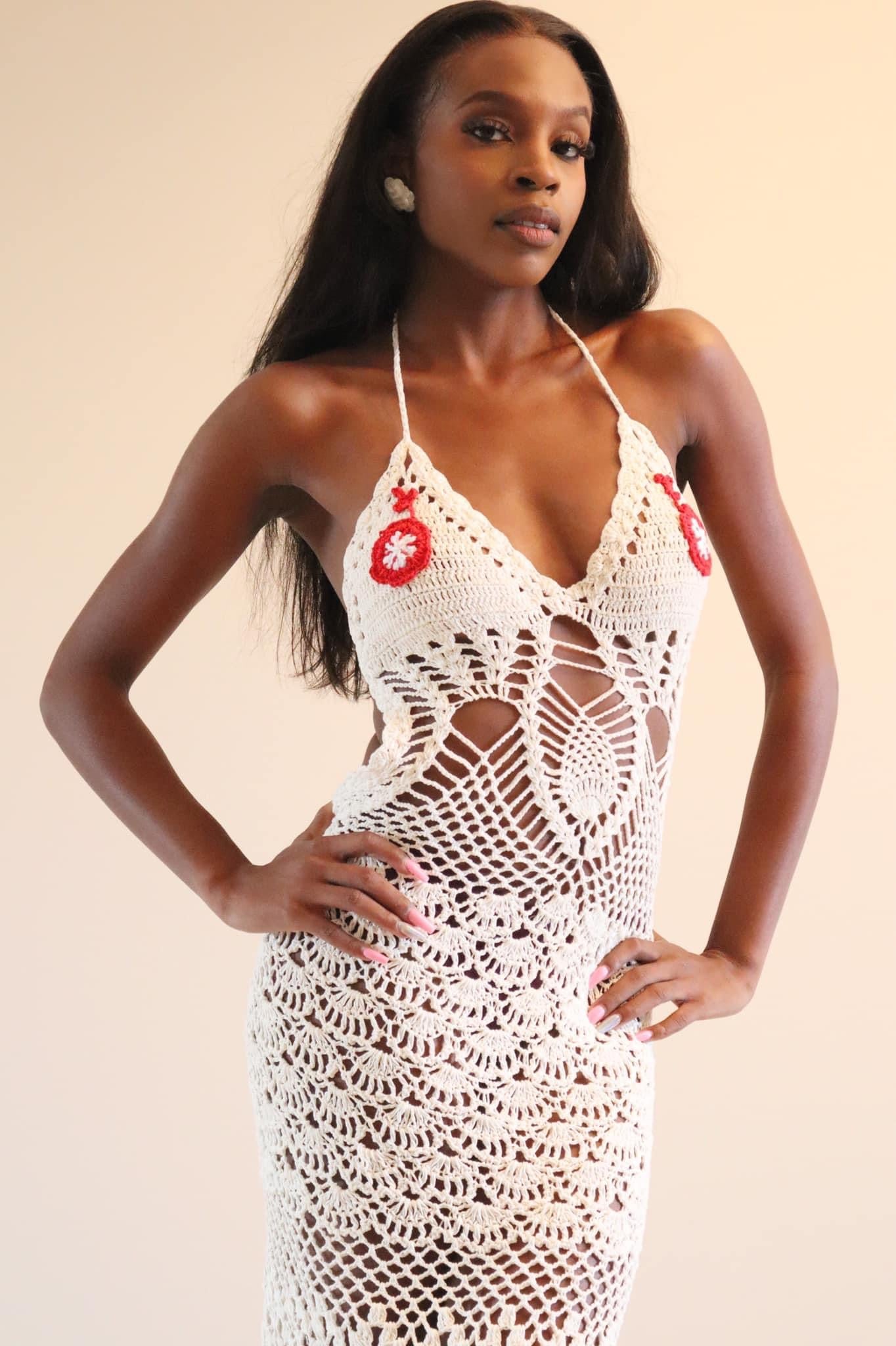
    The white floral crochet dress below β€” with its red flower accents, deep V-neckline, and the unapologetic stance of a woman who knows her own power β€” proves that handmade belongs in the everyday. This isn’t a piece saved for “someday.” This is a piece worn for today. For coffee with friends. For a walk in the park. For the simple, radical act of choosing beauty on an ordinary morning.
    TIKIYOGI Iconic Flower White Crochet Dress, Handmade Beach Dress
    This is where handmade becomes revolutionary. Not in its rarity, but in its regularity. When you wear something made by hands to the grocery store, you’re making a statement. You’re saying: I value craft over convenience. I choose story over speed. I believe that beauty belongs in the mundane.
    Beautiful women never stop wearing handmade because they never stop finding beauty in the everyday. The Tuesday morning. The coffee run. The casual lunch. These moments deserve craft too.

    Your Handmade Manifesto

    So here’s the reframe. Not a shopping list. A philosophy.
    1. Choose the imperfect. The stitch that’s slightly off. The edge that curves. These are signatures, not mistakes. They’re proof of humanity in a world of machines.
    2. Invest in time, not price. A handmade piece that took forty hours to create is worth more than a machine-made piece that took forty minutes, regardless of what the tag says.
    3. Wear the maker. When you put on handmade, you carry someone’s afternoon, someone’s patience, someone’s skill. That’s not clothing. That’s connection.
    4. Reject the disposable. Choose pieces that age, that soften, that tell your story over years. True beauty is longevity.
    5. Make it yourself. Even if you’re a beginner. Even if your first attempt is lumpy. The act of creating what you wear transforms your relationship with your wardrobe from consumption to conversation.
    May your wardrobe be slow. May your stitches be even. May your beauty be unmistakably, irreplaceably yours.
  • This Crochet Piece Looks Better Than Designer Fashion

    This Crochet Piece Looks Better Than Designer Fashion

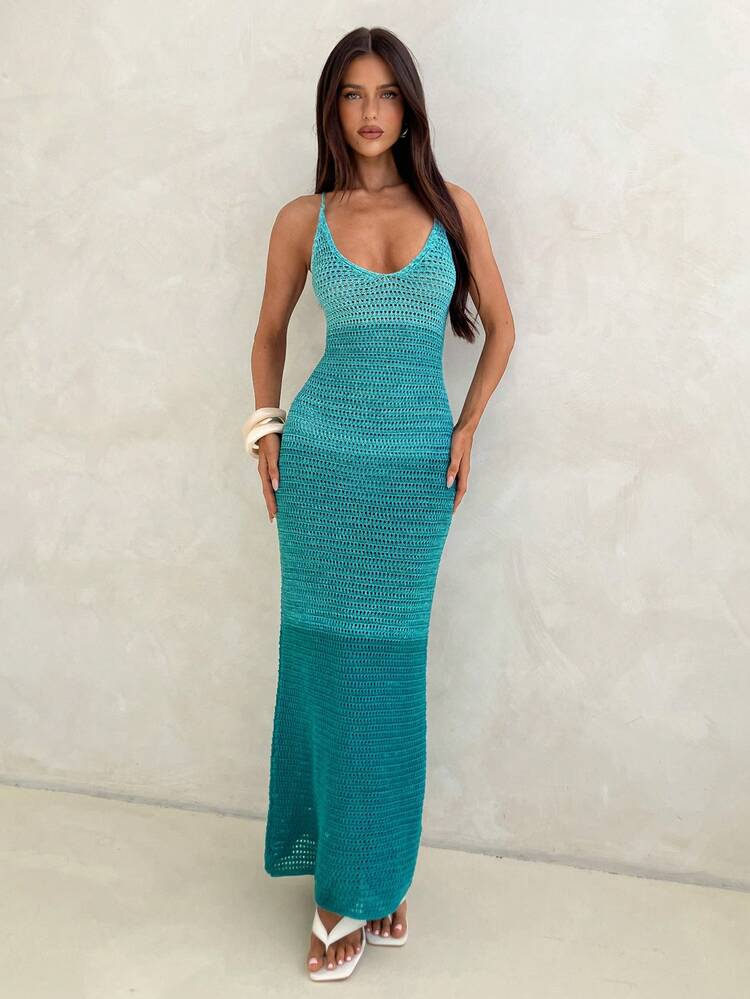
    Aloruh Elegant Backless Gradient Blue Crochet Dress, Goddess Style Vacation  Women's Bodycon Long Dresses For Women High Quality Luxury | SHEIN USA Disclosure: This post contains affiliate links to Creative Fabrica. Red Shawl Crochet Pattern If you purchase through these links, I earn a small commission at no extra cost to you. I only recommend patterns I’ve actually looked at and would use myself. Thank you for supporting Wool & Hook!

    What if the most expensive-looking thing in your wardrobe costs less than your weekly coffee budget?

    The Price Tag Illusion

    Let’s start with a confession that luxury brands don’t want you to hear.
    Last summer, I stood in a boutique staring at a silk dress that cost more than my rent. It was beautiful β€” don’t get me wrong. The fabric draped like liquid gold. The seams were invisible. The label inside whispered status in a language everyone understands. I almost bought it.
    Then I walked past a craft market on my way home. A woman was sitting under a striped umbrella, crocheting a dress in turquoise cotton. Not selling. Just making. The dress hung on a wooden hanger β€” no price tag, no logo, no packaging that would end up in a landfill. And I stopped. I actually stopped walking.
    Because that dress? It had something the silk one didn’t. It had presence. The kind that doesn’t come from a price tag. The kind that comes from knowing someone sat with yarn and time and patience, and created something no machine could replicate.
    The turquoise crochet maxi dress below β€” with its ocean-gradient from pale aqua to deep teal β€” proves this point without saying a word. The fit is body-conscious without being tight. The openwork creates negative space that plays with light. And the overall effect isn’t “I bought this.” It’s “I found this.” Like a shell on a beach that you know no one else has.

    Why Crochet Reads as Rich

    Here’s the counterintuitive truth: crochet looks expensive precisely because it looks difficult.
    We live in an era where algorithms can write essays, generate images, and design clothes. In this world, something that clearly required human hands β€” something that took hours, that demanded patience, that couldn’t be rushed β€” becomes rare. And rarity, in any economy, is the definition of luxury.
    A crochet dress isn’t just fabric. It’s evidence. Evidence of loops formed one by one. Of decisions made stitch by stitch. Of a process that can’t be automated, can’t be mass-produced, can’t be faked.
    The ivory crochet lace dress below β€” with its off-shoulder silhouette, intricate floral openwork, and ocean backdrop β€” demonstrates this on a cellular level. Every petal, every leaf, every connection between motifs was made by human intention. This isn’t decoration. This is architecture with thread. The kind of dress that makes people lean in, not because they’re impressed by the brand, but because they’re moved by the craft.
    Ivory Crochet Lace Bardot Midi Dress
    Designer fashion asks: Can you afford this?
    Handmade crochet asks: Do you understand this?
    The second question is harder to answer. And harder things always feel more valuable.

    The Texture Trap: Why Smooth Is Forgettable and Rough Is Memorable

    Let’s talk about physics.
    Smooth fabrics β€” silk, satin, synthetic blends β€” slide over the body like water. They’re beautiful, yes, but they’re also easy. Easy to produce. Easy to replicate. Easy to forget.
    Crochet does the opposite. It catches. It creates friction. It demands attention through its very irregularity. The openwork creates negative space that plays with light and shadow. The texture invites touch β€” then withdraws, because not every stitch is reachable. It teases. It intrigues. It makes the eye work harder.
    And here’s the secret: the eye working harder reads as value.
    The yellow fringe dress below β€” worn against white stone stairs with desert plants in the background β€” takes this to its logical extreme. The mesh bodice, the macramΓ©-style skirt, the fringe that moves when the wearer moves β€” every element creates visual complexity. This isn’t a dress that hangs quietly in a closet. It’s a dress that performs. That demands to be worn somewhere memorable.
    Women's Crochet Dresses | Gypsy Dress
    Designers have known this for decades. The most expensive collections always include handwork β€” embroidery, beading, lacework, crochet. Not because these techniques are inherently costly, but because they signal something no machine can replicate: human intention.

    The Outfit Alchemy: How Crochet Elevates Everything Around It

    Here’s where logic gets flipped. Crochet doesn’t just look expensive on its own. It makes everything around it look more expensive too.
    Pair a crochet dress with simple sandals? Suddenly the sandals look curated, not casual. Add a straw hat? Suddenly it looks like a choice, not an afterthought. Wear it to a dinner where everyone else is in black? Suddenly you’re the one they remember.
    This is the alchemy of texture. Crochet is the spice that makes the whole dish taste better.
    The multicolored granny square dress below β€” with its riot of purple, orange, yellow and green against tropical greenery β€” proves this rule. On paper, this dress should be too much. Too colorful. Too busy. Too handmade. But on a body, in sunlight, with confidence? It becomes editorial. It becomes art. It becomes the kind of dress that gets photographed for street style blogs and pinned a thousand times.
    Women Handmade Crochet Knit Maxi Dress Backless Beach Fashion Summer Dress  Bohemian Dress, multicoloured
    The lesson? Crochet isn’t just a trend. It’s a transformer. It takes the ordinary and makes it extraordinary. It takes the affordable and makes it look invaluable.

    The Handmade Advantage in a Machine-Made World

    Let’s get philosophical for a moment.
    We are drowning in perfection. Algorithms generate flawless images. Machines produce identical garments. Our feeds are curated to within an inch of their lives. And in this sea of sameness, imperfection has become the most radical act of all.
    A handmade crochet piece carries the mark of its maker. The slight variation in tension. The loop that’s a little tighter than its neighbor. The edge that curves where a machine would have forced it straight. These aren’t flaws. They’re fingerprints. Proof that a human being, with all their fallibility and grace, decided this object should exist.
    The colorful granny square mini dress below β€” with its rainbow of crocheted motifs and scalloped hem β€” carries this energy. It’s not trying to be perfect. It’s trying to be real. And in 2026, real is the most expensive thing you can wear.
    Handmade Crochet Dresses – Versatile Boho Chic Style
    This is why crochet looks better than designer fashion. Not because of what it costs, but because of what it represents. The choice to slow down. The choice to value craft over convenience. The choice to wear something that means something.

    Your Crochet Style Manifesto

    So here’s your permission slip. Not a shopping list. A philosophy.
    1. Choose texture over trend. A classic crochet piece will outlast ten fast-fashion cycles. Invest in the thing that feels like it took time.
    2. Pair with simplicity. Crochet is the star. Let everything else be the supporting cast. Clean lines. Neutral accessories. Minimal hardware.
    3. Embrace the imperfect. The slight unevenness. The hand-finished edge. These are credentials, not defects.
    4. Wear it like you made it. Even if you bought it. Even if you found it. The confidence of craft is transferable.
    May your wardrobe be slow. May your stitches be even. May your style be unmistakably, irreplaceably yours.
  • Granny Patchwork Bucket Bag: The Tote You’ll Crochet This Weekend

    Granny Patchwork Bucket Bag: The Tote You’ll Crochet This Weekend

    Hexagon Granny Square Bag Pattern What if the perfect summer bag isn’t in a store β€” but at the end of your crochet hook?

    The Bag That Started With a Memory

    Let me ask you something. When was the last time you carried a bag that made you feel like you were walking along a beach boardwalk, even if you were just heading to the grocery store?
    I spent last summer searching for the perfect beach tote. Store-bought options were either too expensive ($200 leather totes that feared sand) or too boring (plastic bags with logos that screamed “I gave up”). Then I remembered my grandmother’s yarn basket β€” dense, textured, full of character, sitting by her armchair like a loyal pet.
    Three evenings, two podcasts, and one skein of wool later β€” this bag was born.
    The hexagon granny bag above, with its warm terracotta-to-cream gradient and wooden handle, carries that same energy. Each stitch is a small universe. Each color choice is a decision made by human hands, not an algorithm. And when you carry it, you don’t just carry your things. You carry a story.

    Why Granny Stitches Never Go Out of Style

    Here’s the plot twist that makes this pattern timeless: granny stitches are the LEGO of the fiber world.
    Simple to learn. Infinitely adaptable. Impossible to mess up beyond repair. The basic formula β€” clusters of double crochet separated by chain spaces β€” hasn’t changed in generations because it doesn’t need to. It works. It always works.
    But the magic happens when you start combining colors. Cream next to peach. Terracotta against sand. The colors talk to each other. They argue, harmonize, create tension and resolution like notes in a chord. No two bags are ever the same because no two makers choose the same palette.
    The sunburst granny bags below β€” in pastel creams, peaches, and corals β€” prove that “granny” doesn’t mean “grandma’s house.” They mean versatile. They mean classic. They mean something that looks at home in a farmers market or a boutique hotel lobby.

    Quick Facts

    Table

    Skill Level Easy
    Hook 5mm
    Yarn Cotton or cotton-blend, worsted weight
    Time 8-12 hours
    Size 25 Γ— 30 cm (10 Γ— 12 inches)

    What You’ll Need

    Main Materials:
    • Cotton or cotton-blend yarn, worsted weight (4/medium), approximately 300g total:
      • Color A (Cream): 120g
      • Color B (Peach): 100g
      • Color C (Terracotta): 80g
    • 5mm crochet hook
    • Tapestry needle
    • Scissors
    Hardware:
    • 2 metal D-rings or O-rings, 2.5-3cm diameter (for handles)
    • 2 metal eyelets or small D-rings, 1.5cm diameter (for drawstring)
    • Optional: leather strap for handles, or crochet your own
    πŸ’‘ Tip: Cotton yarn holds its shape beautifully and won’t stretch over time. A cotton-acrylic blend gives you structure with a bit of softness. Avoid 100% acrylic β€” it may sag when loaded.

    Abbreviations (US Terms)

    Table

    Abbreviation Meaning
    ch chain
    sl st slip stitch
    sc single crochet
    hdc half double crochet
    dc double crochet
    st(s) stitch(es)
    sp space
    rep repeat

    The Pattern

    Bag Bottom (Worked in Rounds)

    Round 1: Make a magic ring. Ch 2 (does not count as st), work 8 hdc into ring. Pull tail to close. Join with sl st to first hdc. (8 sts)
    Round 2: Ch 2, 2 hdc in each st around. Join with sl st. (16 sts)
    Round 3: Ch 2, 2 hdc in next st, 1 hdc in next st; rep from * around. Join. (24 sts)
    Round 4: Ch 2, 2 hdc in next st, 1 hdc in next 2 sts; rep from * around. Join. (32 sts)
    Round 5: Ch 2, 2 hdc in next st, 1 hdc in next 3 sts; rep from * around. Join. (40 sts)
    Round 6: Ch 2, 2 hdc in next st, 1 hdc in next 4 sts; rep from * around. Join. (48 sts)
    Round 7: Ch 2, 2 hdc in next st, 1 hdc in next 5 sts; rep from * around. Join. (56 sts)
    Round 8: Ch 2, 2 hdc in next st, 1 hdc in next 6 sts; rep from * around. Join. (64 sts)
    Bottom should measure approximately 18cm (7 inches) in diameter.

    Bag Body β€” Granny Stitch Section

    From here, you’ll work in continuous rounds (spiral) β€” no joining. Place a stitch marker in the first stitch of each round.
    Rounds 9-11 (Color A β€” Cream): Ch 2, hdc in each st around. Move marker up each round. (64 sts)
    Round 12 (Color B β€” Peach): Ch 3 (counts as dc), skip 2 sts, (3 dc, ch 2, 3 dc) in next st, skip 2 sts, 3 dc in next st; rep from * around. This creates your first granny stitch round.
    Round 13 (Color B β€” Peach): Ch 3, 3 dc in next ch-2 sp, (3 dc, ch 2, 3 dc) in next ch-2 sp (corner of granny cluster); rep from * around.
    Rounds 14-16 (Color B β€” Peach): Continue in granny stitch pattern β€” 3 dc in each space, (3 dc, ch 2, 3 dc) in corner spaces. The pattern will naturally form as you work.
    Rounds 17-19 (Color C β€” Terracotta): Continue granny stitch pattern.
    Rounds 20-22 (Color A β€” Cream): Continue granny stitch pattern.
    Rounds 23-25 (Color B β€” Peach): Continue granny stitch pattern.
    For a taller bag, add more rounds. For a shorter bag, stop earlier. The beauty of granny stitch is its flexibility.

    Top Edge and Eyelets for Drawstring

    Round 26 (Color A β€” Cream): Ch 1, sc in each st and each ch-space around. (64 sc)
    Round 27 (Color A β€” Cream): Ch 1, sc in next 6 sts, ch 2, skip 2 sts; rep from * around. This creates eyelets for the drawstring. (8 eyelets)
    Round 28 (Color A β€” Cream): Ch 1, sc in each st and each ch-2 sp around. (64 sc)
    Round 29 (Color A β€” Cream): Ch 1, sc in each st around. Join with sl st. Fasten off.

    Handles (Make 2)

    Option A: Crocheted Handles
    With Color A, ch 80.
    Row 1: Sc in 2nd ch from hook and in each ch across. (79 sc)
    Rows 2-4: Ch 1, turn, sc across.
    Fasten off, leaving long tail for sewing.
    Fold handle in half lengthwise and whipstitch edges together for a neat tube. Thread through D-rings and sew securely to bag.
    Option B: Leather Straps
    Purchase pre-made leather bag handles (approximately 50-60cm long). Attach to bag using D-rings and strong thread or yarn.

    Drawstring Cord (Make 1)

    With Color B, ch 120.
    Row 1: Sc in 2nd ch from hook and in each ch across.
    Fasten off, leaving tails.
    Thread through eyelets in Round 27, weaving in and out. Tie ends together inside the bag, or add tassels for decoration.

    Tassels (Make 2, Optional)

    Cut 20 strands of yarn, each 15cm long.
    Fold in half. Wrap another strand around the folded section to create a tassel head.
    Trim ends evenly.
    Attach to drawstring ends or bag corners.

    Assembly

    1. Weave in all loose ends.
    2. Attach D-rings for handles β€” sew securely to bag sides, approximately 5cm below top edge.
    3. Thread drawstring through eyelets.
    4. Attach handles through D-rings.
    5. Add tassels if desired.

    Size Chart

    Table

    Size Bottom Rounds Body Rounds Total Height
    S Through Round 6 12 granny rounds 22cm
    M Through Round 7 15 granny rounds 28cm
    L Through Round 8 18 granny rounds 33cm

    5 Time-Saving Tips

    1. Swatch first.
    Make a 10 Γ— 10cm granny stitch swatch. Your tension affects the final size. A tight crocheter’s bag will be smaller. A loose crocheter’s bag will be roomier.
    2. Use stitch markers.
    In continuous rounds, it’s easy to lose your place. Mark the first stitch of every round.
    3. Carry colors up the inside.
    When switching colors, carry the unused yarn loosely up the inside of the bag. This avoids a million ends to weave in.
    4. Block before assembly.
    If your bag is wobbly, dampen and shape it, then let dry. Cotton responds beautifully to blocking.
    5. Line your bag for structure.
    Cut a simple cylinder from cotton fabric and hand-sew inside. This gives your bag professional structure and prevents stretching.

    The Philosophy of the Handmade Bag

    Here’s why this project matters more than you think.
    In a world of instant everything β€” instant delivery, instant messages, instant gratification β€” the act of making something slowly is revolutionary. Each stitch is a meditation. Each color change is a commitment. Each round is a small act of creativity in a day that might otherwise feel routine.
    The granny square tote below β€” with its riot of colors held together by warm peach borders β€” carries this philosophy. It wasn’t bought in a rush. It was made with intention. And every time its owner carries it, she carries proof that she can create beauty from thread and time.
    That’s the real luxury of handmade. Not the money saved. Not the compliments received. The knowledge that your hands can transform simple materials into something functional, beautiful, and entirely yours.
    Happy stitching, beautiful maker. 🧢✨
    May your stitches be even, your colors be bold, and your weekends be full of yarn.

    YOU MIGHT ALSO LOVE

  • The Crochet Trend That Makes Every Outfit Look Expensive

    The Crochet Trend That Makes Every Outfit Look Expensive


    Crochet Cardigans Are the Key to Making Jeans and Linen Chic | Who What Wear
    What if the secret to looking like you spent a fortune… is wearing something that looks like it took a lifetime to make?

    The Expensive Outfit Paradox

    Let’s start with a riddle.
    Two women walk into the same restaurant. One is wearing a silk blouse from a luxury brand β€” the kind with a recognizable logo and a price tag that could fund a small vacation. The other is wearing a simple white crochet top over vintage jeans, the kind of top that looks like it was made by hand on a slow afternoon.
    Who looks more expensive?
    The answer isn’t in the price tag. It’s in the story. The silk blouse says: I can afford this. The crochet top says: I understand something you don’t.
    And in a world where anyone with a credit card can buy luxury, understanding has become the ultimate status symbol.
    The cream crochet cardigan below β€” with its delicate openwork and scalloped edges, paired with dark denim β€” isn’t just clothing. It’s a statement. It says: I don’t need a logo to prove my taste. The craftsmanship speaks for itself.

    Why Crochet Reads as Rich

    Here’s the counterintuitive truth: crochet looks expensive precisely because it looks difficult.
    We live in an era of instant everything. Fast fashion delivers trends in weeks. AI generates images in seconds. 3D printers create objects while you sleep. In this world, something that clearly took time β€” something that required human hands, patience, and skill β€” becomes rare. And rarity, in any economy, is the definition of value.
    A crochet top isn’t just fabric. It’s evidence. Evidence of hours spent looping thread, of decisions made stitch by stitch, of a process that can’t be rushed or automated. When you wear crochet, you’re wearing someone’s time. And time, unlike polyester, never goes out of style.
    The chunky white crochet cardigan below β€” sculptural, bold, paired with sleek black trousers and gold heels β€” proves this point effortlessly. It doesn’t scream wealth. It whispers it. The kind of whisper that makes people lean in.
    Crochet Chunky White Cardigan, Elegant Style Outfit, Oversized Woman Dress  Jacket, Wedding Dress Jacket for Brides, Luxury Gift for Woman
    This is the quiet luxury of craft. Not the loud luxury of logos. The kind of luxury that doesn’t need to announce itself because it knows its own worth.

    The Texture Trap: Why Smooth Is Cheap and Rough Is Rich

    Let’s talk about physics.
    Smooth fabrics β€” silk, satin, synthetic blends β€” slide over the body like water. They’re beautiful, yes, but they’re also easy. Easy to produce. Easy to replicate. Easy to wear without thinking.
    Crochet does the opposite. It catches. It creates friction. It demands attention through its very irregularity. The openwork creates negative space that plays with light and shadow. The texture invites touch β€” then withdraws, because not every stitch is reachable. It teases. It intrigues. It makes the eye work harder.
    And here’s the secret: the eye working harder reads as value.
    The brown crochet dress below β€” worn with a tailored blazer and strappy heels at a sunlit cafΓ© β€” demonstrates this perfectly. The intricate pattern of the dress creates visual complexity against the simplicity of the blazer. The contrast isn’t just between colors. It’s between effort and ease. Between the handmade and the mass-produced. Between something that took time and something that took a factory.
    A Crochet Outfit Dress Idea to Beat the Heat in Style this Summer
    Designers have known this for decades. The most expensive collections always include handwork β€” embroidery, beading, lacework, crochet. Not because these techniques are inherently costly, but because they signal something no machine can replicate: human intention.

    The Outfit Alchemy: How Crochet Elevates Everything It Touches

    Here’s where logic gets flipped. Crochet doesn’t just look expensive on its own. It makes everything around it look more expensive too.
    Pair a crochet top with jeans? Suddenly the jeans look curated, not casual. Pair a crochet dress with simple sandals? Suddenly the sandals look intentional, not lazy. Pair a crochet cardigan with a basic tank? Suddenly the tank looks like a layer in a sophisticated ensemble, not an afterthought.
    This is the alchemy of texture. Crochet is the spice that makes the whole dish taste better.
    The white crochet dress below β€” with its bell sleeves and layered openwork, worn on an ordinary street β€” proves this rule. The dress is romantic, nostalgic, almost ethereal in its pattern. But paired with minimal accessories and clean lines, it becomes editorial. It becomes art. It becomes the kind of outfit that gets photographed for street style blogs.
    How to Wear Crochet This Summer: 8 Chic Outfit Ideas
    The lesson? Crochet isn’t just a trend. It’s a transformer. It takes the ordinary and makes it extraordinary. It takes the affordable and makes it look invaluable.

    The Handmade Advantage in a Machine-Made World

    Let’s get philosophical for a moment.
    We are drowning in perfection. Algorithms generate flawless images. Machines produce identical garments. Our feeds are curated to within an inch of their lives. And in this sea of sameness, imperfection has become the most radical act of all.
    A handmade crochet piece carries the mark of its maker. The slight variation in tension. The loop that’s a little tighter than its neighbor. The edge that curves where a machine would have forced it straight. These aren’t flaws. They’re fingerprints. Proof that a human being, with all their fallibility and grace, decided this object should exist.
    The black crochet dress below β€” elegant, mysterious, walking down a sunlit European street β€” carries this energy. It’s not trying to be perfect. It’s trying to be real. And in 2026, real is the most expensive thing you can wear.
    6 Crochet Dresses And Exactly How To Style Them This Summer
    This is why crochet makes every outfit look expensive. Not because of what it costs, but because of what it represents. The choice to slow down. The choice to value craft over convenience. The choice to wear something that means something.

    Your Crochet Style Manifesto

    So here’s your permission slip. Not a shopping list. A philosophy.
    1. Choose texture over trend. A classic crochet piece will outlast ten fast-fashion cycles. Invest in the thing that feels like it took time.
    2. Pair with simplicity. Crochet is the star. Let everything else be the supporting cast. Clean lines. Neutral colors. Minimal hardware.
    3. Embrace the imperfect. The slight unevenness. The hand-finished edge. These are credentials, not defects.
    4. Wear it like you made it. Even if you bought it. Even if you found it. The confidence of craft is transferable.
    May your wardrobe be slow. May your stitches be even. May your style be unmistakably, irreplaceably yours.