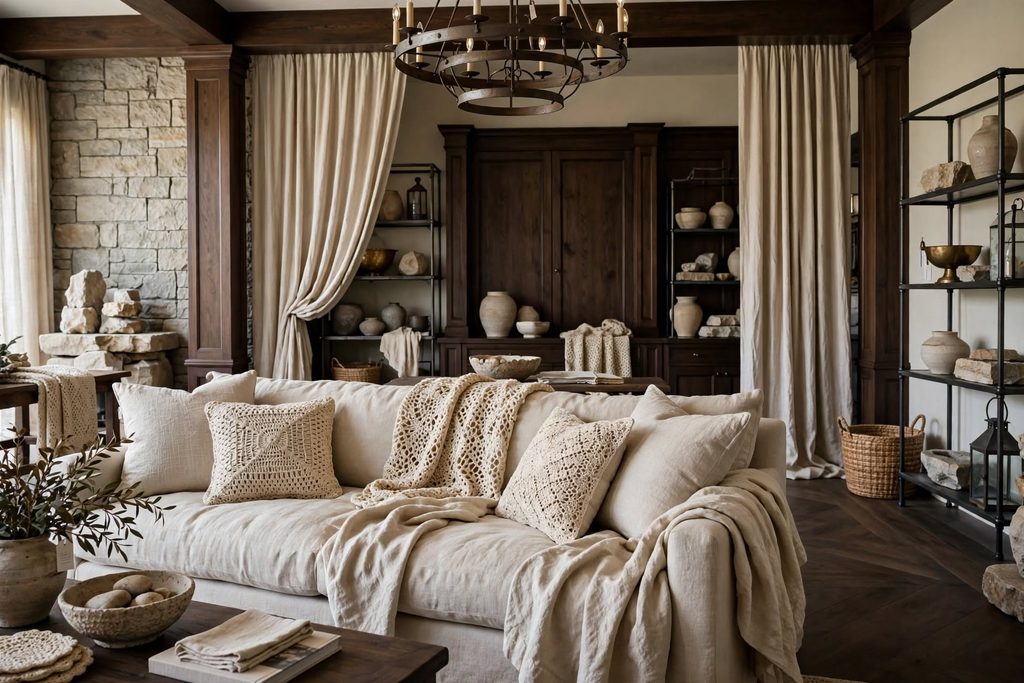
Walk into a Restoration Hardware showroom. The lighting is soft, the sofas are generously proportioned, and the furniture looks as though it has been collecting stories for a century. Linen falls in relaxed folds. Dark wood grounds the room. Stone, metal, and natural textures sit together without competing for attention.
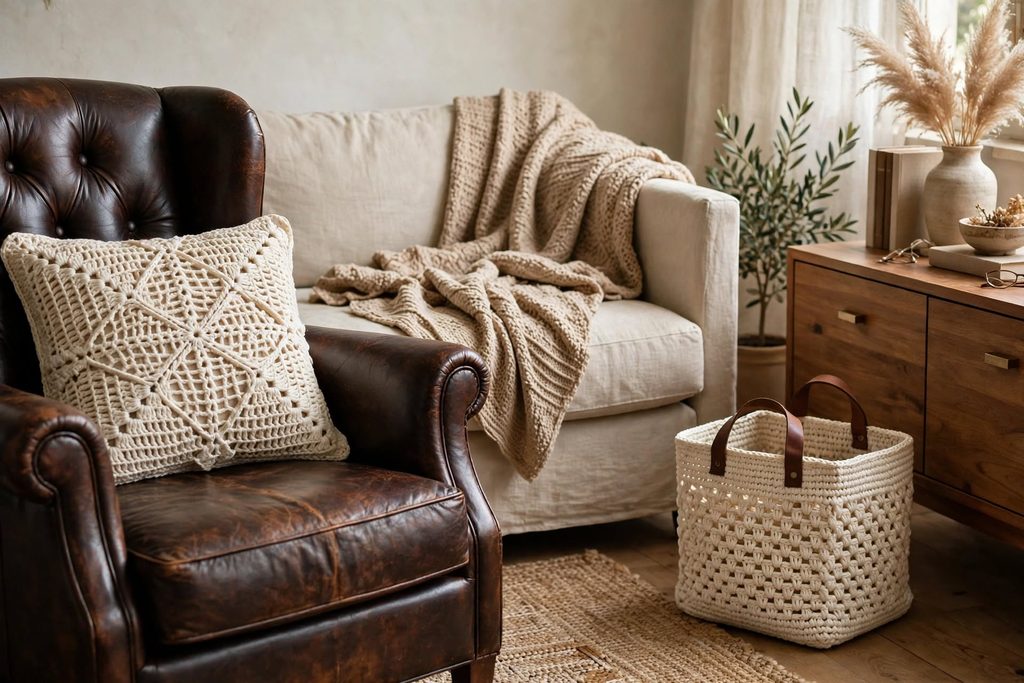
Everything feels substantial. Nothing seems to be in a hurry.
It’s a beautiful aesthetic, but its appeal isn’t simply about expensive furniture. It’s about proportion, texture, restrained colors, and the careful balance between polished surfaces and materials that feel a little more organic.
And here’s the interesting part: crochet decor can bring some of that same atmosphere into your home.
A chunky throw, a sculptural cushion, or a carefully shaped storage basket can soften a contemporary room without making it feel overly rustic. You don’t need to reproduce an entire designer showroom, and you don’t need to spend a fortune on accessories. You need to understand what makes the look work — and choose handmade pieces that belong in the space.
The goal isn’t to make crochet look expensive for the sake of appearances. It’s to make it look intentional.
The $4,000 Sofa Rule
Let’s start with a simple idea: a room doesn’t become beautiful just because one piece of furniture costs more than everything else in it.
A refined interior depends on how its elements work together. A substantial sofa needs visual balance. A dark wooden table benefits from something softer nearby. A smooth stone surface becomes more interesting when paired with a material that has visible texture.
Crochet can provide that contrast.
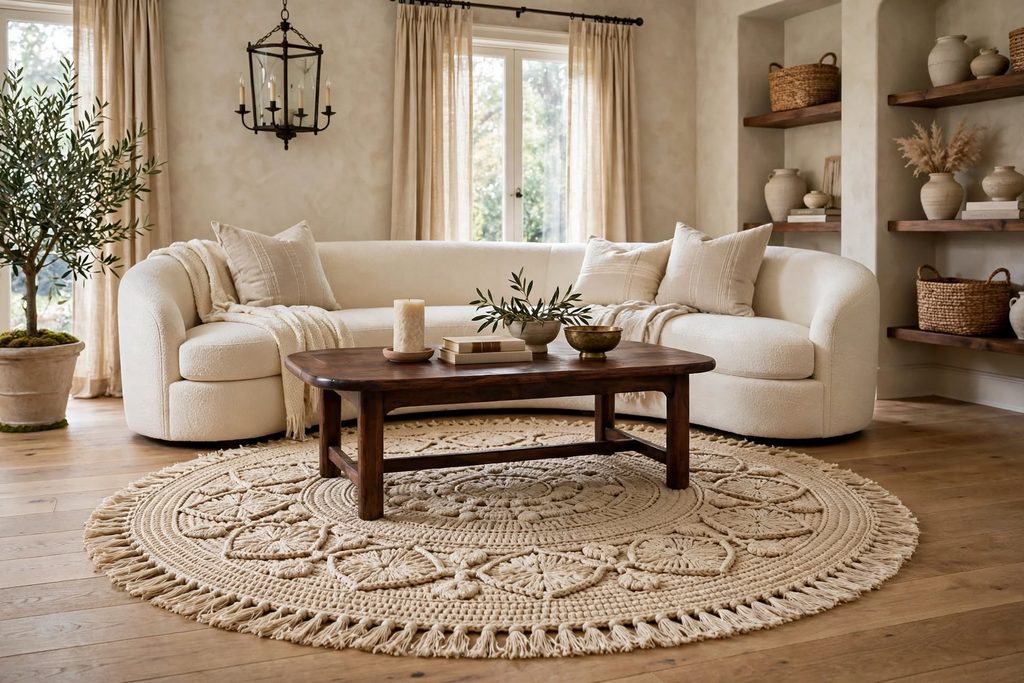
Imagine a curved ivory sofa, a dark wood coffee table, linen curtains, and a round crochet rug in natural beige. The furniture supplies the structure; the handmade textile introduces a softer pattern and a sense of detail.
The rug doesn’t need a designer price tag to contribute to the composition. Its success depends on its scale, color, material, and relationship to the surrounding furniture.
Choose a design that’s too small, and it may look disconnected from the seating area. Choose a color that clashes with the room’s undertones, and the rug may attract attention for the wrong reason. A well-proportioned piece in a complementary shade can feel much more integrated.
The first rule of expensive-looking decor is to make every piece feel as though it belongs.
Texture Is the Real Luxury
In a room built around neutral colors, texture does much of the visual work.
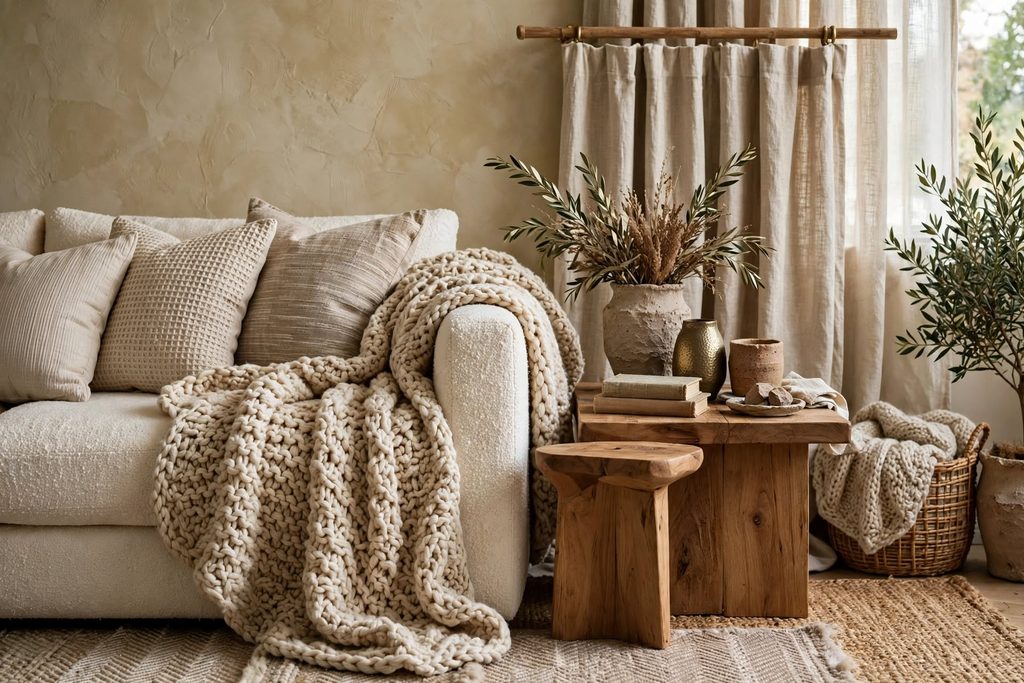
Consider a cream sofa, oatmeal curtains, a wooden side table, and a chunky crochet throw. The colors are related, but the surfaces are different. The sofa looks smooth, the curtains fall in soft folds, the wood has visible grain, and the blanket creates a pattern of loops and ridges.
The result feels layered rather than flat.
Crochet is particularly useful here because its structure remains visible. Depending on the stitch, yarn, and construction, a piece can look dense and sculptural, airy and delicate, or somewhere between the two.
You don’t need an elaborate pattern to achieve an elegant result. A simple stitch worked evenly in a beautiful neutral yarn can look more sophisticated than a complicated design that competes with the rest of the room.
Which Crochet Textures Work Best?
- Chunky stitches: Ideal for throws, oversized cushions, and decorative baskets that need a stronger visual presence.
- Dense, even stitches: Useful for structured baskets, trays, and cushion covers with a clean, contemporary finish.
- Openwork patterns: Add delicacy and negative space, especially when used against solid upholstery.
- Raised and ribbed stitches: Create depth without introducing another color or a busy motif.
- Simple geometric patterns: Work well with modern furniture, dark wood, and understated accessories.
The quality of the finished piece matters as much as the pattern. Consistent tension, suitable yarn, neat edges, and appropriate proportions help handmade decor look considered rather than unfinished.
Handmade doesn’t automatically mean luxurious. Thoughtful design and good finishing make the difference.
5 Ways to Make Crochet Look Refined
1. Choose a Restrained Color Palette
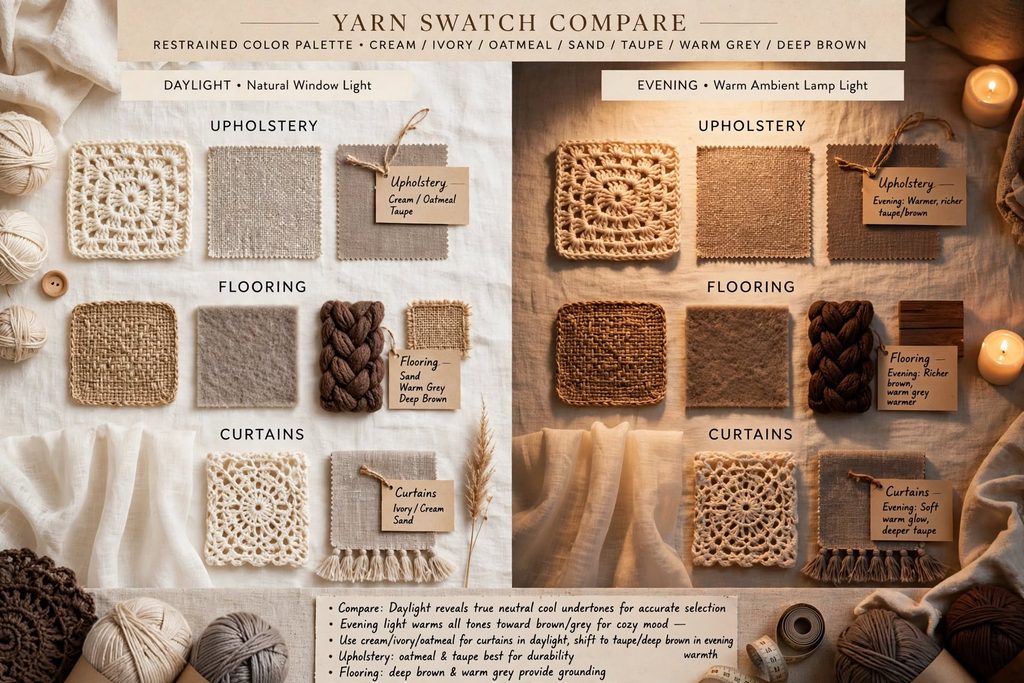
Start with a few related colors: cream, ivory, oatmeal, sand, taupe, warm grey, or deep brown.
These shades work well in understated interiors because they can connect different materials without demanding attention. They also allow stitch patterns and surface details to remain visible.
But neutral doesn’t mean everything must be the same shade of beige.
A cream crochet cushion can stand out against a darker taupe sofa. An oatmeal throw can soften charcoal upholstery. A warm-grey basket can provide a subtle contrast against a pale wooden shelf.
Pay attention to undertones, too. A warm ivory may look beautiful next to honey-colored oak but appear yellow beside a cooler white fabric.
Practical tip: Make a small yarn swatch and compare it with your upholstery, flooring, and curtains in daylight and in the evening. The right shade should work with the room’s existing colors rather than fight them.
2. Get the Scale Right
Proportion can change the entire impression of a handmade object.
A small, delicate cushion may look lost on a large sectional sofa. A generously sized cushion with a simple, textured pattern can hold its own. A substantial throw can soften the straight lines of an armchair, while a small basket may be more appropriate for a narrow console.
The goal isn’t to make everything oversized. It’s to choose pieces that feel balanced in relation to their surroundings.
For a sofa, try one or two textured cushions rather than covering every seat with crochet. For a coffee table, a single carefully shaped basket or tray may be enough. For a reading corner, a folded throw can become the main textile accent.
Before starting a project, measure the space where the finished item will live. A little planning can save hours of crocheting a piece that turns out to be the wrong size.
3. Pair Crochet With Contrasting Materials
Crochet looks particularly effective beside materials with a different surface or visual weight.
Try these combinations:
- A cream crochet cushion on a dark leather armchair.
- A textured throw over a smooth linen sofa.
- A structured crochet basket beside a wooden console.
- A simple crochet tray on a stone or wood coffee table.
- An openwork cushion beside a solid, tightly woven one.
These combinations allow the crochet to stand out without overwhelming the room.
For a more contemporary result, resist the temptation to surround every crochet item with rustic accessories. One handmade piece against a clean background can have more impact than a collection of competing textures.
Think of crochet as an accent that connects the room’s harder surfaces with its softer furnishings.
4. Keep the Shapes Simple
The Restoration Hardware-inspired look often favors strong silhouettes and understated decoration. Crochet can follow the same principle.
A round basket, a rectangular cushion, or a throw with a simple border can complement modern furniture without appearing overly ornate.
You can experiment with stitch patterns while keeping the overall shape clean.
For baskets, concentrate on a firm base, consistent sides, and a finish that helps the piece hold its form. For cushion covers, choose a construction that sits neatly around the insert. For blankets, select an edging that complements the stitch pattern instead of competing with it.
A relaxed drape can look beautiful, but intentional softness isn’t the same as poor finishing. Blocking, when suitable for the yarn and stitch, can help a piece lie more evenly. If a rug’s edge curls or waves, address the construction rather than treating the unevenness as a decorative feature.
5. Use Lighting to Bring Out the Texture
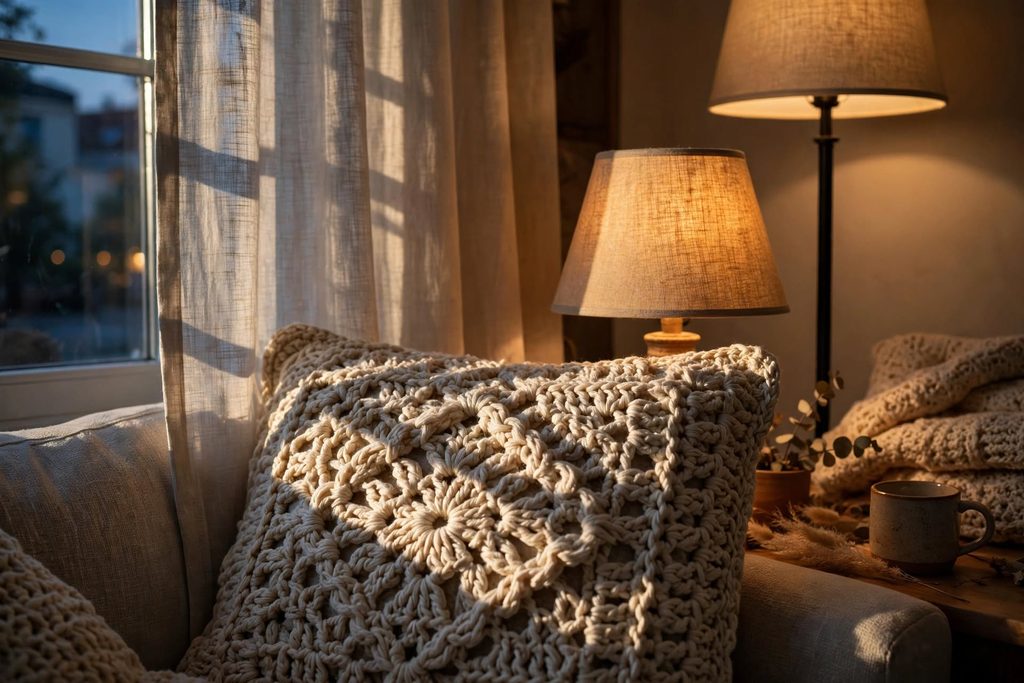
Crochet changes character depending on the light.
Daylight entering from the side can reveal the shadows between stitches. In the evening, a table lamp or floor lamp can make a textured cushion look more dimensional than it does beneath flat overhead lighting.
You don’t need a dark room to create a warm atmosphere. Use layers of light: general lighting for the room, a task light for reading, and a softer lamp near the seating area.
Add a textured throw, a wooden side table, and a simple ceramic object, and you have a composition that feels complete without needing a dozen more accessories.
The Pillow Test: Two Textures Are Better Than Two Matching Sets
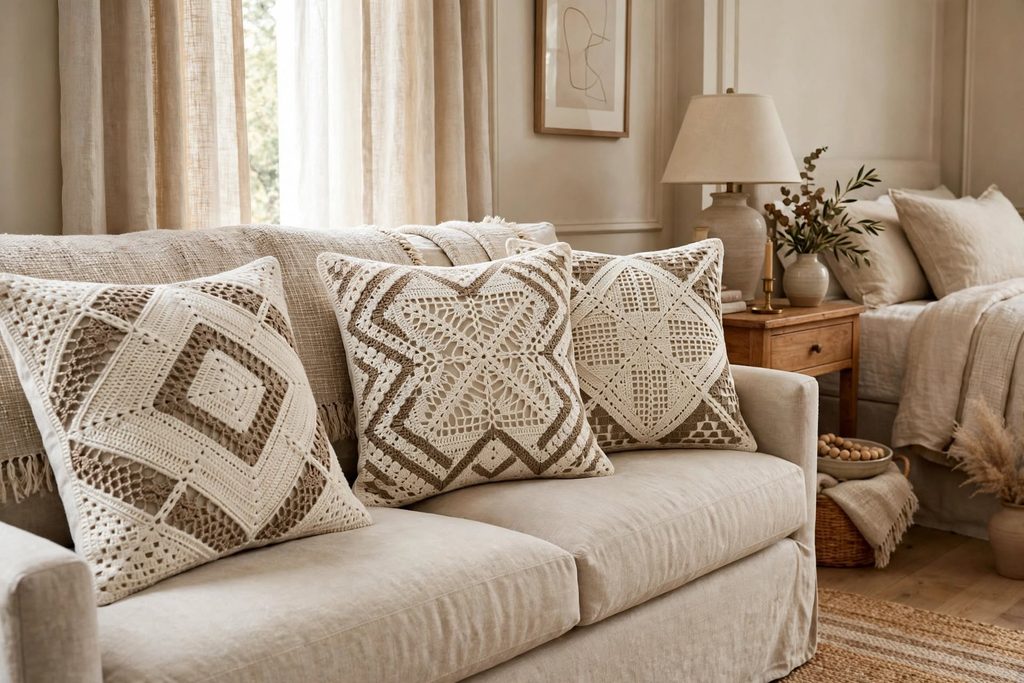
If you’re new to crochet home decor, cushions are an excellent place to start.
They’re manageable projects, easy to move around, and useful for experimenting with yarn and stitch patterns before committing to a large blanket or rug.
Try pairing two cushions in related shades but with different textures. One might have a dense, geometric pattern; the other could feature openwork or a floral motif. They don’t have to match exactly. They simply need to share a color family or visual quality.
The contrast makes the arrangement feel considered rather than overly coordinated.
Choose yarn according to the intended use. Cotton can provide clear stitch definition and a relatively structured finish. Wool and wool blends can create a softer, warmer appearance. Other fibers may work equally well, depending on their texture, durability, and care requirements.
Before beginning, check the yarn label and consider how often the cover will need washing. A beautiful cushion is more practical when its care routine fits your everyday life.
The Organization Trick: Make Storage Part of the Decor
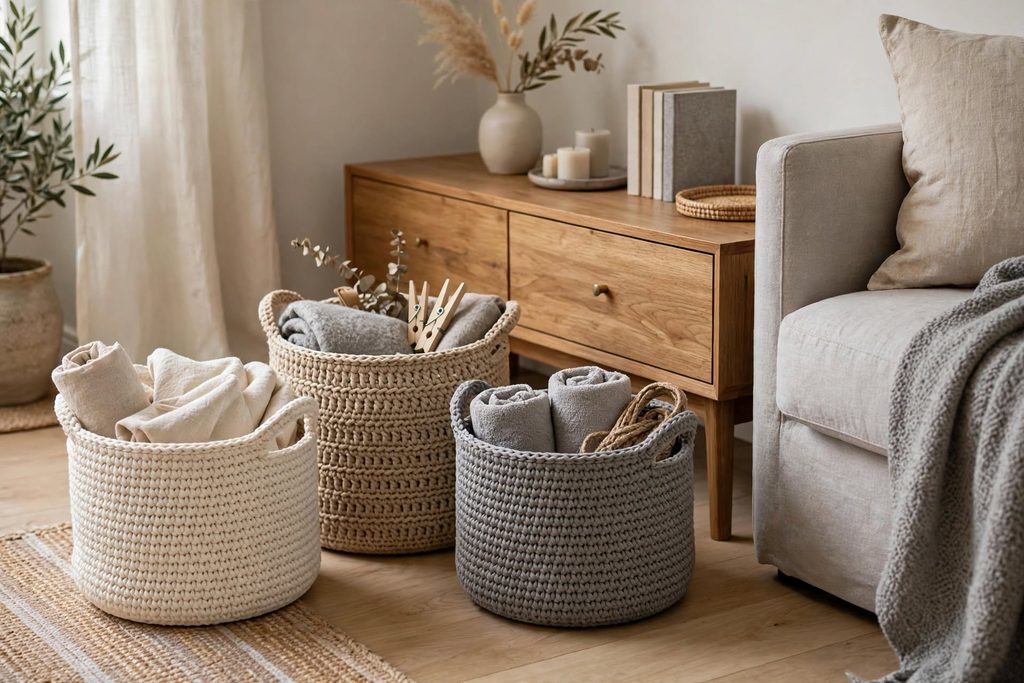
A refined home doesn’t have to be empty. It simply benefits from giving everyday objects a place to belong.
Crochet baskets can hold yarn, books, spare throws, or small household items while contributing color and texture. Instead of hiding every practical object in a cupboard, you can choose storage that looks good enough to leave visible.
The secret is to give each basket a clear purpose.
A larger basket beside the sofa can hold a folded blanket. A smaller one on a shelf can gather accessories. A shallow crochet tray can keep small items together on a console or bedside table.
Construction matters here. A tightly stitched basket made with a suitable sturdy yarn will generally hold its shape better than a loose, floppy design. For a basket that needs extra structure, consider a reinforced base or an appropriate insert.
To keep the arrangement cohesive, repeat one or two colors elsewhere in the room. A cream basket, an oatmeal throw, and a taupe cushion can feel connected without being identical.
And leave some breathing room. A shelf doesn’t need an object on every inch of it. Negative space helps the pieces you choose stand out.
Why Neutral Rooms Need Texture
A neutral palette can feel sophisticated, but it can also look flat if every surface has the same finish.
Texture gives the eye something to explore. A crochet throw creates a different pattern from a linen cushion. Wood introduces visible grain. A ceramic vase adds another surface, even when its color is close to the wall behind it.
This is a visual design principle, not an exclusive property of handmade textiles. Machine-made fabrics can be beautifully textured, and handmade pieces can be smooth or uniform. What matters is the relationship between the materials.
Use this checklist when styling a room:
| Design element | How it helps |
|---|---|
| Restrained colors | Connects different objects into a coherent palette |
| Contrasting textures | Adds visual depth without requiring more colors |
| Simple silhouettes | Keeps the room from feeling overly busy |
| Wood, linen, stone, and ceramics | Introduces variety through different surfaces |
| Useful, attractive storage | Keeps everyday objects contained |
| Layered lighting | Helps reveal shapes and texture |
You don’t need to change everything at once. Look at the room that feels least inviting and identify what’s missing. Perhaps it needs a softer textile, a better-proportioned rug, a basket for loose items, or a lamp beside the sofa.
A single thoughtful change can be more effective than adding several decorative objects.
Where Crochet Decor Works Best
Different crochet projects suit different spaces, and a beautiful design should also be practical.
Living room: Cushions, throws, baskets, and decorative trays can add texture without requiring new furniture.
Bedroom: A crochet cushion or lightweight throw can complement simple bedding, especially when the color palette is already restrained.
Reading nook: A blanket and a basket for books or craft supplies can make a corner feel more inviting and organized.
Entryway: A small basket can hold gloves or accessories. Keep the floor clear and avoid placing loose textiles where they could become a tripping hazard.
Kitchen and dining area: Cotton crochet can work well for suitable decorative pieces and household textiles. Keep yarn away from open flames, hot cookware, and other heat sources.
Flooring: Crochet rugs need particular care. Choose a construction and yarn suitable for floor use, make sure the rug lies flat, and use an appropriate non-slip underlay where necessary. Curling corners, loose edges, and sliding rugs can create hazards, particularly on smooth floors. A decorative crochet rug isn’t automatically suitable for every room or high-traffic area.
Care instructions matter, too. Follow the recommendations for the specific yarn and finished item. Some fibers can be hand-washed, while others require different treatment. Don’t assume every handmade textile can be washed or dried in the same way.
Create the Feeling, Not a Copy
Restoration Hardware has a recognizable aesthetic: substantial furniture, restrained colors, tactile materials, and carefully composed spaces. You can draw inspiration from those principles without copying every detail or spending a designer-sized budget.
Start with one crochet project that serves a real purpose.
Make a cushion in a shade that complements your sofa. Crochet a sturdy basket for the items that tend to accumulate beside your favorite chair. Add a throw that brings a softer texture to a room dominated by smooth surfaces.
Then step back and look at the whole space.
Does the piece complement the furniture? Is its scale appropriate? Does it add a useful contrast, or does it create more visual noise? Would a simpler stitch or a different shade work better?
These questions turn crochet from an isolated craft project into part of a considered interior.
You don’t have to make your home look as though everything came from an expensive showroom. You can create a space that feels thoughtful, comfortable, and distinctly yours.
Sometimes all it takes is good yarn, a well-chosen stitch, and the patience to make something that belongs exactly where you’ve put it.