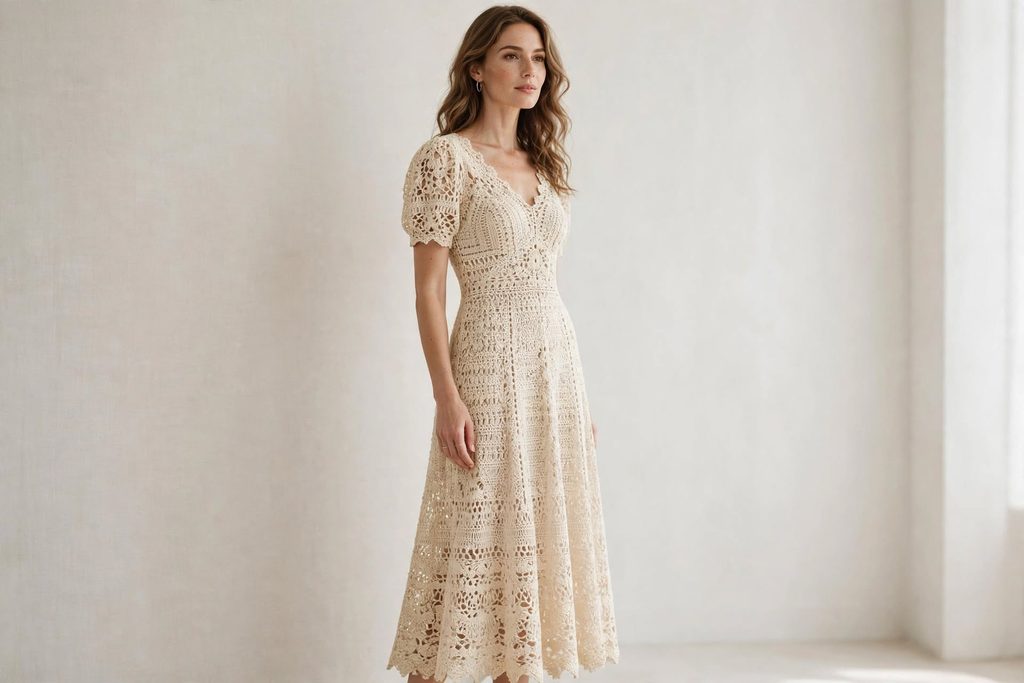
What if the secret to timeless style isn’t in a bottle, a logo, or the latest collection—but in a garment made one stitch at a time?
There is something captivating about a crochet dress. The pattern catches the light. The texture invites a closer look. And unlike a print that simply imitates a surface, every loop contributes to the garment’s design.
Handmade fashion offers a different way to think about getting dressed. It encourages us to look beyond what is new and consider what feels personal, what deserves to be worn again, and what brings character to a wardrobe.
A handmade piece is not automatically more beautiful, sustainable, or durable than a factory-made one. Its appeal lies in the possibilities: distinctive patterns, thoughtful craftsmanship, creative expression, and the pleasure of wearing something chosen for more than its label.
For women who value personal style over constant reinvention, that can be a compelling reason to return to handmade fashion—not once, but season after season.
The Anti-Trend Manifesto: Style Beyond the Season
Open a fashion magazine or scroll through a style feed, and the message can feel relentless: this season calls for one silhouette, the next demands another, and yesterday’s favorite is suddenly old news.
Trends can be inspiring. They introduce us to new colors, silhouettes, and ways of combining clothes. But following every trend can also make a wardrobe feel temporary, as though each season requires a new version of ourselves.
Personal style offers another path.
It develops through the things we discover, the combinations we return to, and the pieces that continue to feel right after the excitement of a purchase has passed.
A multicolored crochet dress, for example, does not need to belong to a particular season to make an impression. Zigzag stitches, diamond motifs, and sunset-inspired shades can give it a distinctive character that stands apart from a more conventional summer dress.
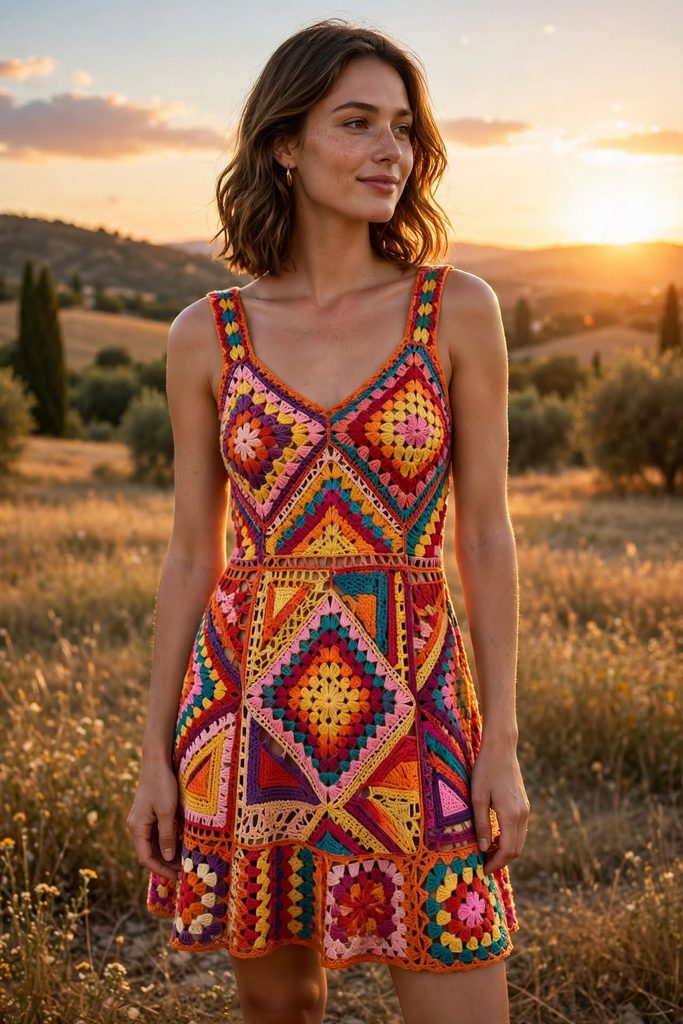
The appeal is not that handmade fashion exists outside trends. Crochet styles come in and out of fashion, too. Rather, a well-chosen handmade piece can offer enough texture and personality to remain interesting even as the surrounding trends change.
That is the difference between buying something because everyone is wearing it and choosing something because you genuinely enjoy it.
True personal style does not require rejecting fashion. It simply gives you permission to make the final decision.
Why Handmade Can Become More Meaningful With Time
A new garment often arrives with the excitement of possibility. We imagine the occasions for which we will wear it, the outfits we will create, and the person we might become in it.
With a favorite piece, something different happens. We learn how it fits, which accessories complement it, and where it belongs in our everyday lives.
Handmade clothing can become especially personal because its construction is visible. You can follow the pattern of the stitches, notice the details of the finishing, and appreciate the work involved in creating the shape.
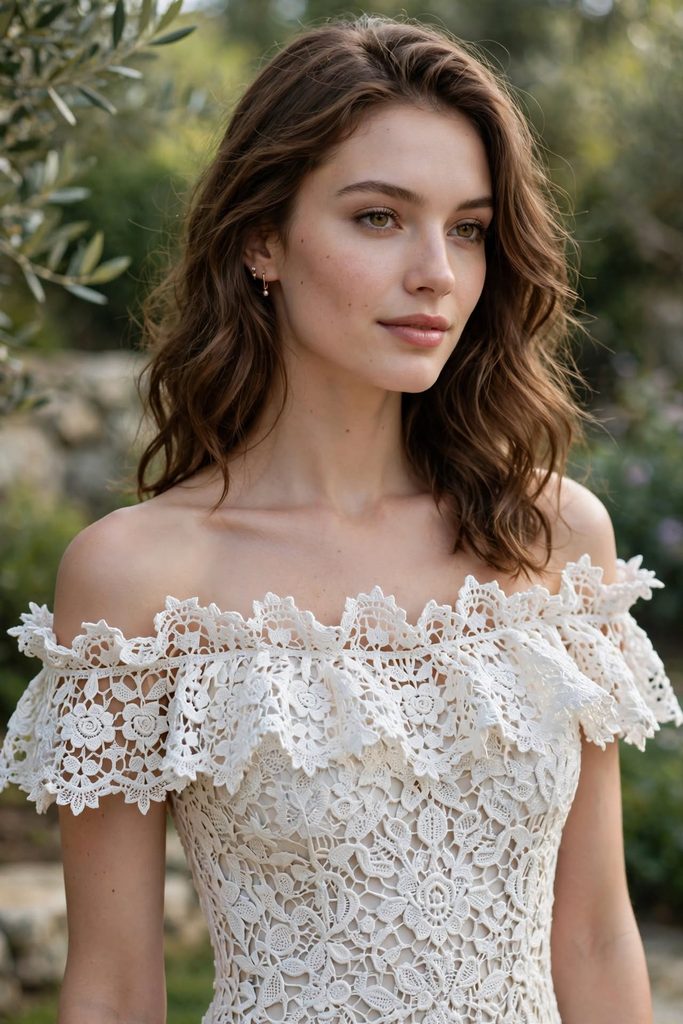
A white lace crochet dress with an off-the-shoulder neckline and intricate floral openwork, for example, may feel romantic without needing elaborate accessories. Worn with simple sandals, it can suit a relaxed summer gathering; paired with more formal shoes and understated jewelry, it may work for a dressier occasion, depending on its construction and coverage.
The garment’s longevity, however, depends on more than the fact that it was handmade. Yarn quality, stitch construction, fit, and care all matter. Crochet pieces can stretch, delicate fibers can snag, and some openwork designs require careful handling.
A garment does not become better simply because it has been worn many times. But when it remains in good condition and continues to suit your style, the memories attached to it can make it more meaningful.
The first wear introduces you to a piece. The tenth may make it familiar. Years later, it may remind you of a holiday, a celebration, or a chapter of your life.
That is a different kind of value—and one that cannot be measured by a price tag alone.
The Confidence of Wearing Something Personal
Designer fashion and handmade fashion are not opposites. A beautifully tailored designer garment can be a pleasure to own, just as a carefully made crochet dress can become a favorite.
The difference is not necessarily the label. It is the relationship you have with what you wear.
A garment that suits your taste, feels comfortable, and works with your lifestyle can make getting dressed easier. You do not need to explain your choice or prove that it is expensive. You simply need to feel that it belongs in your wardrobe.
Handmade fashion gives you many ways to express that individuality. It may be the color of the yarn, an unusual stitch pattern, a distinctive neckline, or a combination of details rarely found together in conventional ready-to-wear clothing.
Consider an olive-green crochet dress decorated with beads and shell-inspired details. Its texture and embellishments provide visual interest before you add a single accessory.
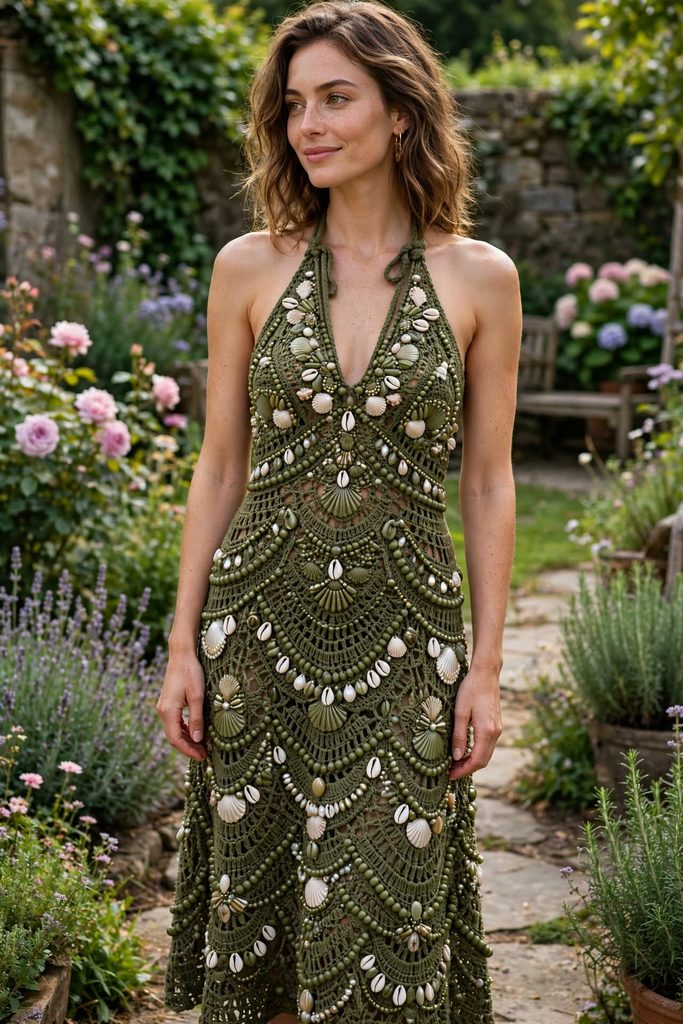
To keep a detailed garment at the center of an outfit, try pairing it with simple sandals, a small bag, or minimal jewelry. If the dress already features strong colors or intricate patterns, additional statement accessories may not be necessary.
The goal is not to look different at any cost. It is to develop a style that feels considered rather than assembled from whatever happens to be fashionable.
And sometimes, that means wearing the same beloved dress in several different ways instead of searching for a new one.
Handmade Fashion and the Question of Sustainability
Handmade fashion is often associated with slower consumption, but the relationship between craft and sustainability deserves a closer look.
A garment made by hand can involve considerable time and skill. That investment may encourage its owner to care for it, repair it, and wear it repeatedly. Choosing a piece that fills a genuine gap in your wardrobe can also help reduce unnecessary purchases.
But handmade does not automatically mean environmentally friendly.
The impact of a garment depends on the fibers used, how the yarn was produced, where the materials came from, how the item was made and transported, and how long it remains in use. A handmade garment made from unsuitable materials or worn only once is not necessarily a more responsible choice than a well-made ready-to-wear alternative.
The most useful question is not simply, “Was it handmade?” but, “Will I wear it often, care for it properly, and want to keep it?”
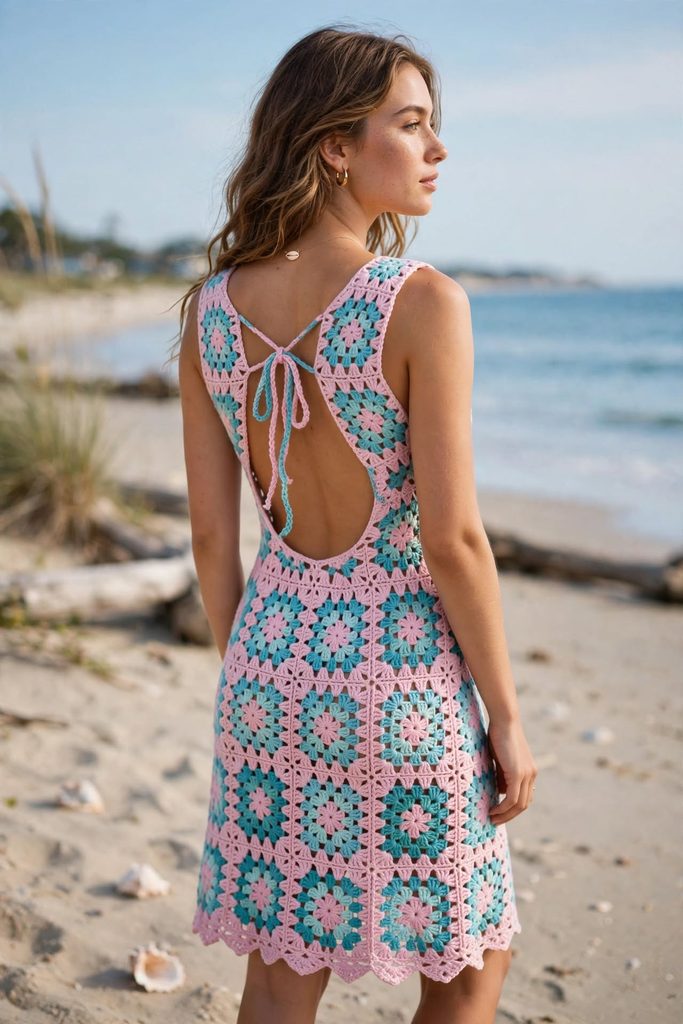
A pastel granny-square crochet dress illustrates how a distinctive design can become a recurring part of a summer wardrobe. Its combination of colors and motifs can be styled for a beach holiday, a relaxed outdoor gathering, or a casual day out, depending on its fit and coverage.
If you love a garment enough to wear it repeatedly, that is a meaningful starting point for a more considered wardrobe.
You do not need to buy an entirely handmade collection. You can begin with one piece that suits your needs, combine it with clothes you already own, and decide over time whether you want to explore more crochet or knitwear.
Sustainability is not a label attached to a purchase. It is also shaped by the choices that follow it.
The Maker’s Mark: Craftsmanship Without the Myth of Perfection
One of the pleasures of handmade fashion is the visible relationship between the material and the person who worked with it.
In crochet, every stitch contributes to the finished surface. Changes in stitch pattern can create geometric shapes, openwork panels, decorative borders, and variations in texture. Color changes can transform a simple design into something expressive.
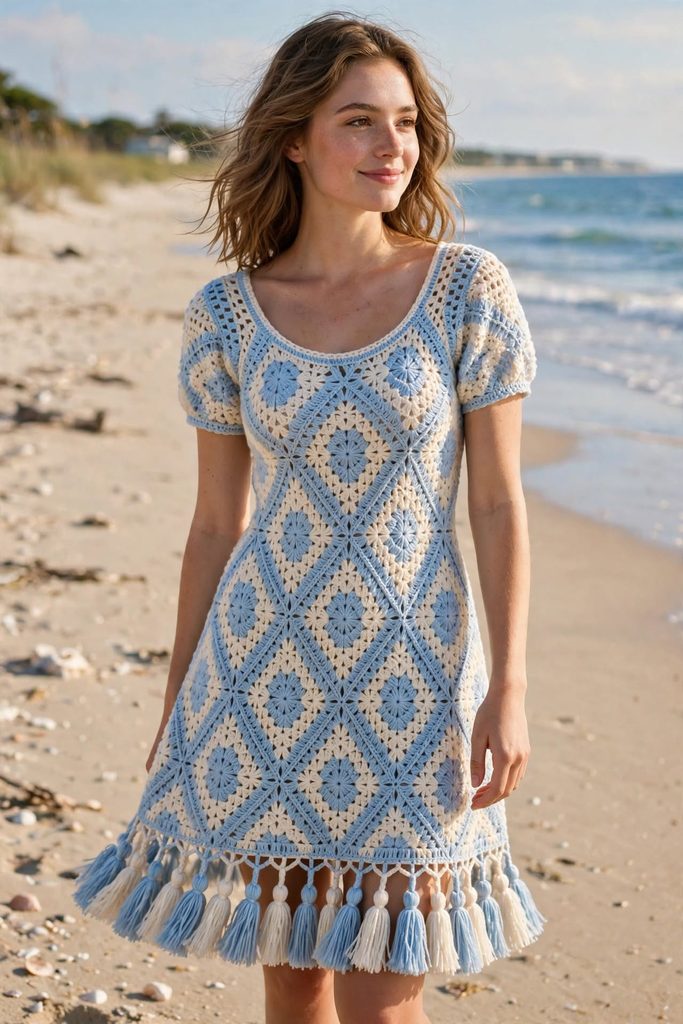
A baby-blue-and-cream crochet dress with geometric motifs and a tassel hem, for example, combines a recognizable handmade technique with a relaxed summer silhouette.
The appeal comes from the design and the work involved in creating it—not from imperfections alone.
Inconsistency is not automatically a sign of authenticity or quality. Uneven tension, poorly finished edges, loose seams, and insecure attachments can affect the appearance and durability of a garment. Good craftsmanship involves making intentional choices and finishing them carefully.
Nor does handmade mean that every garment is completely unique. Makers often follow shared patterns, and popular designs can be recreated by many people. Individuality may come from the yarn, color palette, fit, finishing, or the way the wearer styles the piece.
This is what makes craft so interesting: a technique can be familiar while still allowing room for personal expression.
Luxury does not have to mean flawless uniformity. It can also mean appreciating the decisions, skills, and attention that went into a well-made garment.
The Everyday Magic: Handmade Beyond Special Occasions
It is easy to associate crochet dresses with beach holidays, weddings, and carefully styled photographs. Yet handmade fashion can also have a place in ordinary life.
The secret is choosing a garment that suits the occasion and feels comfortable enough to wear.
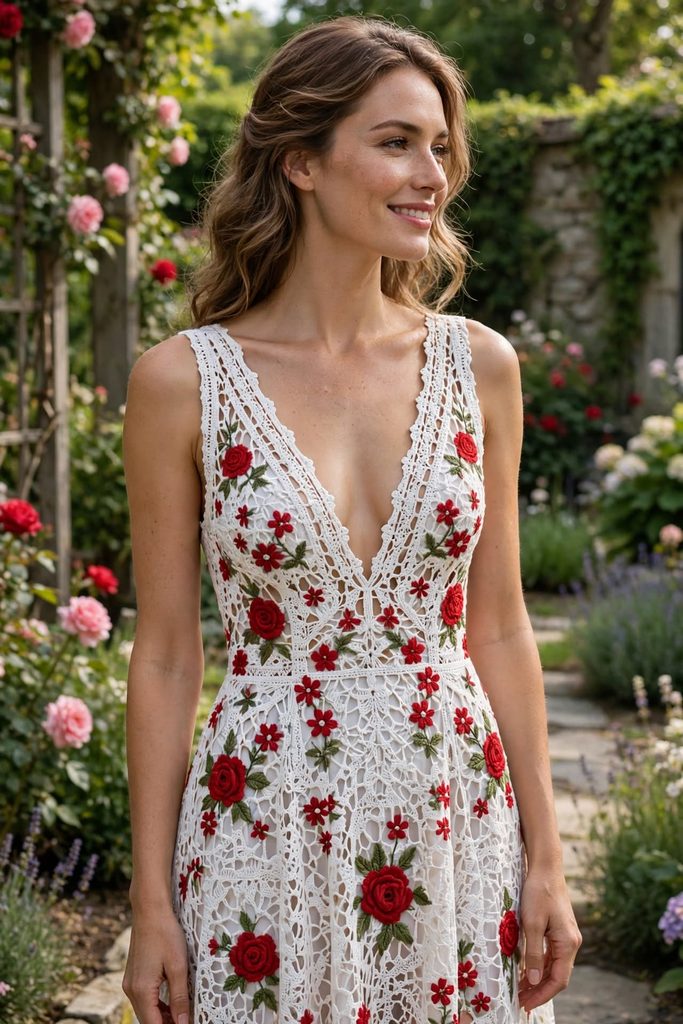
A white crochet dress with red floral accents, for instance, already has a strong visual identity. It can be paired with understated sandals and a simple bag for a relaxed summer outing, or styled with more refined accessories for a suitable daytime event.
For everyday wear, consider practical details as well as appearance. Is the fabric sufficiently opaque for the setting? Does the garment need a slip or lining? Can you sit and move comfortably? Are the straps and closures secure? Will the care requirements fit your routine?
These questions help turn an appealing photograph into a realistic wardrobe choice.
A crochet top might work with jeans and flat sandals. A knitted cardigan can soften a simple dress. A more elaborate crochet maxi dress may become a holiday favorite when paired with comfortable shoes and minimal accessories.
Not every handmade piece needs to be versatile enough for every occasion. It simply needs a purpose that makes sense for you.
Beautiful style does not have to wait for a special event. Sometimes it is found in a well-chosen outfit for an ordinary afternoon.
How to Choose Handmade Fashion You Will Actually Wear
If you are considering adding a handmade garment to your wardrobe, look beyond the photograph and think about how the piece will work in real life.
1. Check the Materials
Read the fiber information and care instructions. Cotton, linen, wool, and synthetic blends have different characteristics. The best choice depends on the garment, the climate, and how you intend to wear it.
2. Pay Attention to Fit
Use the seller’s measurements rather than relying only on a size label. For crochet garments, consider whether the design is intended to stretch and how the fabric may behave with wear.
3. Consider Coverage and Layering
Openwork can be beautiful, but its transparency varies. Check product photographs and descriptions to determine whether you will need a slip, lining, or additional layer.
4. Examine the Finishing
Look at the straps, seams, edges, closures, and decorative details. Neat finishing and secure attachments can make a difference to both appearance and everyday use.
5. Think About Cost Per Wear
A handmade garment may cost more because it takes time and skill to create. Consider the price alongside its quality, expected lifespan, versatility, and how frequently you are likely to wear it.
An expensive item is not automatically a good investment, and an affordable one is not automatically poor quality. Choose based on what the garment offers you.
6. Learn How to Care for It
Follow the maker’s instructions for washing, drying, and storing the piece. Delicate crochet may need gentle handling, and some garments should be dried flat to help preserve their shape.
Thoughtful care cannot prevent every sign of wear, but it can help a garment remain attractive and wearable for longer.
Your Handmade Fashion Manifesto
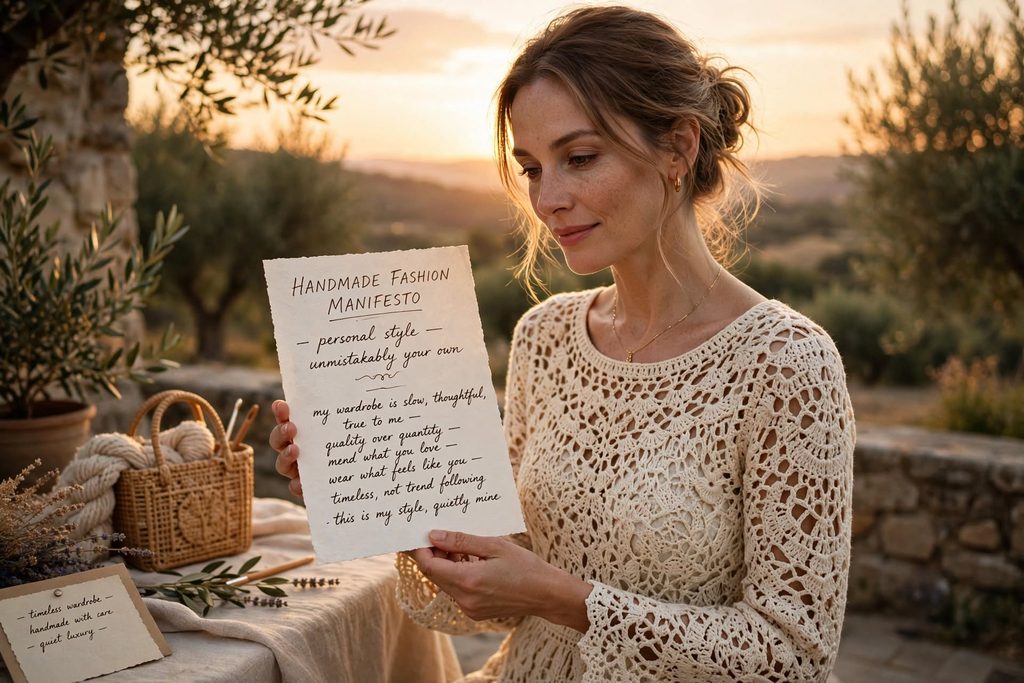
You do not need to reject every trend, avoid every brand, or fill your wardrobe with handmade pieces to develop a more personal style.
Start with a few simple principles.
- Choose with intention. Look for garments that genuinely appeal to you, rather than buying something simply because it is popular.
- Value craftsmanship. Notice the materials, construction, pattern, and finishing—not just the label or the story attached to a product.
- Wear what suits your life. A beautiful garment is most valuable when you feel comfortable wearing it.
- Care for what you own. Follow the care instructions, address small problems when possible, and give favorite pieces the chance to last.
- Make room for creativity. Try crochet, knitting, visible mending, or a new way of styling clothes you already have.
Handmade fashion does not promise perfection, and it does not need to. Its appeal lies in the meeting of material, skill, design, and personal taste.
A crochet dress can be a summer statement. A knitted cardigan can become an everyday favorite. A piece you make yourself can offer the satisfaction of turning yarn into something you can wear.
The most beautiful wardrobe is not necessarily the most expensive or the most unusual. It is one in which the pieces have a reason to be there.
May your wardrobe reflect your taste, your clothes earn their place, and your personal style remain unmistakably your own.