Why the oversized knit, timeless neutrals, and beautifully textured sweaters are becoming wardrobe favorites — and how to make the look your own.
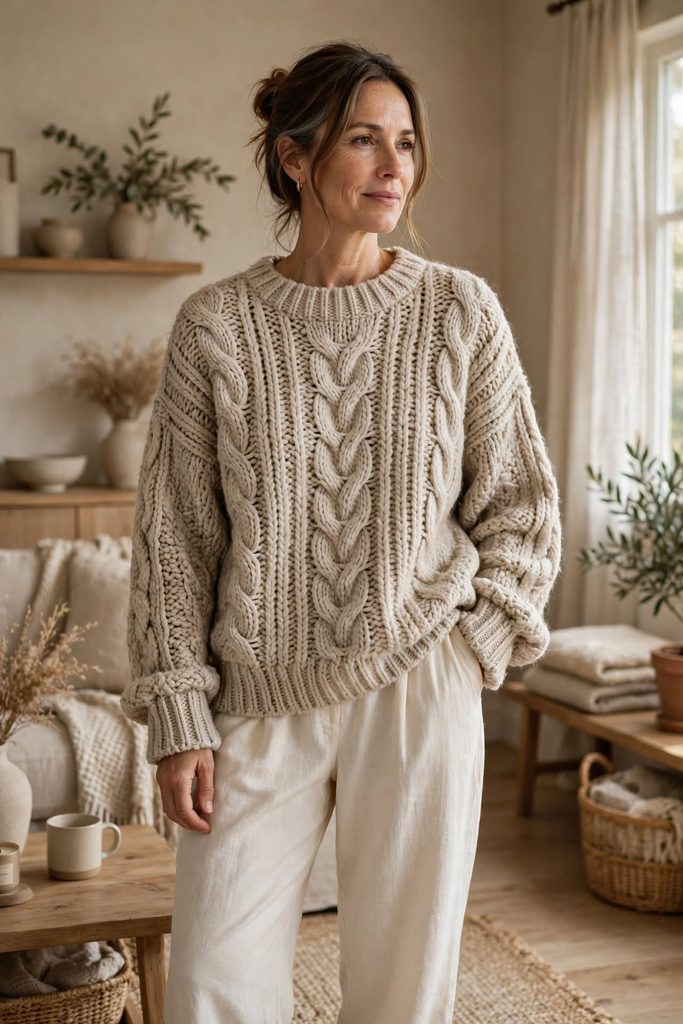
There comes a point when getting dressed becomes less about following every new trend and more about understanding what makes you feel like yourself.
You begin to notice the difference between clothes that look beautiful on a hanger and clothes you actually want to live in. You pay attention to the softness of a fabric, the way a sleeve falls over your wrist, and whether you can sit down with a book, walk through a cold morning, or meet a friend for coffee without thinking about your outfit every five minutes.
Perhaps that is part of the appeal of the oversized knit sweater.
It doesn’t demand much. It doesn’t need a complicated styling trick or a perfectly coordinated set of accessories. It simply brings texture, warmth, and a little ease to the everyday wardrobe.
For many women over 40, that combination feels particularly appealing. But this isn’t a trend with an age limit. If you love tactile fabrics, relaxed silhouettes, and clothes that feel as good as they look, a beautifully chosen knit deserves a place in your wardrobe.
And the best part? You don’t need an entirely new closet to make it work.
Why the Oversized Knit Deserves a Place in Your Wardrobe
Some garments announce themselves. Others quietly become the pieces you reach for again and again.
An oversized sweater often belongs to the second category.
Its appeal lies in the balance between structure and softness. A generous sleeve, a slightly dropped shoulder, or a relaxed body creates an easy silhouette. Meanwhile, the texture of the knit gives the outfit depth, even when the color palette is simple.
A cream sweater with dark jeans can look considered without feeling formal. A chunky cardigan over a plain dress can make an outfit feel ready for a chilly afternoon. A softly structured knit paired with tailored trousers creates a useful contrast: relaxed on top, polished below.
The secret isn’t wearing the largest sweater you can find. It’s choosing a shape that gives you room to move while still feeling intentional.
5 Reasons Textured Knitwear Is Worth Considering
1. Texture Can Make a Simple Outfit Feel Complete
A plain outfit doesn’t have to be a boring one.
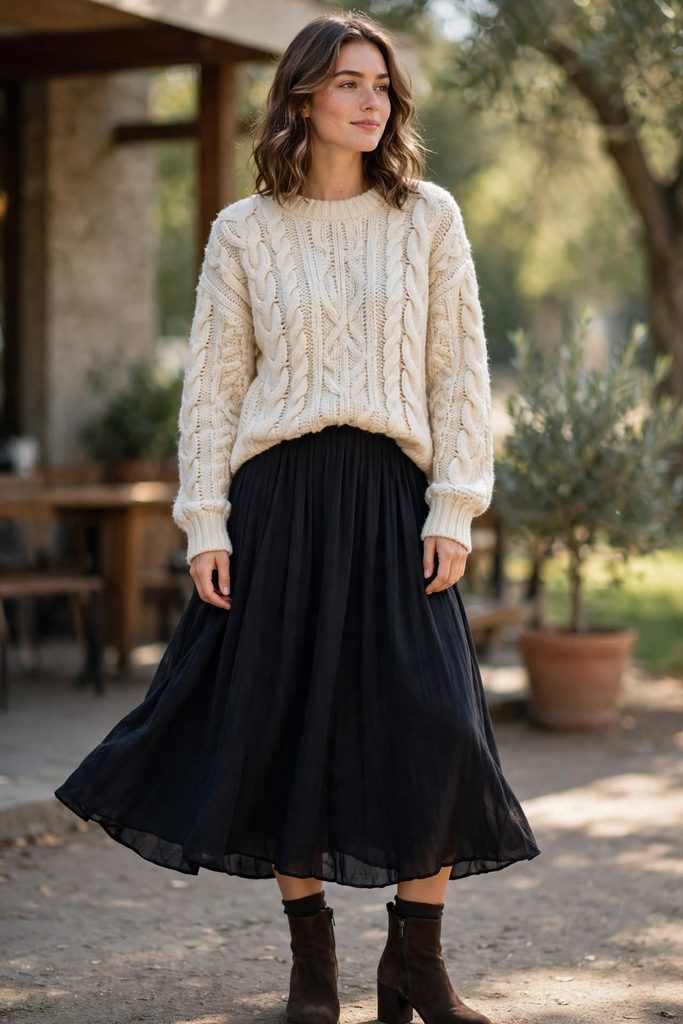
Cable stitches, ribbing, seed stitch, moss stitch, and brushed yarns all catch light differently. That variation creates visual interest without requiring a bright color or a bold print.
Imagine a simple pair of charcoal trousers and a cream sweater. If the sweater has a pronounced cable pattern or a soft, nubby surface, the outfit already has a focal point.
Texture does some of the styling work for you.
When choosing a textured sweater, consider the rest of your outfit. If the knit is thick and highly patterned, simpler trousers or a plain skirt can help keep the overall look balanced.
2. Neutral Colors Are Easy to Wear in Different Ways
Cream, oatmeal, camel, charcoal, chocolate brown, and soft grey work well in many wardrobes because they can be combined in several ways.
A cream sweater might sit comfortably beside blue denim one day and a brown midi skirt the next. A charcoal knit can work with black trousers, faded jeans, or a soft grey coat.
That doesn’t mean every wardrobe needs to be beige.
Deep burgundy, forest green, dusty blue, rust, and muted pink can be just as versatile, depending on the colors you already own and enjoy wearing.
The useful question is not whether a color is considered timeless. It’s whether you can imagine wearing it with at least three things already in your closet.
3. A Relaxed Fit Can Still Look Intentional
Oversized doesn’t have to mean shapeless.
The most wearable sweaters tend to have some relationship between their volume and the rest of the outfit. A roomy knit can work beautifully with straight-leg jeans, tapered trousers, a column skirt, or leggings made from substantial fabric.
You can also create shape without pulling the sweater tightly against your body. Try a small front tuck, push the sleeves up slightly, or let the sweater fall naturally over a more streamlined bottom half.
If you prefer a defined waist, look for a knit with a hem that sits near your natural waist or hip rather than one that extends far below it.
If you prefer a longer silhouette, a tunic-length sweater can work well with slim trousers or leggings.
Neither approach is more correct than the other. The best fit is the one that feels comfortable and looks balanced to you.
4. A Good Sweater Can Work Across Several Seasons
The right knit isn’t necessarily the thickest one.
A lightweight merino sweater can work under a blazer or coat. A medium-weight cotton knit may be useful during cool spring days. A chunky wool sweater can be a favorite in winter, especially when worn over a thin base layer.
Thinking about weight and layering before buying helps prevent the familiar problem of owning a beautiful sweater that is too warm for most of your daily life.
Consider your climate, how warm you tend to feel, and whether you spend most of your time outdoors or in heated rooms.
A sweater that suits your real routine will usually earn more wear than one chosen only for its appearance.
5. Comfort and Personal Style Can Exist Together
Comfort doesn’t mean giving up on style.
A relaxed sweater can look elegant with tailored trousers, a wool coat, a long skirt, or simple leather accessories. It can also look perfectly at home with jeans and sneakers.
The difference often comes down to small decisions: the length of the sweater, the shape of the neckline, the texture of the fabric, and the way the pieces work together.
You don’t need to dress more formally to look put together. You simply need clothes that make sense together and feel right when you wear them.
How to Choose a Sweater You’ll Actually Wear
Before falling in love with a photograph or a product description, think about how the sweater will fit into your everyday wardrobe.
| What to consider | What to look for |
|---|---|
| Fiber | Choose wool, cotton, alpaca, cashmere, acrylic, or a blend based on warmth, softness, care needs, and budget. |
| Weight | Lightweight knits are easier to layer; chunky knits make more of a statement and provide more warmth. |
| Color | Start with shades that coordinate with the trousers, skirts, coats, and shoes you already own. |
| Stitch pattern | Cables and raised stitches add dimension; smoother knits create a cleaner silhouette. |
| Fit | Check shoulder seams, sleeve length, body width, and hem length rather than relying on the label alone. |
| Neckline | Crew necks are easy everyday choices; V-necks create a different line; roll necks provide extra coverage and warmth. |
| Care | Read the label before buying, especially if hand-washing or flat drying would be inconvenient. |
Understanding Sweater Fibers
Different fibers have different strengths. Price alone doesn’t tell you how a sweater will feel, wear, or suit your lifestyle.
Merino wool is often soft and comfortable against the skin, and it provides warmth without always feeling bulky. Some merino knits can be worn for repeated outings before needing washing, depending on how much they are worn and whether they become damp or soiled.
Alpaca can feel exceptionally soft and offers warmth. Some alpaca garments have a fuzzy surface or drape differently from more structured wool knits, so check the actual fabric rather than relying on the fiber name alone.
Cashmere is prized for its softness and light warmth. Quality, yarn construction, and care all influence how well a cashmere sweater performs. Even expensive cashmere can develop pills with friction.
Cotton is often a good option for milder weather and for people who prefer to avoid wool. Cotton knits can feel heavier than some wool alternatives and may stretch or lose shape if washed or dried carelessly.
Acrylic and blended yarns can be practical, accessible, and easy to care for. Their performance varies widely by construction and fiber blend. A well-made blend may suit everyday wear better than a delicate natural-fiber sweater that requires more care than you’re willing to give it.
If possible, touch the fabric, check how densely it is knitted, and read the care instructions. Think about whether you would realistically follow those instructions after a long day.
The best sweater is not automatically the most expensive or the one made from the most luxurious fiber. It’s the one whose feel, appearance, durability, and care requirements work for you.
Hand-Knit or Machine-Knit: What Really Matters?
Hand-knit sweaters have a particular charm. Small variations in the stitches can give them a sense of individuality, and the maker may have chosen the yarn, pattern, and fit with great care.
Machine-knitted sweaters can be beautifully made, too. Modern production can create consistent stitches, interesting textures, and well-designed garments.
Neither method guarantees quality on its own.
A hand-knit sweater can stretch if it is made from a yarn that is too heavy for the stitch pattern or if it is stored incorrectly. A machine-knit sweater can remain attractive for years if its materials and construction are good and it receives suitable care.
When assessing a sweater, look at the fabric rather than making assumptions based on how it was produced.
Check whether the seams lie flat, whether the cuffs and hem recover after gentle stretching, and whether the yarn looks secure rather than loose or fragile. Consider whether the garment’s weight is appropriate for its shape.
And if you’re buying a handmade sweater, ask about measurements, fiber content, and care. Those details will tell you more about how it will fit into your life than the words handmade or luxury alone.
4 Easy Ways to Style an Oversized Knit Sweater
You don’t need a complicated outfit formula. A few reliable combinations can help you wear the same sweater in several different ways.
1. The Slow Morning Look: Sweater and Straight-Leg Jeans
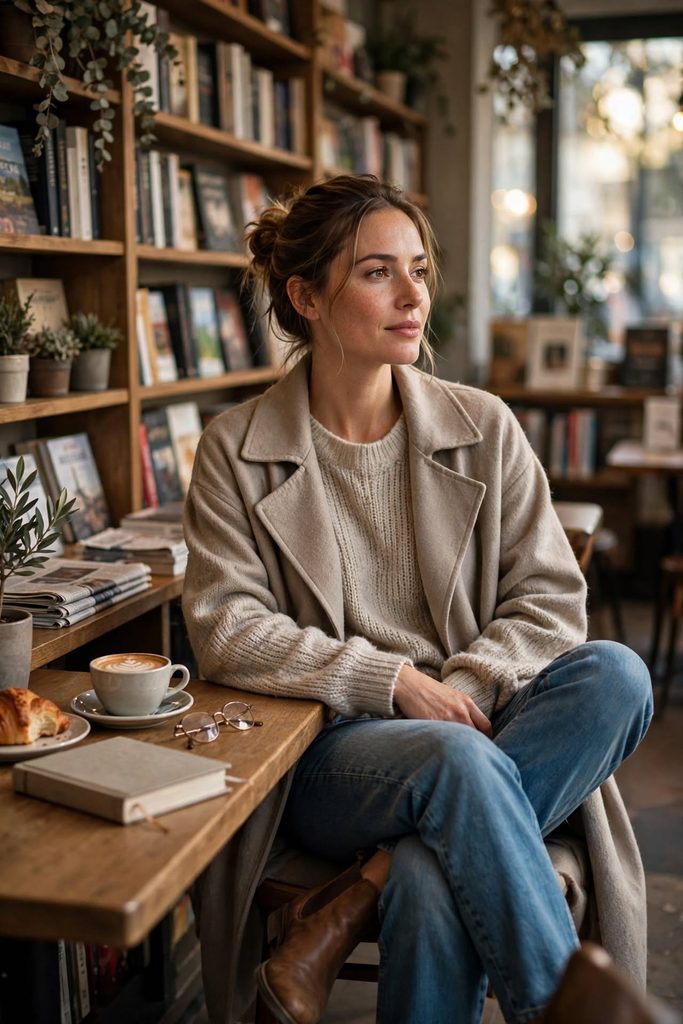
This is the uncomplicated combination that makes a sweater so useful.
Choose a knit with enough room through the body and sleeves to feel relaxed. Pair it with straight-leg denim and boots, loafers, or clean sneakers.
If the sweater is very wide, a more streamlined pair of jeans can create balance. If the knit is relatively neat, relaxed denim may work just as well.
A simple leather bag or a wool coat adds structure without taking away from the easy feeling of the outfit.
The goal is not to look as though you spent an hour getting dressed. It’s to look as though you know what works for you.
2. The Everyday Polished Look: Sweater and Tailored Trousers
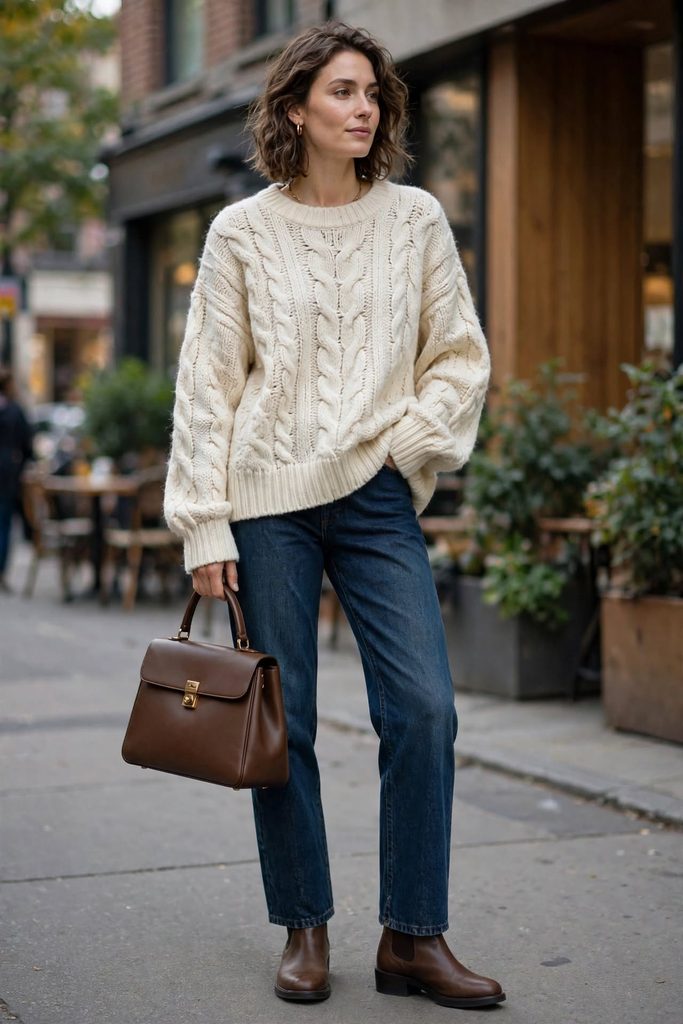
This pairing is particularly useful when you want something more polished than jeans but don’t want to wear a formal outfit.
Try a medium-weight knit with wool trousers, cotton twill trousers, or another structured fabric. The contrast between the softness of the sweater and the cleaner line of the trousers makes the combination feel considered.
A partial front tuck can work if the sweater isn’t too thick. Otherwise, let the hem fall naturally and choose trousers with a rise and shape that feel comfortable.
For color, try cream with chocolate brown, grey with black, or camel with dark navy. If you prefer stronger color, a burgundy or forest-green sweater can provide the same effect.
3. The Sunday Look: Chunky Knit and a Long Skirt
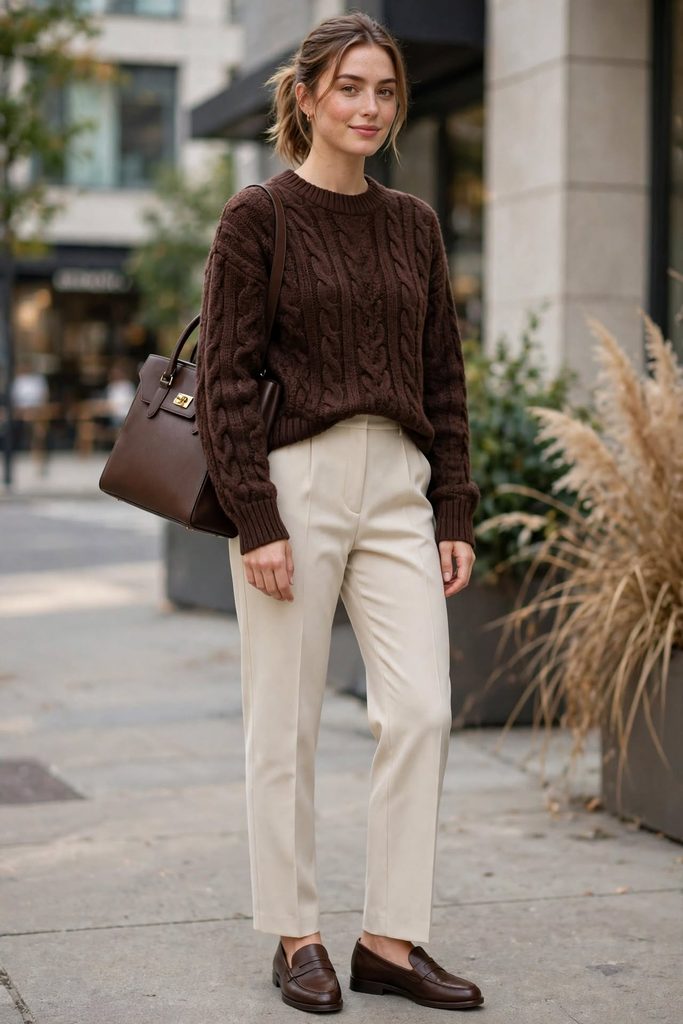
A chunky sweater and a long skirt can create an interesting mix of structure and movement.
A smooth skirt contrasts with a pronounced cable knit, while a softly pleated skirt creates more movement. A denim or wool skirt can make the outfit feel more casual.
If the sweater is especially thick, check where its hem falls. A hem that ends around the waist or upper hip may feel more balanced with a fuller skirt, while a longer sweater may work better with a straighter silhouette.
You can add tights and boots when the weather turns cold. In milder conditions, simpler shoes can keep the outfit light.
There’s no need to match every element. Often, the contrast is what makes the combination work.
4. The Quietly Elegant Look: Fine Knit and a Long Coat
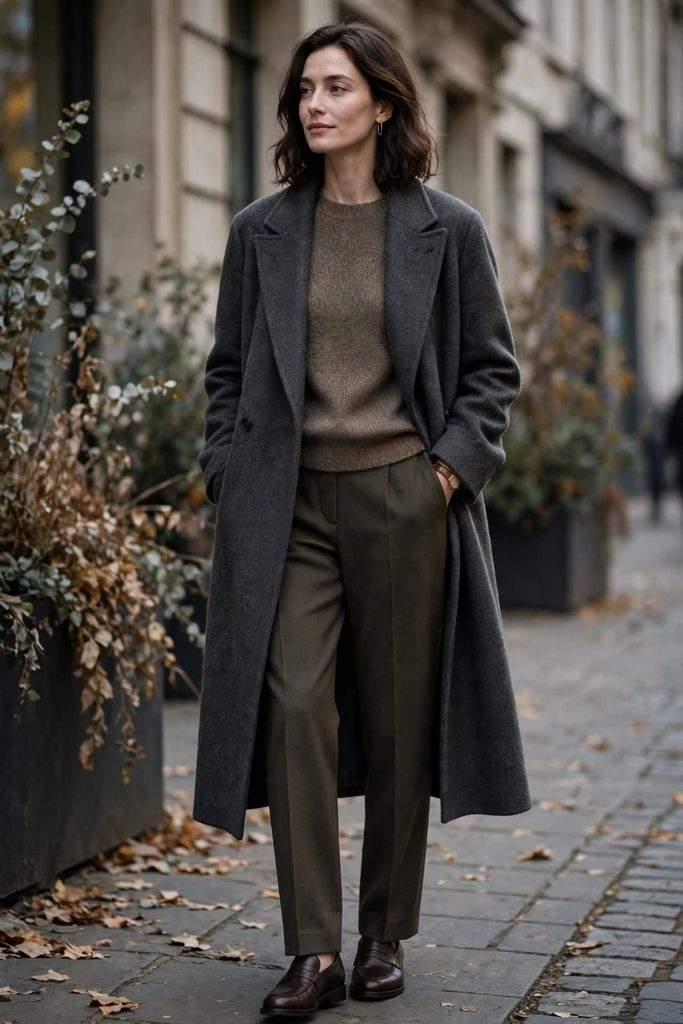
For days when you want a cleaner silhouette, choose a fine or medium-weight knit rather than the chunkiest sweater in your wardrobe.
Layer it beneath a long coat, add tailored trousers, and keep the accessories simple. A scarf can introduce another texture or color without making the outfit feel busy.
This combination works because each piece has a clear role: the sweater adds softness, the coat provides structure, and the trousers create a defined line.
You can wear it to lunch, to work in a relaxed setting, or while running errands when you want to feel a little more dressed without sacrificing comfort.
The Forest Test: Does This Sweater Belong in Your Wardrobe?
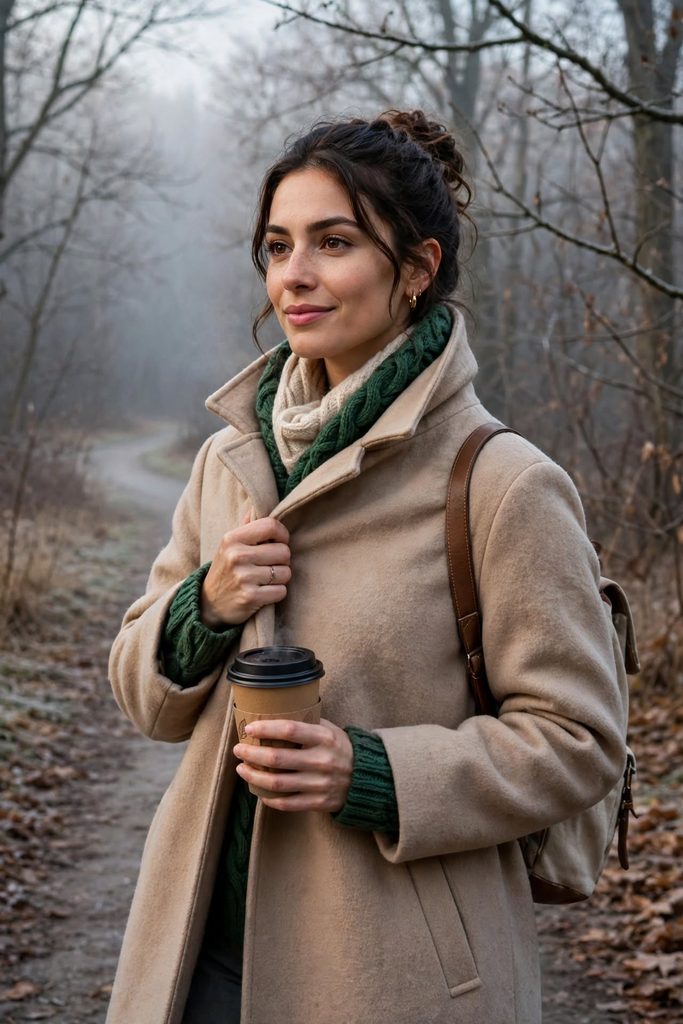
Imagine a cold morning.
You step outside, and the air is crisp enough to make you pull your coat closer. You have somewhere to go, but there is no need to rush. Perhaps you’ll stop for coffee, walk beneath bare branches, or take the longer route home.
What would you want to be wearing?
Maybe it’s a thick forest-green cable knit. Maybe it’s a soft grey cardigan over a white T-shirt. Maybe it’s a simple cream sweater with a scarf tucked into the collar of your coat.
The point isn’t to choose the most fashionable answer. It’s to notice what makes you feel comfortable, confident, and ready for the day.
Use the same idea when shopping.
Before buying a sweater, ask yourself:
- Can I imagine wearing it with at least three things I already own?
- Is the fabric comfortable enough for the way I dress?
- Does the shape work with my usual trousers, skirts, or layers?
- Am I willing to follow the care instructions?
- Would I still want to wear it if it weren’t trending this season?
If the answer to most of these questions is yes, the sweater may be a useful addition to your wardrobe.
If you love it only in a styled photograph but cannot imagine wearing it in your real life, it’s perfectly fine to leave it behind.
The Quiet Luxury of Wearing What You Love
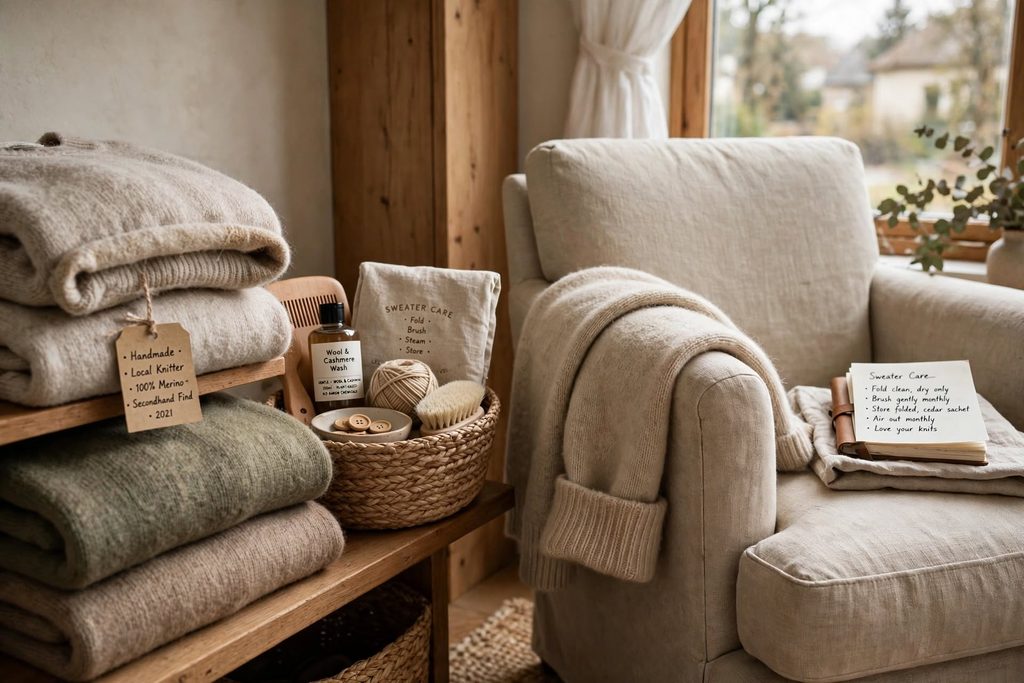
The phrase quiet luxury is often used to describe expensive fabrics, subtle colors, and carefully chosen pieces. But a useful wardrobe doesn’t have to be costly, and good style isn’t reserved for people who can afford designer labels.
A sweater can feel special because it fits beautifully, because its color suits the clothes you already own, or because you reach for it every week.
It can be a handmade piece from a local knitter, a carefully chosen secondhand find, or an affordable high-street purchase that happens to fit just right.
What matters is how the garment works for you.
A wardrobe built around things you genuinely enjoy wearing can be more satisfying than one filled with pieces bought simply because they were popular.
And if you love color, prints, fitted silhouettes, or dramatic accessories, there’s no reason to abandon them for a neutral knit. Personal style isn’t a uniform. It’s a collection of choices that feel like yours.
How to Care for Your Favorite Knitwear
Even a well-made sweater needs suitable care. The right routine depends on its fiber, construction, and care label, so always follow the manufacturer’s instructions first.
Wash only when needed. Many sweaters benefit from airing between wears rather than being washed after every use. Wash promptly when a garment is sweaty, stained, or otherwise needs cleaning.
Use the recommended washing method. Some wool and cashmere garments require gentle hand-washing or professional cleaning; others are labeled machine-washable. Never assume that every natural fiber should be treated the same way.
Avoid unnecessary heat and agitation. These can cause shrinkage, felting, or distortion in some fibers. Use the temperature and cycle specified on the label.
Dry according to the care instructions. Many heavier knits keep their shape better when dried flat on a clean towel rather than hung while wet. Reshape gently if needed.
Store knits folded. Hanging a heavy sweater for long periods can stretch the shoulders or body. Fold it neatly and keep it dry.
Manage pilling gently. Small pills can form where fabric rubs against bags, coats, seat belts, or other surfaces. Use a suitable fabric comb or sweater shaver carefully, following its instructions and testing an inconspicuous area first.
Give your sweaters room to rest. Rotating between several knits can reduce repeated friction and give each garment a break between wears.
A little attention can help your favorite pieces stay attractive for longer. It won’t make every sweater last forever, but it can help you get more enjoyment from the ones you love.
Your Sweater Manifesto
You don’t need a wardrobe full of sweaters.
You need the ones that make sense for your life: the knit you reach for on a cold morning, the cardigan you keep near the door, the soft layer that makes an ordinary outfit feel complete.
Choose texture because you enjoy it. Choose a color because you love wearing it. Choose an oversized shape because it feels right on your body, not because someone has declared it the correct silhouette for your age.
And don’t worry if your favorite sweater isn’t the newest one in the shop.
Perhaps it has a slightly softened cuff. Perhaps the color has become familiar, like the mug you always choose or the chair beside the window. Perhaps it has accompanied you through enough ordinary days to feel like part of your own story.
Clothes don’t have to transform us to be worth keeping. Sometimes they simply make the day a little more comfortable, a little more beautiful, and a little more our own.
And sometimes, that’s exactly what good style should do.