Discover how thoughtful craftsmanship, beautiful textures, and personal touches can make a handmade blanket one of the most special pieces in your home.
We’ve been taught to think of luxury as a transaction.
Swipe a card. Open a beautiful box. Admire the label. The cashmere throw from a heritage brand. The merino blanket with the designer name. The carefully packaged home accessory that looks almost too beautiful to use.
And these things can be beautiful. They can be soft, well made, and thoughtfully designed.
But there’s another kind of luxury that doesn’t arrive with a label.
It’s the blanket you reach for on a quiet evening. The one resting over the arm of your favorite chair, ready when you settle down with a book. The one whose texture catches your eye every time you walk into the bedroom.
A handmade blanket can offer something that goes beyond its appearance: the visible character of its construction, the choices of its maker, and the pleasure of owning something created with care.
Not every handmade blanket is better than a factory-made one. Not every expensive throw is worth its price. What matters is how a piece feels, how well it is made, and whether it belongs in your everyday life.
Sometimes, luxury isn’t about owning the most expensive thing in the room.
It’s about owning something you genuinely love.
The Weight of Warmth
Pick up a chunky knit blanket and notice its generous loops, substantial yarn, and distinctive texture. Spread it across a bed, and it immediately changes the way the room looks.
Now imagine a lightweight cotton throw. It creates a different impression: softer visually, easier to layer, and often more suitable for warmer weather.
Neither is automatically better. Each serves a different purpose.
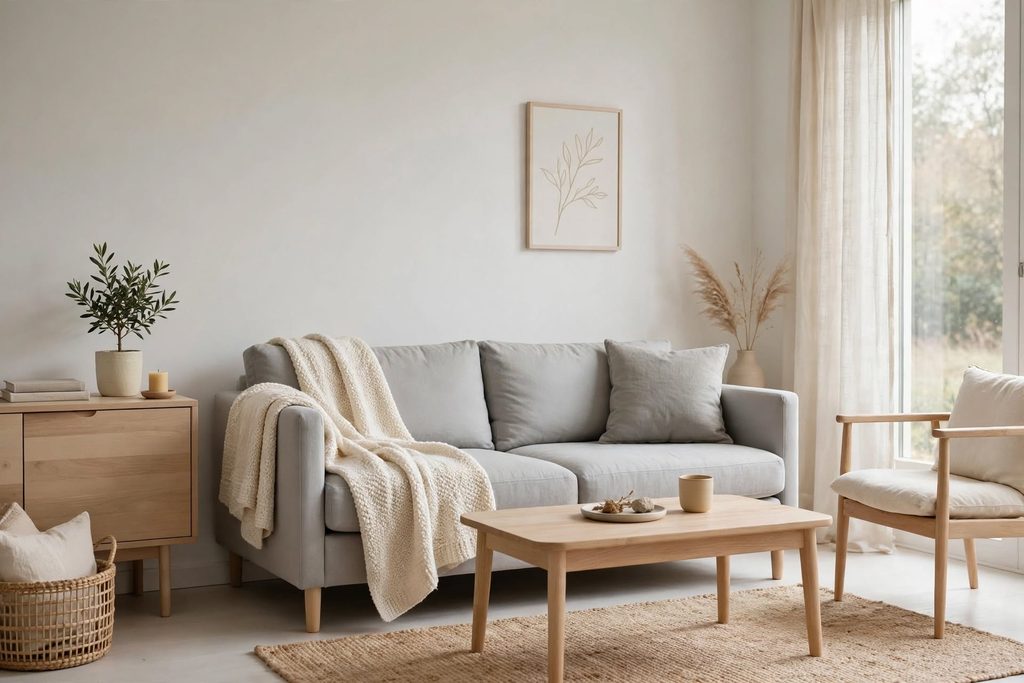
Chunky handmade blankets are particularly appealing when a room needs a strong textural element. Their oversized stitches create depth against smooth linen, painted walls, polished wood, or simple upholstery.
A substantial blanket can also feel comforting when you pull it over your legs on a cold evening. Yet weight alone doesn’t determine warmth or quality. Fiber, construction, size, and personal preference all play a part.
A thick wool blanket might be perfect for a winter reading nook. A lightweight cotton crochet throw may be the one you use throughout the year.
The best blanket isn’t necessarily the heaviest. It’s the one that suits the moment you bought it for.
The Beauty of Handmade Texture
Luxury is often photographed before it is experienced.
We see a perfectly arranged bed, a neutral palette, and a blanket folded into elegant layers. But the appeal of a textile begins with its actual surface: the stitches, the yarn, and the way the fabric falls.
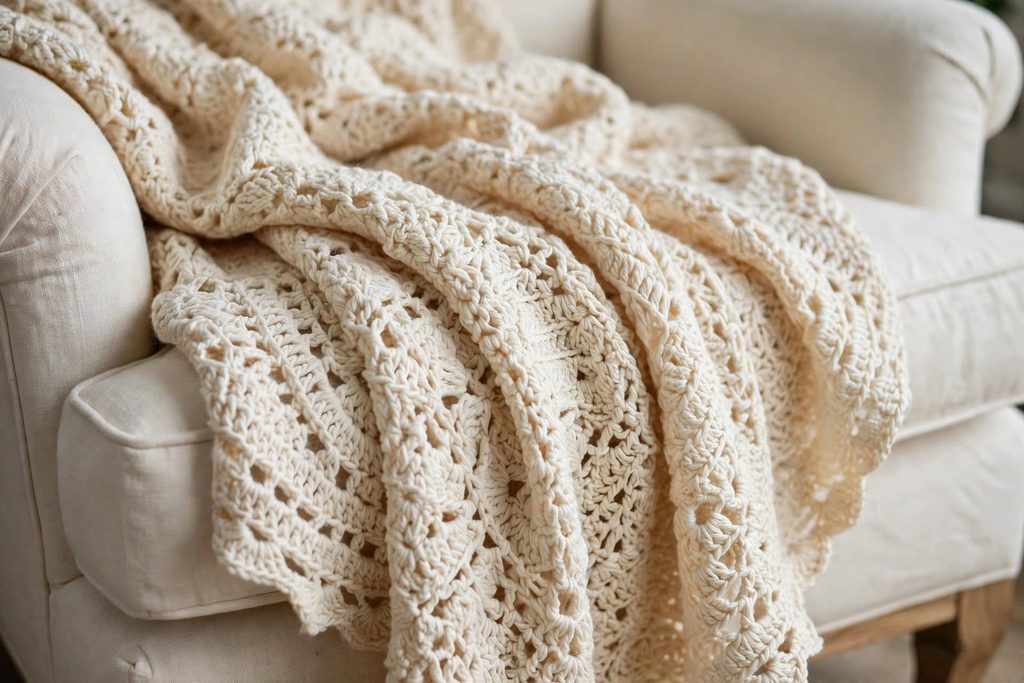
Handmade knitting and crochet can create distinctive textures. Raised stitches catch the light. Open patterns introduce delicate spaces between the yarn. Thick loops create a sculptural appearance, while finer stitches can produce a softer, more understated finish.
Small variations may also appear during the making process. Sometimes they give a piece an individual character; sometimes they indicate uneven tension or a finishing issue. Good craftsmanship is not simply about accepting every irregularity. It is about creating a finished object that is attractive, functional, and thoughtfully made.
A machine-made blanket can have beautiful texture, too. Modern manufacturing can produce intricate patterns and consistent construction. The difference is not that one is lifeless and the other is inherently superior.
Rather, handmade work often makes the process more visible.
You can follow the stitches, appreciate the repeating pattern, and imagine the time involved in creating a large piece. If you value craftsmanship, that knowledge can become part of the pleasure of owning it.
The blanket becomes more than a layer of fabric. It becomes a small reminder of what patient, skilled work can create.
7 Reasons Handmade Blankets Can Feel More Luxurious
A handmade blanket isn’t automatically the best choice for every home. But a thoughtfully chosen piece can offer qualities that make it especially rewarding to own.
1. Texture Gives a Room More Depth
When every surface in a room is smooth, the overall design can feel flat. A textured blanket introduces contrast without requiring a new color or an elaborate pattern.
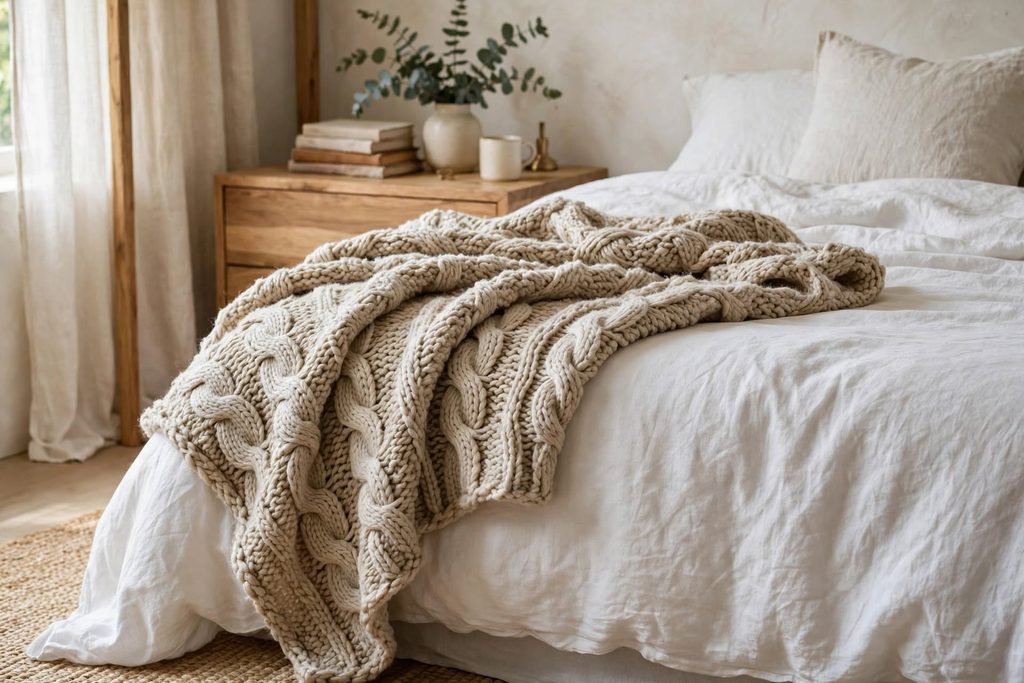
Imagine a white linen bed with a simple wooden headboard. A chunky oatmeal knit adds visual depth. On a leather sofa, a crochet throw softens the harder surface. In a reading nook, a wool blanket makes a plain chair feel more inviting.
The effect can be subtle, but it changes how the different materials work together.
2. Handmade Pieces Can Have a Personal Story
Perhaps a friend made the blanket as a housewarming gift. Perhaps you discovered it at a local craft market. Perhaps you crocheted it yourself, a few rows at a time, over several weeks.
That story becomes part of the object’s meaning.
A commercially made blanket can carry memories, too. The distinction is personal rather than universal: a handmade piece may offer a more direct connection to the person and process behind it.
Sometimes that connection is precisely what makes a simple object feel special.
3. The Right Fiber Makes Everyday Comfort Better
The material matters as much as the method of production.
Merino wool is often chosen for its softness and warmth. Cotton can be suitable for lighter layers and milder weather. Alpaca is valued for its warmth and distinctive feel. Acrylic and blended yarns can provide practical options at a range of prices.
Every fiber has trade-offs.
Some wool may feel itchy to sensitive skin. A dense cotton blanket can be heavier than expected. Fluffy yarns may shed, while some tightly constructed blankets feel firmer than their photographs suggest.
Before choosing a blanket, consider its intended use, your sensitivity to different fibers, and how much care you are prepared to give it.
Luxury is not simply a material name on a label. It is the combination of comfort, appearance, practicality, and personal preference.
4. A Beautiful Drape Makes a Difference
Some blankets fall into soft, relaxed folds. Others hold a more structured shape. The difference depends on the fiber, stitch pattern, yarn weight, and construction.
A fine crochet throw may drape lightly over an armchair, while a chunky knit creates a more substantial shape across a bed.
Think about where your blanket will live. A generous size may be ideal for a bed or sectional sofa, while a smaller throw may be easier to use in a reading chair.
The best blanket should be easy to arrange, comfortable to use, and attractive without constant adjustment.
5. Handmade Pieces Can Feel Distinctive
A handmade blanket may stand out because of its stitch pattern, unusual color combination, carefully finished edge, or custom dimensions.
That individuality can work particularly well in interiors that feel collected over time rather than purchased all at once.
Still, uniqueness is not a substitute for quality. Look for secure edges, a shape that lies as intended, and construction suited to the blanket’s size and weight.
A distinctive piece should be beautiful to look at and practical enough to use.
6. A Useful Blanket Becomes Part of Your Daily Routine
The throw beside the sofa is there when you want to read. The cotton blanket rests at the end of the bed. The wool layer waits in a basket near the window.
Over time, these objects become part of ordinary life.
A blanket may remind you to settle in for the evening, make a reading corner more inviting, or provide an extra layer when the temperature drops.
Its value comes partly from what it allows you to do. It is not simply an accessory to admire; it is something to live with.
7. Craftsmanship Gives You Something to Appreciate
Look closely at a handmade textile and you can often see how it was constructed.
You notice the repeating stitches, the development of the pattern, and the way the edges have been finished. You may appreciate the hours involved in making a large blanket or the skill required to keep a complex design consistent.
That pleasure doesn’t depend on the item being expensive.
A carefully made cotton throw can be just as satisfying to own as a costly wool blanket if its design, construction, and use suit your life.
Sometimes the luxury lies in noticing the work behind the finished object.
How to Choose the Perfect Handmade Blanket
The most beautiful blanket isn’t necessarily the right one for your home. Before choosing a color or falling in love with a photograph, consider the material, size, weight, and care requirements.
| Blanket type | Best suited for | What to consider |
|---|---|---|
| Chunky knit | Bedrooms and reading corners | Texture, weight, and storage |
| Crochet throw | Living rooms and cottage-style interiors | Stitch pattern, drape, and care |
| Wool blanket | Cool rooms and winter use | Warmth, fiber sensitivity, and washing instructions |
| Cotton blanket | Everyday use and warmer weather | Weight, softness, and washability |
| Merino wool throw | Softer wool layers | Feel against the skin and care requirements |
| Oversized throw | Large beds and sectional sofas | Dimensions, weight, and intended use |
Chunky Knit Blankets
Chunky knits work well in rooms that need a noticeable layer of texture. Large stitches can create a sculptural look that complements simple furniture, linen bedding, and natural wood.
Look for yarn suited to the pattern and the blanket’s dimensions. A very heavy knit may stretch under its own weight, particularly if it is hung while wet.
Use a chunky blanket across the foot of a bed, over a wide armchair, or beside a sofa for colder evenings.
Crochet Throws
Crochet can create a remarkable range of textures, from airy openwork to dense, substantial fabric.
Granny squares, shell stitches, ripples, and textured patterns each bring a different mood. Cream crochet works beautifully in cottage-inspired rooms, while a more geometric pattern can suit a modern interior.
Choose the yarn according to how the blanket will be used. Cotton can be useful for everyday throws, while wool and some blends may provide more warmth.
Always check the care instructions. Not every crochet blanket is machine-washable, and some handmade designs need gentle handling to retain their shape.
Wool Blankets
Wool is a useful choice when warmth is a priority. Depending on the fiber and construction, a wool blanket can feel light and soft or dense and substantial.
Sheep’s wool, merino, alpaca, and wool blends each have different characteristics. If you are sensitive to wool, try to assess the fabric before purchasing whenever possible.
Care requirements vary. Some wool textiles can be washed gently, while others require professional cleaning. Follow the instructions for the specific blanket rather than assuming all wool should be treated alike.
Cotton Blankets
Cotton is often a good choice for warmer weather, guest rooms, and everyday use.
Its texture can range from crisp and structured to soft and flexible. Dense cotton blankets can be surprisingly heavy, so consider the finished size as well as the yarn.
Check the washing instructions before buying. Some cotton blankets can be machine-washed, but unsuitable washing or drying conditions may cause shrinkage or distortion.
Merino Wool Throws
Merino is often selected for its softness and warmth. However, softness varies according to the yarn, construction, and finishing, and not every person will find the same wool comfortable against the skin.
If the blanket will touch your skin directly, consider that before choosing it. Check whether the care routine fits your lifestyle, too.
The best merino throw is not necessarily the most expensive one. It is the one that feels right, looks well made, and suits the way you intend to use it.
Choosing the Right Size
Think about what you want the blanket to cover.
A small throw may be ideal for an armchair or for placing across your knees. A larger blanket can cover more of a sofa or provide a generous layer at the foot of a bed.
Measure the furniture before purchasing, especially if the blanket is handmade to order. Remember that thick yarn can make a blanket feel heavier and bulkier than a thinner textile of the same dimensions.
Choosing a Neutral Color
Oatmeal, cream, taupe, warm grey, and sand are popular choices because they pair easily with wood, linen, stone, and other natural finishes.
But a neutral palette doesn’t have to be entirely beige.
Rust can bring warmth to a pale sofa. Forest green can add depth to a bedroom. Muted blue can sit beautifully beside cream and grey.
Choose a shade that works with your existing furniture and that you will still enjoy when the season changes.
Handmade Blanket Styling Ideas
A beautiful throw doesn’t have to look as though it has been arranged for a magazine. The most inviting rooms make space for both thoughtful design and everyday use.
Bedroom: Let the Texture Lead
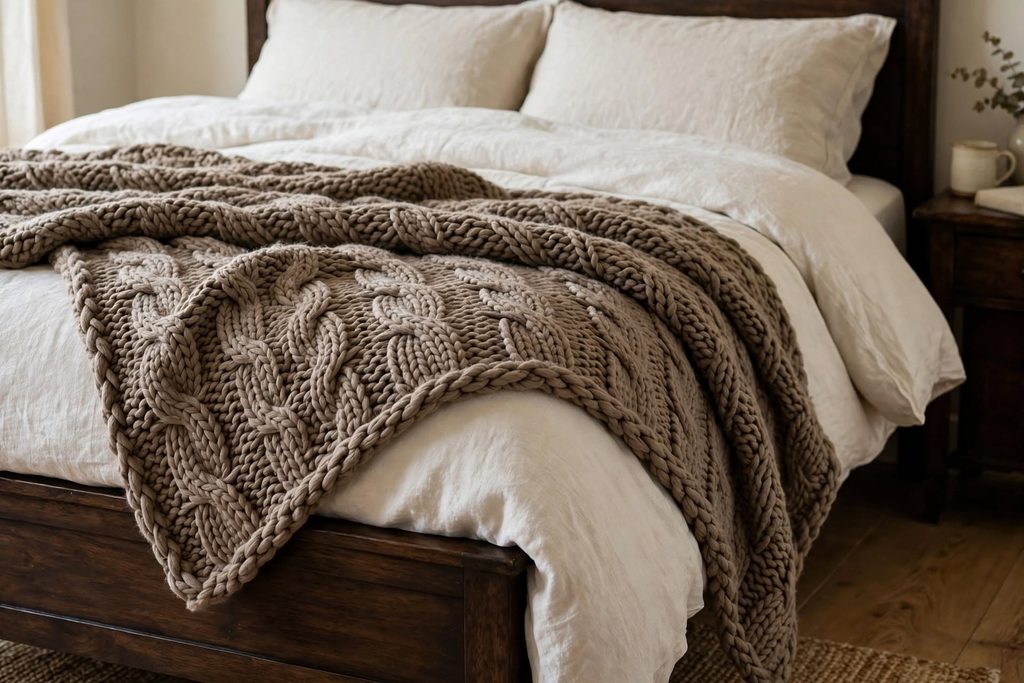
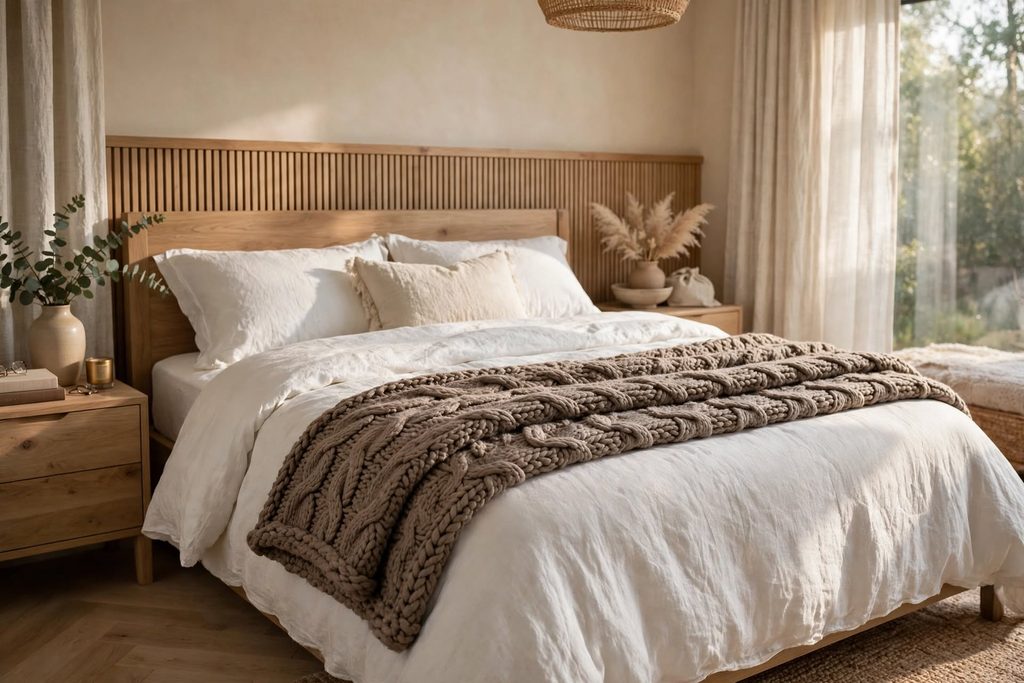
Place a chunky blanket across the foot of the bed and let the edges fall naturally. If your bedding is smooth and simple, the knit can provide most of the visual interest.
Keep the surrounding palette restrained for a calm, hotel-inspired look. A wooden bedside table, linen pillows, and one carefully chosen decorative object may be all the room needs.
The blanket doesn’t have to match every pillow. It only needs to feel at home in the space.
Living Room: Make the Throw Easy to Reach
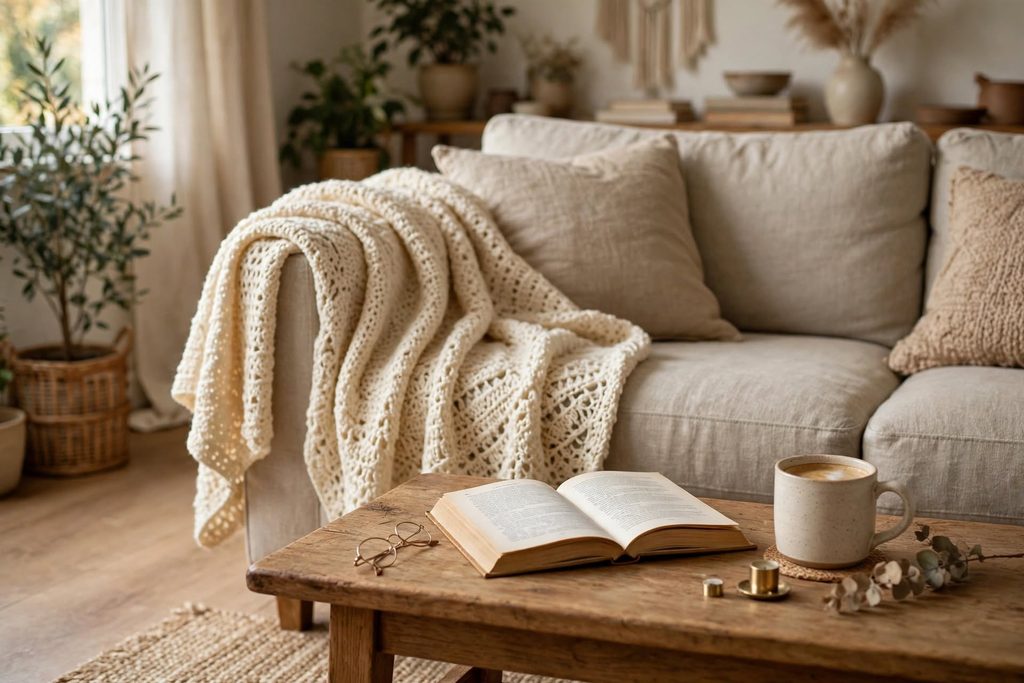
Fold a crochet throw loosely over the sofa arm or place it in a basket beside the seating area.
Choose a size that is comfortable to use rather than one that exists only for decoration. If the sofa is used every day, the blanket should be easy to pick up, unfold, and put away.
A book, a ceramic mug, or a wooden tray can complete the scene without making it feel overly staged.
Reading Nook: Build Around Comfort
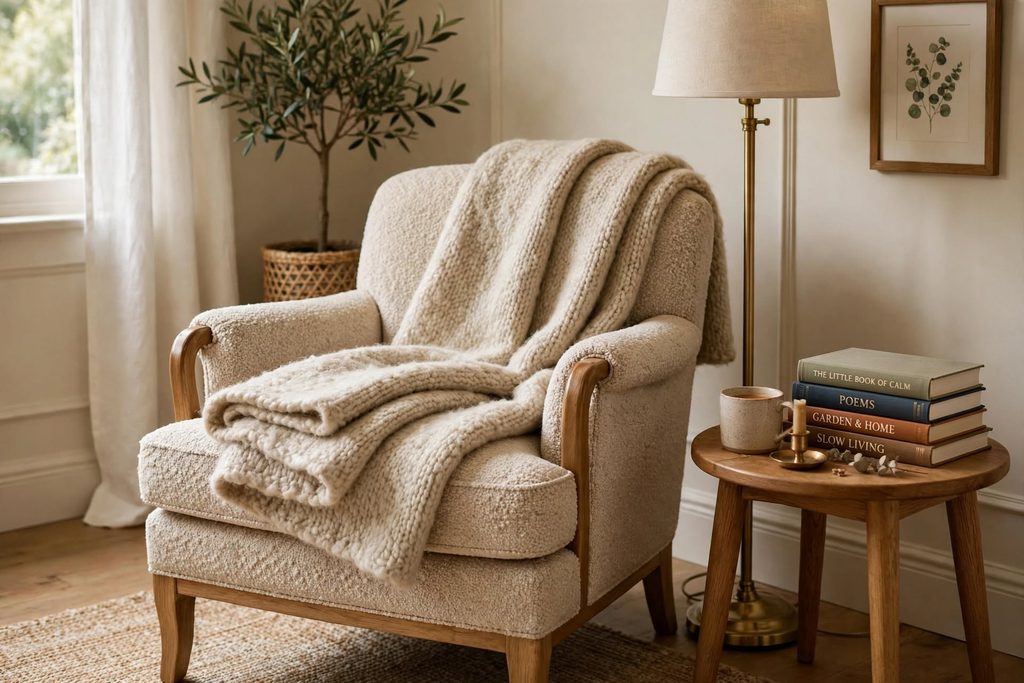
Start with a chair you genuinely enjoy sitting in. Add a floor lamp, a small table for a drink, and a blanket suited to the room’s temperature.
You can keep two blankets nearby if your needs change with the seasons: a lighter cotton throw for mild evenings and a warmer wool blanket for winter.
The purpose of the corner isn’t to look perfect. It’s to make it easy to stay a little longer.
Fall Decorating: Introduce Deeper Color
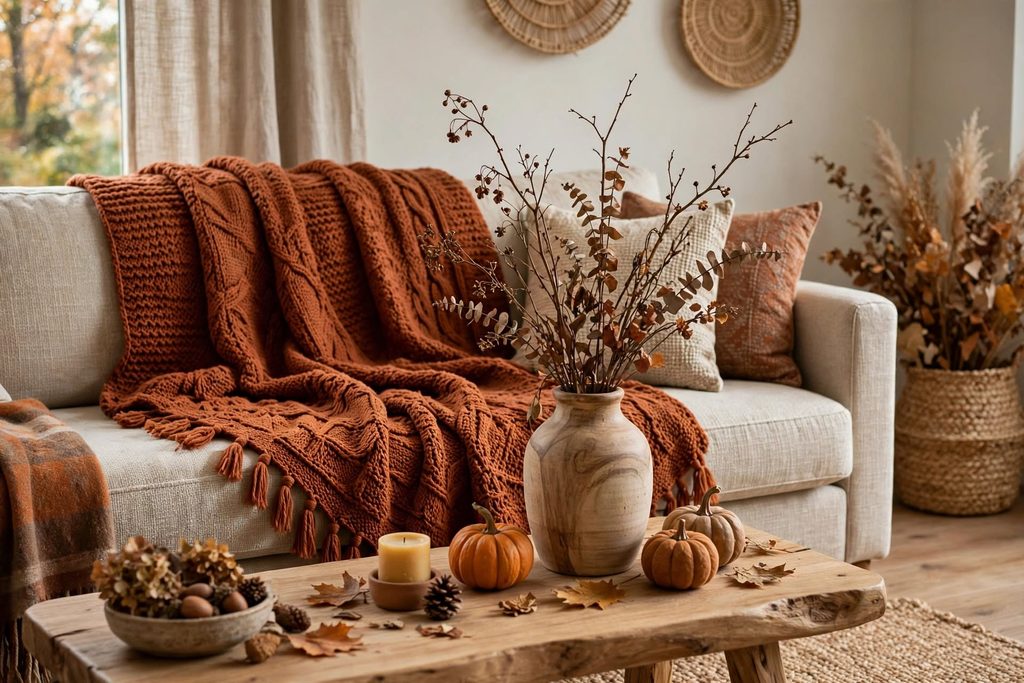
As the weather cools, introduce richer colors and more substantial textures. Rust, olive, chocolate, and deep burgundy can complement the natural tones already present in many homes.
You don’t have to replace every cushion or accessory. A single blanket can introduce enough seasonal color to refresh a room.
Cottage Style: Choose a Pattern With Character
Crochet blankets can work beautifully in cottage-inspired spaces, particularly when their stitch pattern complements painted wood, floral fabrics, vintage ceramics, or natural finishes.
A cream granny-square blanket creates a different mood from a dense, single-color crochet throw. Both can work, depending on whether you prefer a traditional, playful, or understated result.
Let the blanket contribute to the room without forcing every other element to follow the same style.
Scandinavian Interiors: Keep the Palette Simple
For a Scandinavian-inspired look, combine a restrained palette with contrasting textures.
A cream throw can soften a grey sofa. A taupe blanket can add depth to a white bedroom. Pale wood and linen can keep the space from feeling too stark.
The aim is not to remove every decorative object. It is to give each element enough room to be appreciated.
The Quiet Appeal of a Cozy Home
A home is more than a collection of objects arranged for other people to see. It is where we begin our mornings, spend ordinary afternoons, and settle down at the end of the day.
Texture, lighting, color, and comfort all contribute to the experience of a room. A soft throw doesn’t transform a home on its own, but it can make a seating area more inviting or bring warmth to a space dominated by smooth surfaces.
Consider two blankets in the same room.
One has a beautiful color but is too small to cover your legs. The other is simple, comfortable, and always within reach.
The first may be a lovely decorative object. The second may become the blanket you use every evening.
Neither is inherently better. They simply serve different purposes.
A blanket can be both decorative and useful. In fact, that combination is often what makes it so satisfying to own.
The Bedroom as a Sanctuary
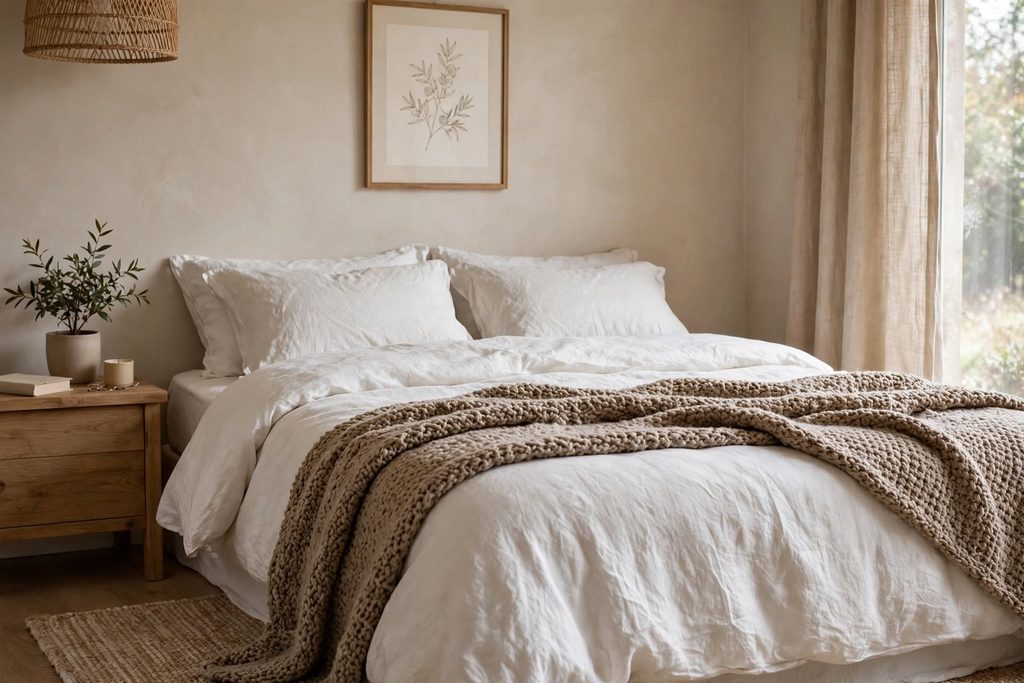
Look at a bedroom with white linen, warm wood, a few botanical prints, and a chunky taupe blanket folded across the foot of the bed.
Nothing needs to shout for attention. The textures work together.
The linen brings softness. The wood adds warmth. The blanket introduces a more pronounced pattern and a sense of depth. Its color connects the different elements without making them identical.
This is one of the most useful lessons in decorating: pieces don’t have to match exactly to belong together.
They can share a color family, repeat a texture, or create a pleasing contrast. A handmade blanket can be particularly useful here because its stitches add visual interest without requiring a busy print.
The room doesn’t need to look untouched. It needs to feel considered.
The Living Room Doesn’t Have to Be a Magazine Spread
We’ve become accustomed to photographs of living rooms where every cushion is perfectly positioned and every throw looks as though it has been folded for a photo shoot.
Those images can be inspiring. They can also create an unrealistic idea of what a home should look like every day.
A real living room has books left on the table, a mug waiting to be washed, and a blanket that moves from the sofa to the reading chair and back again.
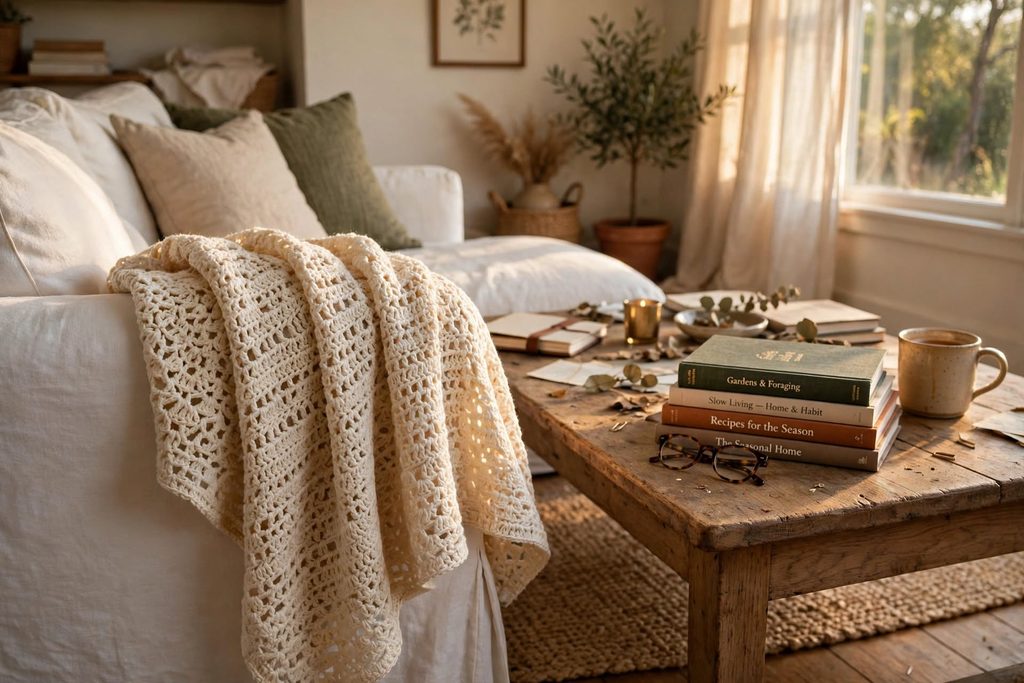
A handmade throw can help a room feel collected rather than overly coordinated. Its texture adds another layer, while its everyday use gives it a practical place in the home.
You don’t need to arrange it perfectly every time you leave the room. Fold it when you want a neater appearance; leave it draped over a chair when that suits your routine.
A home can be beautiful without remaining untouched.
The blanket isn’t there to perform for a photograph. It’s there to be used.
How to Care for Your Handmade Blanket
A little attention can help a handmade blanket remain attractive and useful. The right routine depends on the fiber, stitch pattern, and construction, so always follow the maker’s care instructions first.
Wash only when needed. Airing a blanket between uses may be sufficient when it isn’t soiled. Clean it when it needs washing, following the recommended method.
Avoid unnecessary heat and agitation. These can cause shrinkage, felting, or distortion in some fibers. Don’t assume every wool or cotton blanket can be washed in the same way.
Dry it appropriately. Many heavy knits benefit from drying flat because hanging them while wet can stretch the fabric. Follow the specific care instructions and reshape gently if recommended.
Store it folded. Folding is often preferable to hanging heavy knitted blankets for long periods, which can distort their shape.
Manage pilling carefully. Some pilling is normal when fibers rub together. If needed, use a suitable fabric comb or sweater shaver carefully and follow its instructions.
Keep it away from prolonged direct sunlight. Strong sunlight can fade some dyes and fibers over time. Rotate the blanket or move it away from a consistently sunny spot if fading is a concern.
Choose storage with the material in mind. Make sure blankets are clean and completely dry before putting them away for an extended period.
Good care cannot make every textile last forever. It can, however, help you enjoy your favorite blanket for longer.
Your Blanket Manifesto
You don’t need to replace every expensive throw in your home. You don’t need to buy a handmade blanket simply because handmade is fashionable. And you certainly don’t need to spend more than your budget allows to create a beautiful room.
Start by paying attention.
Which blanket do you reach for first? Which texture do you enjoy touching? Which piece works with your furniture, suits your climate, and feels easy to care for?
Perhaps your favorite is a handmade crochet afghan from a local market. Perhaps it is a chunky knit made by someone you love. Perhaps it is an affordable cotton blanket that has become part of your everyday routine.
Keep the pieces that earn their place.
If you choose a handmade blanket, appreciate the work behind it. Notice the stitches, the yarn, the finishing, and the time that may have gone into making it. Look after it according to its material and construction. Let it become part of your home rather than something you are afraid to use.
Luxury isn’t a competition between handmade and factory-made, inexpensive and expensive, imperfect and flawless.
It is the pleasure of living with things that make sense for you.
A blanket may be a simple object: yarn, stitches, texture, and warmth. But the right one can become part of the small rituals that make a house feel personal.
May your evenings be comfortable, your favorite textiles be well loved, and your home be beautiful in a way that doesn’t require everything to be perfect.
Because the most luxurious room isn’t necessarily the one with the most expensive things.
It’s the one you are happy to come home to.