A rug is often one of the last things we think about when decorating a room. We choose the sofa, arrange the cushions, hang the curtains, and perhaps add a plant or two. Then we look down and realize that the floor still feels unfinished.
But a rug can do more than fill an empty space. It can soften the lines of a room, introduce texture, connect different colors, and make a collection of furniture feel intentional.
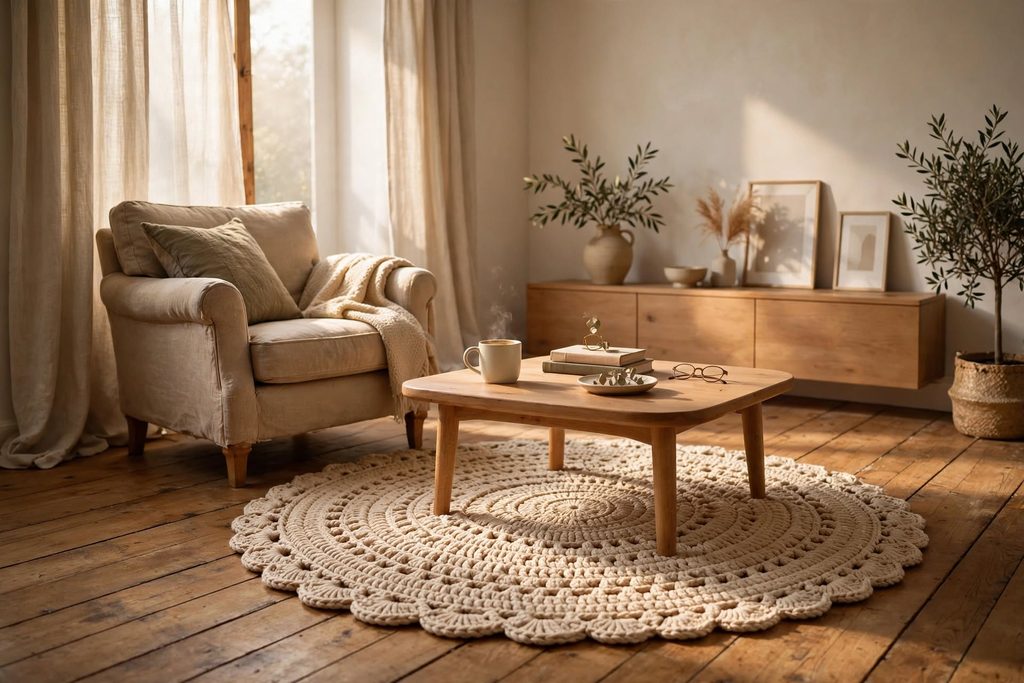
That is one reason crochet rugs are finding their way back into contemporary interiors. They bring something that smooth, factory-made surfaces often lack: visible texture, a handmade character, and the small irregularities that make an object feel individual.
Picture a quiet living room with warm wooden floors, linen curtains, a well-loved armchair, and a round crochet rug beneath a coffee table. Nothing needs to be perfectly matched. The room simply feels considered, comfortable, and personal.
Crochet rugs are not just for traditional cottages or nostalgic interiors. With the right color, yarn, pattern, and placement, they can work beautifully in modern, Scandinavian, rustic, bohemian, and minimalist homes.
The Forgotten Canvas: Why Your Floor Deserves Attention
When we decorate a room, our attention naturally moves toward eye-level details. We notice wall art, shelves, lamps, and the furniture that takes up most of the space.
The floor is often treated as a background.
A crochet rug changes that relationship. Its loops and stitches create a surface with visible depth, giving the eye something interesting to discover without requiring another decorative object on the walls.
Unlike a flat printed design, crochet has a physical pattern. Depending on the stitch, the yarn, and the way the light falls across it, the rug can look delicate and open or thick and sculptural.
This makes crochet particularly useful in rooms that feel a little too smooth. A space filled with painted walls, glass, metal, and polished wood can benefit from the softness of a textile with a more pronounced texture.
The key is balance. A detailed crochet rug does not need to compete with a patterned sofa, a busy wallpaper, and several decorative cushions. Sometimes it works best when the rest of the room gives it space.
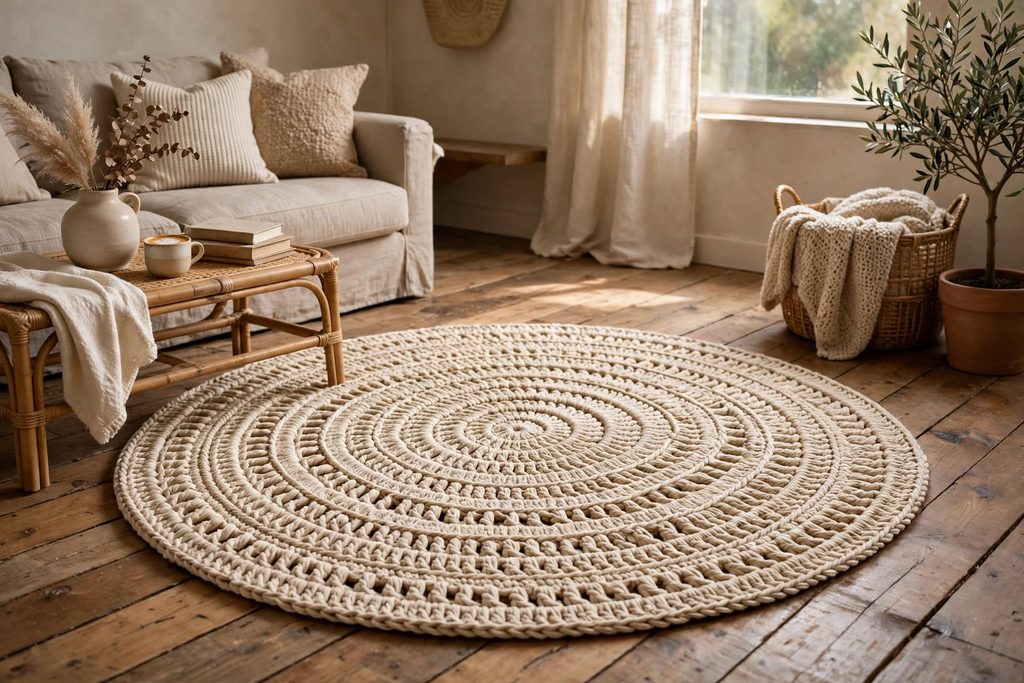
Why Crochet Rugs Feel So Different
Crochet rugs have a visual quality that comes from the construction itself. The stitches are easy to see, the surface has dimension, and the pattern can change subtly as the yarn moves through each row.
That handmade appearance can bring character to an otherwise simple interior.
A machine-made rug may be the right choice for durability, convenience, or a particular design. A crochet rug offers a different appeal: the rhythm of repeated stitches, the texture of the yarn, and the sense that the pattern was built one loop at a time.
Neither option is automatically better. What matters is the atmosphere you want to create and how the rug will be used.
A crochet rug can be especially effective when you want to introduce texture without adding more colors. A cream rug with a raised stitch pattern, for example, can add interest to a neutral room while keeping the palette calm.
Choosing the Right Yarn
The yarn influences the appearance, weight, comfort, and care requirements of a crochet rug.
Cotton: Cotton yarn is a popular choice for smaller rugs and decorative pieces. It offers clear stitch definition and comes in a wide range of colors. Check the yarn label and finished rug construction for washing and drying instructions.
Wool: Wool can create a warm, resilient texture and is often suitable for rugs intended to feel substantial underfoot. Care requirements vary, so check the fiber content and cleaning guidance before choosing it.
Cotton blends: Blended yarns can offer a useful balance of texture, flexibility, and ease of care. Their performance depends on the fibers used and how the rug is constructed.
Recycled fabric yarn: Thick fabric yarn can produce a bold, contemporary look with prominent stitches. It may also create a heavier rug, so consider its weight and how easily you can move or clean it.
Chunky specialty yarn: Oversized yarn creates dramatic texture, but the finished rug may be bulky and less practical in a busy walkway. Check the thickness and stability before using it in a high-traffic area.
Before starting a project, consider the finished rug’s weight, thickness, washing instructions, and intended location—not just the color shown on the yarn label.
The Shape That Changes Everything
Color and texture matter, but shape can influence how a rug relates to the furniture around it.
Crochet rugs are particularly interesting in this respect because their handmade construction works well with both clean geometric outlines and softer, organic forms.
Round Crochet Rugs: A Softer Center
A round rug can soften a room filled with straight lines. It works well beneath a small coffee table, beside an armchair, or in a reading corner where you want to create a distinct little zone.
In a living room, the size matters. A rug that is too small may look disconnected from the furniture. If possible, choose a size that relates clearly to the coffee table or seating arrangement rather than leaving it floating in the middle of the floor.
Round rugs can also be lovely in bedrooms, nurseries, and quiet corners where a gentle shape feels more natural than a rectangle.
Oval Crochet Rugs: Flow Without Sharp Corners
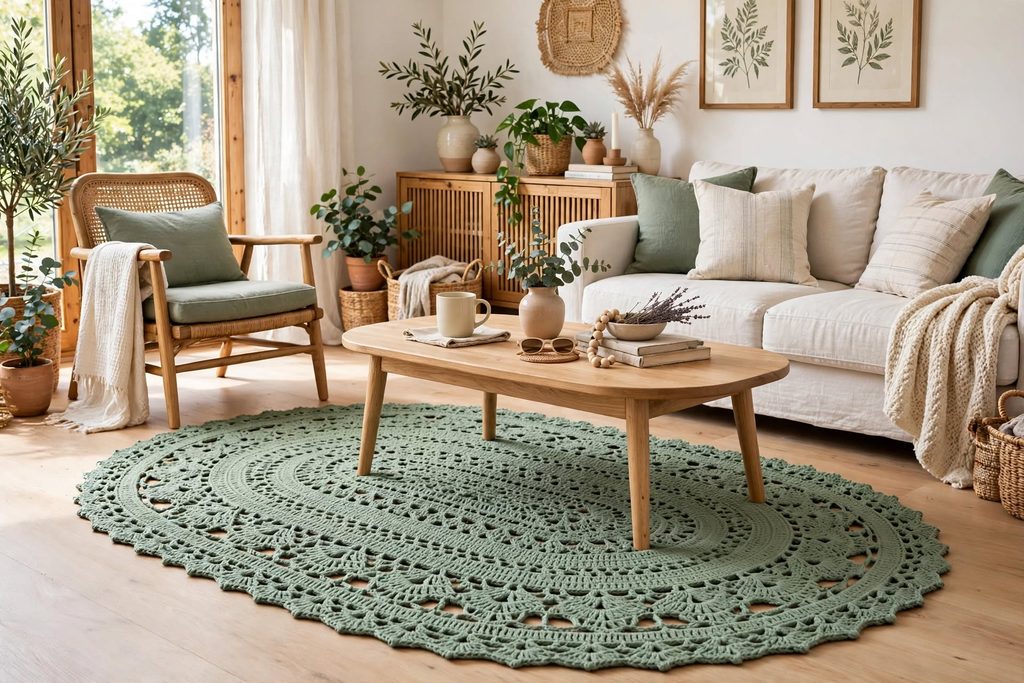
An oval crochet rug offers a slightly different effect. It has the softness of a rounded shape but creates a longer visual line, which can work well beside a bed, along a narrow space, or in front of a sofa.
Oval designs are also a natural fit for rustic and cottage-inspired rooms, especially when paired with wood, linen, ceramic accessories, and muted colors.
A sage-green or warm beige oval rug can add color without overwhelming a neutral palette.
Rectangular Crochet Rugs: Practical and Versatile
Rectangular rugs are easy to position alongside beds, beneath narrow coffee tables, or in areas where a clear outline helps organize the furniture.
They can look modern when made in a single color with a simple stitch, or more traditional when worked in stripes and decorative borders.
For kitchens, entrances, and other frequently used areas, pay particular attention to thickness, cleaning requirements, and whether the rug stays securely in place.
A beautiful rug should suit the way you live, not make everyday movement more difficult.
The Return of Slow Decor
Slow decor is not about filling a home with handmade objects simply because they are handmade. It is about choosing pieces with care and giving them a meaningful role in the space.
A crochet rug fits this approach naturally. It can be a project made over several evenings, a gift created for someone special, or a carefully chosen piece that brings texture to a room.
The process also offers a different relationship with decorating. Instead of buying several accessories to change a room all at once, you can begin with one textile and build around it.
Choose the rug first. Notice its main colors and the feeling of its texture. Then introduce complementary materials—perhaps a wooden side table, a linen cushion, a ceramic vase, or a woven basket.
The result does not have to look like a perfectly staged photograph. A room can feel finished while still showing signs of everyday life.
And if you enjoy making things yourself, a crochet rug offers the satisfaction of watching a simple sequence of stitches gradually become something useful.
5 Ways to Style a Crochet Rug Without Making Your Home Feel Overdecorated
A crochet rug can be a statement piece, but it does not need to dominate the room. These five approaches help its texture feel intentional rather than excessive.
1. Give the Pattern Room to Be Seen
If your rug has an intricate stitch pattern, keep nearby textiles relatively simple. Plain cushions, understated curtains, and solid-color upholstery allow the rug’s construction to stand out.
This does not mean everything else must be neutral. It simply helps to choose one main pattern and let the other elements support it.
2. Contrast Crochet With Smooth Surfaces
Texture becomes more noticeable when it sits beside something different.
Try a crochet rug with a smooth wooden floor, a simple painted wall, or furniture with clean lines. In a rustic room, pair the rug with linen, glazed ceramics, or a plain cotton throw.
The contrast makes the rug feel like a deliberate design choice.
3. Try a Monochrome Palette
A crochet rug does not need several colors to attract attention.
A cream rug on a pale wooden floor, a charcoal rug in a light room, or a muted green design among natural materials can create interest through texture alone.
If you choose a rug close in color to the floor, look for enough difference in shade or stitch depth to keep the outline visible.
4. Layer Carefully
Layering can add depth, but it requires attention to stability and proportions.
If you want to layer a crochet rug over a larger rug, make sure both lie flat and do not slide against one another. Avoid raised edges that could catch a foot, particularly in busy walkways.
A smaller decorative crochet rug may work best in a low-traffic corner rather than beneath a chair that moves frequently.
5. Let Side Lighting Reveal the Stitches
The texture of crochet becomes more visible when light creates gentle shadows between the stitches.
Place the rug where natural light can reach it, or use a nearby lamp to illuminate its surface from the side. This can help a simple, single-color design feel more dimensional.
You do not need dramatic lighting. Often, the quiet combination of texture and soft daylight is enough.
Are Crochet Rugs Practical for Everyday Life?
Crochet rugs can be beautiful and useful, but their practicality depends on the pattern, yarn, construction, size, and location.
Before choosing or making one, consider how the room is used.
- For a living room: A stable, appropriately sized rug can work well beneath a coffee table or in a quiet seating area.
- For a bedroom: A smaller rug beside the bed can introduce softness and texture, provided its edges lie flat.
- For a kitchen: Think carefully about spills, frequent cleaning, and the rug’s position near cupboards or appliances.
- For an entryway: Dirt and moisture can make maintenance more demanding. Choose materials and a construction suited to the conditions.
- For homes with children or pets: Consider snagging, loose loops, cleaning needs, and whether the rug can be kept securely in place.
One important detail is often overlooked: crochet rugs can move on smooth flooring. Use a suitable non-slip rug pad where appropriate, and check regularly that the rug and pad remain flat.
Avoid placing a thick or curling rug where people need to walk quickly or where doors must pass over it. If a rug becomes stretched, misshapen, or difficult to secure, move it to a more suitable location.
How to Care for a Crochet Rug
A little preparation can make a crochet rug easier to live with.
Check the fiber content. Cotton, wool, synthetic blends, and fabric yarn may require different cleaning methods. Follow the yarn manufacturer’s instructions and any care guidance supplied with the finished rug.
Vacuum gently. Use a suitable setting for the rug’s construction. Avoid aggressive suction or attachments that might catch the loops.
Blot spills promptly. Press with a clean cloth rather than rubbing the spill deeper into the fibers. Test any cleaning product on an inconspicuous area first.
Dry it thoroughly. Follow the recommended washing and drying method. A thick rug that remains damp for too long may develop an unpleasant odor or other moisture-related problems.
Keep it away from excessive direct sunlight. Strong sunlight can fade some yarn dyes over time, so consider rotating the rug or moving it if you notice uneven fading.
Check its shape and edges. If the rug stretches, curls, or begins to slip, address the problem before it becomes a tripping hazard.
A crochet rug is a textile, not an indestructible surface. Choosing the right place for it and caring for it according to its materials will help it remain attractive for longer.
Make or Buy? Finding the Right Crochet Rug for Your Home
There is no single right way to bring crochet into your interior.
If you enjoy making things, crocheting your own rug lets you choose the color, dimensions, stitch pattern, and yarn. You can adapt the design to a particular corner or work with materials you already have.
The trade-off is time. Larger rugs require more yarn and more work than small decorative pieces, and the finished result depends on the pattern, materials, and construction.
If you would rather start with a pattern, look for instructions that clearly explain the required yarn, hook size, finished dimensions, stitch techniques, and care considerations. Check the skill level and whether the design is intended for a rug rather than a decorative wall hanging.
This link is intended for exploring the linked pattern or craft resource; check the product description for exactly what is included before purchasing.
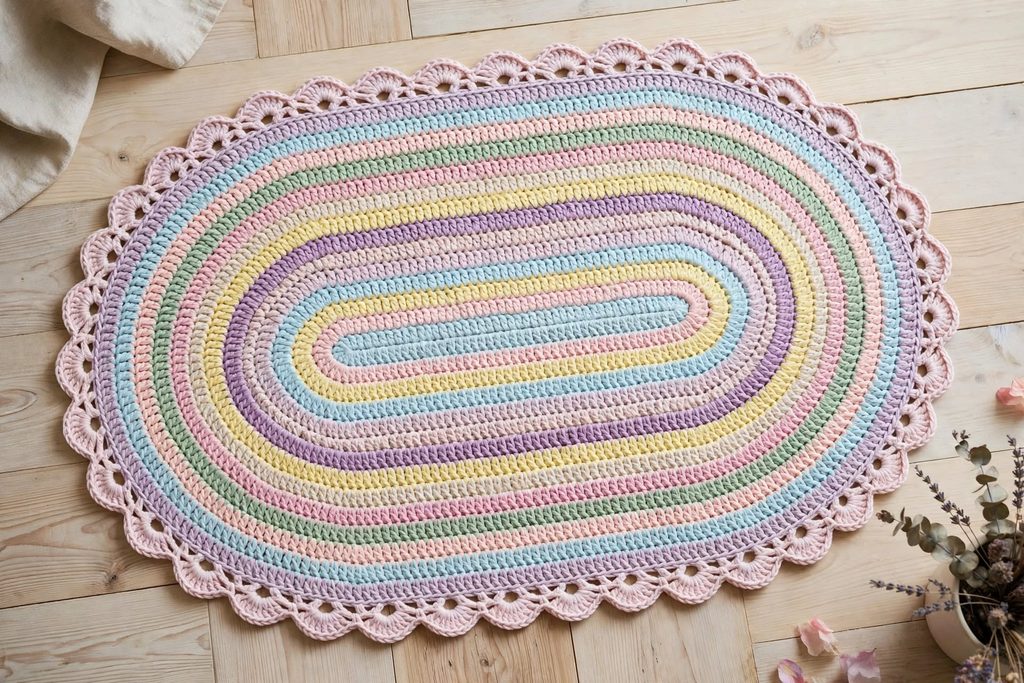
If you are buying a finished rug instead, check its exact dimensions, materials, construction, cleaning instructions, and return policy. Product photographs can make rugs look larger or thicker than they are, so the measurements matter.
Whichever route you choose, start with the space rather than the trend. A rug should work with your furniture, suit the way you use the room, and bring you a texture or color you genuinely enjoy.
Your Home, One Stitch at a Time
A crochet rug does not have to transform an entire room to make a difference.
Sometimes it is simply the piece that softens the space beside a favorite chair. Sometimes it introduces a little color to a quiet bedroom. And sometimes it becomes the starting point for a room that gradually takes shape around it.
That is part of the appeal of crochet: a pattern made from small, repeated movements becomes something with a place in everyday life.
You do not need a perfect cottage, antique furniture, or a room styled for a magazine. A crochet rug can belong in a modern apartment just as comfortably as it does in a rustic home.
Choose a shape that suits the space, a yarn that makes sense for your needs, and a pattern you will still enjoy looking at months from now.
Then let the rest of the room come together around it—one thoughtful detail, and perhaps one stitch, at a time.