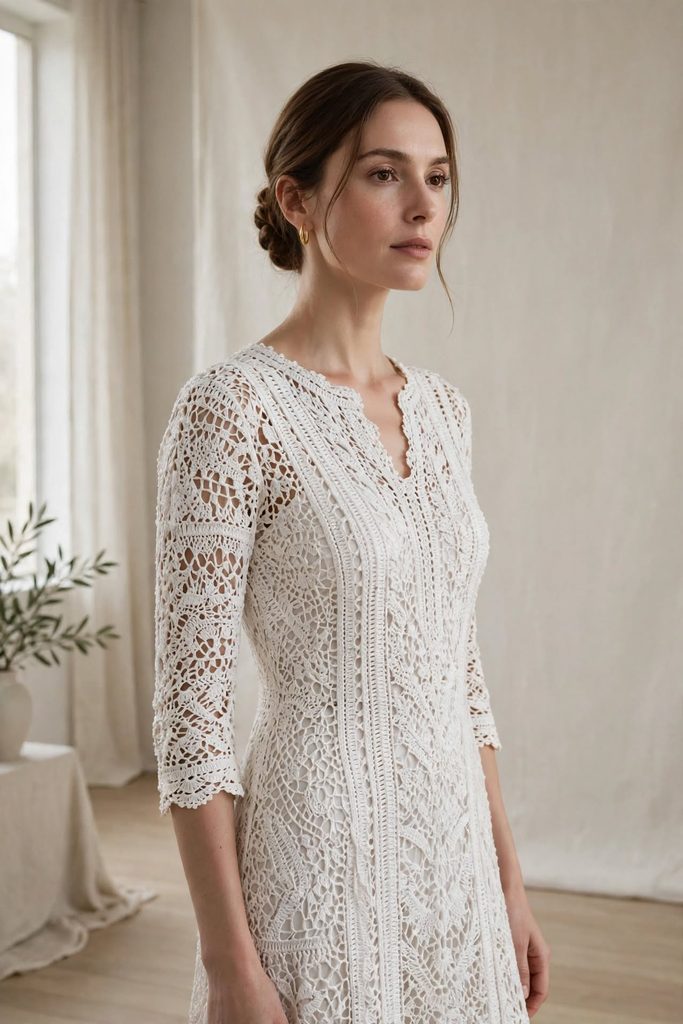
Some outfits announce their price. Others make you look twice.
A beautifully chosen crochet dress belongs to the second category. It catches the light differently, creates shadows through its stitches, and brings a sense of texture that smooth, uniform fabrics often lack. It can feel romantic, modern, artistic, or quietly luxurious—without relying on a recognizable logo.
But here is the interesting part: crochet does not automatically look expensive, and designer clothing does not automatically look better. The difference often comes down to proportion, construction, texture, fit, and the way a piece is styled.
A crochet garment with thoughtful details can become the most memorable item in an outfit. It does not need to imitate luxury fashion. Its appeal comes from offering something different.
The Price Tag Illusion: What Makes Fashion Look Expensive?
We often associate expensive clothing with a particular silhouette, carefully chosen colors, beautiful materials, and clean finishing. Designer labels can influence our expectations, but the label alone cannot guarantee that a garment will look exceptional.
The same visual principles apply to crochet.
A dress with a balanced silhouette, intentional stitch patterns, and a well-finished neckline can look more polished than a much more expensive garment that fits poorly or feels disconnected from the person wearing it.
Crochet also has a quality that is difficult to reproduce with a flat surface: visible construction. You can see how the stitches connect, how the pattern changes, and how the fabric moves around the body. That structure gives the garment its own visual character.
The goal is not to make crochet look like designer clothing. It is to choose crochet that looks considered, distinctive, and beautifully made.
Why Crochet Has Such a Distinctive Look
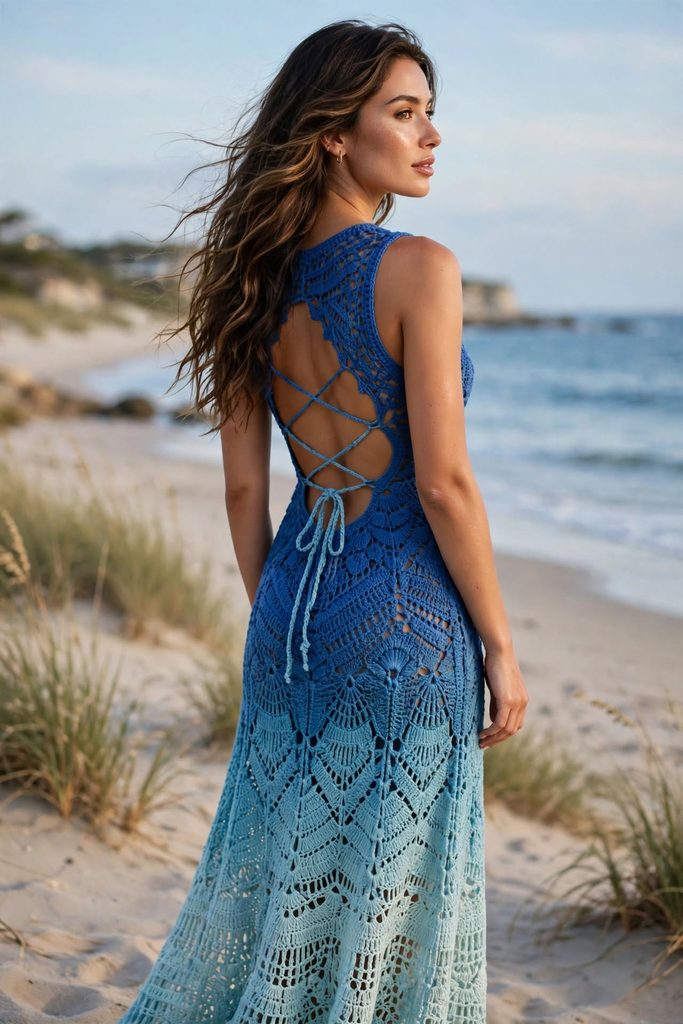
Crochet changes the way a garment interacts with light. Small openings, raised stitches, and layered patterns create highlights and shadows that shift as the wearer moves.
That visual depth is one reason crochet can stand out even when the color palette is simple.
Texture Creates Visual Interest
A plain fabric may depend on its color, cut, or print to make an impression. Crochet has another element to work with: the stitch itself.
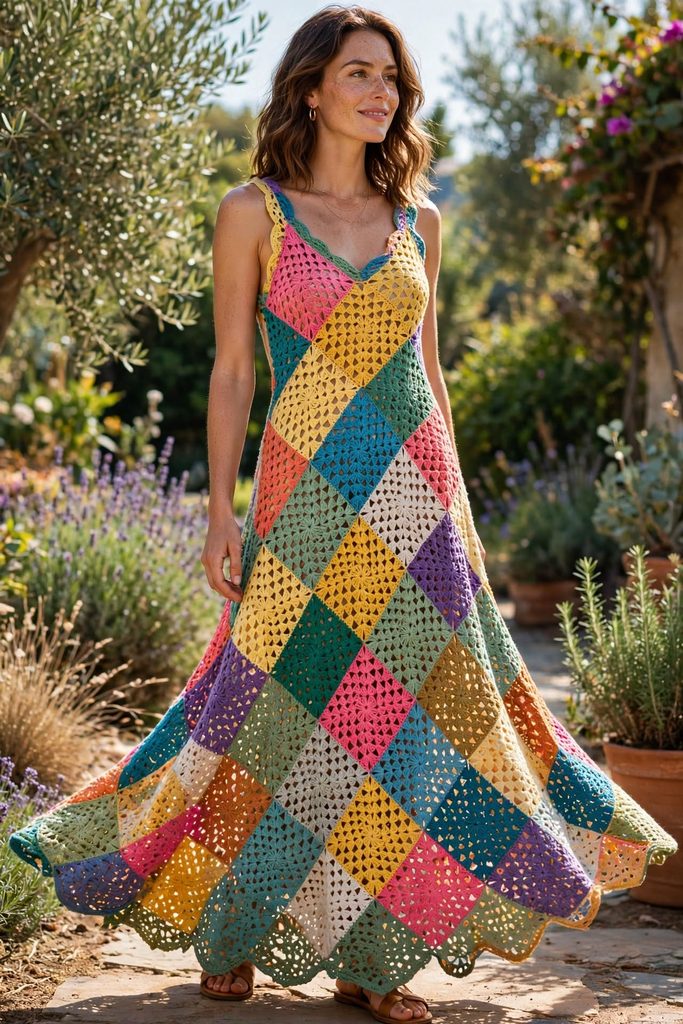
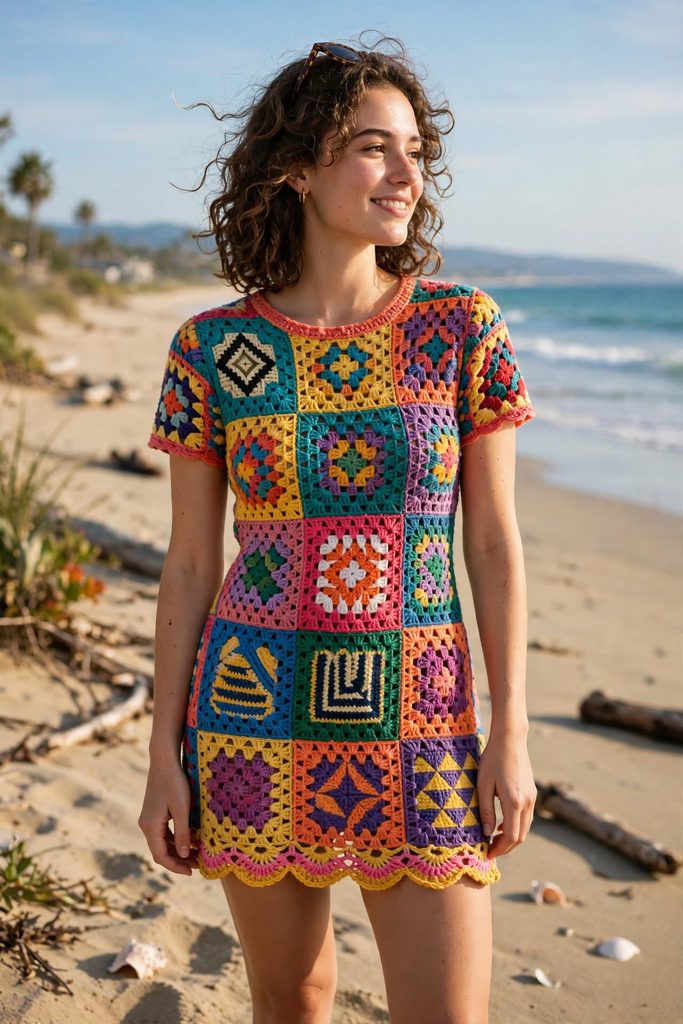
Openwork, shell stitches, granny squares, ribbed sections, and dense textured patterns all create different effects. Some feel delicate and airy; others look bold and architectural.
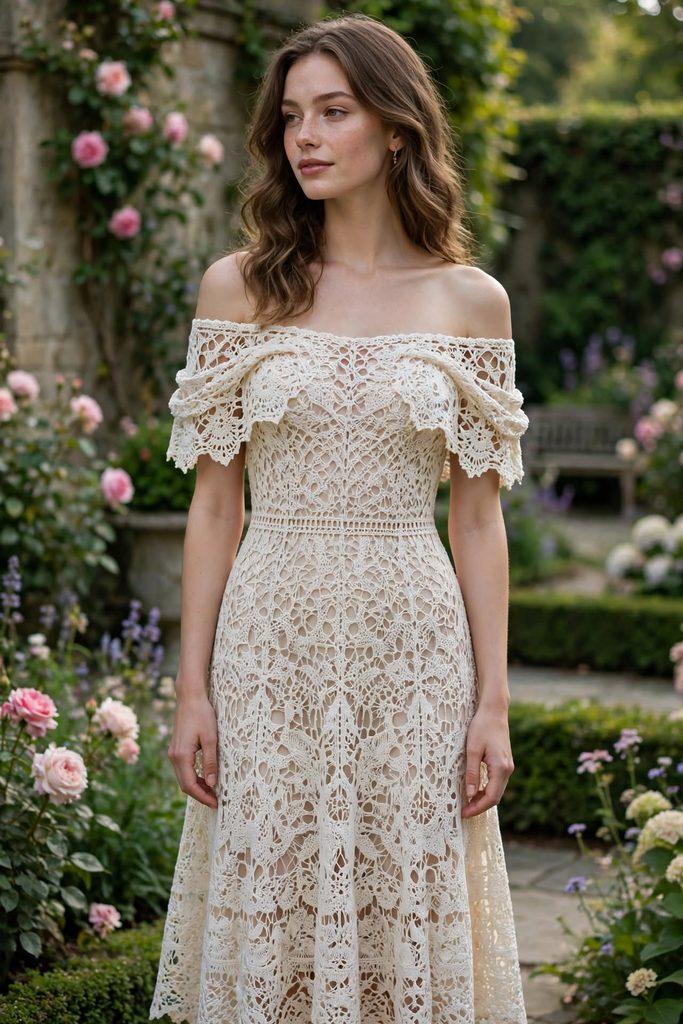
This variety allows crochet dresses to move between styles. An ivory lace dress can feel romantic and refined. A geometric dress in saturated colors can look playful and fashion-forward. A simple crochet beach dress can feel relaxed without being visually ordinary.
The most successful designs usually have a clear point of view. They do not need every possible detail at once.
The Space Between the Stitches Matters
Openwork is part of crochet’s appeal, but it also affects how wearable and polished a garment feels.
A pattern that looks beautiful on a model may require a lining, a slip, or carefully chosen underlayers in everyday life. The amount of coverage, the placement of openings, and the contrast between the crochet and the layer beneath it all change the final look.
Before choosing a dress, consider where you plan to wear it. A sheer beach cover-up has different needs from a dress intended for a summer dinner or a city afternoon.
The right amount of transparency makes the design feel intentional rather than unfinished.
Texture, Light, and the Art of Being Memorable
A memorable outfit does not always need bright colors or dramatic accessories. Sometimes, the fabric provides all the interest.
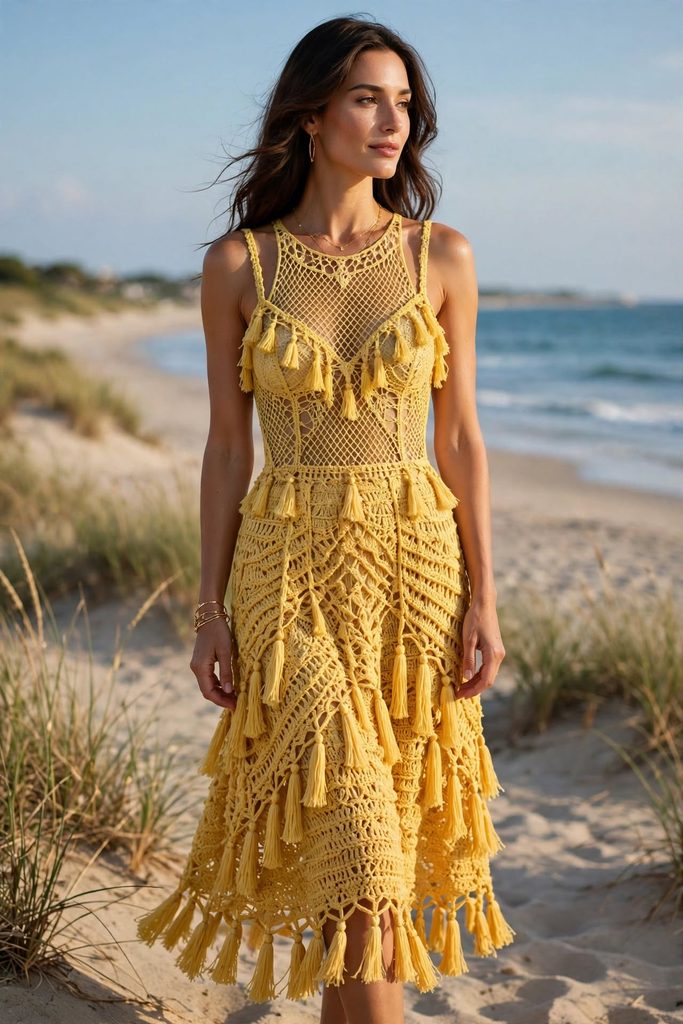
Crochet can look different in morning light, late-afternoon sunshine, and soft indoor lighting. Raised stitches create subtle shadows, while open sections reveal glimpses of the layer underneath. Fringe and loose edges add movement.
This is especially effective when the rest of the outfit gives the crochet room to stand out.
Imagine a textured dress with simple sandals, a small woven bag, and understated jewelry. The dress remains the focal point because the other pieces support it instead of competing with it.
Now imagine the same dress paired with several statement accessories, a busy print, and elaborate shoes. The individual pieces might be attractive, but the overall outfit could feel crowded.
The lesson is simple: when the garment already has texture, styling often works best when it leaves space for that texture to be seen.
Color Changes the Mood
Color plays a major role in how crochet is perceived.
- Ivory, cream, and soft beige emphasize stitch detail and create a gentle, understated look.
- Black and deep brown can make openwork feel more graphic and dramatic.
- Blue and green bring a fresh, relaxed quality, particularly in summer silhouettes.
- Yellow and coral feel energetic and work well with simple accessories.
- Multicolored granny squares create a more expressive, nostalgic, or playful statement.
There is no single color that makes crochet look luxurious. The important thing is whether the color suits the design, the occasion, and the overall outfit.
How Crochet Can Elevate an Entire Outfit
A striking garment is only part of the picture. The way you wear it determines whether the final outfit feels harmonious.
1. Let One Piece Lead
If your crochet dress has a detailed pattern, dramatic sleeves, fringe, or a colorful arrangement of squares, allow it to be the main feature.
Choose accessories that complement rather than compete with it. Minimal sandals, a simple clutch, or delicate jewelry can be enough.
This does not mean every crochet outfit must be understated. It simply means that each element should have a purpose.
2. Pay Attention to Proportion
The shape of a garment matters as much as its stitch pattern.
A long crochet dress may work beautifully with a defined waist or a clean vertical silhouette. A shorter, boxier design might look balanced with simple footwear and a structured bag.
Think about where the hem falls, how the neckline frames the shoulders, and whether the garment moves comfortably when you walk or sit.
The best fit is not necessarily the tightest fit. It is the one that allows the design to look intentional while letting you move naturally.
3. Choose Underlayers Carefully
Because crochet often includes open spaces, what you wear underneath becomes part of the outfit.
A slip in a similar color can create a continuous look. A contrasting layer can emphasize the stitch pattern and make the design more graphic. For a relaxed summer outfit, a simple camisole and shorts may be appropriate, depending on the garment’s cut and transparency.
Check the result in natural light before leaving home. A layer that looks opaque indoors may appear much more transparent outside.
4. Balance Handmade Texture with Clean Lines
Crochet pairs well with simple, structured pieces.
A textured dress can work with a neat leather or faux-leather bag, understated sandals, or a lightweight jacket with a clean silhouette. The contrast between the handmade texture and the simpler shapes gives the outfit definition.
For a more relaxed look, woven accessories and natural materials can reinforce crochet’s artisanal character. For a sharper look, choose accessories with more defined shapes.
Neither approach is automatically better. The right combination depends on the mood you want to create.
5. Dress for the Occasion
A crochet beach cover-up, an openwork evening dress, and a lined crochet midi dress serve different purposes.
For daytime, consider comfortable shoes, practical layers, and a bag that suits the setting. For an evening event, pay closer attention to the garment’s lining, the finish of its edges, and how it looks under artificial lighting.
A beautiful piece becomes more versatile when you know how to adapt it rather than expecting it to work for every occasion.
The Handmade Advantage in a Machine-Made World
Crochet has a visible relationship with the person who made it. The stitches form a pattern through repeated movements, and the construction is often part of the design’s appeal.
That does not mean every handmade garment is superior to every factory-made one. Quality depends on the materials, the skill involved, the construction, and the care taken during finishing.
Nor is every crochet piece made by hand: some knitwear and crochet-inspired fabrics are produced mechanically. If the handmade origin matters to you, check the garment’s description and production details rather than relying on appearance alone.
Still, well-made handmade crochet offers something many shoppers value: the sense that a garment was created through a particular process, with attention to its pattern and structure.
The stitch pattern may be intricate or simple. The colors may be restrained or exuberant. What matters is how those choices come together in the finished piece.
Small Details Make a Difference
When examining a crochet garment, look closely at:
- Consistent tension: Stitches should generally look intentional, without unexplained loose areas or abrupt changes.
- Secure joins: Seams and connections between motifs should feel stable.
- Neat edges: Necklines, armholes, and hems should look finished rather than stretched or unfinished.
- Thoughtful construction: Straps, closures, and areas that carry weight should feel secure.
- Suitable materials: The yarn or fabric should work for the garment’s intended use and care requirements.
Minor variations may be part of handmade character, but they should not be confused with poor construction. The distinction is whether the variation feels intentional and whether the garment remains comfortable and durable.
How to Choose a Crochet Piece That Looks Polished
You do not need an expensive wardrobe to find a crochet piece that makes an impression. You need to know what to look for.
Start with the Fit
Check the shoulders, bust, waist, and hem. If the garment includes straps, make sure they stay in place. If it is fitted, test whether you can sit, walk, and move comfortably.
For online purchases, consult the size chart and garment measurements rather than relying on the size label alone.
Examine the Finish
Look at close-up photographs when shopping online. Check the edges, joins, lining, and closures. If the seller provides only distant photographs, it may be difficult to judge construction quality.
For a handmade item, useful details include the yarn composition, dimensions, care instructions, and whether the garment is made to order or sold ready-made.
Consider the Material
Different fibers behave differently. Cotton can provide structure and breathability, while some other fibers may feel softer, stretch more, or drape differently. Blends can combine useful properties, but their performance depends on the specific yarn and construction.
Do not assume that a natural fiber is always better or that a synthetic fiber is always inferior. Consider the garment’s weight, texture, care needs, and how it is expected to hold its shape.
Think Beyond the First Outfit
Before buying, imagine at least two or three ways you could wear the piece. Could it work with sandals and a woven bag? Could you layer it with a jacket or cardigan? Would a different slip or set of accessories change its mood?
A garment that fits into your existing wardrobe is more likely to earn repeated wear than one that looks wonderful in a single photograph but is difficult to style.
Check the Care Instructions
Crochet garments can stretch or lose their shape if they are washed or stored incorrectly. Follow the care label or the maker’s instructions. Depending on the yarn and construction, a garment may need gentle washing, careful drying, or flat storage.
Taking care of a piece helps preserve its shape, texture, and appearance over time.
Is Crochet More Sustainable Than Designer Fashion?
It is tempting to assume that handmade clothing is automatically a more sustainable choice. The reality is more complicated.
A handmade garment may be made in small quantities, customized to the wearer, or kept for years because its owner values the work involved. Those qualities can encourage a more thoughtful relationship with clothing.
However, the environmental impact also depends on the fiber, where and how the materials were produced, how long the garment lasts, and whether it is worn regularly. Handmade production alone does not guarantee a lower footprint.
The same is true of designer fashion. Price and branding do not tell you enough about a garment’s durability, production conditions, or environmental impact.
A practical approach is to choose carefully, wear what you buy, repair items when reasonable, and look after the pieces you want to keep. If sustainability matters to you, investigate the specific garment and its materials rather than relying on a label or aesthetic.
Your Crochet Style Manifesto
You do not need to reject designer fashion to appreciate crochet. You do not need to prove that handmade clothing is always better, either.
The more interesting idea is that style cannot be measured by price alone.
A crochet dress can be striking because its stitches create texture, because its colors feel alive, because its shape suits the wearer, or because it brings personality to a simple outfit. Its value lies in how thoughtfully it is made, chosen, and worn—not in whether it resembles something from a luxury runway.
Choose the piece that makes you want to wear it. Look for good construction, a comfortable fit, and details that speak to your own taste. Give it room to stand out, and take care of it once it becomes part of your wardrobe.
Because the most memorable clothes are not always the ones with the biggest names attached to them.
Sometimes, they are simply the ones that feel unmistakably right.