White Crochet Bag With Wooden Handle — Or: How 847 Beads and One Stubborn Thread Taught Me the Meaning of Life
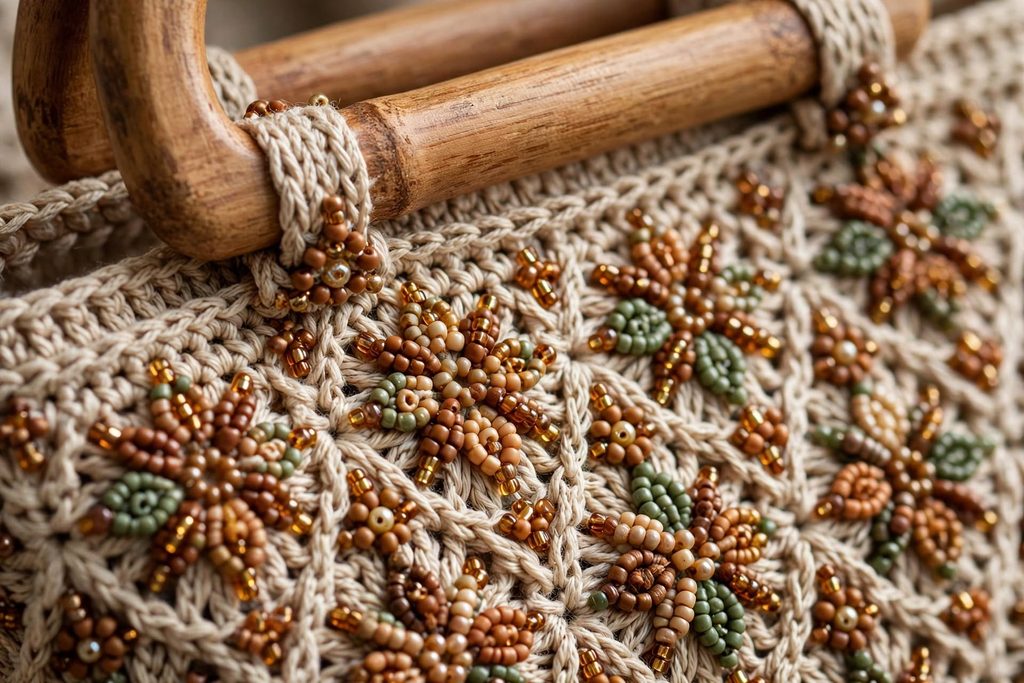
Hundreds of tiny beads, countless stitches, and a project that turned out to be more complicated than it looked.
Chapter 1: The Photo That Ruined My Life
It was 2 AM. I was scrolling Instagram, minding my own business, when I saw it.
A bag.
Not just any bag. A beautiful crochet bag with delicate beads, a lovely texture, and the kind of finish that makes you wonder whether the person who made it has eight hands and unlimited patience.
I zoomed in on the stitches. I studied the shape. I tried to figure out how the beads were positioned.
Then I made a terrible decision.
“I bet I could make that.”
Famous last words.
Soon, I was thinking about crochet hooks, beads, yarn, and all the little details that would turn an inspiring photograph into a real project.
I had no idea how much patience it would require.
Chapter 2: The Anatomy of an Obsession
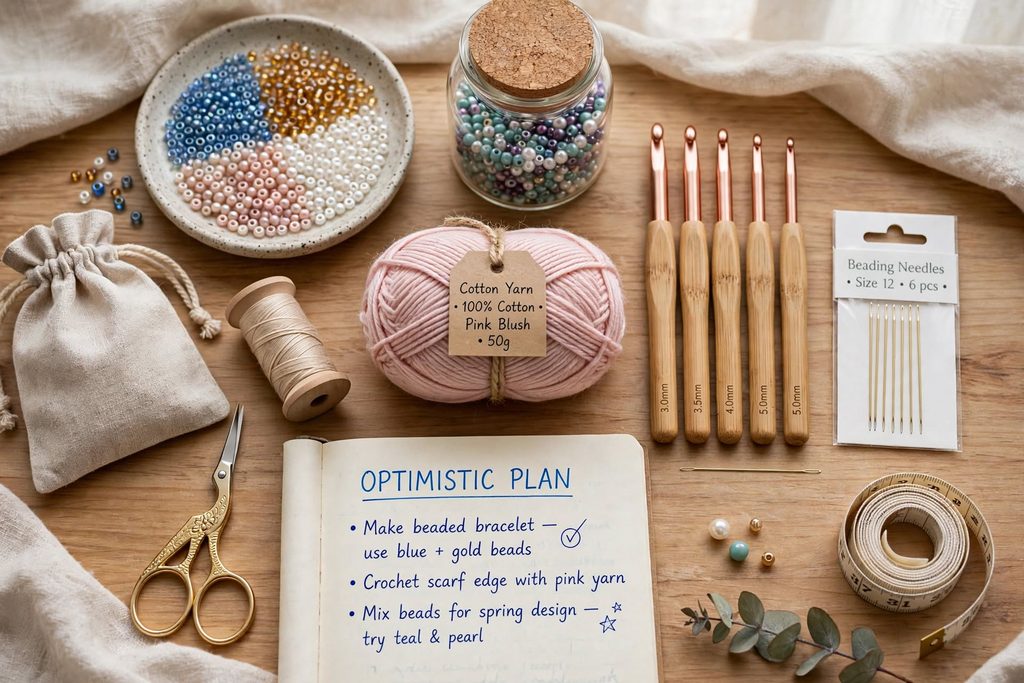
The tools of the project: beads, hooks, yarn, and an optimistic plan.
Here’s what makes bead crochet different from an ordinary crochet project: the crocheting is only part of the work.
Depending on the pattern and technique, beads may need to be threaded onto the yarn before you begin. That means planning the sequence carefully, because changing the order later isn’t always simple.
The preparation can be surprisingly time-consuming. Small beads slip away, thread can catch, and keeping everything organized becomes its own little challenge.
And then comes the actual crocheting.
With many beaded crochet techniques, you move a bead into position as you work a stitch. The exact method depends on the pattern, but consistency matters if you want the finished texture to look even.
Hour 1: Look at those beads! This is going to be gorgeous.
Hour 4: Why is this taking so long?
Hour 8: I have become one with the bead.
At some point, the project stops being just about making a bag. It becomes a lesson in slowing down, paying attention, and accepting that tiny details take time.
Chapter 3: The Physics of Impatience
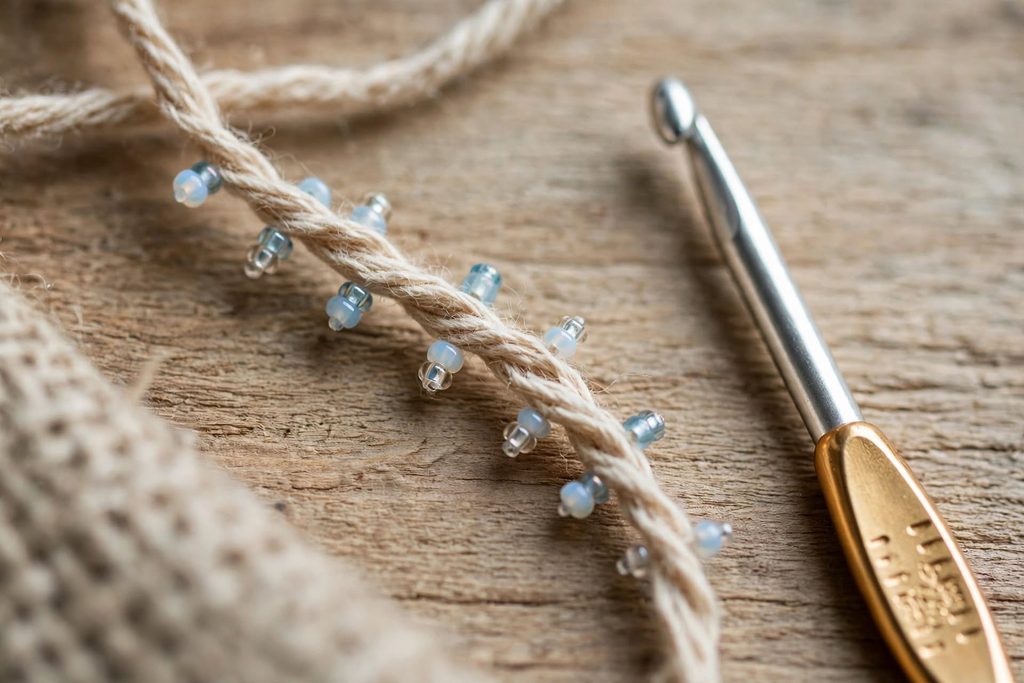
Every bead is a tiny detail. Every tiny detail takes time.
Let me explain the mathematics of bead crochet with a little imaginary experiment.
Suppose a bag requires 2,000 stitches. If each stitch takes two seconds, that’s about 67 minutes of stitching.
If each stitch takes eight seconds, the same number of stitches takes approximately 4 hours and 27 minutes.
And that’s only a simplified calculation. It doesn’t include threading the beads, checking the pattern, correcting mistakes, or taking breaks.
The real time depends on the design, the stitch technique, the size of the beads, and your experience.
I also learned an important lesson about preparation: if your beads need to follow a particular sequence, it pays to check that sequence before you begin crocheting. A small mistake can become much harder to fix once you’ve worked several rows.
Here are a few habits that can make the process easier:
- Follow the pattern’s bead sequence carefully.
- Keep beads in a tray or divided container so they don’t scatter across your workspace.
- Check your work regularly instead of waiting until the end of a long section.
- Keep your tension consistent.
- Take breaks when your hands or eyes feel tired.
The goal isn’t to finish as quickly as possible. It’s to make a bag you enjoy creating and will be happy to use.
And once the movements become familiar, repetitive stitching can feel surprisingly calming.
In a world where you can order a new bag in minutes, making one by hand offers a different kind of satisfaction. You’re not choosing the fastest option. You’re choosing to create something of your own.
Chapter 4: The Reveal
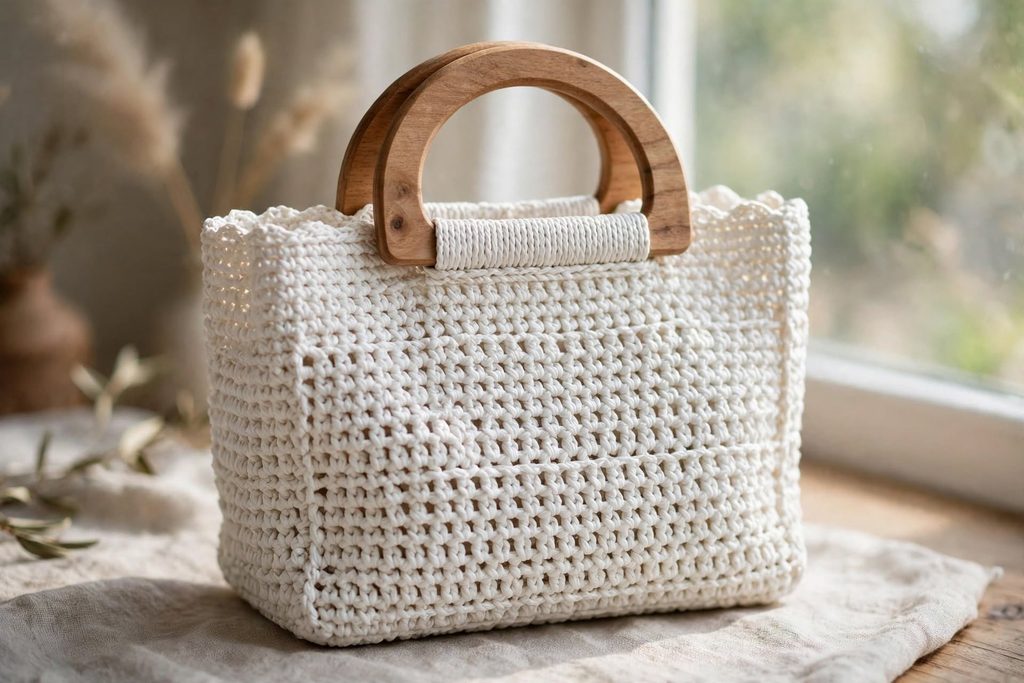
The finished bag: proof that patience can turn a pile of supplies into something beautiful.
When a complicated crochet project finally comes together, the finished piece can feel very different from the materials you started with.
The texture. The shape. The way the beads catch the light. The contrast between delicate crochet and a solid wooden handle.
What began as an inspiring photograph has become something tangible.
And that is one of the most satisfying parts of making something by hand: you can look at the finished object and recognize all the small decisions that helped bring it to life.
The process may have involved mistakes, slow progress, and moments when you wondered whether you had taken on too much.
But the finished bag tells a different story.
It shows what can happen when you work through a project one stitch at a time.
Chapter 5: What I Learned About Bead Crochet
The biggest lesson wasn’t simply that bead crochet takes patience. It was that preparation can make a complicated project much more manageable.
Here are five things worth considering before starting a beaded bag.
1. Check the bead sequence before you begin.
If the design depends on a particular color order or repeating pattern, prepare the beads according to the instructions. Don’t assume you can fix every mistake later.
2. Make sure your materials work together.
Bead-hole size, yarn thickness, and hook size all matter. The yarn needs to pass through the beads during preparation, and the finished stitches should still be comfortable to work.
3. Keep your tension consistent.
Uneven tension can affect the appearance and shape of the fabric. Work at a comfortable pace instead of rushing through the stitches.
4. Organize your workspace.
Small beads have a remarkable ability to disappear. A shallow tray or divided container can save you from searching the floor for the one bead you need.
5. Take breaks.
Fine, repetitive work can tire your eyes and hands. Stop when you feel uncomfortable, stretch gently, and return to the project when you’re ready.
These habits won’t make the beads thread themselves. Unfortunately, I haven’t discovered a way to convince them to do that.
But they can make the process more manageable and leave you with more energy to enjoy the finished piece.
Chapter 6: Making a Pattern Work for You
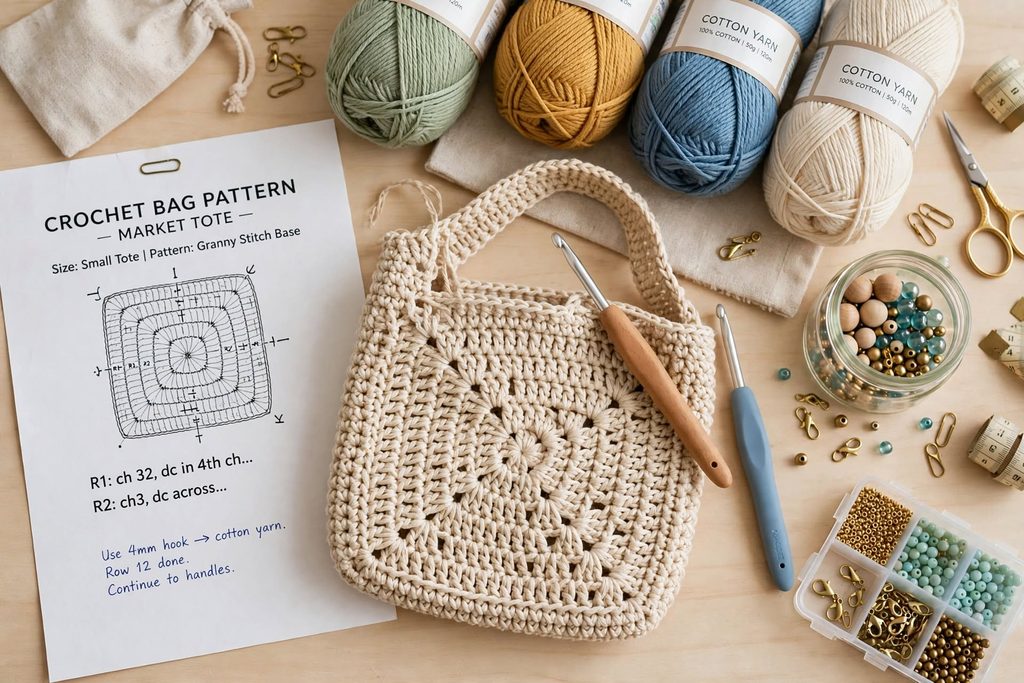
A clear workspace makes it easier to concentrate on the details.
Bead crochet involves more planning than simply picking up yarn and starting a row. Depending on the design, you may need to understand the stitch sequence, how the beads are positioned, and when to prepare particular sections.
Before beginning a project, read through the pattern and make sure you understand the materials and basic construction.
Look for instructions that explain the bead preparation and stitch technique clearly. Photos or diagrams can be helpful when you need to see exactly where a bead belongs.
Video demonstrations can also be useful if you learn better by watching someone work. You can pause, replay a section, and practice at your own pace.
If a technique feels confusing, try a small sample before committing to the entire bag. A little practice can help you understand the movements and check whether your materials work well together.
Most importantly, give yourself room to learn. A challenging project doesn’t have to be completed perfectly on the first attempt to be worthwhile.
Chapter 7: The Unexpected Side Effects
Making a beaded bag can change the way you look at handmade accessories.
Consequence 1: You begin noticing beads everywhere—in clothing, jewelry, bags, and decorative objects. Suddenly, tiny details become much more interesting.
Consequence 2: You start appreciating the work behind handmade accessories. A decorative detail that once seemed simple may represent careful planning and a surprising amount of time.
Consequence 3: You begin imagining variations. A different color, another handle, a slightly different shape. One project can easily inspire the next.
Consequence 4: You develop an attachment to the things you make. They carry memories of the process as well as the pleasure of using the finished object.
Would I try another beaded bag?
The idea is tempting. I might just take a proper break before choosing the next one.
Chapter 8: Why Handmade Things Feel Different
Why spend a weekend making a beaded crochet bag when you could buy a perfectly functional bag instead?
For me, the answer isn’t that handmade is always better or that everyone should make everything themselves.
It’s that making something changes your relationship with it.
You remember the planning, the mistakes, the stitches that finally started to make sense, and the moment the last section was finished. The object carries those decisions with it.
A beaded bag makes that process visible. You can see the texture, the pattern, and the details that required extra care.
You can’t see every hour that went into it, of course. But you know they’re there.
In that sense, a handmade bag is a little like time made visible. The finished object represents more than its materials; it represents the attention you chose to give it.
And when you reach for something you’ve made yourself, that knowledge can make an ordinary moment feel special.
Chapter 9: Your Turn to Make Something
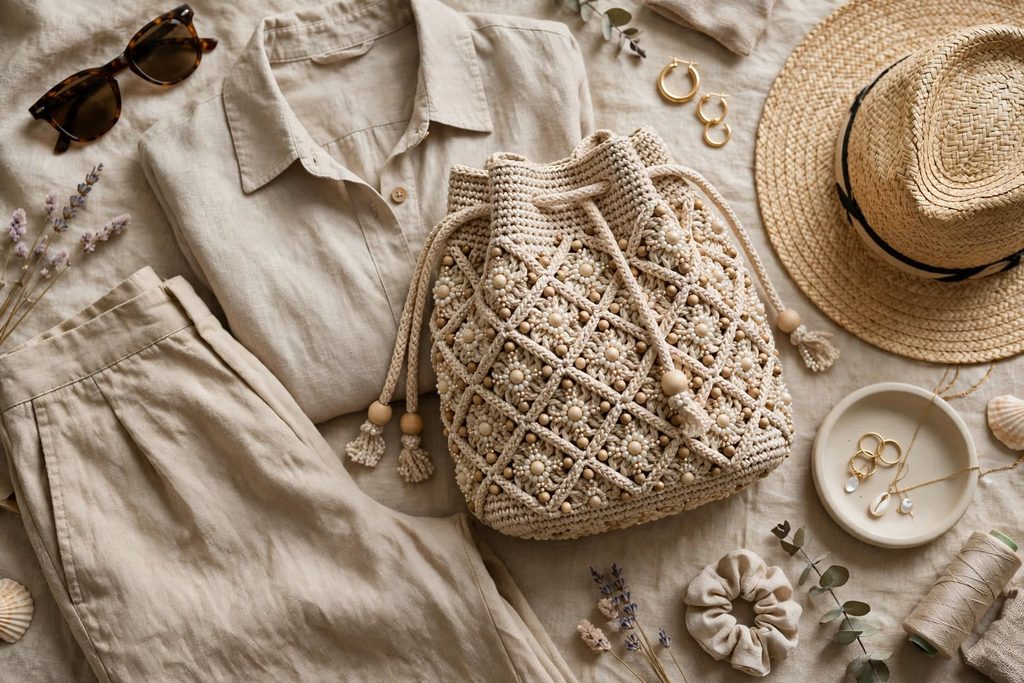
Handmade doesn’t have to mean perfect. Sometimes the best part is knowing you made it yourself.
If this project has made you curious about bead crochet, you don’t need to begin with the most complicated bag you can find.
Start by learning how beads are incorporated into crochet. Choose a pattern that explains the technique clearly, gather compatible materials, and allow enough time to practice.
Your first attempt may be slower than you expect. You may need to undo a few stitches. You may discover that a bead you thought was the perfect size doesn’t work well with your yarn.
That’s part of learning.
You don’t have to finish a masterpiece in one weekend. You just need a project that interests you and the willingness to work through it one step at a time.
If you decide to make a beaded bag, focus on enjoying the process as well as the result.
And perhaps keep a small container nearby for the beads that inevitably escape.
Epilogue: The Bag Lives On
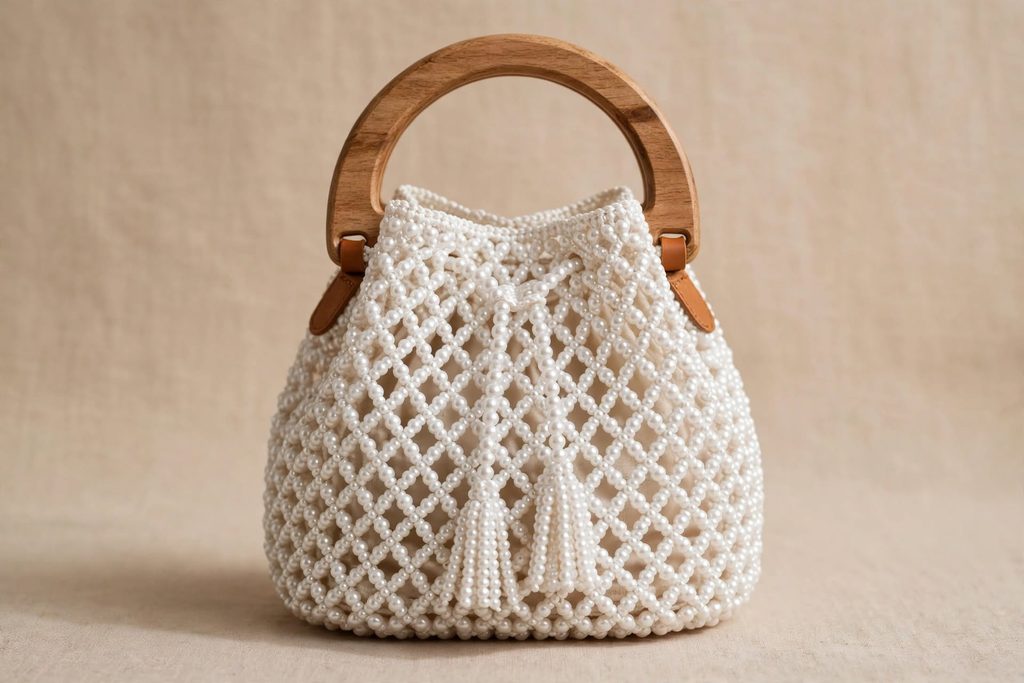
The bag that ate my weekend—and gave me something worth keeping.
The best part of finishing a handmade project is getting to use it.
A bag that begins as an idea gradually becomes a collection of stitches, tiny details, and decisions that come together in a finished design.
It reminds us that not every satisfying thing needs to happen quickly.
Sometimes, you need a little yarn, a lot of patience, and the willingness to keep going when a project becomes more complicated than you expected.
The hook is in your hands now.
What will you make?