There is a moment, somewhere between the bread stall and the tomato stand, when a plastic bag would already be straining at its handles—and your crocheted mesh market bag simply settles.
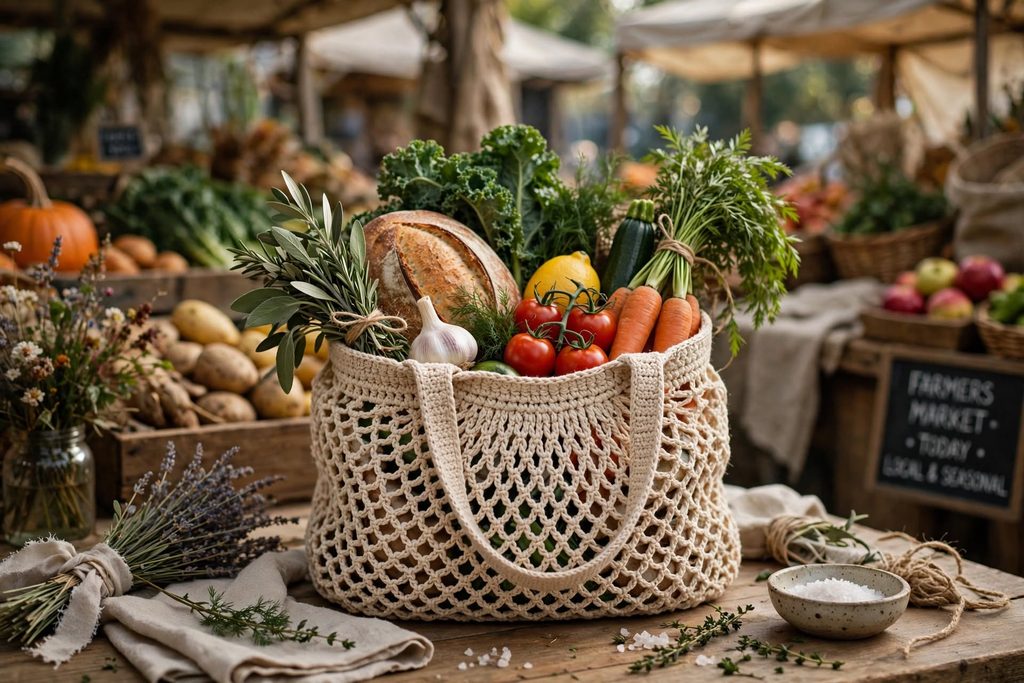
The net stretches around its contents. The oranges nestle against the open stitches, the apples find their places, and the bag adjusts to the shape of what you’re carrying instead of holding everything in a rigid rectangle.
Someone at the market notices it. Perhaps they ask where you bought it.
You get to say, with a small smile: “I made it.”
This is not just an article about a bag. It’s about what a handmade bag can do to an ordinary errand—and how something as simple as a few rows of crochet can make a familiar routine feel a little more intentional.
Part One: The Geometry Secret — Why Mesh Works So Well
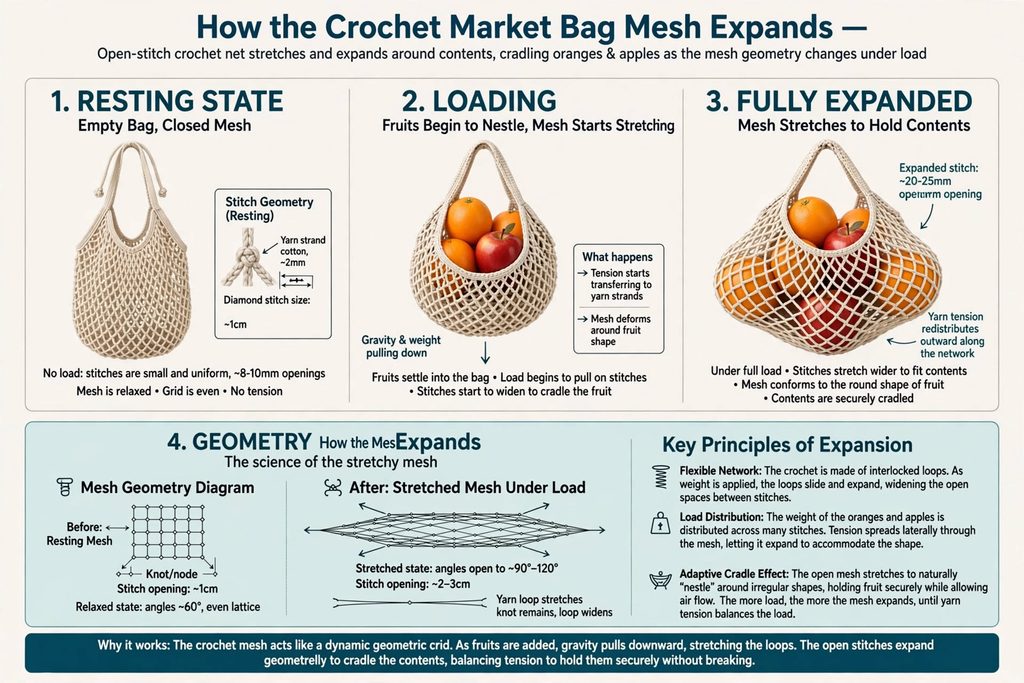
Here’s the clever idea behind a crochet market bag: the open spaces are part of its structure, not a flaw in its design.
Unlike a solid fabric tote, a mesh bag can expand around its contents. When empty, it may fold into a compact shape. Add groceries, and the openings stretch as the fabric accommodates the load.
The result is a bag that can hold more than its relaxed shape might suggest.
Many classic crochet market bags use a combination of chain stitches and taller stitches to create an open mesh. Depending on the pattern, the spaces may form diamonds, squares, or another repeating design. As the bag fills, the mesh opens; when the load is removed, it can relax again.
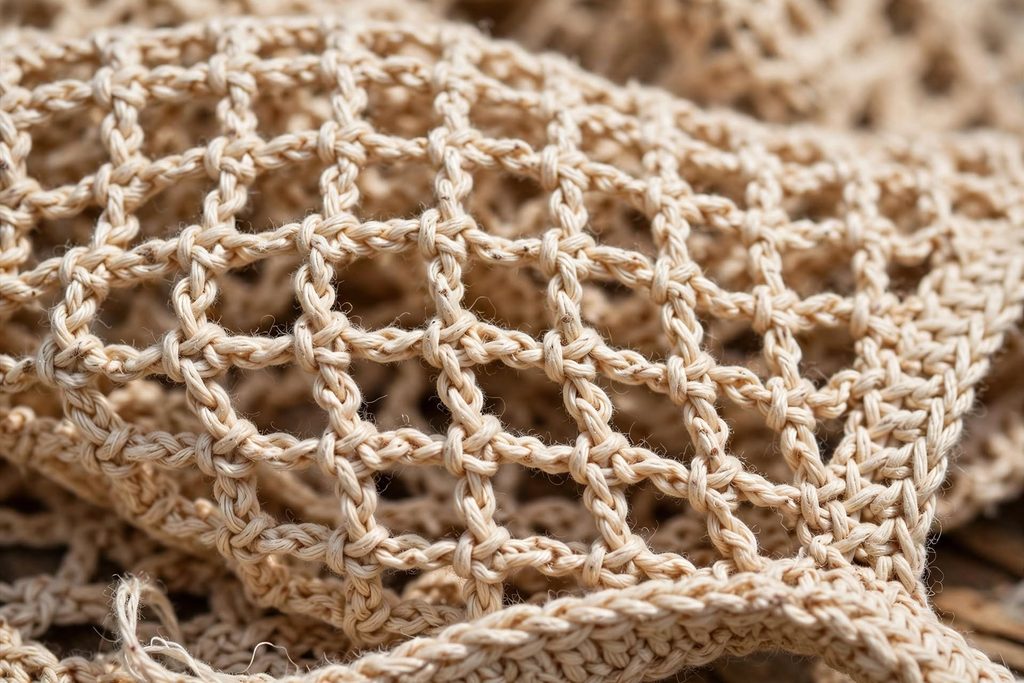
This structure also uses less yarn than a similarly sized bag made with dense stitches. That makes mesh a practical choice when you want a lightweight bag that can expand around groceries.
But mesh isn’t perfect for everything. Small items can slip through large openings, and delicate produce may need extra protection. A reusable produce pouch inside the bag can help keep small fruit, herbs, or other loose items secure.
The beauty of the design lies in its balance: flexibility when you need room, and a simple construction that doesn’t require a rigid frame.
Part Two: The Craft — What Your Hands Need to Know
The practical part, written for your hands—not just your Pinterest board.
Choose Your Yarn for the Job
A market bag needs to handle repeated use, changing loads, and occasional washing. The yarn you choose affects its weight, stretch, texture, and care requirements.
Medium-weight cotton yarn
Cotton is a popular choice for crochet market bags because it is comfortable to handle, comes in many colors, and is generally easy to care for when the yarn label permits machine or hand washing. A tightly constructed cotton bag can work well for everyday groceries.
Keep in mind that cotton can stretch under sustained weight, particularly when the fabric is made with large open stitches. The yarn’s construction and the way you crochet matter just as much as the fiber itself.
Cotton–linen blends
These can offer an appealing natural texture and a slightly different drape. Check the yarn’s recommended care instructions before choosing a blend, because washing and drying requirements vary.
Recycled T-shirt yarn
T-shirt yarn can create a substantial, sturdy-feeling bag, especially when used for a dense base or handles. The trade-off is weight: a bag made entirely from thick T-shirt yarn may be heavier and bulkier to carry.
For a lightweight grocery bag, I would usually start by considering cotton yarn and then choose the weight and construction to suit the pattern.
The Four Main Parts of a Crochet Market Bag
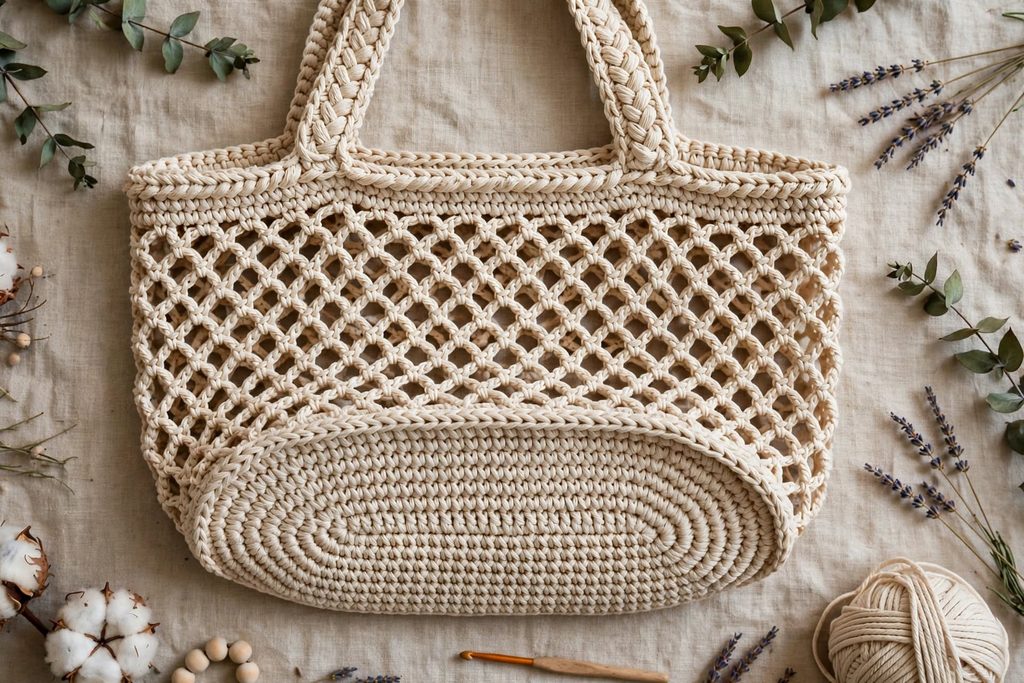
Many crochet market bags share four basic construction elements, although the exact design varies from pattern to pattern.
1. The base
The base may be worked as a flat circle, an oval, or another shape. A wider base can create more room for groceries, while the stitch pattern and dimensions influence how the bag sits when filled.
2. The mesh body
This is the openwork section that gives the bag its flexible, expandable character. Repeating stitches help establish the pattern, and once you understand the sequence, the rhythm can become pleasantly automatic.
3. The top edge
A band of denser stitches can help stabilize the opening and provide a firmer area for attaching the handles. The number of rows and the stitch choice depend on the design.
4. The handles
Handles need particular attention because they carry the weight of the contents. Their length affects how the bag sits in your hand or over your shoulder, while their construction affects comfort and durability.
If the pattern calls for reinforced handles, follow those instructions carefully. Before weaving in the final ends, check that both handles are even and comfortable to hold.
A first market bag may take several evenings, depending on the pattern, your experience, and how quickly you work. Once you become familiar with the mesh repeat, the body may feel much faster than the beginning.
Part Three: The Honest Part — Load, Care, and Common Mistakes
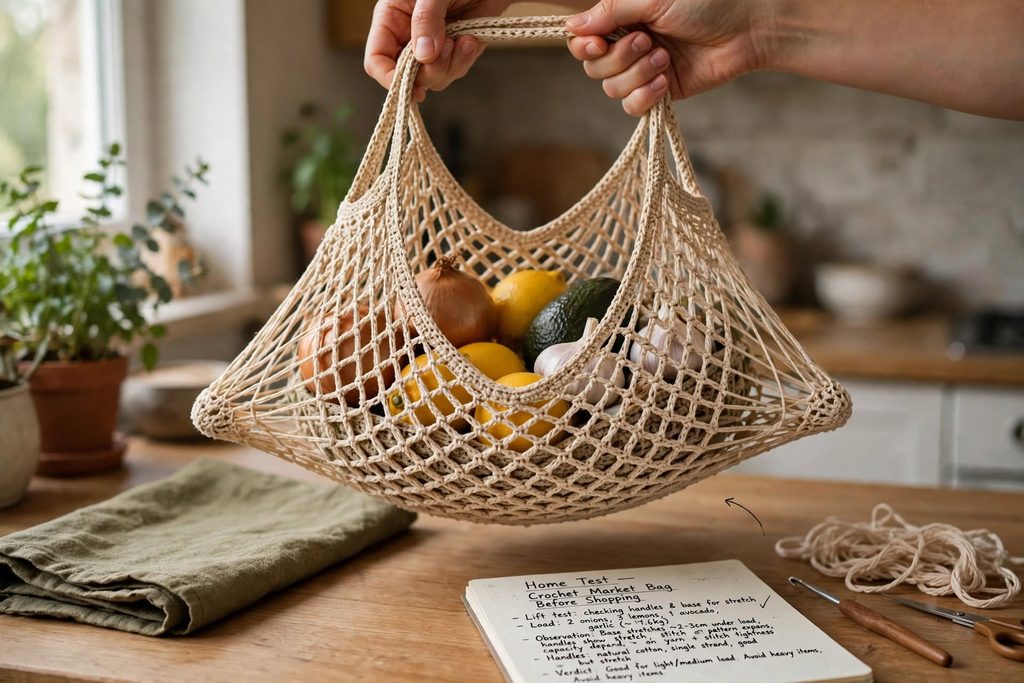
A crochet market bag can be both practical and beautiful, but it still needs to be made for the way you intend to use it.
Test the Bag Before Taking It Shopping
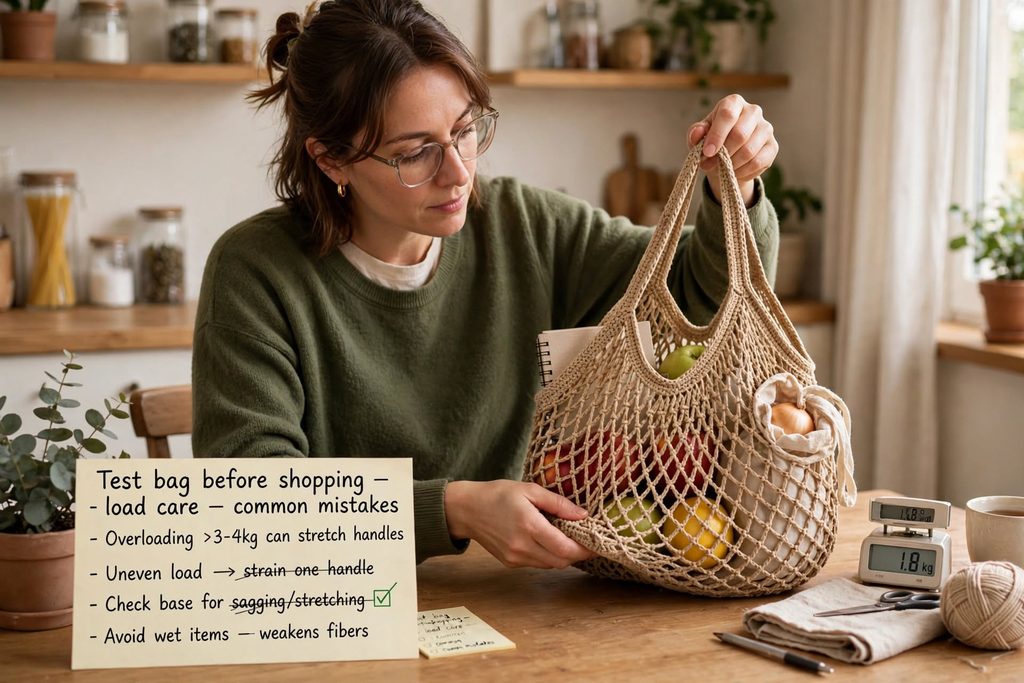
Don’t assume every mesh bag can carry the same amount. Capacity depends on the yarn, stitch pattern, base, handles, and quality of the finished construction.
Before using your bag for groceries, test it at home with a modest load. Place a few items inside, lift the bag, and check how the base and handles behave. Increase the load gradually only if the construction appears to handle it comfortably.
Look for excessive stretching, loose stitches, or signs that the handles are pulling away from the top edge. If anything seems unstable, reinforce or repair it before carrying heavier items.
A little testing at home is much better than discovering a weak spot beside the tomato stall.
Give Cotton the Right Care
Cotton yarns don’t all behave identically. Some finished bags may relax or stretch with use, while washing can change the fabric’s shape or feel.
Follow the care instructions for your specific yarn. If the bag needs reshaping after washing, gently arrange it into its intended form and dry it as recommended. Avoid hanging a wet, heavy bag by its handles, because the added weight may encourage stretching.
Let the bag dry completely before folding it away.
Avoid Mesh That’s Too Tight—or Too Loose
If your mesh stitches are too tight, the fabric may not open as intended, and the bag can become less flexible than you expected. If the stitches are excessively loose, small items may slip through and the bag may stretch more under load.
Make a small sample if you’re unsure about your hook size or stitch tension. Check how the mesh looks when relaxed and how it opens when gently stretched.
A slightly different hook size may help, but the best choice depends on the pattern, yarn, and fabric you’re trying to create.
Pack Groceries Thoughtfully
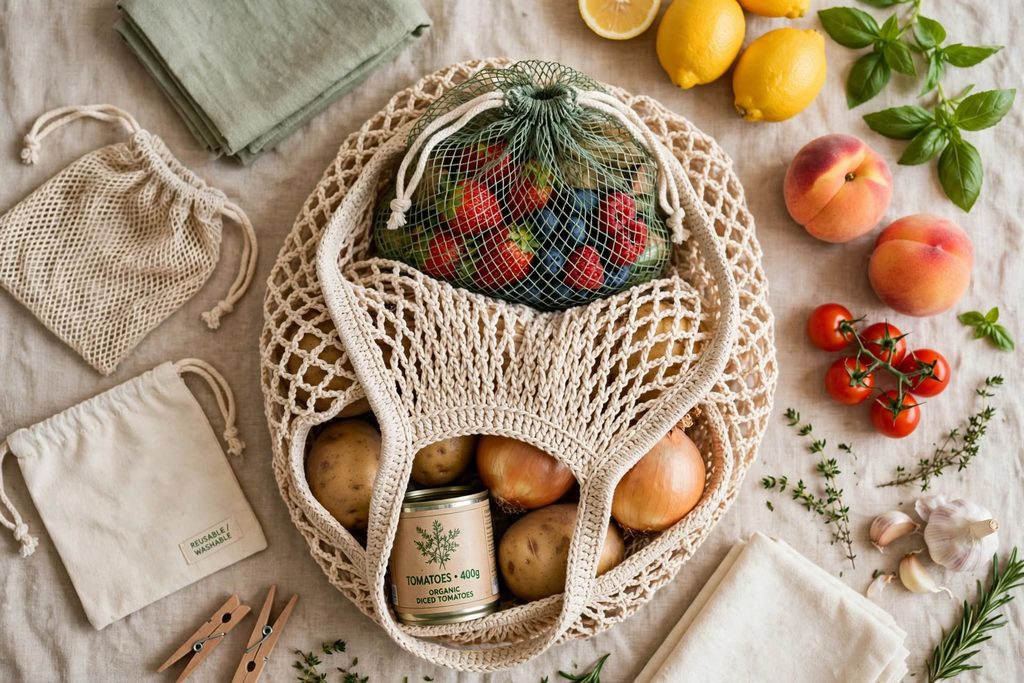
Mesh bags are excellent for many everyday items, but they aren’t ideal for everything.
- Put heavier items near the bottom, while avoiding loads that strain the base.
- Protect soft fruit and delicate produce in a small reusable pouch if the mesh openings are large.
- Keep sharp packaging edges away from the yarn.
- Carry glass bottles separately or use a bag designed to support them securely.
- Avoid overloading the bag simply because the mesh appears able to stretch further.
The goal is not to see how much the bag can hold. It’s to make something you can use comfortably and repeatedly.
Part Four: The Ritual Itself
Now comes the part no crochet pattern can teach you.
Saturday morning. The market bag is waiting by the door, folded into a compact shape. At the market, you start with bread, keeping it where it won’t be crushed. You add apples and oranges, then tuck smaller or more delicate items into a reusable produce pouch.
Flowers can go in last, with their stems arranged carefully so they don’t catch on the mesh.
The bag makes you pay attention to what you’re buying and how you carry it. There’s less rummaging, less wrestling with a stiff container, and a small satisfaction in seeing the day’s groceries gather inside something you made yourself.
The errand begins to feel different.
There is a beginning: taking the bag from its place by the door.
There is a middle: walking between stalls, choosing produce, filling the mesh one item at a time.
And there is an end: walking home with groceries in a bag that carries a little of your own work.
A handmade object doesn’t automatically transform an ordinary Saturday. But it can give a familiar routine a small point of connection. You remember making the stitches. You notice the texture against your hand. You appreciate the way the bag folds away when the shopping is finished.
The ritual isn’t hidden in the yarn. It’s in the attention you bring to the moment.
Final Thought
A crochet market bag won’t solve every problem with disposable packaging, and it won’t make every grocery trip magical.
What it can do is more modest—and perhaps more meaningful.
It can give you a useful object made by your own hands. It can encourage you to notice the details of an ordinary errand. And it can turn a few simple stitches into something that becomes part of your everyday life.
Thousands of loops. A bag that goes shopping with you. A small ritual worth repeating.
And next Saturday, when you reach for it by the door, you’ll have one more reason to look forward to the market.