How a Yellow Oval Changed My Relationship With Furniture
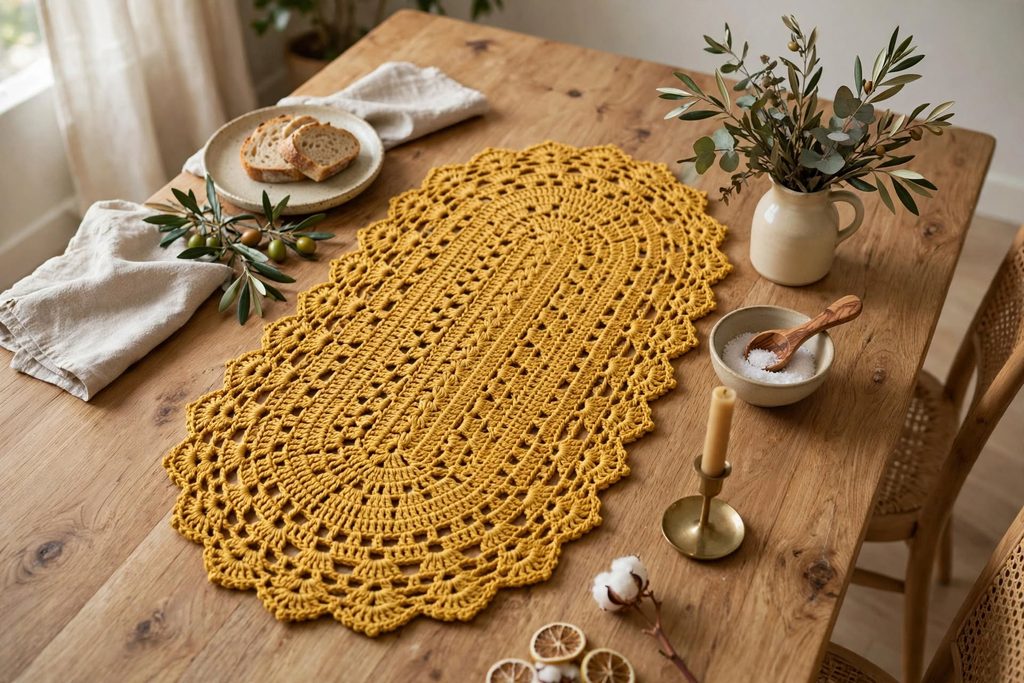
My dining table needed something.
Not a new table. Not an expensive vase or an elaborate centerpiece. Just one detail that would make the room feel a little more personal.
I tried the usual decorating tricks. A vase here, a few decorative objects there. Nothing felt quite right.
Then I had an idea: what if I crocheted a table runner?
Not just any table runner, either. I imagined a soft, rounded shape in a cheerful shade of yellow — something that would bring warmth to the wood and make an ordinary table feel a little less ordinary.
There was one small problem.
I had chosen an oval.
And ovals, as I was about to discover, have their own opinions.
1. Why I Chose a Yellow Crochet Table Runner
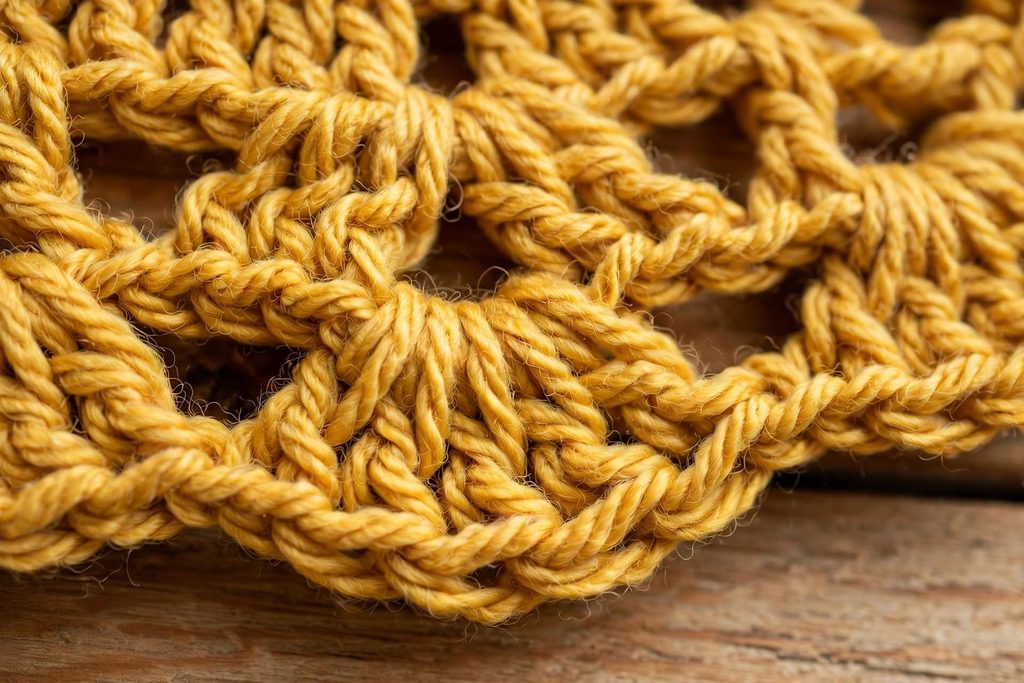
Yellow is not a shy colour. Even in a small amount, it can become the focal point of a room.
A mustard or butter-yellow crochet table runner can add warmth to natural wood, brighten a neutral dining area, and create an interesting contrast with white ceramics, linen, or greenery.
The trick is choosing a shade that works with the rest of your room.
- Mustard yellow feels warm and earthy, especially with oak, walnut, and other natural wood tones.
- Soft butter yellow creates a lighter, more delicate look.
- Bright yellow makes a stronger statement and works best when the surrounding decor is relatively simple.
If your table already has a prominent grain or a rich colour, a simpler crochet pattern can keep the overall look balanced. If the table is plain, a more textured design may become the feature that draws the eye.
For a yellow oval, the goal is simple: let one handmade piece bring the table to life without covering it in clutter.
2. The Challenge of Crocheting an Oval
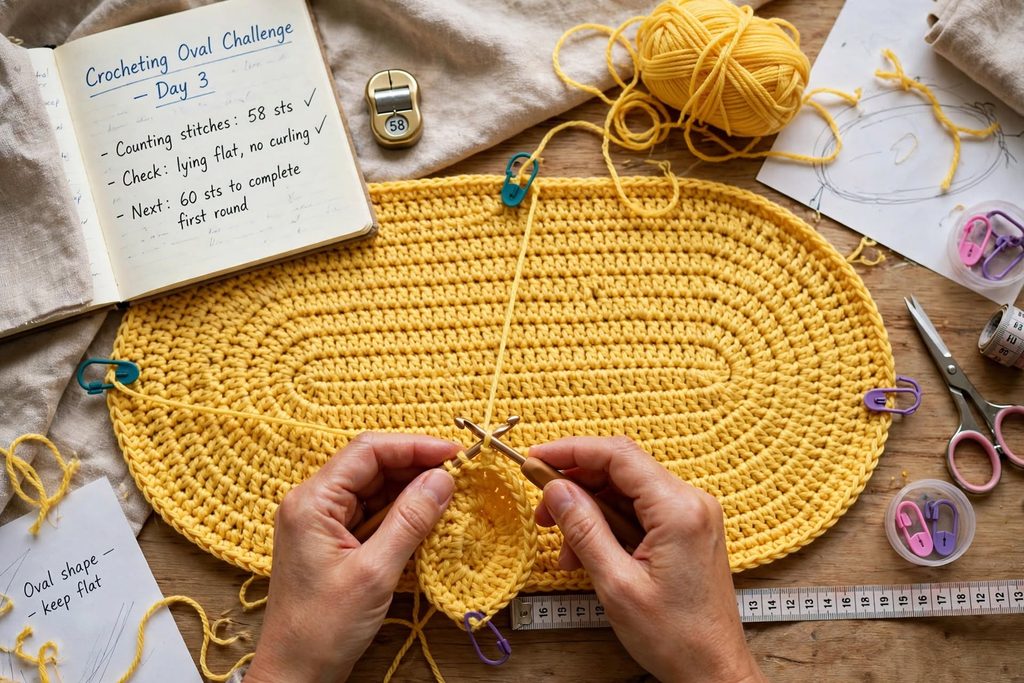
A rectangular project can feel straightforward because its edges follow a predictable path. An oval introduces curves, and those curves need to grow evenly if the finished piece is to lie flat.
Depending on the pattern, shaping an oval may involve working around a starting chain and placing increases at the ends. The exact stitch counts and increase placement vary, so it is important to follow the instructions for your chosen design rather than guessing.
Here are a few practical habits that can help:
Count your stitches. Keep track of each round or row, particularly where the pattern places increases. Losing count early can make the shape harder to correct later.
Check the shape as you work. Lay the project on a flat surface from time to time. If the edges begin to curl or ruffle, pause and compare your work with the pattern instructions before continuing.
Use stitch markers when helpful. Marking important points can make it easier to identify the ends of the oval or other shaping locations specified by the pattern.
Do not rush the finishing. Once the crochet is complete, weave in the ends securely and follow the yarn’s care instructions. Blocking may help even out the shape if the fibre and pattern allow it.
The goal is not to finish as quickly as possible. It is to create a piece that lies neatly on the table and looks good from every angle.
3. Choosing Yarn for a Plush Table Runner
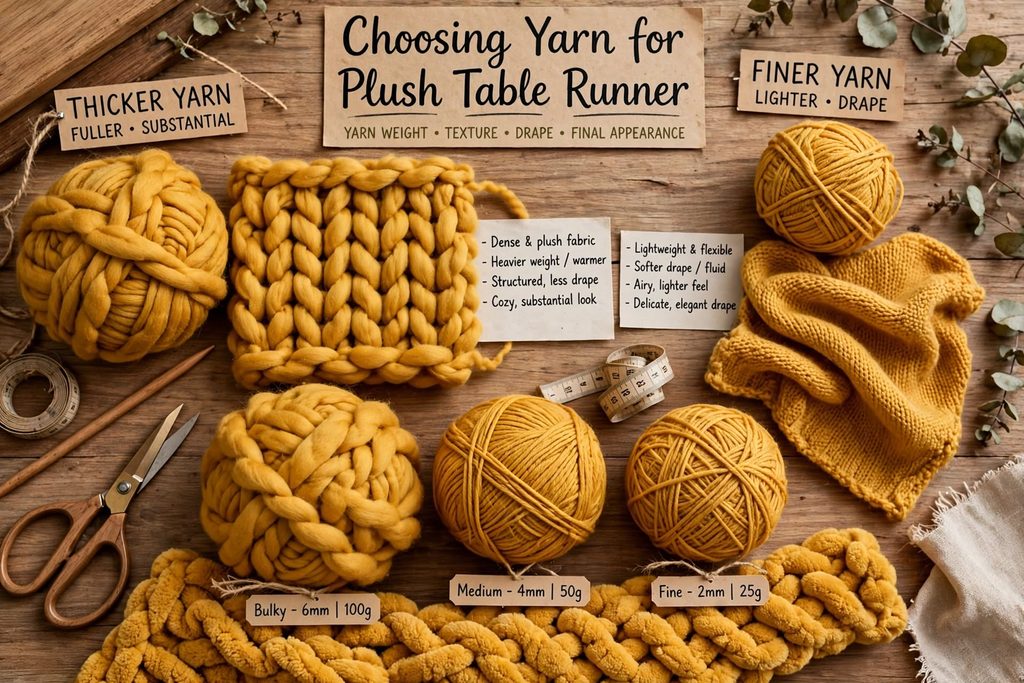
The yarn you choose affects the runner’s texture, weight, drape, and final appearance.
A thicker yarn can create a fuller, more substantial fabric, while a finer yarn generally produces a lighter look. Neither is automatically better; the right choice depends on the design and how you intend to use the finished piece.
Before starting, consider these points:
- Texture: Do you want a soft, raised surface or a more defined stitch pattern?
- Weight: Will the finished runner sit comfortably on the table without feeling too bulky?
- Colour: Does the shade complement the wood and other items in your dining area?
- Care: Can the finished textile be cleaned in a way that suits your household?
- Pattern compatibility: Does the pattern specify a particular yarn weight, fibre, or hook size?
If you are following a crochet pattern, begin with its recommended materials. Changing the yarn or hook can affect the dimensions and appearance, so make a small test piece if the instructions recommend one.
Buy yarn according to the pattern’s stated requirements rather than guessing how many skeins you will need. Dye lots can differ, and running out halfway through a project is a frustrating kind of plot twist.
4. Styling Your Crochet Table Runner
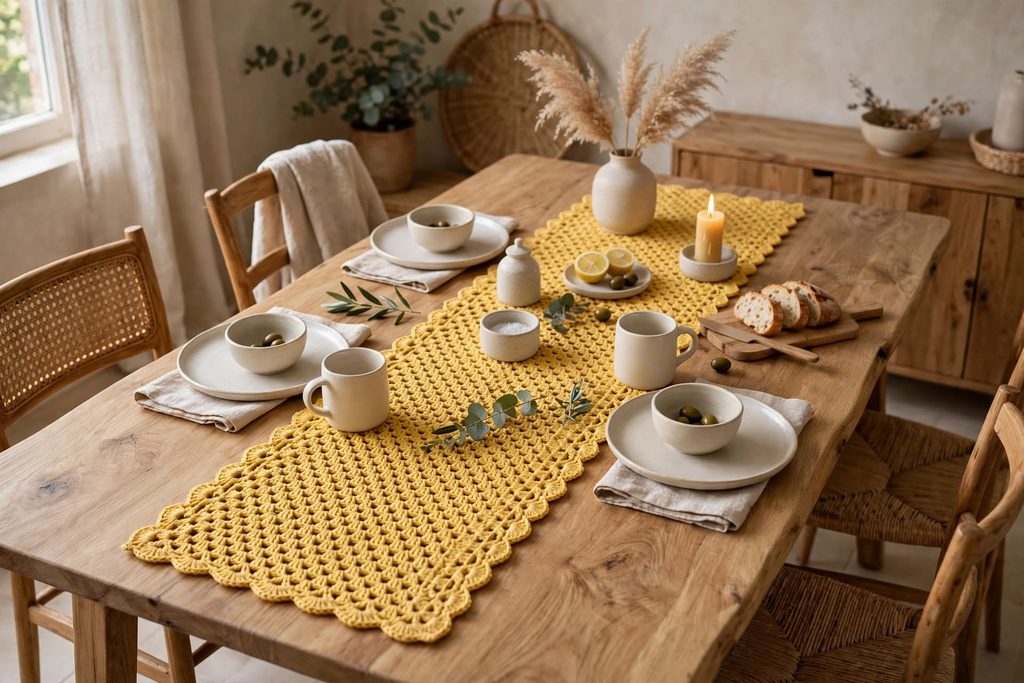
A handmade runner does not need a complicated tablescape to look beautiful.
On a wooden dining table, try pairing a yellow runner with a simple ceramic vase, a few stems of greenery, or neutral tableware. Let the colour provide the contrast.
For a cottage-inspired room, combine it with natural materials, linen, and relaxed floral arrangements. For a more modern look, keep the accessories minimal and allow the crochet texture to stand out.
You can also style a runner on a console table or sideboard, provided the size and shape suit the surface.
One practical consideration matters: a crocheted runner is a decorative textile, not a heat-resistant mat. Keep it away from hot cookware, open flames, and anything that could snag or stain the yarn.
5. When Handmade Decor Feels Personal
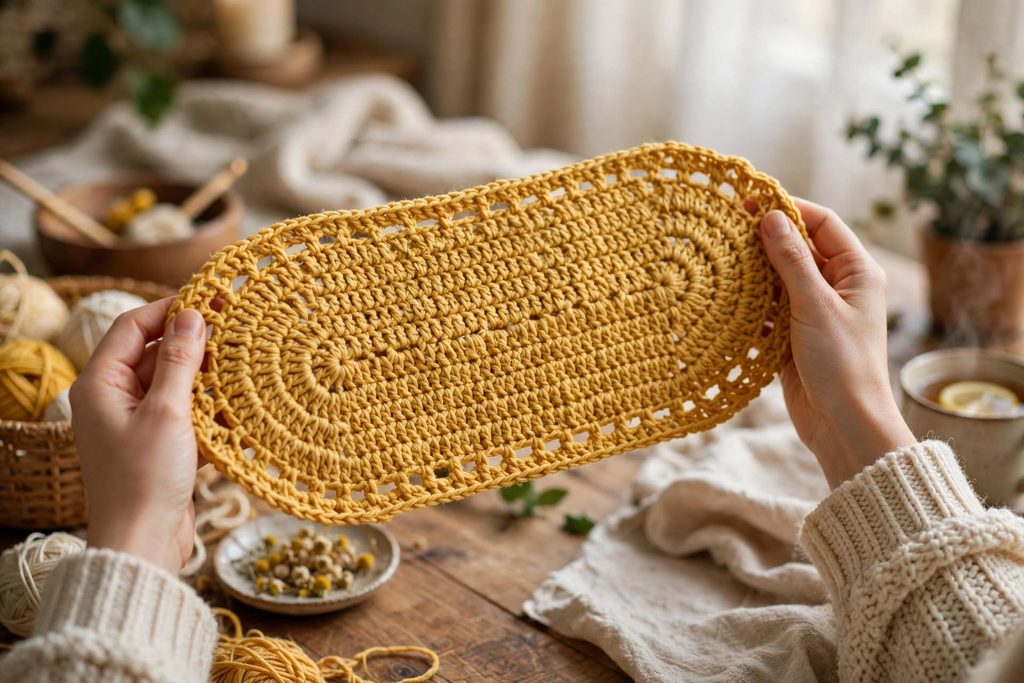
There are plenty of ready-made table runners available, in every colour and style imaginable. Crocheting one offers something different: the chance to choose the colour, texture, and dimensions that suit your own home.
It also gives you time to enjoy the process. You count stitches, learn how the shape develops, undo a section when something looks wrong, and gradually turn a ball of yarn into a finished object.
That does not mean every project is relaxing every minute. Sometimes the oval refuses to lie flat. Sometimes you discover a mistake several rows too late. Sometimes you wonder why you did not choose a simpler pattern.
That is part of making things by hand.
The finished runner does not have to be perfect to feel personal. It simply needs to be something you chose to make and are happy to use.
Choosing a Pattern for Your Own Project
If you would like to crochet an oval table runner, look for a pattern that clearly states its finished dimensions, recommended yarn and hook, skill level, and shaping instructions. Check the project photographs carefully so you know whether the design is plush, lacy, textured, or relatively flat.
Choosing a pattern that matches your skill level and preferred style will make the project easier to plan and help you understand what to expect from the finished piece.
The Oval Lives On
A crochet table runner may be a small addition to a room, but it can change the way a familiar surface looks and feels.
Choose a colour you love. Take your time with the shaping. Check the dimensions before you begin, and give the finished piece the care its yarn requires.
And if your oval takes longer than expected? Well, at least it will have a good story behind it.
Sometimes the best home decor is not the thing you buy in a hurry. It is the thing you make, one stitch at a time.