The enduring beauty of handmade texture, the value of time, and why an old craft still belongs in modern homes.
They told us macramé was back. Then quilting. Then embroidery.
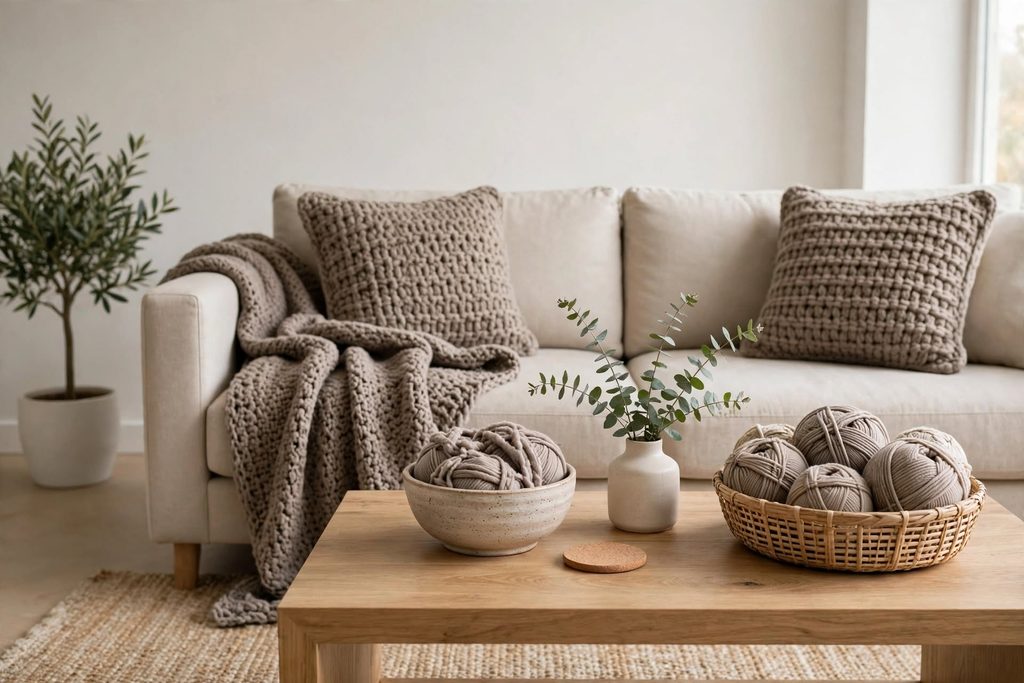
But crochet never needed a revival — because it never needed saving.
We’ve been taught to believe that newness is the engine of style. Fashion moves forward, we’re told, by abandoning what came before. The moment something becomes familiar, it risks becoming embarrassing: the shag carpet, the macramé owl, the doily beneath the lamp in your grandmother’s living room.
We look at crochet and see nostalgia. We see the past. We see something that belongs in a museum of domestic life rather than a modern home.
But here’s the twist: crochet doesn’t have to be vintage to be timeless.
The same basic technique that once produced lace collars, household linens, and blankets can create a sculptural cushion for a contemporary sofa, a textured throw for a minimalist bedroom, or a colorful granny-square bag carried through a city that never stops moving.
The technique remains recognizable. What changes is the maker, the material, the colors, and the way each piece finds its place in the world.
And perhaps that is the real secret of crochet: it doesn’t need to defeat the future. It simply needs room in it.
The Beauty of Being an Anti-Trend
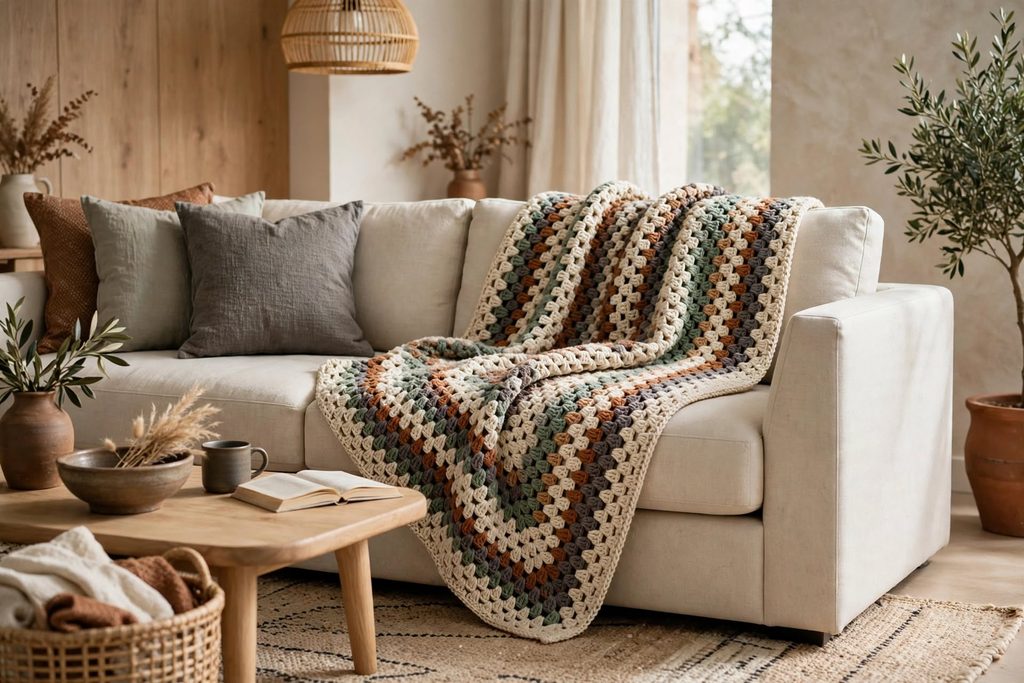
Trends move in cycles. Something familiar becomes unfashionable, disappears from the spotlight, and eventually returns with a new name, a fresh color palette, and a considerably higher price tag.
Handmade crafts experience these cycles, too. Macramé, embroidery, quilting, and crochet have all enjoyed periods of renewed attention. But the craft itself does not disappear when the trend moves on.
People continue to make things because they want to learn a technique, create something useful, give a personal gift, or spend time doing work that unfolds one stitch at a time.
Crochet is especially adaptable. The same basic loops can become delicate lace, thick winter accessories, openwork garments, sturdy baskets, or textured home décor. Change the yarn, the scale, the stitch pattern, or the color scheme, and the result can feel entirely different.
A chunky blanket in earthy neutrals might suit a rustic living room. A fine cotton doily could look striking against a clean-lined wooden table. A bright granny-square cushion might bring life to a room filled with simple furniture.
None of these objects has to be fashionable in the narrow sense of following a current trend.
They only need to work beautifully in the space where they belong.
That is a more lasting kind of style: not the refusal to change, but the ability to change without losing what makes something distinctive.
Why Handmade Things Feel Different
A factory can produce a blanket efficiently, consistently, and at a price that makes it accessible to more people. Machine-made textiles are not inherently less beautiful or less meaningful than handmade ones.
But a handmade crochet piece offers a different experience.
Someone selected the yarn. Someone worked the stitches. Someone noticed when the edge began to curl, counted the clusters, corrected a mistake, or decided that a slightly different shade would make the pattern work.
The finished object carries the decisions that shaped it.
And then there is the time.
We cannot mass-produce time.
A crocheted blanket may take many evenings to complete. Those hours are not automatically a measure of quality, and a handmade object does not become valuable simply because it took a long time to make. Yet the time invested can give the piece a personal significance that goes beyond its material cost.
Perhaps the blanket was made during a long winter. Perhaps it was a birthday gift. Perhaps it was the first large project its maker completed without help.
The object becomes part of a story.
You can buy a blanket because it matches your sofa. You can also keep one because you remember who made it, what was happening in your life when it arrived, or how it feels to pull it over your shoulders on a cold evening.
Those two kinds of value can coexist.
Handmade does not automatically mean better. It means that the process of making can become part of what makes an object matter.
Five Reasons Crochet Continues to Inspire Makers
1. One Technique Can Create Almost Anything
A hook and yarn can produce an extraordinary range of forms.
A small coaster can be finished in an afternoon. A blanket may take weeks or months. Garments, bags, baskets, accessories, wall hangings, and sculptural objects all offer different challenges.
The technique is flexible enough to accommodate both beginners and experienced makers. A simple stitch can create something useful; a more complex combination can produce intricate texture and pattern.
Crochet is not limited to one aesthetic, either. It can be delicate or bold, traditional or contemporary, restrained or wonderfully colorful.
That versatility helps keep the craft relevant. Each maker can find a way to make it their own.
2. It Can Travel With You
A small project can fit into a bag, a basket, or a drawer beside the sofa. Many crochet projects need little more than a suitable hook, yarn, and a pattern or a bit of memory.
That makes crochet easy to return to during quiet moments: on a journey, while waiting for an appointment, or during an evening at home.
Not every project is portable. A large blanket can become an entire lapful of yarn, and complicated lace may demand more attention than a crowded train allows.
But the possibility of carrying a small creative project from place to place is part of its appeal.
You do not need a dedicated studio to make something. Sometimes a comfortable chair and a little light are enough.
3. Handmade Texture Gives a Room Character
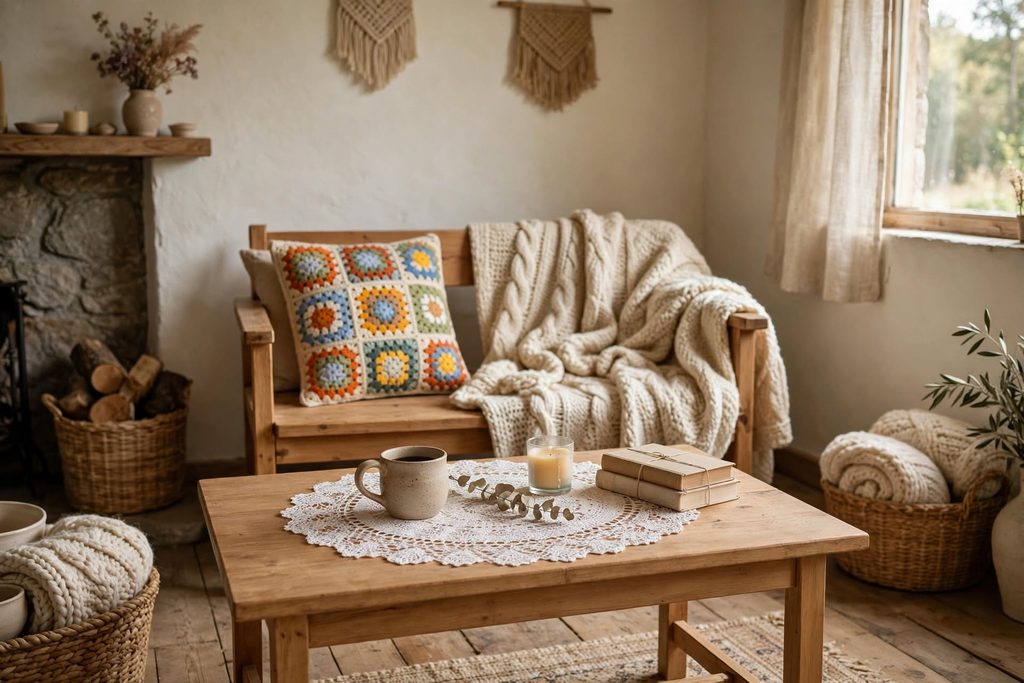
Crochet has a distinctive visual language: loops, open spaces, raised stitches, soft edges, and patterns that catch the light differently from smooth woven fabric.
These qualities can make it particularly interesting in interiors.
A chunky throw introduces a sense of softness to a leather sofa. A cotton cushion adds pattern to a plain armchair. A crocheted wall hanging can bring texture to a bare wall without introducing another hard surface or glossy finish.
The effect depends on proportion and placement.
Too many competing textures can make a room feel busy. A single handmade piece, chosen with care, can provide just enough contrast.
Crochet works especially well when its texture complements the materials already present: wool beside wood, cotton against linen, or a sculptural yarn piece against a simple painted wall.
The goal is not to fill every corner with handmade objects. It is to choose the pieces that make a space feel more personal.
4. A Handmade Piece Can Change With You
Crochet is not guaranteed to improve with age. Fibers can fade, stretch, pill, or wear thin, and some pieces need more careful handling than others.
But a well-made item, cared for appropriately, can remain useful for years. It may soften with use, become familiar, and collect associations that no new purchase can provide.
A blanket might move from the bedroom to the sofa. A bag might become the one you carry every summer. A cushion cover might survive several changes in furniture and still feel right in the room.
If a piece is damaged, repair may be possible. Depending on the yarn and construction, a loose end can be secured, a small hole can be mended, or a section can be reworked.
Care matters. So does choosing a project suited to its purpose.
A delicate lace shawl and a heavily used floor rug have different needs. The yarn, stitch structure, finishing, and cleaning method all affect how well an object holds up.
The lasting value is not that every handmade item will survive forever. It is that we can choose to use, care for, repair, and appreciate the things we already have.
5. Crochet Encourages a Slower Kind of Making
Many everyday activities are designed around speed. We order, scroll, replace, and move on.
Crochet asks for a different relationship with time.
A row takes as long as it takes. A complicated pattern may require counting, concentration, and the occasional return to the previous round. A mistake might mean undoing several minutes of work.
This is not always relaxing. Sometimes it is frustrating, especially when a project refuses to behave.
But for many makers, the steady rhythm of familiar stitches offers a welcome contrast to a day filled with screens and interruptions. Others enjoy the challenge, the learning, or the satisfaction of watching a shape emerge from a strand of yarn.
There is no need to turn crochet into a wellness prescription. It does not have to calm everyone, and it does not need to produce a measurable benefit to deserve a place in someone’s life.
Making something simply because you enjoy making it is reason enough.
The Granny Square: A Pattern That Keeps Becoming New
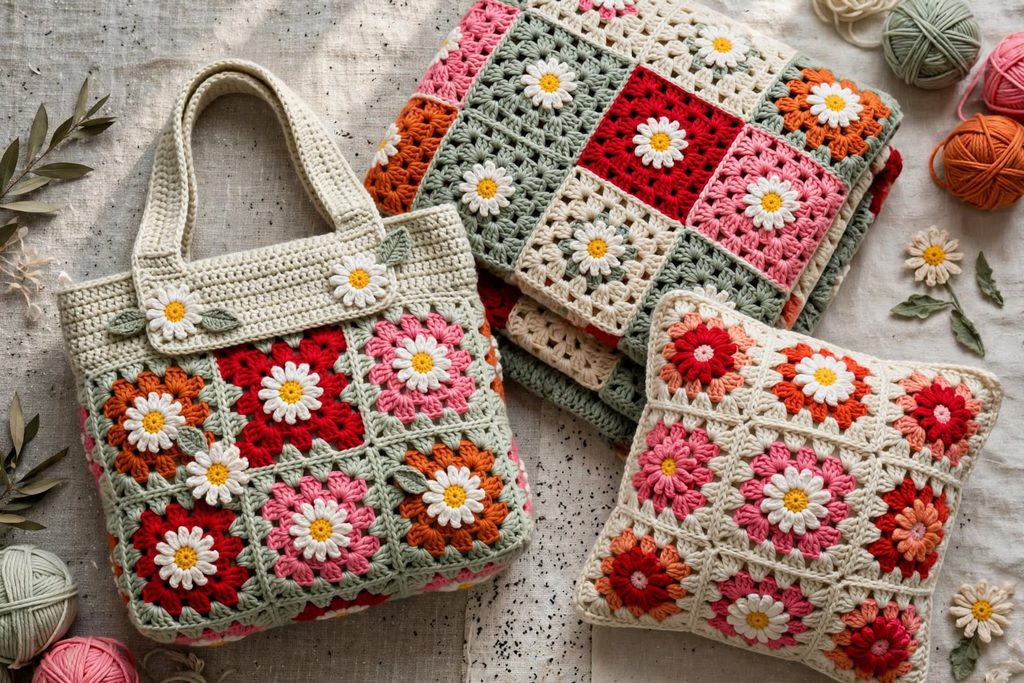
The granny square is one of crochet’s most recognizable motifs. Its familiar structure can be adapted through color, scale, yarn choice, and the way individual squares are joined.
One maker might choose daisies in sage and cream. Another might combine saturated reds, pinks, and oranges. Someone else might make a monochrome blanket that relies on texture rather than color for its impact.
The basic idea remains recognizable, but the result reflects the person who made it.
That is how traditional crafts stay alive: not only through preservation, but through use.
A pattern can be passed from one person to another, learned from a book, discovered in an online tutorial, or adapted from a blanket found in a family home. Each maker adds something — a different palette, a new application, a personal variation.
The granny square does not need to be reinvented completely to feel fresh.
Sometimes changing the colors is enough. Sometimes the squares become a bag instead of a blanket. Sometimes a beginner makes their first square and discovers a technique they will return to for years.
Tradition does not have to mean copying the past exactly. It can mean carrying an idea forward and allowing it to change.
The Crochet Loop: Simple Structure, Endless Possibilities
The crochet stitch is built from loops, but those loops can be arranged in countless ways. Different stitch heights, yarn weights, hook sizes, and construction methods produce different surfaces and shapes.
That is part of the craft’s appeal: a small set of basic actions can lead to a wide range of results.
Crochet also has practical strengths and limitations.
- Texture: Raised stitches, openwork, and dense fabric can create very different visual and tactile effects.
- Shape: Working in rows or rounds allows makers to create flat pieces, tubes, curves, and three-dimensional forms.
- Customization: Colors, dimensions, borders, and stitch patterns can be adjusted to suit a project.
- Repair: Some damage can be repaired by securing ends or reworking stitches, although the difficulty depends on the structure and extent of the damage.
- Material choice: Cotton, wool, acrylic, and blended yarns behave differently, so the fiber should suit the intended use.
A loose openwork shawl and a dense basket are not interchangeable designs. The stitch pattern, yarn, and tension all influence drape, weight, and stability.
Understanding these differences is part of what makes crochet rewarding. The hook is a tool, but the maker’s choices determine what the material becomes.
Bringing Handmade Crochet Into a Modern Home
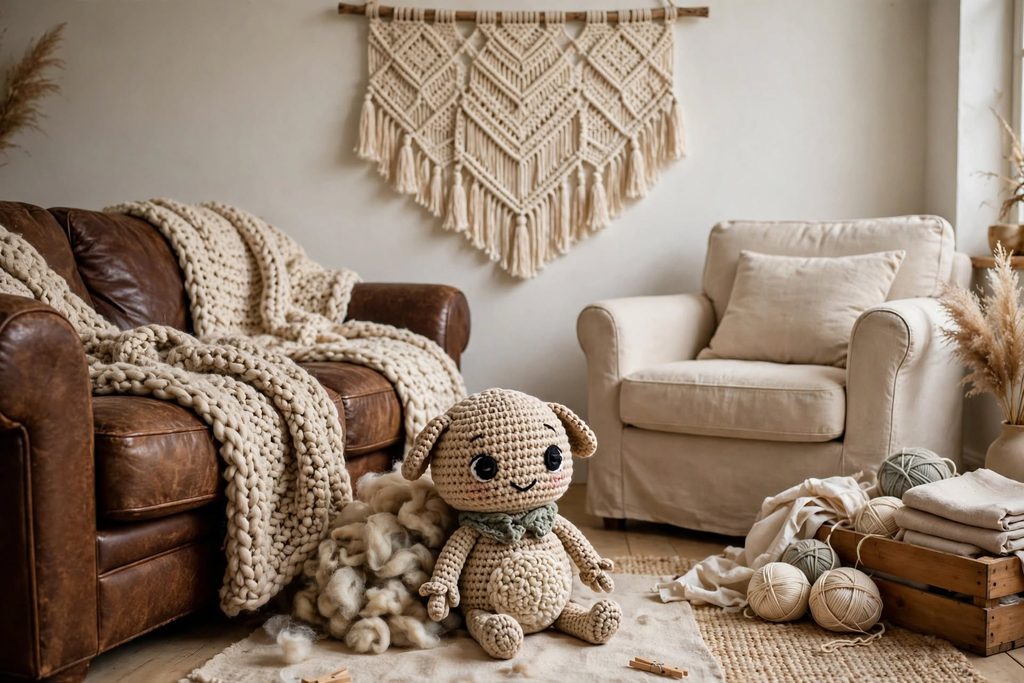
Crochet does not belong exclusively in a cottage, a vintage bedroom, or a room filled with antiques. It can work in contemporary interiors, too.
The key is to treat it as a material and a design element rather than as a theme.
Start With One Textured Piece
If your room already contains strong patterns, colorful artwork, or several competing materials, begin with one crochet item.
A neutral throw can soften a structured sofa. A cushion with a clear geometric pattern can introduce texture without overwhelming the room. A simple wall hanging can bring warmth to a space with plain walls and clean lines.
Let the piece have room to be noticed.
Choose Colors That Connect the Room
Crochet can be colorful, but it does not have to be.
Cream, oatmeal, muted sage, rust, charcoal, and warm brown can work well with wood, linen, stone, and other natural-looking materials. Brighter colors can create an intentional focal point in an otherwise restrained room.
Instead of matching every object exactly, look for a color relationship: a thread of green that echoes a plant, a warm neutral that complements a wooden table, or a deep accent that connects to artwork.
Pay Attention to Scale
A delicate doily may disappear on a large coffee table, while an oversized, heavily textured cushion can dominate a small chair.
Consider the size of the object, the furniture around it, and how the item will be used.
A thick crochet rug needs to be suitable for the floor and should not create an unstable or slippery surface. A decorative wall hanging has different requirements from a blanket that will be washed and used frequently.
Beauty and practicality should work together.
Let Handmade Objects Feel Lived In
A room does not have to look untouched to look beautiful.
A blanket folded over an armrest, a basket holding an unfinished project, or a cushion that has softened with use can make a home feel personal. Handmade pieces often work best when they are part of daily life rather than displayed as untouchable decorations.
The aim is not to create a showroom of perfect objects. It is to create a space that feels like yours.
A More Thoughtful Approach to Making and Buying
Crochet can fit into a slower approach to fashion and home décor, but handmade does not automatically mean sustainable.
The environmental impact of a project depends on several things: where the fiber comes from, how it is processed and dyed, how far it travels, how much material is wasted, and how long the finished item remains in use.
You can make more considered choices by:
- Buying yarn for a project rather than collecting more than you can realistically use.
- Choosing a fiber that suits the object’s purpose and care requirements.
- Using suitable leftover yarn for smaller projects.
- Repairing handmade items when repair is practical.
- Caring for finished pieces according to the fiber and yarn recommendations.
- Making or buying fewer items that you genuinely want to keep and use.
These choices will not make every project impact-free. They can, however, help you approach materials and consumption more deliberately.
A handmade blanket is not automatically better than a factory-made one for every purpose. But if you enjoy making it, use it for years, and care for it well, the process can offer value beyond the finished object’s price.
The Value of Handmade
Perhaps the most interesting thing about crochet is not that it is ancient, fashionable, therapeutic, or inherently superior to machine production.
It is that the craft can hold several meanings at once.
It can be a practical skill, a creative challenge, a way to connect with family, a source of income, or a quiet activity at the end of a long day. It can produce something useful, something beautiful, or something imperfect that teaches you what to try differently next time.
A handmade piece can be expensive or inexpensive, elaborate or simple. Its value depends partly on its materials and workmanship, but also on the person who makes it and the person who chooses to keep it.
Not every crochet project will become an heirloom. Not every blanket will last for decades. Not every maker will find the process calming.
None of that diminishes the craft.
A small coaster can matter because it was your first project. A blanket can matter because someone made it for you. A colorful granny-square bag can matter because it makes you smile every time you leave the house.
These are ordinary objects. They do not need to prove that handmade work is better than everything made by machines.
They only need to earn their place in your life.
Your Crochet Manifesto
You do not have to become a crocheter to appreciate handmade work. And if you already crochet, you do not have to turn every project into a masterpiece.
Make something useful. Make something strange. Make a first square with uneven edges. Unravel it if you want to try again.
Give a finished piece to someone you love, or keep it for yourself. Repair a favorite item if it can be saved. Choose yarn because its color makes you happy, not because someone has declared it fashionable.
Protect the handmade things that matter to you — the blanket with the loose thread, the doily with the old stain, the rug that has become part of your home. Care for them when you can, and allow them to show the signs of a life well lived.
Trends will change. Colors will come and go. New materials and techniques will continue to appear.
But the value of making something with care does not need a revival.
Sometimes the most timeless thing in a modern home is the one that reminds us a human being made it by hand.