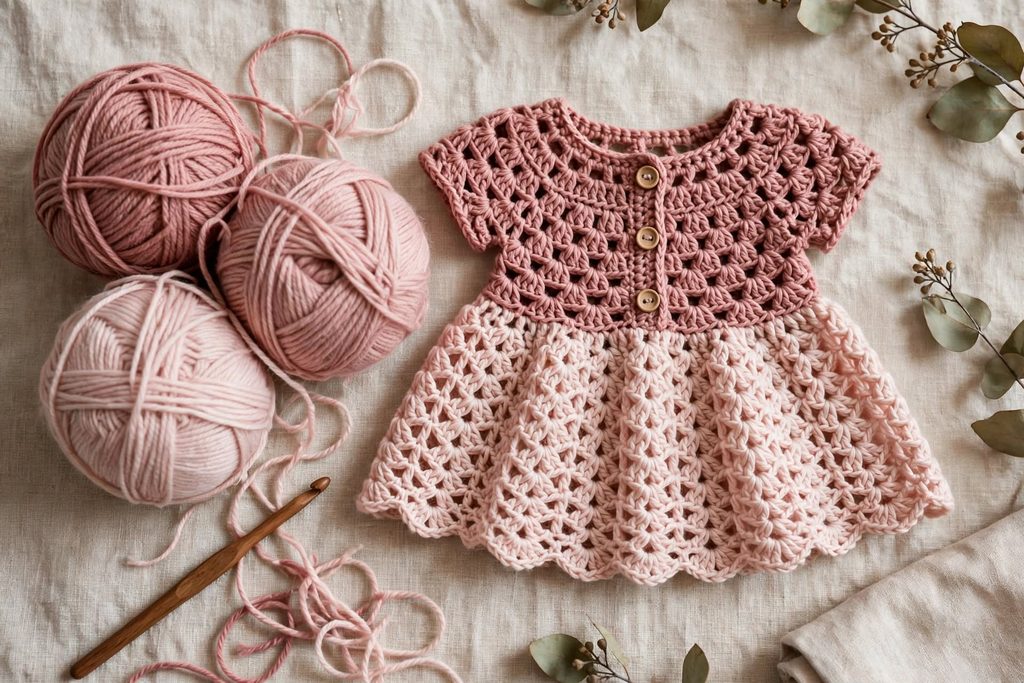
Disclosure: This post contains an affiliate link to Creative Fabrica. If you purchase through the link, Wool & Hook may earn a commission at no additional cost to you. Thank you for supporting the blog. 🌿 Two-Tone Crochet Baby Dress Pattern
Baby clothes look tiny, but they still ask for real attention.
The yarn, the sizing, the way the fabric feels against skin, the finishing — all of it matters more than it first seems. A dress can look lovely in a photo and still end up uncomfortable, difficult to wash, or less practical than you hoped.
I wanted to make a two-tone dress because colour does so much of the work on its own. Dusty rose against soft pink feels gentle and classic. Cream and yellow feel fresh. Sage and ivory feel quieter, a little more modern. The same simple shape can take on a completely different mood just by changing the palette.
What appealed to me most was the chance to choose everything deliberately — the colours, the proportions, the small details — instead of simply buying something ready-made. At the same time I knew a baby garment isn’t the place for purely decorative decisions. Comfort and safety have to come first.
Choosing Colours That Feel Right Together
Two-tone crochet doesn’t need complicated colour changes to look considered. The contrast between the bodice and the skirt, or between the main fabric and the edging, is often enough.
These are the combinations I keep returning to:
Dusty rose and blush pink
Soft and traditional. It works best when the two shades share similar undertones so they feel related rather than high-contrast.
Cream and soft yellow
Light and cheerful, especially nice for warmer months. Just make sure both yarns can be washed the same way.
Sage green and ivory
A calmer alternative to pink. The contrast stays gentle, so the texture and shape of the dress stay in focus.
When you choose the yarn, look at fibre, weight and care instructions together. Using two colours from the same range usually helps the fabric behave consistently, but it’s still worth checking that the colours won’t bleed.
The Pattern
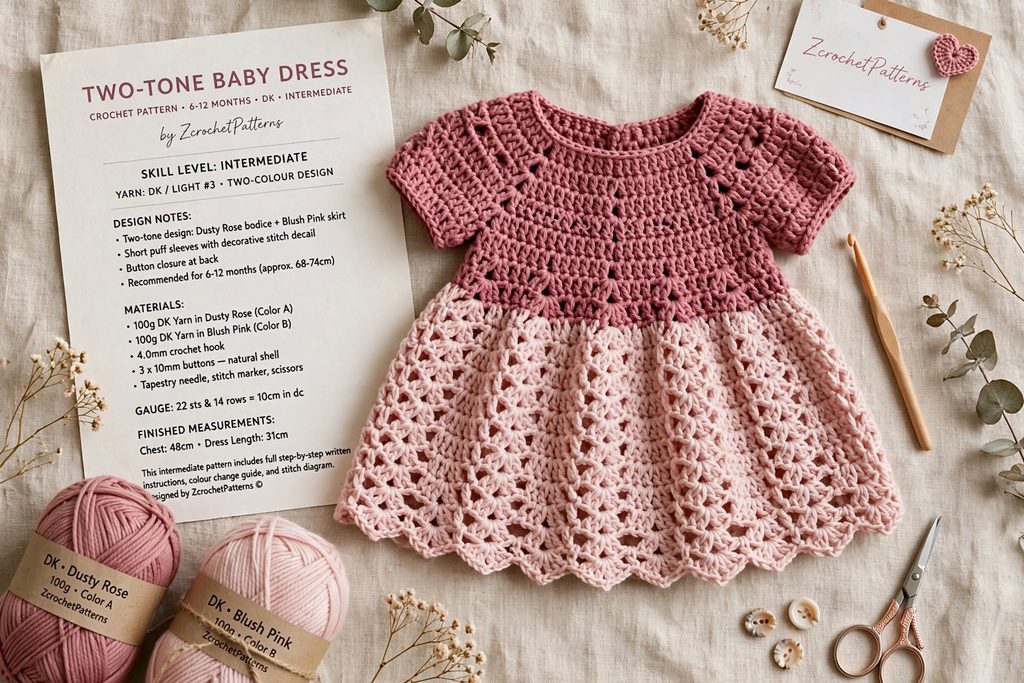
The pattern I used is the Two-Tone Baby Dress by ZcrochetPatterns, a digital PDF sized for babies around 6–12 months.
It’s listed as DK weight and intermediate level. The download includes written instructions, charts and photos, with the exact materials and hook sizes given in the pattern itself.
Before I bought any yarn I read through the full materials list, checked the gauge and wrote down the finished measurements. A photograph shows the style, but only the instructions tell you how the shaping, colour changes and finishing actually work.
What I Checked Before Starting
This is the short list I now use for any baby garment:
- The yarn weight matches the pattern (DK in this case)
- There’s enough yarn, with a little extra if I might make changes
- I use the recommended hook and make a gauge swatch
- I note the actual finished measurements, not just the age range
- The care instructions will work for whoever will be washing the dress
If you change the yarn or the hook, the size and the feel of the fabric will change too. Substitutions can work, but they shouldn’t be treated as exact equivalents without checking.
Getting the Fit Right
Babies grow quickly and need room to move. The age on a pattern is only a starting point.
Before I consider a dress finished, or ready to give as a gift, I compare the pattern’s measurements with the baby’s current size — especially around the chest, armholes, neckline and length. Adding length or width without looking at how the shaping works can throw the proportions off.
For a first version I usually follow the original measurements. It’s the clearest way to understand how the design is meant to fit.
Details That Stay Pretty and Safe
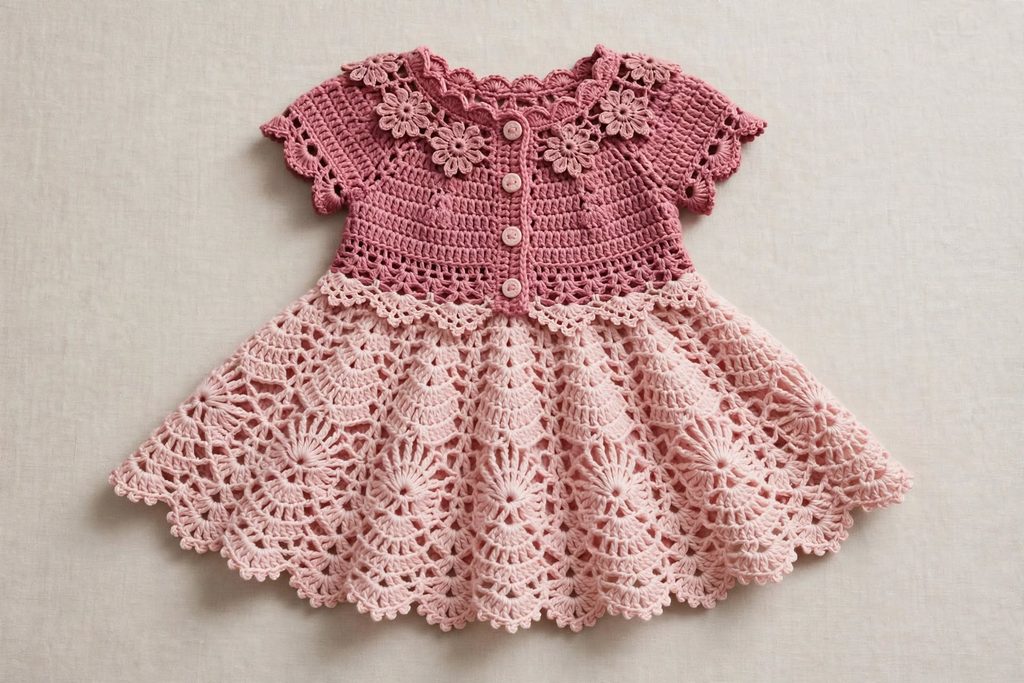
Small details can give a crochet dress real character — a contrasting hem, a textured edge, a delicate border. But with baby clothes every decorative choice has to pass a practical test.
Anything small that could come loose (crocheted flowers, buttons, beads) is a choking hazard. I avoid detachable pieces and check every join carefully.
Long ties and loose cords carry their own risks. I don’t add drawstrings around the neck, and I look closely at any belt or fastening that appears in a pattern photo. If something feels questionable, I leave it off.
Often the strongest decision is the simplest one: let the colour contrast, the stitch texture and the shape of the dress do the work.
Choosing Yarn That Will Actually Be Worn
Softness matters, but it isn’t the only thing that matters.
I look for a texture that feels comfortable against skin, clear care instructions (because baby clothes need frequent washing), enough durability to hold its shape, and good colourfastness — especially when two shades sit next to each other. The gauge needs to match the pattern too.
Cotton is one option, but it isn’t automatically the best choice for every design. Some blends drape or wash better. Whatever you choose, follow the manufacturer’s instructions, and if the dress is a gift, include those instructions so the recipient knows how to look after it.
Finishing
Finishing is what turns a collection of pieces into something that feels complete.
Before I call a baby dress done I check the overall shape, weave in every end securely, inspect the seams and joins, look at the neckline and armholes, and only block or wash the way the yarn allows. Then I look again for anything that could come loose.
I don’t stretch the dress hard during blocking. The goal is simply to even the fabric while keeping the intended proportions.
And before it is worn or given away, I check it one more time.
Is a Handmade Baby Dress a Good Gift?
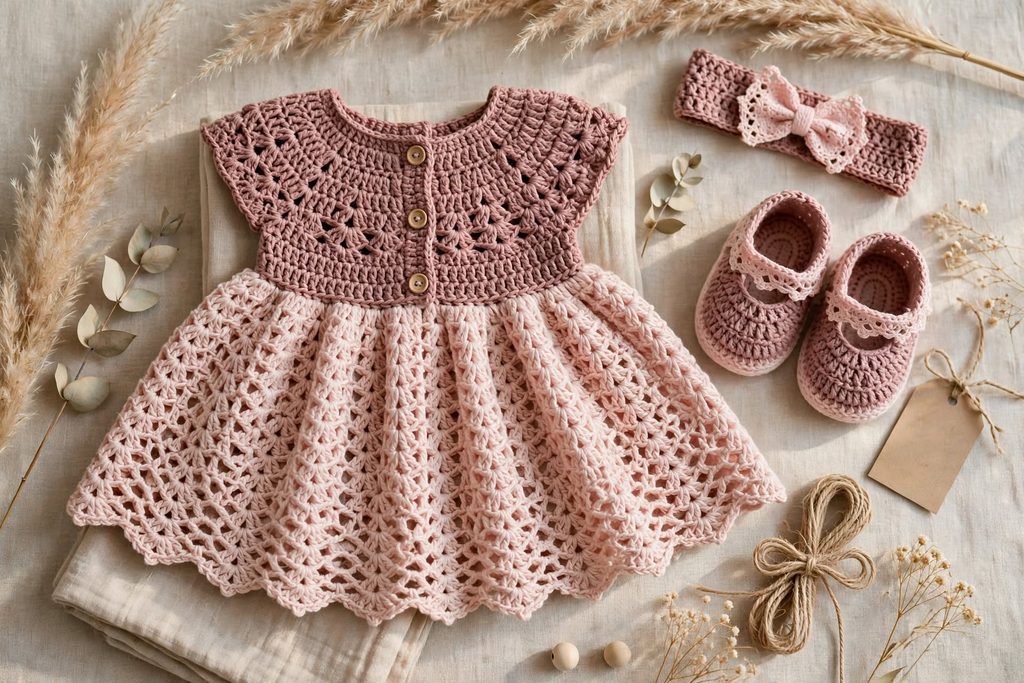
It can be a lovely one — for a baby shower, a family celebration, or a photograph people will keep. The time shows. The chance to choose colours that feel right for the child or the family is part of the pleasure.
But practicality still counts. Size, season, how often it can be washed, and whether it will actually be worn all matter. A beautiful dress is most successful when it’s also comfortable and easy to care for.
If I’m unsure about the size, I ask before I start. A short conversation early on can prevent a lot of disappointment later.
Final Thoughts
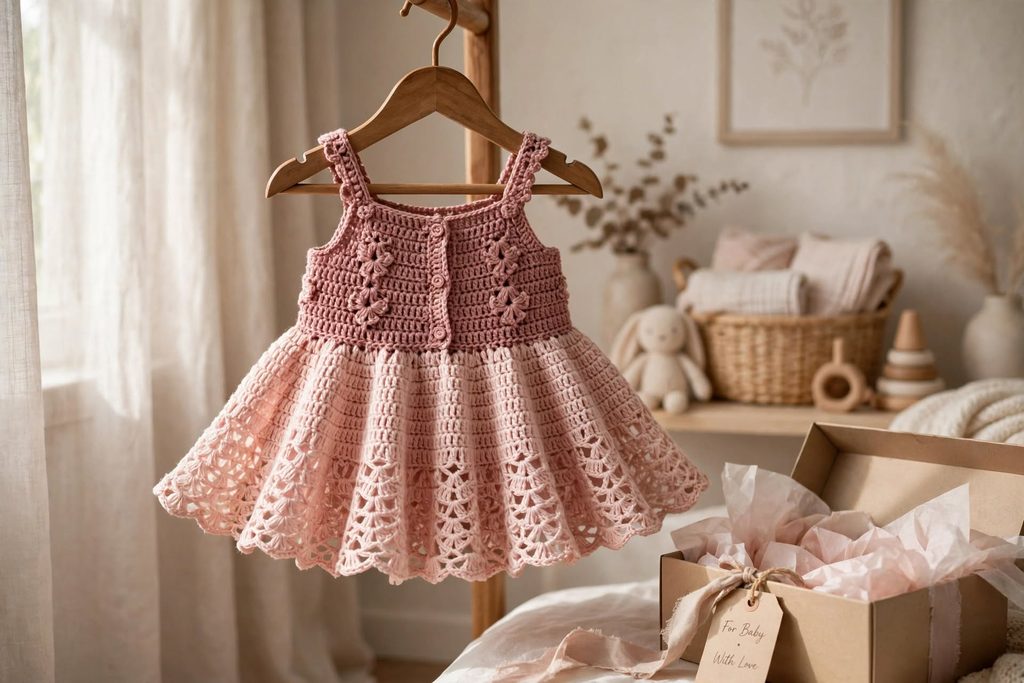
A two-tone crochet baby dress is a small garment, but it holds a lot of decisions — colour, texture, fit and care. With a clear pattern and thoughtful yarn choices it can be a deeply satisfying project.
The most important balance is between how it looks and how it will actually be used. Follow the measurements, be cautious with anything small or loose, and let the simple strengths of the design carry the result.
If this style appeals to you, look at the Two-Tone Baby Dress pattern by ZcrochetPatterns, read the materials and instructions carefully, and decide whether it feels like the right project for the baby you have in mind.
Sometimes two well-chosen colours and careful, attentive crochet are all a little dress really needs.