Or: How I Learned to Stop Worrying and Trust the Hook
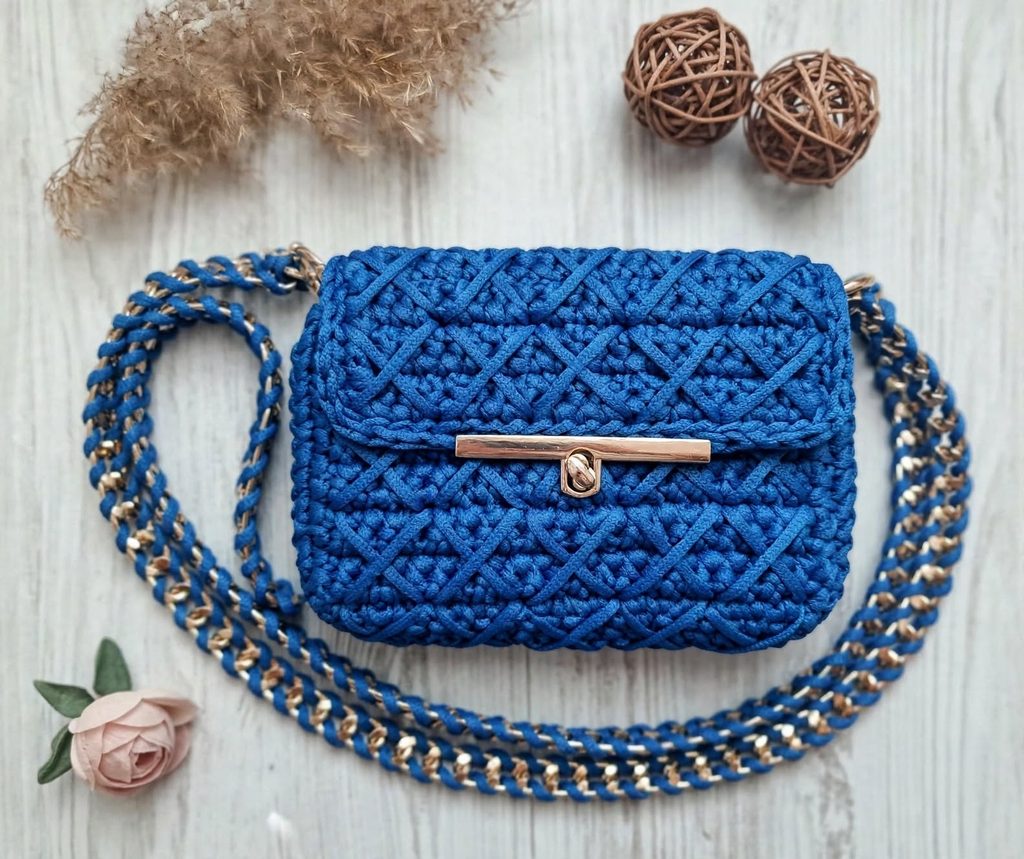
Affiliate disclosure: This article may contain affiliate links. If you purchase through them, Wool & Hook may earn a commission at no additional cost to you. Explore the Crochet Mini Handbag pattern here.
A ball of yarn does not look like much.
It sits quietly in a basket — soft, ordinary, completely unremarkable. Then a crochet hook enters the picture.
One loop becomes another. Rows start to form. A flat piece of fabric slowly gains structure, texture, and purpose. Eventually, what began as a single strand of yarn becomes a bag you can actually carry into the world.
That is the quiet magic of crochet.
It does not break the laws of physics.
It simply makes ordinary material feel extraordinary.
A blue crochet bag is a perfect example. The colour may catch the eye, but the real achievement lies in the construction — the stitches, the shape, the handles, and all the small decisions that turn yarn into something useful.
Here is what makes a handmade bag special, and what is worth knowing if you want to create one of your own.
Chapter 1: The Impossible Object
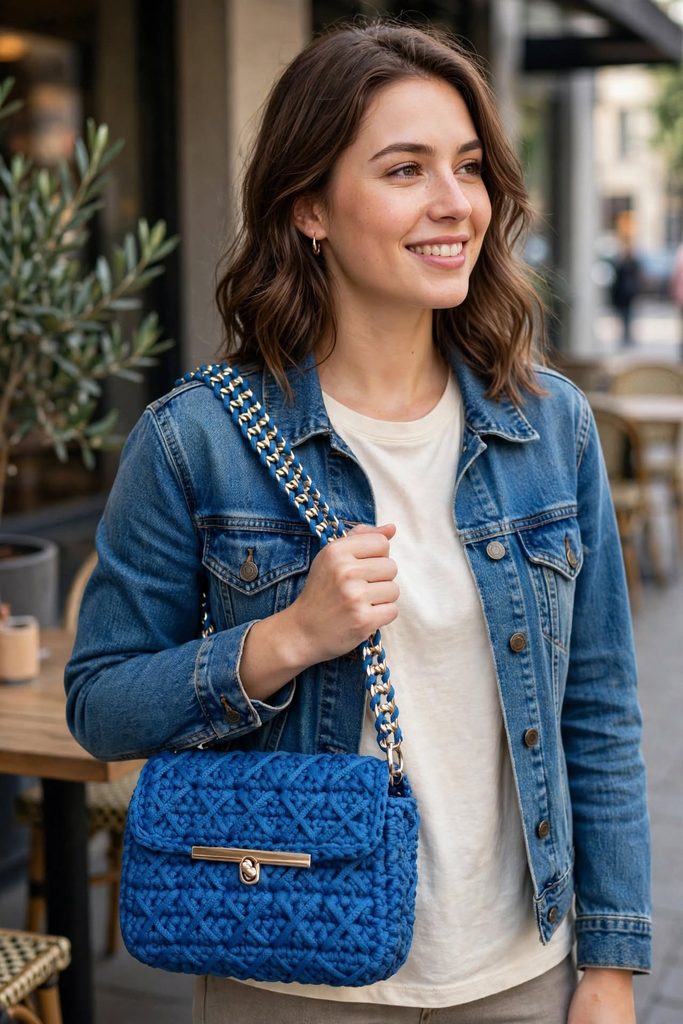
I found the exact Diamond Lattice pattern for this blue bag on Creative Fabrica during my free trial — here’s the PDF I used with photos and diagrams.
- • ✅ Diamond Lattice Texture — structured, holds shape
- • ✅ Gold Bar Clasp with Heart + Blue + Gold Chain Strap
- • ✅ Includes PDF Pattern + Photos / Diagrams
- • ✅ Perfect for Everyday Use — phone, wallet, keys
At first glance, a crochet bag looks simple. It holds a phone, a wallet, keys, and the small things you need to take with you.
Look closer, and you realise it is a collection of design decisions working together.
The body has to hold its shape. The fabric needs to suit what you plan to carry. The handles must be strong enough to take the weight. The closure (if there is one) should open and close without fighting you.
Even the colour changes the personality of the bag. Deep blue can feel bold and modern. A softer shade feels quieter and more relaxed. A metal chain adds contrast — and also weight.
Crochet works through repeated loops. There is no mystery in the mechanics. The interesting part is how small choices accumulate. A different stitch changes the texture. A firmer yarn creates more structure. A wider base changes how much the bag can hold.
The finished object is never just the sum of its stitches. It is the result of deciding how those stitches should work together.
Chapter 2: The Quiet Mathematics of Crochet
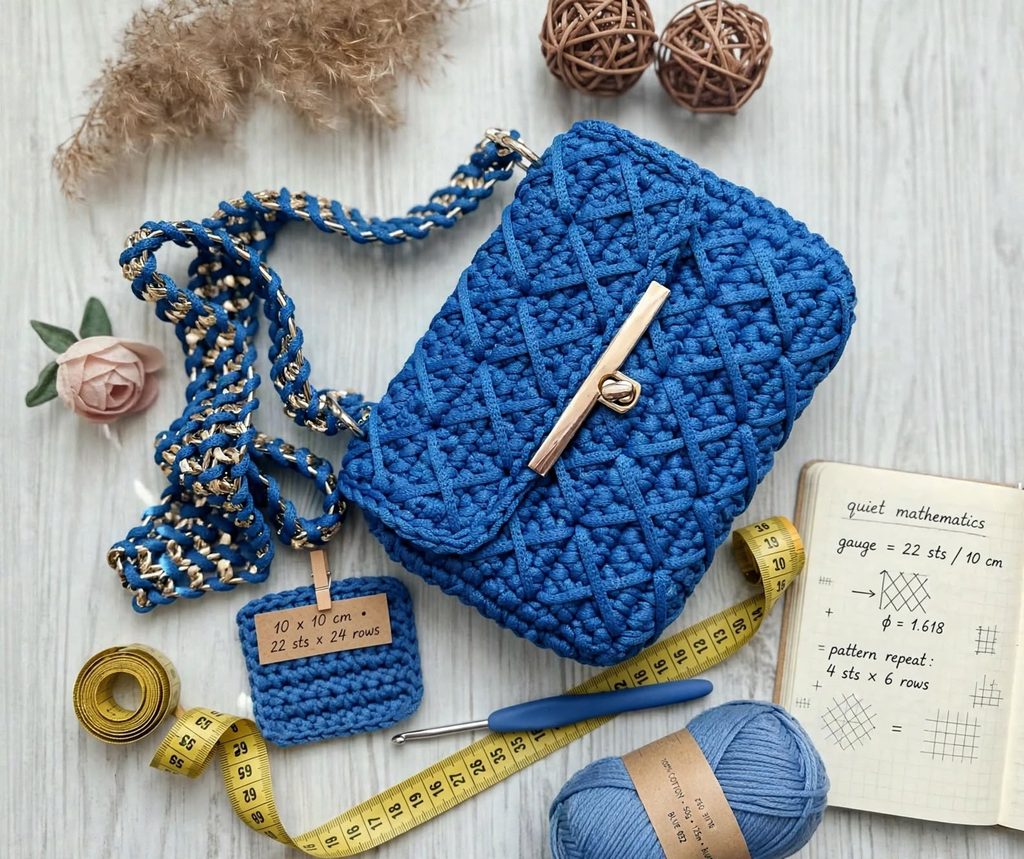
Crochet involves counting, repetition, and a certain amount of patience. It also rewards attention.
It is tempting to estimate a project by saying “a small bag needs about this many stitches.” In reality, there is no universal number.
The total depends on:
- Finished size
- Yarn thickness
- Hook size
- Stitch pattern
- Construction (base, sides, flap, decorative sections)
This is why stitch counts and yarn estimates should come from the actual pattern or a carefully made sample — not from a guess.
Gauge matters more than most people want to admit. A small swatch shows how many stitches and rows fit into a measured square. If your gauge is different from the pattern, the finished bag will be larger, smaller, softer, or stiffer than expected.
It is not busywork. It is one of the simplest ways to avoid discovering halfway through that the fabric is not behaving the way you hoped.
Once a stitch becomes familiar, the work can settle into a quiet rhythm. That rhythm is part of the pleasure — as long as you remember to take breaks.
Chapter 3: Choosing the Right Blue
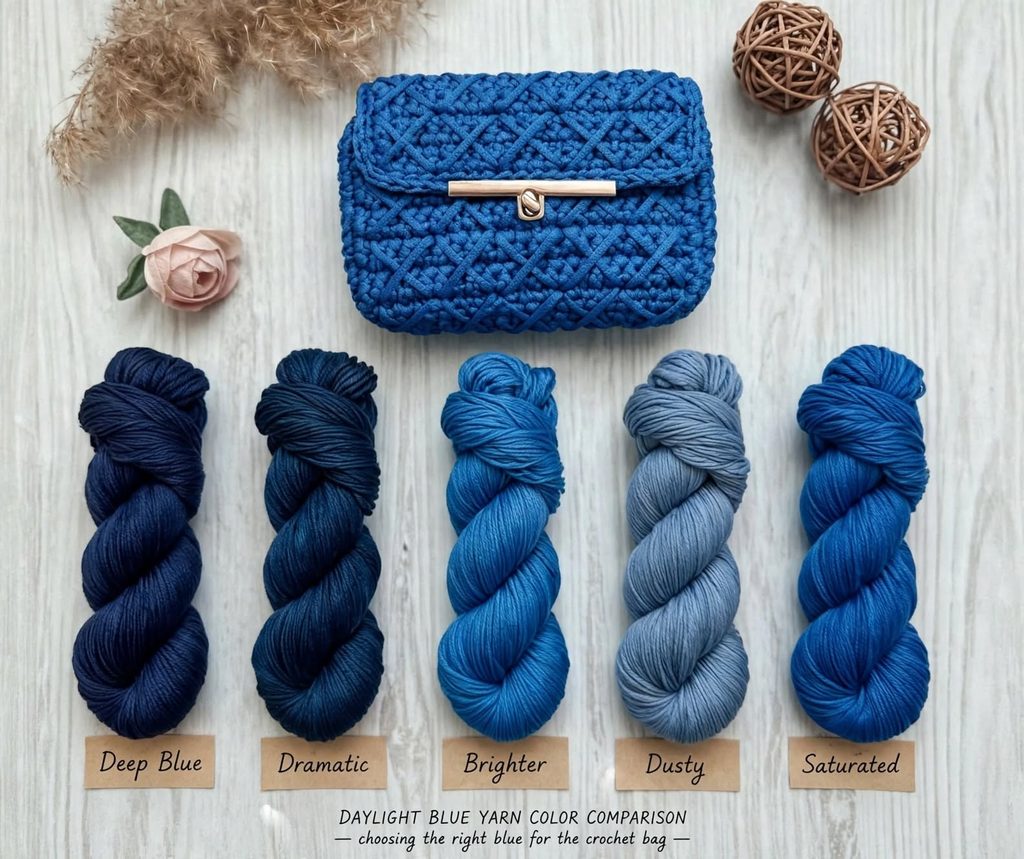
Some colours do a lot of the emotional work for you.
Deep blue can feel dramatic without the severity of black. A brighter blue makes a simple shape stand out. Dusty blue sits comfortably with neutrals, while a saturated shade can become the main feature of an outfit.
Before choosing yarn, decide how you want the finished bag to look and feel.
Think about structure
For a bag that needs to hold its shape, a yarn with some body usually works better than a very soft, drapey one. Cotton is a popular choice because it gives clear stitch definition, but not every cotton behaves the same. Thickness, twist, and softness all matter.
Blended yarns can offer different combinations of flexibility, weight, and care. Always check the label and the pattern recommendations before substituting.
Check the colour in real light
Yarn can look completely different in a shop, beside a window, and under indoor lighting. If the exact shade matters, compare it in daylight and against the clothes or lining you plan to use.
Also make sure you have enough yarn from the same dye lot. Small colour differences can become surprisingly visible in a solid-coloured bag.
A beautiful colour can start the project. Choosing a yarn that suits the construction is what helps the bag actually work.
Chapter 4: The Hook Is a Tool, Not Magic
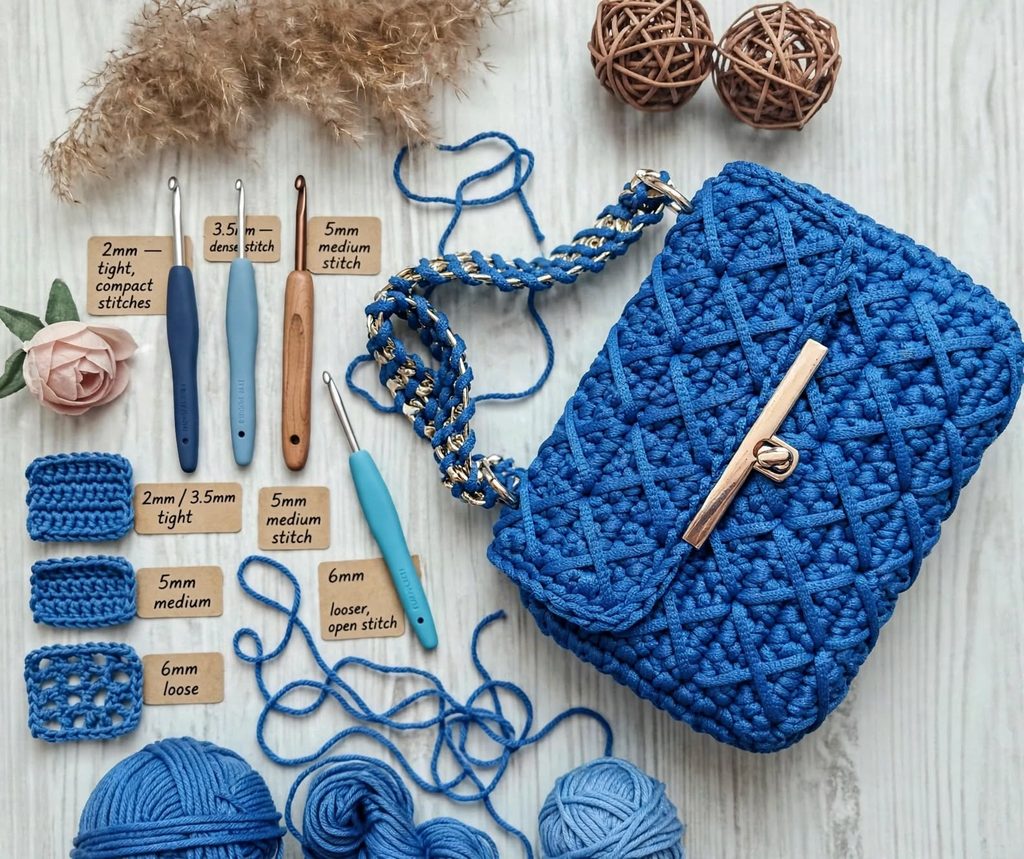
A crochet hook is a simple tool, but the size you choose changes the fabric.
A smaller hook usually creates tighter stitches. A larger hook creates looser ones. Neither is automatically better.
For a bag, the fabric needs to suit its purpose. Very open stitches may let small items slip through. Extremely tight stitches can make the fabric stiff and tiring to work. The right balance depends on the yarn, the stitch, and the design.
If you are following a pattern, start with the recommended hook and check your gauge. Change it only when you understand how that change will affect the final result.
Mistakes are normal. A missed stitch or an uneven row does not ruin the project. Catching problems early — by counting stitches and using markers — makes them much easier to fix.
The goal is not perfection in every loop. It is a finished bag that works and has been made with care.
And yes — crochet hooks are sharp enough to cause injury. Store them safely, especially if you have children or pets.
Chapter 5: Finding a Pattern That Actually Helps
A good pattern does more than list stitches. It helps you understand how the bag is built.
Before starting, check:
- Skill level and required techniques
- Clear materials list (yarn weight, approximate amount, hook size)
- Finished measurements
- Construction details (base, sides, handles, lining, closure)
- Photos or diagrams where the instructions might be confusing
- Clear terminology
A pattern labelled “beginner-friendly” is not always suitable for someone who has never held a hook. Read the requirements carefully.
If you would like to explore a paid option, you can review this crochet pattern for a women’s mini handbag on Creative Fabrica. Check the current listing for the exact design, skill level, materials, and measurements. Do not assume it matches the blue bag in this article unless the listing confirms it.
Disclosure: This post contains an affiliate link. If you purchase through it, I may earn a commission at no extra cost to you.
The right pattern should give you a clear path from the first stitch to the finished bag — not just a pretty photograph.
Chapter 6: Building a Bag That Can Actually Be Used
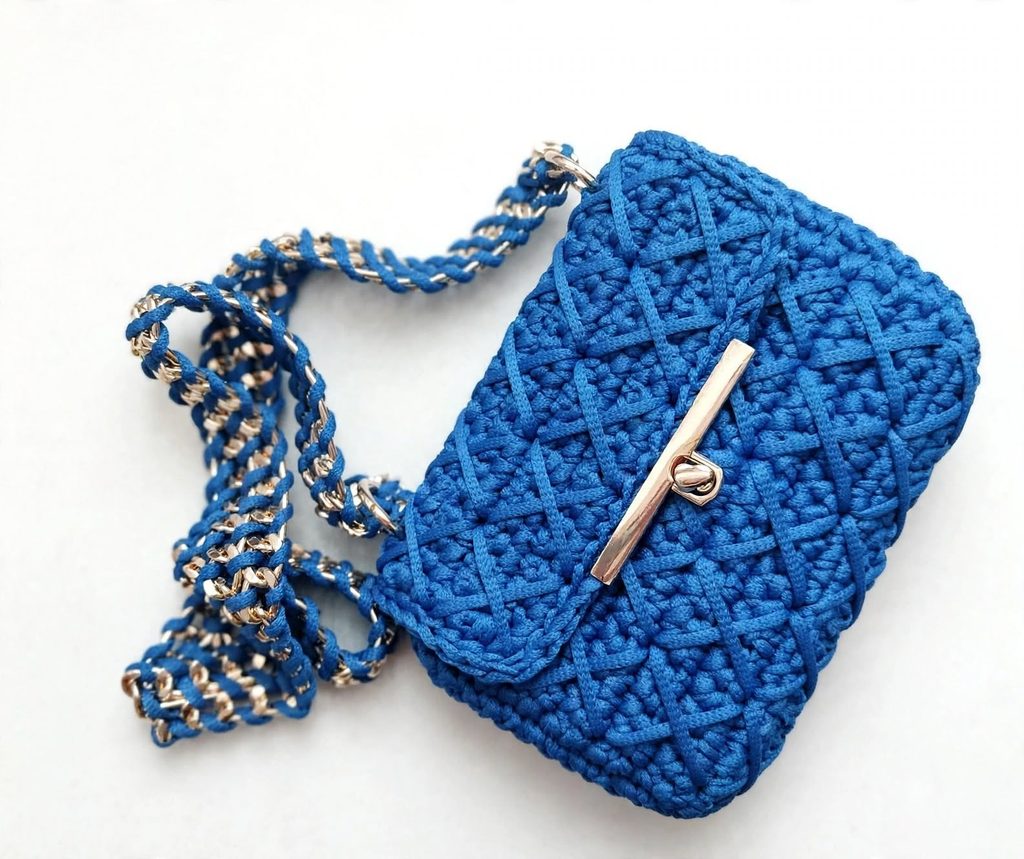
A crochet bag should look good, but it also needs to function as a bag.
Start with the base
The base largely determines the shape. Count carefully and check the dimensions as you go. An uneven base will affect everything that sits on top of it.
Pay attention to the sides
The stitch pattern influences openness, flexibility, and strength. If the design uses open stitches, consider whether the gaps suit the items you plan to carry. A lining can help, but it must be attached securely.
Treat the handles as structural
Handles take repeated stress. Their attachment points deserve extra care. Follow the pattern instructions and test the strength before trusting the bag with anything important.
Choose hardware thoughtfully
Clasps, chains, and rings change both the look and the weight of the bag. Make sure they are securely attached and free from sharp edges. A heavy chain concentrates force at the attachment points — the construction needs to account for that.
Test the finished bag
Before putting valuables or heavy items inside, inspect the seams, handles, and closure. Start with a light load and watch for stretching or movement. Do not assume a handmade bag has a particular weight limit unless that limit has been properly established.
A careful finish is not only about appearance. It makes the bag more practical to use.
Chapter 7: The Less Glamorous Side of Crochet
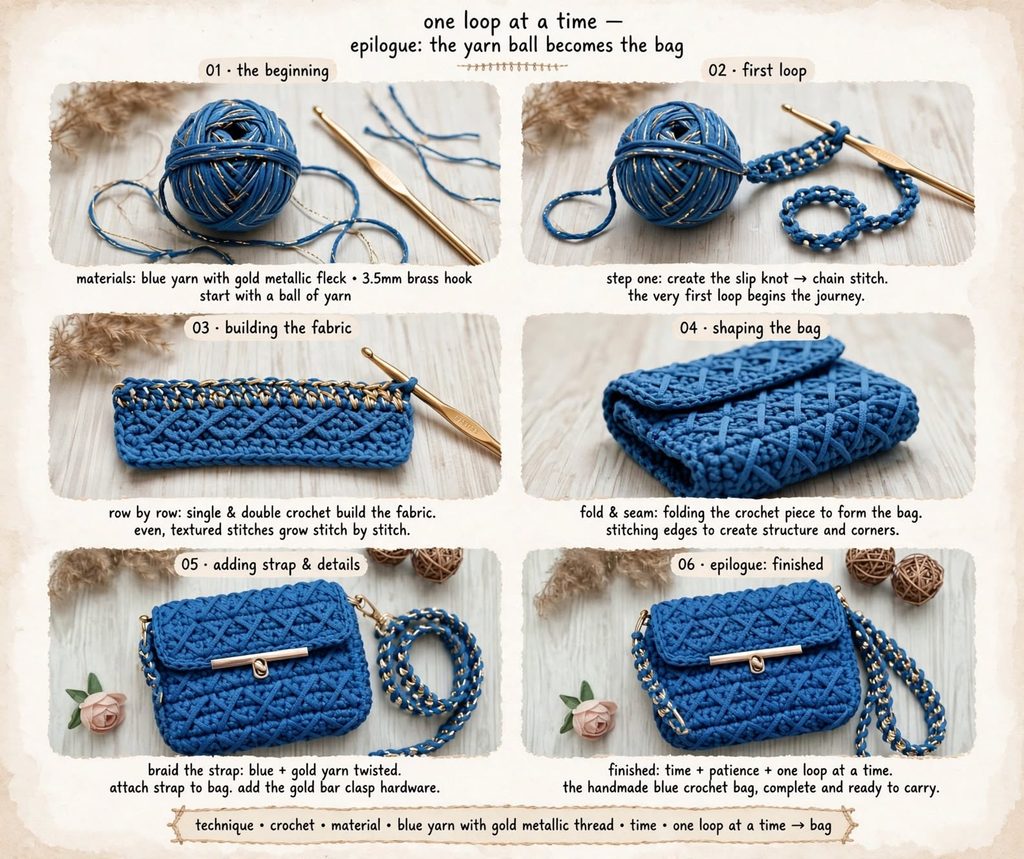
Every craft has its unphotogenic moments.
Yarn tangles. Rows come out uneven. A project that looked small in a photograph takes much longer than expected. And sometimes your hands simply get tired.
If you notice discomfort, numbness, or pain, stop. Adjust your posture, support your arms, and take real breaks. Persistent symptoms deserve proper attention.
Keep your workspace comfortable and well lit. Store scissors, hooks, and small hardware safely. Secure loose yarn so it does not become a hazard for children or pets.
It is also worth being honest about supplies. Buying yarn for a specific project is usually more useful than collecting materials without a plan.
The imperfect parts of making something are normal. They do not need to become a test of endurance.
Chapter 8: The Real Science of Handmade Pride
A crochet bag does not break physics.
It simply shows what happens when material, technique, and time are allowed to work together.
A strand of yarn has certain properties. A hook draws loops through other loops. Those loops form a structure. The pattern, tension, and yarn all influence the result.
There is no need to invent a paradox to make that process interesting.
What is certain is that a handmade bag reflects a series of choices — colour, yarn, stitch, shape, and finish. Those choices give the object its character.
A blue bag may become a favourite because it fits your everyday needs, because the colour makes you smile, or because you remember the hours that went into it. Its value does not depend on whether strangers notice it.
Sometimes the most satisfying part is simply knowing how it came together — and being able to use something you made yourself.
Chapter 9: Your Turn
You do not need to begin with a complicated handbag.
If you are new to crochet, start with a small swatch or a simple pouch. Learn to make even stitches and count rows before committing to a larger project.
If you already know the basics, a mini bag can be a good next step. Before you begin:
- Choose a pattern that matches your current skill level.
- Check the yarn, hook, and other supplies.
- Make a gauge swatch if the pattern asks for one.
- Read the instructions, especially the sections about shaping and handles.
- Check your stitch count and measurements as you work.
- Finish carefully, inspect the construction, and test the bag with a light load.
Do not worry if your first attempt looks different from the photograph. Yarn, tension, and technique all leave their mark. That is part of the process.
Most importantly, choose a project you actually want to make. The work is easier to enjoy when the finished object has a real purpose.
Epilogue: One Loop at a Time
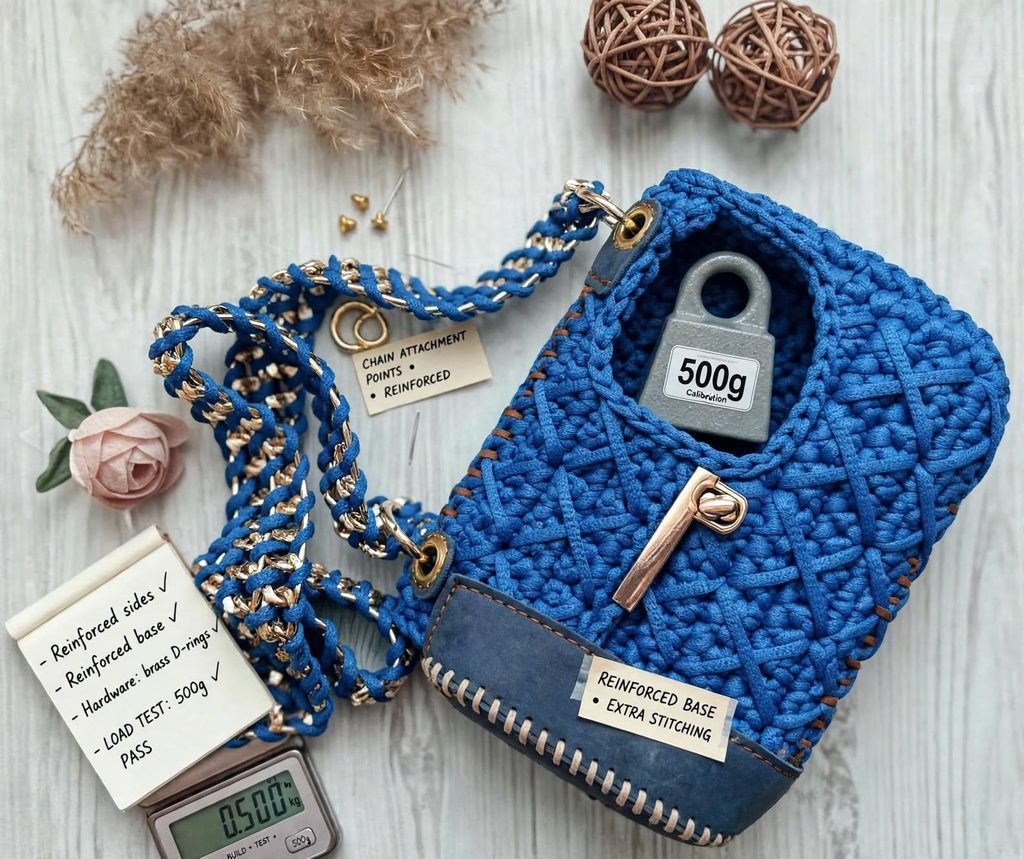
A ball of yarn becomes a bag through a sequence of small actions. There is no instant transformation. No single stitch does all the work.
The result appears gradually — one loop, one row, one decision at a time.
That is what makes crochet satisfying. It turns a simple material into something with shape and purpose, while still leaving room for personal choices along the way.
Maybe your next project will be a blue handbag.
Maybe it will be something else entirely.
You do not have to break physics to make something remarkable.
You just have to begin with the first loop.