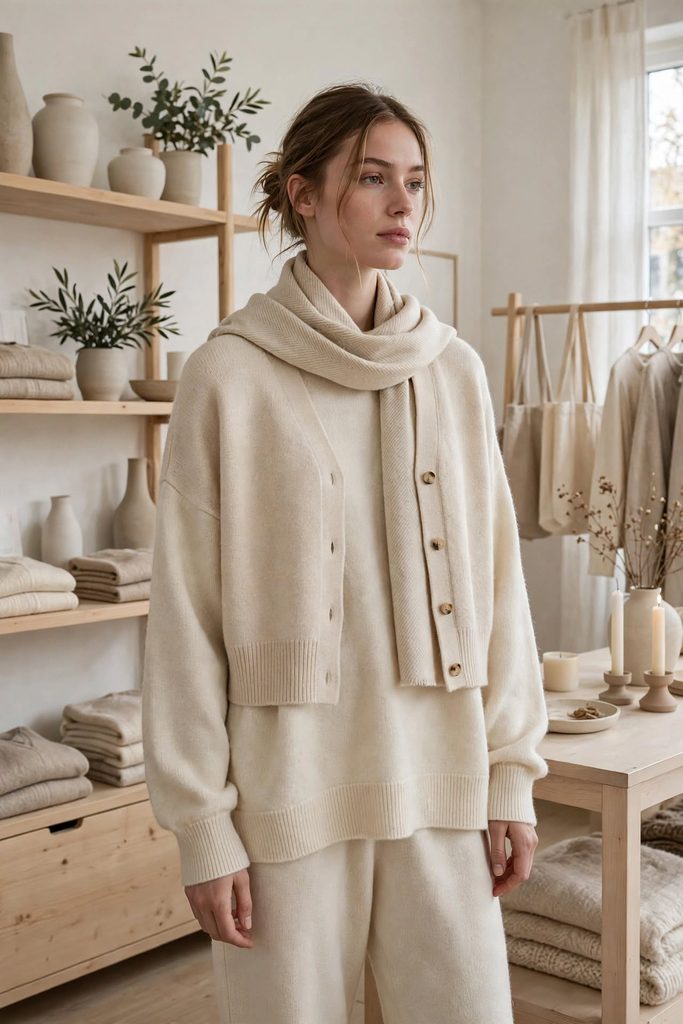
Or: Why Your $4 Skein Can Pass for a $400 Sweater
There is a quiet conspiracy in the yarn aisle.
The expensive skeins sit under flattering lights, looking as though they have never experienced a bad day. Hand-dyed merino bats its eyelashes. Baby alpaca plays hard to get. Meanwhile, the affordable acrylic blend on the bottom shelf waits patiently, wondering what it did wrong.
Here is the secret the yarn industry would probably prefer you not to notice: the price of your yarn does not automatically determine how expensive your finished project will look.
A well-designed sweater made with modestly priced yarn can look more polished than an expensive one with awkward proportions, uneven stitches, or a neckline that seems to be having an existential crisis.
The difference often comes down to a handful of decisions: the stitch pattern, the fabric’s texture, the shape of the garment, the color, and the finishing.
You do not need a luxury yarn budget. You need a little restraint, a decent understanding of your materials, and the willingness to undo a few rows when something is not working.
Let’s talk about what actually makes knitted pieces look polished, intentional, and beautifully made.
1. The Five Stitch Patterns That Make Simple Yarn Look Special
Not every knitting project needs a complicated chart or a stitch pattern that requires three cups of coffee and complete silence.
Sometimes, the simplest stitches do the most convincing work.
Stockinette: The White T-Shirt of Knitting
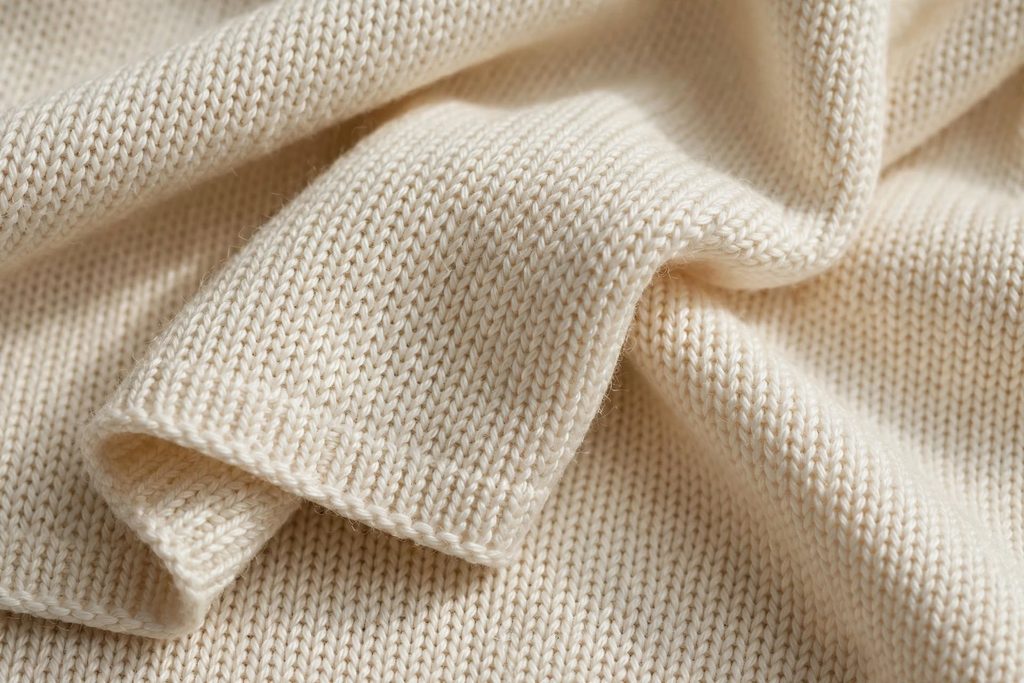
Stockinette stitch is the plain white T-shirt of the knitting world. It goes with almost everything, never asks for attention, and reveals more about the quality of the fit than you might expect.
Because the surface is relatively smooth, small inconsistencies are easy to see. Even stitches, balanced proportions, and clean edges make a stockinette sweater look considered rather than unfinished.
This is also why gauge matters. A fabric that is too loose for the design may look floppy, while one that is too tight may become stiff and uncomfortable. The goal is not to squeeze as many stitches as possible into an inch. It is to create a fabric that suits the garment.
Best for: sweaters, simple cardigans, scarves, and minimalist accessories.
The expensive-looking detail: neat edges, consistent tension, and a silhouette that hangs the way you intended.
Ribbing: The Small Detail That Holds Everything Together
Ribbing rarely gets the spotlight, but it can make or break the finished piece.
Think of the cuffs, neckline, and hem of a sweater. If they flare, twist, or stretch out of shape, even beautiful yarn cannot distract from the problem.
Well-executed ribbing gives a garment a clean beginning and a clean ending. It helps cuffs sit comfortably around the wrists and gives hems a more deliberate finish.
A simple 1×1 or 2×2 rib is often all you need. The important thing is consistency and choosing a ribbing treatment that works with the main fabric.
Best for: cuffs, hems, necklines, hat brims, and cardigan bands.
The expensive-looking detail: ribbing that lies neatly without pulling the garment out of shape.
Moss Stitch and Seed Stitch: Texture Without the Drama
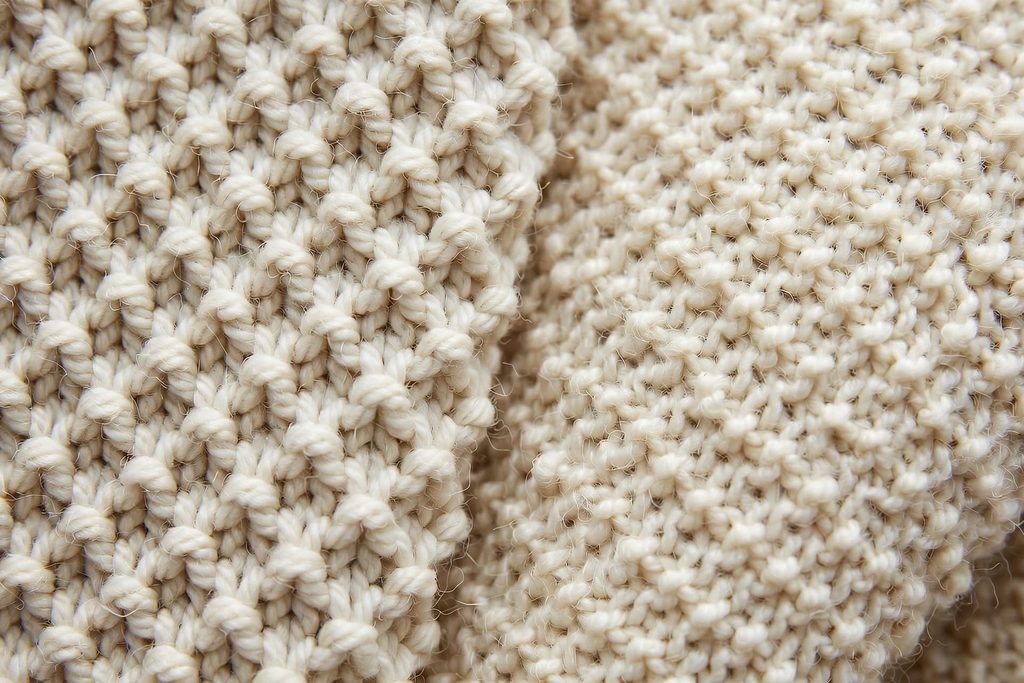
Textured stitches can make an inexpensive yarn look more interesting because the surface itself becomes part of the design.
Moss stitch and seed stitch are both useful examples, although the names are not always used consistently across knitting traditions and patterns. They can describe different stitch arrangements, so check the actual instructions rather than assuming the terms are interchangeable.
The appeal is the same: small, repeated bumps create a rich surface without requiring elaborate cables or colorwork.
This kind of texture can be especially effective in scarves, hats, cushions, and simple sweaters. It adds depth while allowing the overall shape to remain uncomplicated.
Best for: accessories, textured panels, and understated everyday pieces.
The expensive-looking detail: an even, deliberate texture that looks good up close as well as from across the room.
Fisherman’s Rib: Softness With a Little Architecture
Fisherman’s rib creates a plush, dimensional fabric that can look wonderfully substantial.
It is particularly effective for scarves, hats, and sweaters where warmth and texture are part of the design. The fabric can have considerable stretch and bulk, however, so it is worth making a swatch before committing to an entire garment.
Not every yarn behaves equally well in this stitch. A yarn that is already bulky may produce a very heavy fabric, while a lighter yarn may give you a softer, more flexible result.
Best for: cozy scarves, winter accessories, and relaxed sweaters.
The expensive-looking detail: a fabric with enough body to hold its shape without becoming stiff or cumbersome.
Simple Cables: One Bold Detail Is Often Enough
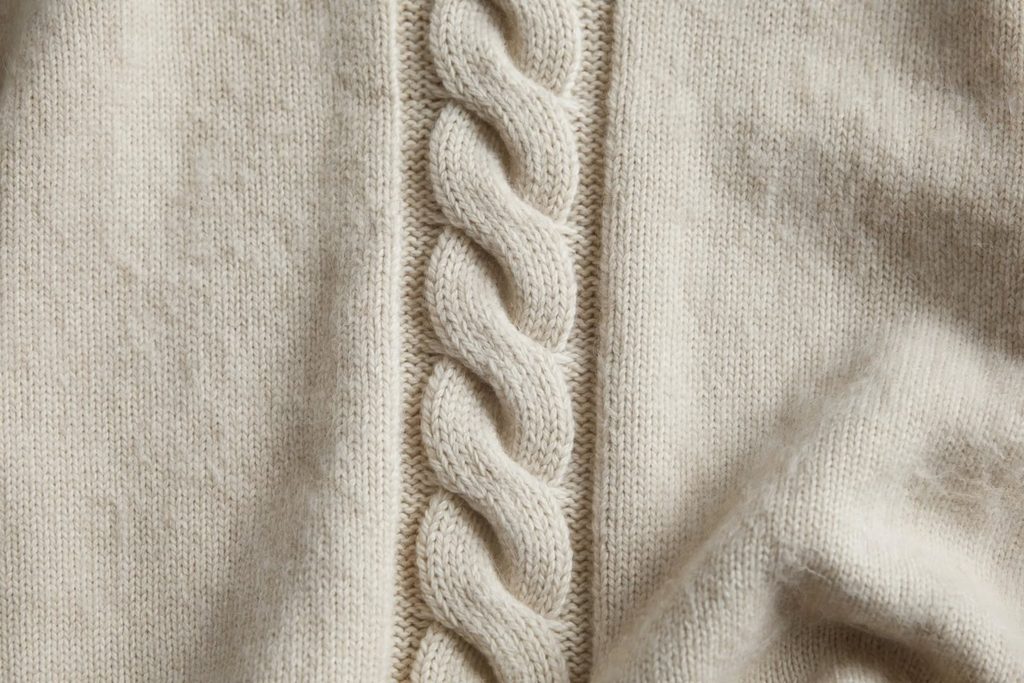
Cables look complicated. That is part of their charm.
A single, well-placed cable running down the front of a sweater can create a strong focal point without overwhelming the design. A few cables along a scarf can turn a straightforward project into something that looks carefully considered.
The trick is to give the pattern room to breathe. If every surface is competing for attention, the result can become visually busy.
You do not need six cable patterns, three kinds of ribbing, and a decorative border that deserves its own postcode.
Best for: sweater panels, scarves, headbands, and classic winter accessories.
The expensive-looking detail: a clear, consistent cable pattern surrounded by enough plain fabric to let it stand out.
2. The Color Trap: When Less Really Can Be More
Walk into a high-end knitwear shop and you will often see a familiar family of colors: cream, oatmeal, camel, charcoal, navy, soft brown, and muted olive.
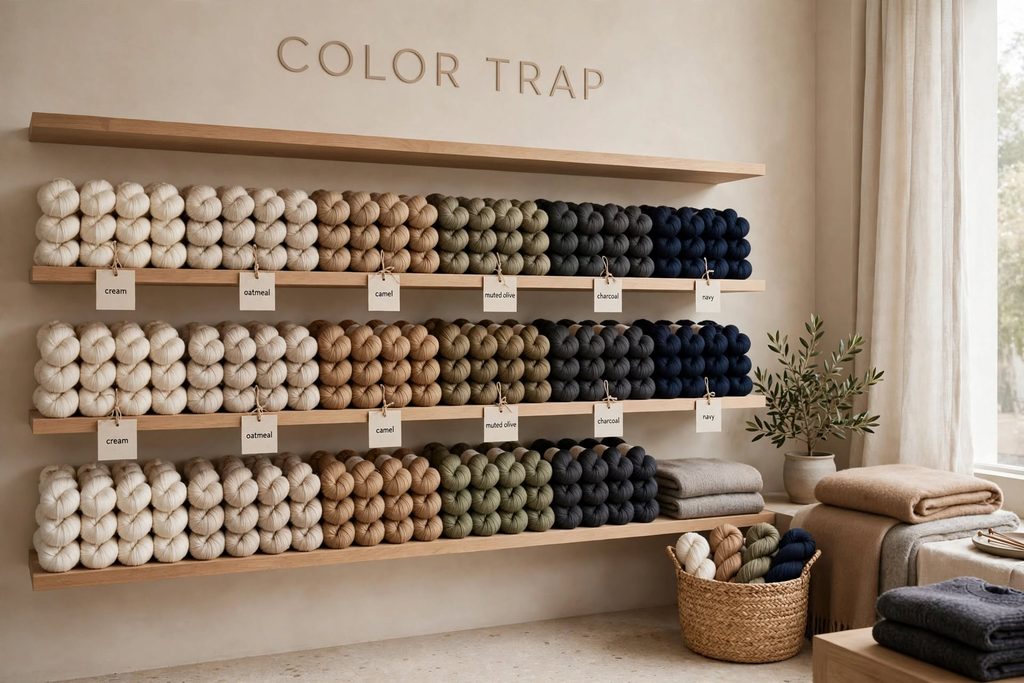
These shades work well because they are easy to combine and tend to emphasize the shape and texture of a garment. They also make it easier to build a coordinated wardrobe.
That does not mean bright colors or variegated yarn automatically look cheap. A vivid blue sweater can look extraordinary. A colorful hand-dyed skein can produce a beautiful shawl. Handmade does not mean less refined, and neutral does not automatically mean luxurious.
The question is whether the color works with the stitch pattern and the finished shape.
A complex cable may be easier to appreciate in a solid or gently tonal yarn. Highly variegated yarn can compete with intricate texture, while a simple stockinette scarf may benefit from a lively color palette.
Before buying yarn, ask yourself:
- Does this color suit the design I want to knit?
- Will the stitch pattern remain visible?
- Can I imagine wearing or using the finished piece regularly?
- Does the yarn’s color variation complement the texture, or compete with it?
If you are building a minimalist wardrobe, start with a color you already wear often. Cream, charcoal, navy, and warm brown are useful options, but the best choice is the one that belongs in your life rather than merely looking beautiful in the skein.
A polished result comes from coordination, not from obeying a list of approved luxury colors.
3. Fabric Matters More Than Tight Knitting
There is a persistent myth that tightly knitted fabric always looks expensive.
It does not.
A fabric knitted too tightly can become rigid, heavy, and uncomfortable. A deliberately airy fabric can look elegant, light, and beautifully draped. What matters is whether the fabric suits the project.
A structured cardigan needs a different fabric from a delicate shawl. A warm winter hat needs different properties from a loose summer top.
Instead of automatically reaching for smaller needles, think about three things.
Gauge
Gauge is the number of stitches and rows in a given measurement, usually a 10 cm or 4-inch square.
It affects the finished dimensions and the way a fabric behaves. If you are following a pattern, matching the recommended gauge helps your garment come out closer to the intended size.
Even when you are designing your own piece, a swatch helps you judge whether the fabric is too loose, too dense, too heavy, or just right.
Drape
Hold your swatch in your hand. Does it fall softly? Does it stand away from your body? Does it feel pleasant against the skin?
There is no universal answer. A structured bag may need a firm fabric, while a scarf usually benefits from movement. The right drape is the one that serves the design.
Consistency
Uneven tension can be more noticeable than the yarn’s price. A few stitches that are much tighter than their neighbors can interrupt an otherwise smooth surface.
You do not need machine-perfect knitting. You need a reasonably consistent fabric and a design that makes the most of its natural character.
A modestly priced cotton blend can look beautifully polished when the stitch pattern, gauge, and shape work together. An expensive merino yarn cannot rescue a garment whose fabric is unsuitable for its intended purpose.
Choose the fabric for the job, not the tightest possible stitch.
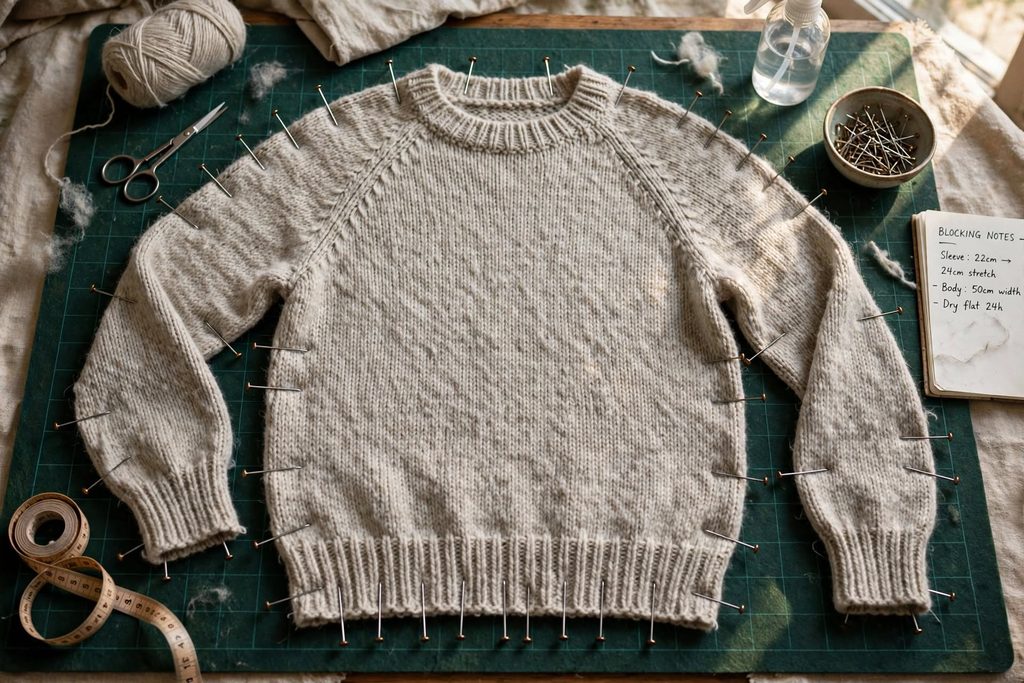
4. Blocking: The Finishing Step That Can Change Everything
Blocking is often the moment when a knitted piece starts to look like the object you imagined rather than a collection of stitches that has just survived a long journey.
It can help even out stitches, settle edges, open up lace, and bring pieces closer to their intended measurements. But blocking is not identical for every fiber, and it is not a universal cure for every knitting problem.
Wool, cotton, acrylic, and blended yarns respond differently to moisture and heat. Always check the yarn label and the care instructions for your project before choosing a method.
A Sensible Blocking Routine
1. Check the fiber.
Look at the yarn label. If the fiber content is uncertain, test your approach on a swatch first.
2. Choose an appropriate method.
Some pieces can be gently soaked and laid flat. Others may benefit from careful steam treatment or another method suited to the fiber. Do not assume that every yarn should be soaked or steamed.
3. Remove excess water gently.
If soaking is suitable, support the fabric and press out excess water without twisting or wringing it. A towel can help absorb moisture.
4. Shape the piece without forcing it.
Lay the knitting flat on a suitable surface and adjust it to the intended dimensions. Use rust-resistant pins or blocking wires when appropriate, especially for lace or pieces that need straight edges.
5. Let it dry completely.
Give the piece time to dry in its intended shape before wearing it or storing it.
Blocking can improve the appearance of a scarf with uneven edges or help a lace pattern open up. It cannot reliably repair incorrect sizing, poor construction, or a fabric that is fundamentally unsuitable for the design.
And please, do not block aggressively just because a tutorial makes it look dramatic. Stretching a garment beyond its intended measurements can create a different problem rather than solving the first one.
The goal is a better finish, not a wrestling match with wet wool.
5. Fit and Silhouette: The Shape Is Doing More Work Than You Think
You can have beautiful yarn, perfect stitches, and a color that belongs in a Scandinavian design shop. If the garment fits badly, the overall impression will still suffer.
That does not mean every sweater needs to be fitted or every cardigan needs a tailored waist. Relaxed, oversized, cropped, and boxy silhouettes can all look intentional.
The important distinction is between a shape that has been chosen and one that has happened by accident.
The Relaxed Sweater
A relaxed sweater can look refined when its proportions are balanced. Drop shoulders, a roomy body, and generous sleeves can work beautifully together.
But oversized does not mean that every measurement should be increased without thought. Sleeve length, body length, neckline, and the amount of ease all affect the final result.
The Cropped Cardigan
A cropped cardigan can make a simple outfit feel modern. It works especially well when the body length, sleeve proportions, and button band feel balanced.
Because the silhouette is shorter, small differences in length can have a noticeable effect. Check the measurements against the clothes you plan to wear underneath.
The Classic Scarf
A scarf does not need an elaborate pattern to look polished. Consistent width, tidy edges, and a length that suits the way you intend to wear it can be enough.
If the edges curl, consider whether the stitch pattern needs a border or whether the yarn and fabric are contributing to the problem. Blocking may help in some cases, but the best solution depends on the construction.
The Details Worth Checking
Before calling a project finished, look at:
- Whether the garment matches your intended measurements.
- Whether the sleeves and other paired pieces are reasonably consistent.
- Whether seams, edges, and button bands are neat.
- Whether the neckline and cuffs sit comfortably.
- Whether the fabric behaves as expected when worn.
These details are not glamorous. Nobody is likely to write a love poem about a tidy button band.
But together, they help a handmade piece look deliberate, wearable, and well finished.
6. The Final Touch: Presentation
A finished knitted piece deserves a little attention before you photograph it, gift it, or put it away.
If you are taking pictures for a blog, an online shop, or your own project archive, try natural light and a simple background. A wooden table, a neutral wall, or a clean bedspread can help the texture and color remain the focus.
Photograph the piece from more than one angle. Include a close-up of the stitches, a view of the edges and finishing, and—when relevant—a picture showing how it fits on a person.
You do not need a professional studio. You do need enough light to show what you actually made.
For storage, follow the yarn’s care instructions. Clean, fully dry knitwear should be stored in a way that protects it from dust, moisture, and pests. Fold heavier sweaters rather than hanging them if hanging would stretch the shoulders. Use suitable storage materials, and take care with cedar or other scented products if you have sensitivities.
If you are selling your work, presentation should support an honest description of the item. Show the actual color, texture, and proportions. Do not use styling or editing to hide flaws that a buyer would reasonably want to know about.
A beautiful photograph cannot replace good workmanship, but it can help people appreciate it.
7. Three Simple Projects That Can Look Surprisingly Refined
If you want to practise these ideas without committing to a large sweater, start with a smaller project.
A Cream or Charcoal Scarf
Choose a yarn with a pleasant texture and a color you will wear often. Use stockinette with an appropriate edge treatment, a simple rib, or a subtle textured stitch.
Focus on keeping the width consistent and finishing the ends neatly. If the fiber and construction benefit from blocking, use a suitable method.
A Ribbed Hat
A ribbed hat is a good opportunity to practise consistent tension and neat decreases. The fit matters: a hat that is too loose may slide around, while one that is too tight may be uncomfortable.
Choose a yarn that suits the stitch pattern and follow a pattern designed for your intended size and yarn weight.
A Minimalist Cushion Cover
A cushion cover gives you room to experiment with texture without worrying about garment fit. Stockinette, moss or seed stitch, and simple cables can all work well.
Think about how the fabric will stretch over the insert, how the edges will be finished, and whether the yarn is appropriate for an item that may need regular cleaning.
None of these projects requires luxury yarn. Each gives you a chance to practise the details that make handmade objects feel considered.
Frequently Asked Questions
Can inexpensive yarn really look expensive?
Yes, sometimes. The result depends on the yarn’s quality and behavior, the stitch pattern, gauge, color, construction, and finishing. A low-cost yarn will not imitate every property of cashmere or fine merino, but it can still produce a beautiful, well-designed object.
Which knitting stitches look the most luxurious?
Stockinette, well-executed ribbing, subtle textured stitches, fisherman’s rib, and simple cables can all work well. The best stitch depends on the project and yarn. Even tension and suitable fabric structure usually matter more than choosing the most complicated pattern.
Should I use smaller needles for a more expensive look?
Not automatically. Smaller needles can create a denser fabric, but they can also make it too stiff. Knit a swatch and choose the needle size that produces the right gauge, texture, and drape for your project.
Does every knitted piece need blocking?
No. Blocking can be very helpful, especially for lace, seams, and pieces that need shaping, but the method depends on the fiber and construction. Some projects need little or no blocking. Always check the yarn’s care instructions.
Are neutral colors always more elegant?
No. Neutrals are versatile and can highlight stitch definition, but bright colors and variegated yarns can look just as beautiful. Choose colors that suit the design and the way you intend to use the finished piece.
The Real Secret
Expensive-looking knitwear is not about money. It is about restraint.
It is knowing when a simple stitch is enough. When a single cable says more than six. When the shape needs another adjustment, the edge needs tidying, or the fabric would benefit from careful blocking.
It is choosing a yarn because it suits the project, not because its label promises a more sophisticated version of yourself.
And it is remembering that handmade does not have to mean rough, rustic, or imperfect by default. A knitted piece can be practical, personal, and beautifully finished all at once.
So choose an affordable yarn that works for your design. Make a swatch. Pay attention to gauge and proportions. Finish the edges carefully, and block the piece when the fiber and pattern call for it.
You may not convince everyone that your sweater cost $400.
But you might end up with something better: a piece you love wearing, made with your own hands, at a price that lets you afford your next project too.