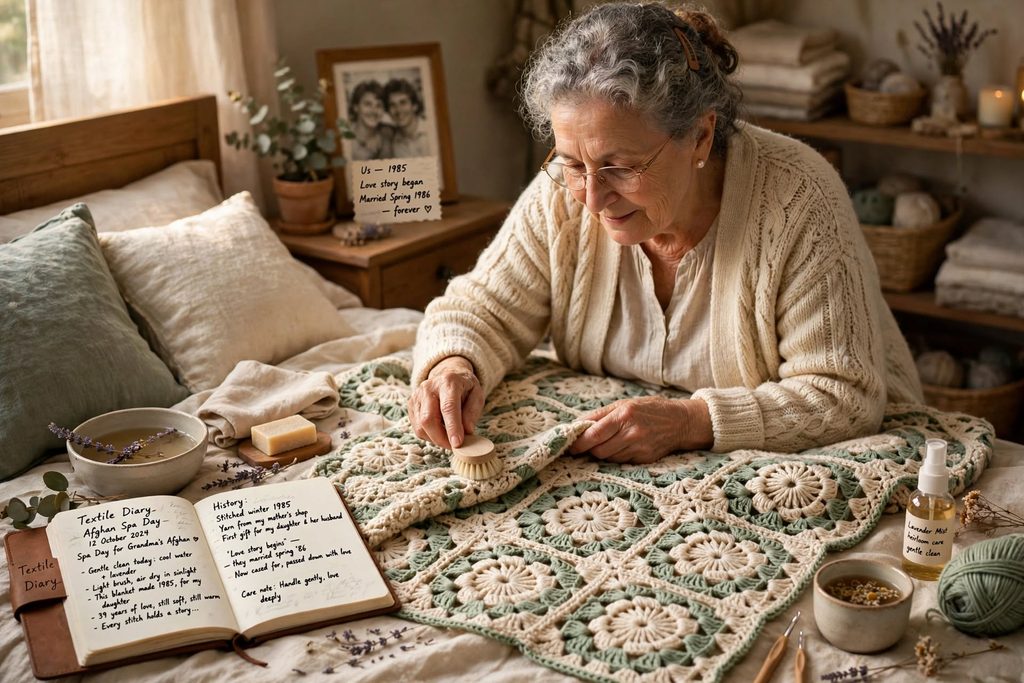
Or: Why Your Grandma’s Afghan Deserves a Spa Day
Let me tell you a secret about handmade crochet items: they are more than things made of yarn. They are textile diaries.
Every loop can hold a story. That slightly uneven edge? Perhaps that was the row where your aunt was watching a thriller and jumped at the plot twist. The impossibly tight stitch in the corner? Maybe someone was thinking hard about a breakup.
Handmade blankets, cardigans, hats, and little crocheted creatures carry hours of patience and the occasional questionable decision. And yet, when they need cleaning, we sometimes toss them into the washing machine as casually as gym socks.
Shame on us. All of us.
The good news is that caring for crochet does not have to be complicated. You just need to understand what your yarn can handle, how to remove water without stretching the fabric, and why drying deserves more attention than it usually gets.
Consider this your four-act guide to keeping handmade treasures clean, comfortable, and ready for many more years of use.
Act I: The Confession
First, admit your crimes.
Have you ever thrown a handmade cardigan into a hot wash because you were “in a rush”? Have you watched in horror as a beloved crochet hat emerged from the dryer looking as though it had been designed for a teacup chihuahua?
Welcome to the club. The membership fee is one shrunken sweater and a heavy conscience.
Before we talk about water, let’s talk about reading. Not poetry. Labels.
Read the Yarn Label First
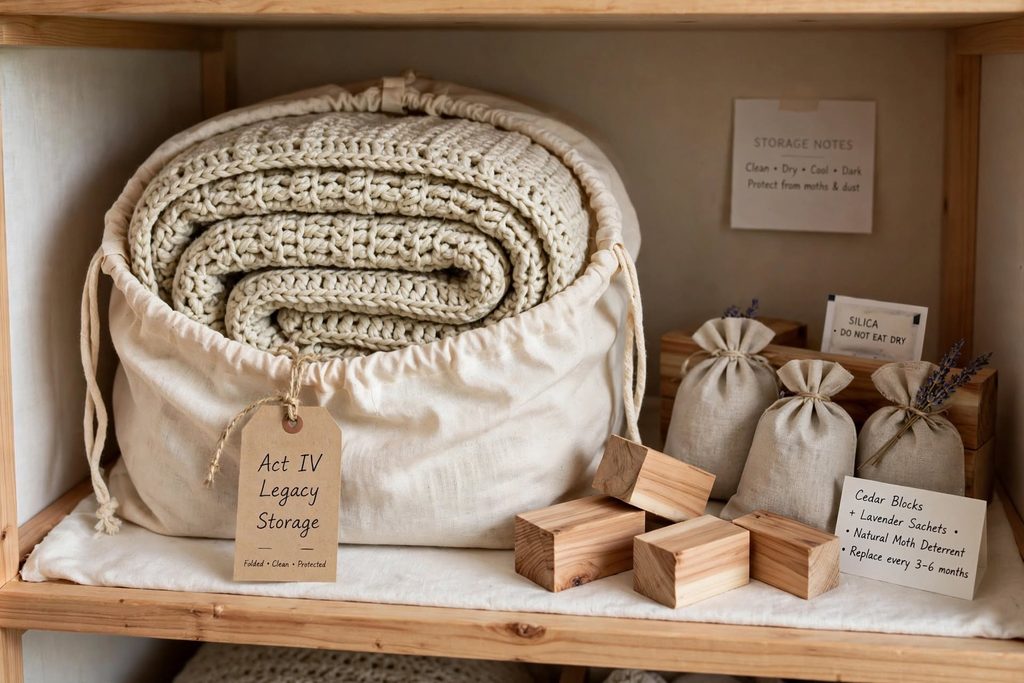
If your item came with care instructions, follow them. If you made the item yourself, check the yarn label or look up the manufacturer’s care recommendations if you still have the yarn details.
Different fibers behave differently:
- Wool: Some wool items can felt or shrink when exposed to an unsuitable combination of moisture, temperature changes, and agitation. Gentle handling is especially important.
- Cotton: Cotton is often washable, but it can become heavy when wet and may stretch or lose its shape if handled carelessly.
- Acrylic: Many acrylic yarns are relatively easy to care for, but heat can damage or distort them. Check the label before using a dryer or steam.
- Blends: A blend may need to be treated according to its most care-sensitive fiber and the manufacturer’s instructions.
The yarn is not being difficult. It simply has its own rules.
If you don’t know what the item is made from, don’t assume that every handmade piece can be washed the same way. Start with the gentlest suitable method, test an inconspicuous area when appropriate, and avoid heat until you know what the material can tolerate.
Before Washing, Check the Item
Look for loose ends, weak seams, missing buttons, stretched handles, or delicate embellishments. Repair anything that could become worse during washing.
If the item has a stain, identify it before choosing a cleaning method. Rubbing aggressively can damage the surface or push a stain deeper into the fibers.
And if your crochet blanket is large enough to qualify as a small country, check that you have somewhere clean and spacious to dry it before you get it wet.
A wet blanket is considerably less cooperative than a dry one.
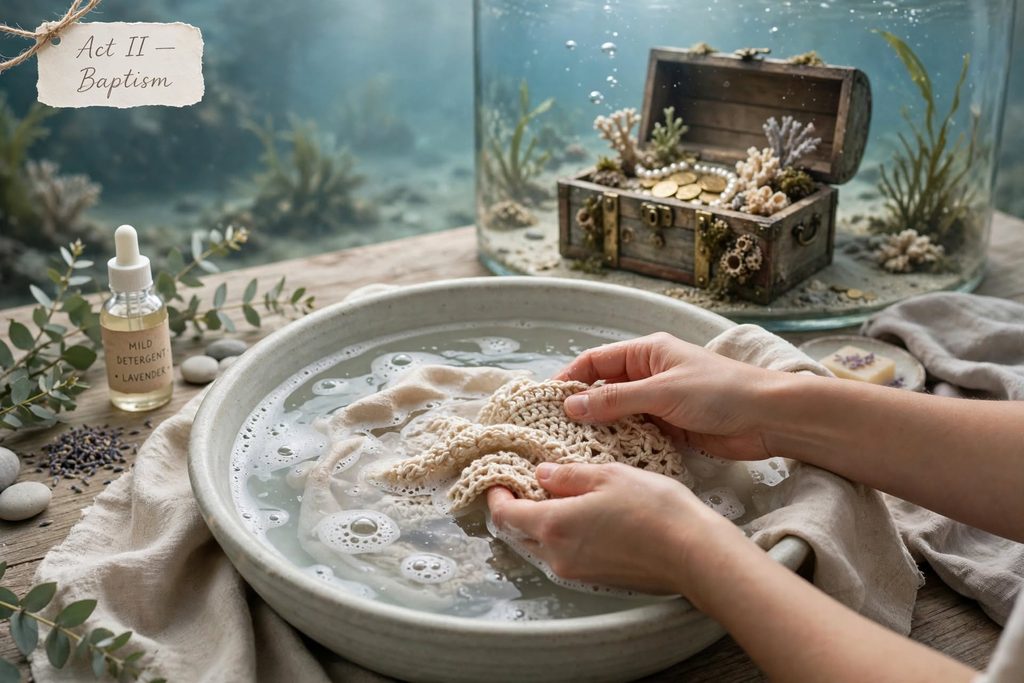
Act II: The Baptism
Now, the water.
The first rule is not “always use cold water.” It is use the temperature recommended for your yarn, and avoid unnecessary heat or agitation.
For many delicate crochet items, cool or lukewarm water is a sensible starting point. Wool and other sensitive fibers may need especially careful handling. Some machine-washable yarns, however, can tolerate a different routine when their care labels allow it.
How to Hand-Wash Crochet Items
1. Prepare a clean basin.
Use a clean sink or basin large enough for the item to rest without being crammed into a small space.
2. Add a suitable detergent.
Choose a mild detergent appropriate for the fiber. For wool, use a wool wash or another product recommended for the yarn. Baby shampoo is not a universal substitute for textile detergent.
Follow the product instructions rather than assuming that more soap means a better clean.
3. Submerge the item gently.
Support the crochet as you lower it into the water. Allow the water to move through the fabric without twisting, scrubbing, or stretching it.
Imagine lowering a treasure chest into the sea. There is no need to throw it overboard.
4. Let it soak only as appropriate.
A short soak may help loosen dirt, but the suitable duration depends on the fiber, detergent, and condition of the item. Follow the care instructions, especially for wool, dyed yarns, and delicate embellishments.
5. Press gently.
Move the water through the fabric with light pressure. Do not wring or twist the item. Those movements can distort stitches and stretch the wet fabric.
6. Rinse if needed.
If your detergent requires rinsing, use water at a suitable temperature and handle the item gently. Avoid sudden temperature changes with fibers that are sensitive to them.
What If the Water Changes Color?
Don’t panic, but don’t dismiss it either.
Some dyed yarns release color during washing. If you notice noticeable dye bleeding, keep the item separate from other laundry and avoid washing it with contrasting colors.
Follow the yarn manufacturer’s recommendations, and be especially careful with brightly colored or dark items. If the color continues to bleed significantly, stop and reassess your washing method rather than assuming it is harmless.
Your yarn may be dramatic, but you still want the color to stay where it belongs.
Can Crochet Go in the Washing Machine?
Sometimes, yes.
If the yarn label or the item’s care instructions explicitly permit machine washing, use the recommended cycle and temperature. A mesh laundry bag can provide an extra layer of protection for smaller items or pieces with delicate details.
If the instructions call for hand-washing, don’t assume that a delicate machine cycle is automatically equivalent. Machine settings, agitation, and spin speeds vary.
When in doubt, hand-washing is often a cautious option for a valuable or delicate handmade item, provided the fiber itself is suitable for wet cleaning.
The goal is not to prove that your washing machine can handle anything. The goal is to keep your crochet looking like crochet.
Act III: The Secret Life of Stitches
Washing is only half the story. Drying is where a beautiful crochet item can lose its shape if it is handled carelessly.
Wet crochet can become heavy, and some fibers are more vulnerable to stretching or distortion when saturated. Wool can also change shape during washing and drying, particularly if it is exposed to unsuitable heat or agitation.
The solution is simple: support the fabric, remove excess water gently, and let it dry in a suitable position.
How to Dry Crochet Without Stretching It
1. Lift it with support.
Do not lift a heavy, soaking-wet blanket by one corner. Support as much of the fabric as possible so its weight is distributed evenly.
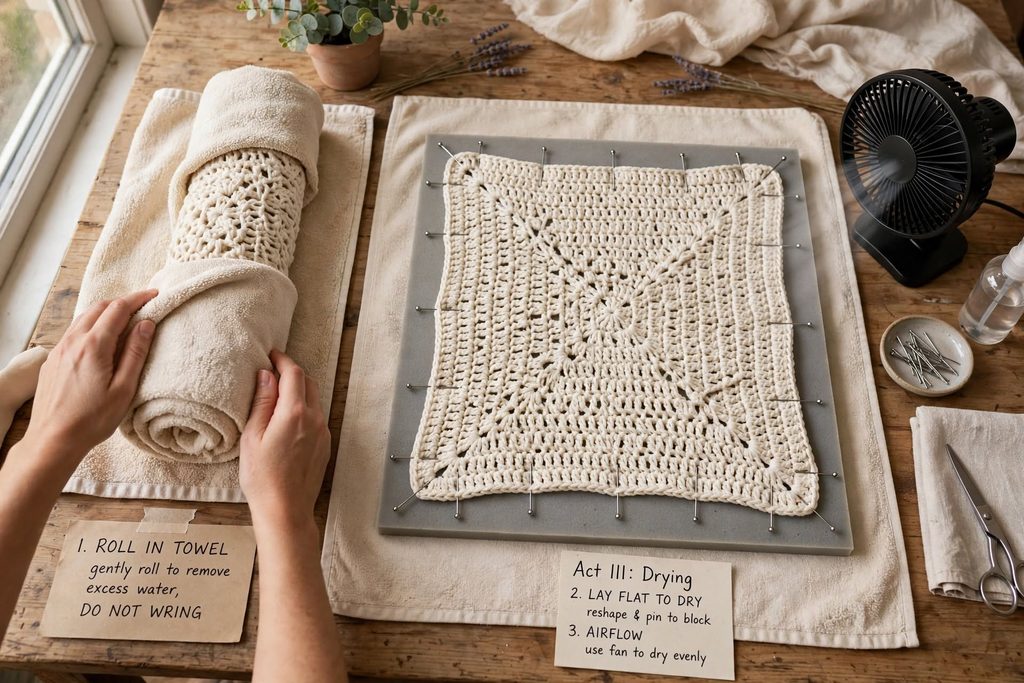
2. Remove excess water with a towel.
Lay the item on a clean, absorbent towel. Roll the towel and item together, then press gently to absorb water.
Do not wring the bundle. You are removing water, not trying to extract the last drop of a dramatic confession.
3. Reshape the item if needed.
Unroll the towel and move the item to a clean, dry surface. Smooth it gently into its intended shape.
For pieces that benefit from blocking, such as some blankets, shawls, and lace projects, this is the time to adjust the edges and measurements.
Blocking means shaping a finished textile and allowing it to dry in that shape. The exact method depends on the fiber and construction. Some pieces need little or no blocking, and not every yarn should be stretched, steamed, or pinned.
4. Let it dry completely.
Lay suitable items flat on a clean, dry towel, drying rack, or blocking mat. Choose a location with good airflow and change the towel if it becomes saturated.
Allow enough time for the entire item to dry, including thicker seams and dense stitches. Never store crochet while it is still damp.
What About the Dryer?
The dryer is not automatically forbidden, but it is not automatically safe either.
Some yarns and finished items are labeled as suitable for tumble drying. Others may shrink, felt, stretch, or become damaged by heat. Acrylic can be particularly vulnerable to excessive heat, which may distort or damage the fibers.
Check the care label before using a dryer. If machine drying is not recommended, allow the item to air-dry using a method suited to its shape and fiber.
Patience is not the most glamorous part of crochet care, but it is often the part that saves the most trouble.
A Note on Blocking
Blocking is not a magical repair service. It can help even out stitches, improve edges, and shape an item, but it cannot reliably reverse severe shrinkage or repair damaged fibers.
For many crochet blankets and garments, gentle reshaping while damp may be enough. Lace pieces and projects that need precise dimensions may benefit from more deliberate blocking.
Always choose a method appropriate for the yarn. Heat and steam can be unsuitable for some fibers, and aggressive stretching can distort the fabric.
Think of blocking as careful finishing, not a wrestling match with wet yarn.
Care Is Part of the Story
There is something satisfying about laying a handmade blanket out to dry and seeing its familiar shape return.
You remember the evenings spent making it. The row you had to undo. The stitch you finally figured out. The time you promised yourself you would stop after one more round and somehow continued for another hour.
The care routine becomes part of the life of the object. It is not magic, and it does not need to be. Sometimes a clean, dry, well-kept blanket is enough.
Act IV: The Legacy
Storage is the final frontier.
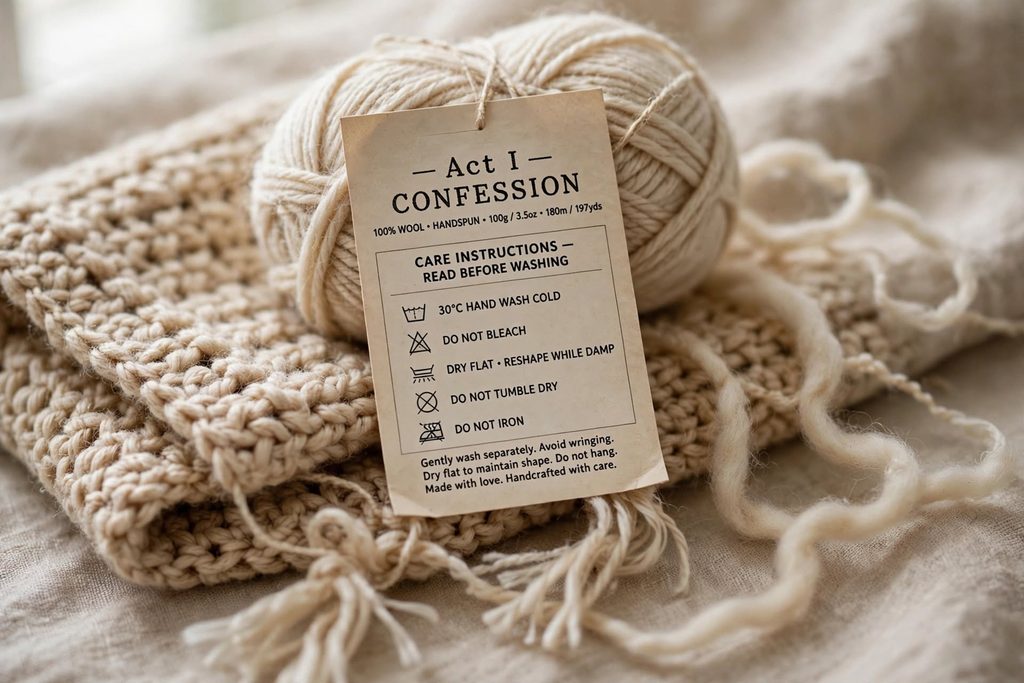
Once your crochet is clean and completely dry, the goal is to protect it from dust, pests, excess moisture, and unnecessary stretching.
How to Store Handmade Crochet Items
1. Store items clean and completely dry.
Dirt, body oils, and food residue can attract pests. Moisture can encourage mildew. Make sure the item is thoroughly dry before putting it away.
2. Choose suitable storage.
Clean cotton bags, pillowcases, or other breathable storage options can be useful for many items. A clean, dry storage container may also be appropriate when the environment is dry and the item is fully dry.
The important thing is to avoid trapping moisture. No storage method can compensate for putting away a damp blanket.
3. Fold heavy items rather than hanging them.
A heavy crochet sweater or blanket may stretch under its own weight when hung for long periods. Folding is often a better choice for bulky or delicate pieces.
4. Protect against pests.
Wool and other animal fibers can attract clothes moths. Keep storage areas clean, inspect stored items periodically, and use appropriate pest-prevention methods.
Cedar blocks or lavender sachets may be used as supplementary measures, but they should not be treated as a guarantee against moth damage.
5. Check stored items from time to time.
Every few months, inspect your pieces for moisture, pests, or signs of damage. Refold them if needed, and allow them to air out in a clean, dry place when appropriate.
You may talk to them if you like. I am not here to judge.
If You Make Crochet to Give or Sell
Consider attaching a care label to your finished pieces.
This is not fussiness. It is part of giving someone a handmade item they can enjoy for years.
A useful label should include the fiber content when known and the recommended washing and drying method. If the item contains multiple yarns, beads, buttons, or other embellishments, account for those details when deciding how it should be cleaned.
Avoid giving universal instructions such as “hand wash cold” unless that method is suitable for the actual materials used.
A few clear words can help the next owner avoid an expensive mistake.
Frequently Asked Questions
How often should I wash crochet blankets?
Wash a crochet blanket when it needs cleaning rather than following a rigid schedule. How often depends on how it is used, the fiber, exposure to dirt, and the manufacturer’s care instructions. Spot-cleaning small marks may help reduce unnecessary full washes when the material allows it.
Can I wash crochet items made with acrylic yarn?
Many acrylic yarns are machine-washable, but not all finished items have the same care requirements. Check the yarn label and the item’s construction. Avoid excessive heat, which can damage or distort acrylic fibers.
Can I wash wool crochet in the washing machine?
Only if the yarn and finished item are labeled as suitable for machine washing. Some wool can felt or shrink under unsuitable conditions. When the instructions recommend hand-washing, follow them rather than assuming that a delicate cycle is safe.
Should every crochet item be blocked after washing?
No. Blocking can help improve the shape and appearance of some items, but it is not necessary for every project. The method depends on the fiber, stitch pattern, and intended shape.
How do I stop a crochet blanket from stretching?
Support the blanket while it is wet, avoid wringing, remove excess water gently with a towel, and dry it in a position appropriate for its size and fiber. Heavy wet fabric can stretch under its own weight, so avoid hanging it by one edge.
How should I store crochet items for a long time?
Clean and dry the items thoroughly, fold heavy pieces, and store them in a clean, dry place. Breathable fabric storage can be useful, especially for delicate items. Check stored pieces periodically for pests or moisture.
The Bottom Line
Handmade crochet is made of yarn, but it is also made of time.
It holds evenings spent counting stitches, gifts made for people we love, projects finished just before a birthday, and blankets that somehow become part of the furniture and the family at once.
Caring for these things does not require a luxurious detergent collection or a complicated ritual. It requires a little attention: read the label, choose a suitable washing method, support the fabric while it is wet, dry it properly, and store it clean.
And if you make crochet for someone else, pass that knowledge along.
Because the story of a handmade item does not end when you fasten off the last stitch.
Sometimes, the next chapter begins in a basin of water, with a clean towel, and with someone deciding that this little piece of yarn deserves to be looked after.