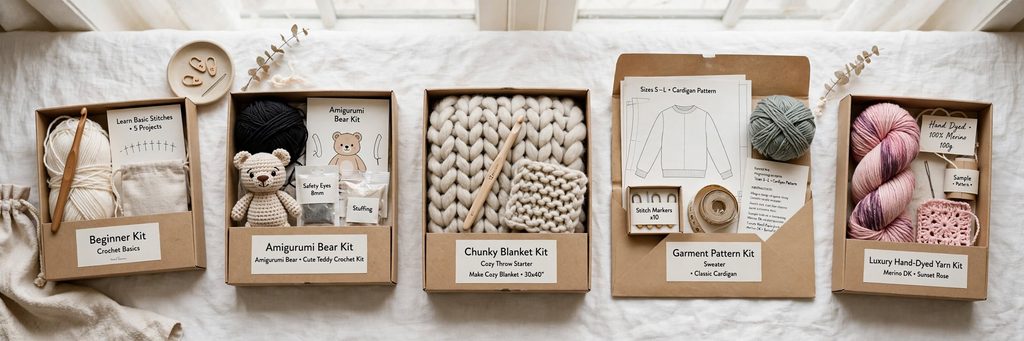
There is a peculiar kind of silence that descends when you finally learn to hold a crochet hook comfortably. Not the silence of an empty room, but the silence of a mind that has, for the first time in hours, stopped rehearsing tomorrow’s anxieties. Your hands move. The yarn loops. And something quietly remarkable happens: you are exactly where you are.
If you are an adult standing at the threshold of crochet — or returning after decades away — the sheer number of kits available can feel paralyzing. Should you buy the enormous box with a hundred rainbow skeins and forty-seven hooks? The tiny amigurumi kit shaped like a cactus? The luxury merino set that costs as much as a dinner out?
Here is the counterintuitive truth: the best crochet kit is not the one with the most stuff. It is the one that makes you want to begin.
It should match your current skill level, the amount of time you have, the kind of project you want to make, and even the patience you can reasonably expect from yourself on a Tuesday evening.
Below is a practical guide to choosing a crochet kit you will actually use — not simply admire in its packaging.
1. The Beginner Crochet Kit: Start Small, Start Well
Most beginner kits try to impress you with quantity. Eighty-seven hooks. Forty-two stitch markers. A storage bag large enough to qualify as luggage.
But more supplies do not automatically make learning easier. Sometimes they just give you more things to organize before you have made your first chain.
For your first project, you need a comfortable hook, yarn that lets you see your stitches, a clear pattern, and permission to make mistakes.
What to look for
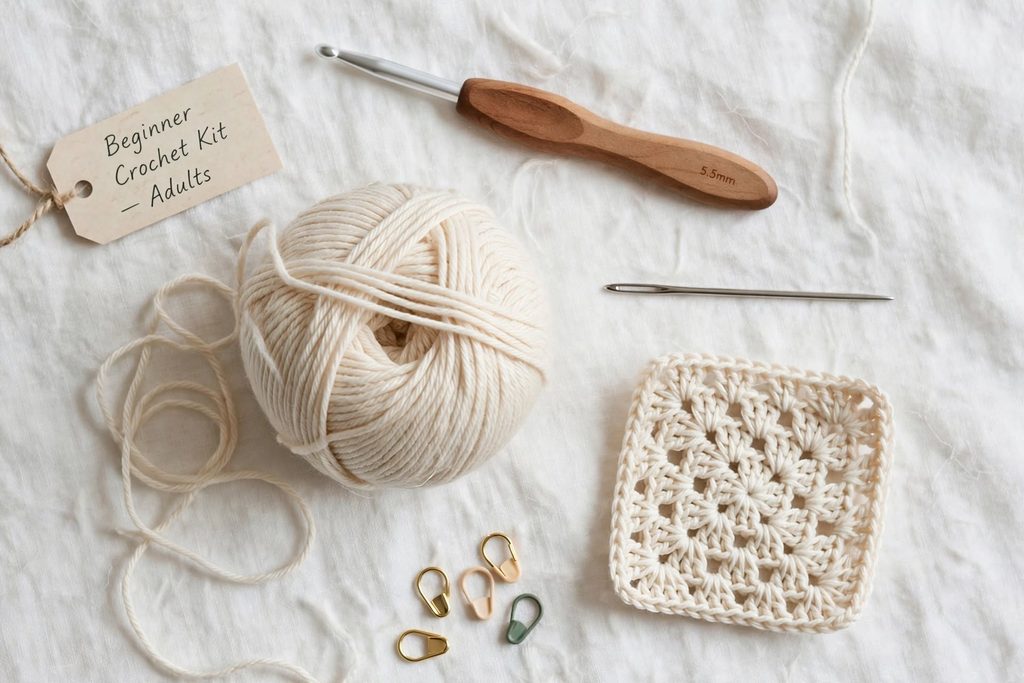
- A comfortable crochet hook. A hook around 5.0 or 5.5 mm is a reasonable starting point for many medium-weight yarns, but follow the pattern’s recommendation. An ergonomic handle can make longer practice sessions more comfortable. Clover Amour and KnitPro Waves are examples worth exploring.
- Light-colored, smooth yarn. Cream, pale gray, or a soft pastel shade makes individual stitches easier to see. Very dark yarn and highly variegated colors can make it harder to recognize where the hook should go.
- A small, achievable project. A square, dishcloth, or simple coaster can give you a satisfying first finish without demanding weeks of commitment.
- A yarn needle and stitch markers. These are inexpensive but useful for weaving in ends, keeping track of rounds, and marking important stitches.
- Instructions that explain the basics. Look for a stitch glossary, clear photographs, or a video tutorial. A pattern written entirely in unexplained abbreviations is not a friendly introduction.
What to avoid
Be cautious with kits that combine very fine yarn, tiny hooks, complicated shaping, and minimal instructions. They may be perfectly suitable for experienced crocheters, but they can turn a first project into an unnecessary test of endurance.
Best for: Adults who have never crocheted, people returning after a long break, and anyone who wants a low-pressure way to discover whether the craft suits them.
Typical budget: $25–$40, depending on the included tools, yarn quantity, and brand.
2. The Amigurumi Kit: For Adults Who Miss Playing
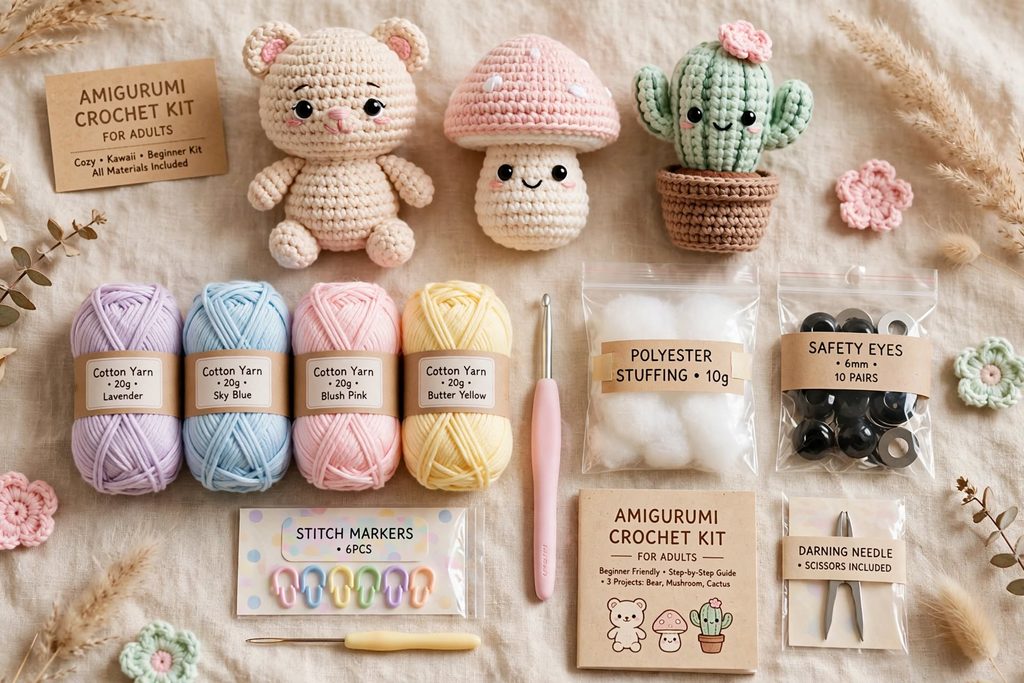
Amigurumi — the Japanese craft of crocheting small stuffed figures — is not just for children. It is miniature construction disguised as a very good time.
You begin with a strand of yarn and end with a tiny bear, a sleepy mushroom, or a cactus that requires no watering and has never once judged your life choices.
The appeal is partly playful and partly technical. You build a three-dimensional object, shaping its body with increases and decreases until the pieces become something recognizable.
What to look for
- Smooth cotton or cotton-blend yarn. Cotton is a popular choice because its stitch definition makes small details easier to see. Other yarns can work well too, provided the fabric is dense enough for the project.
- A suitable hook size. Amigurumi is usually worked more tightly than a flat project to help prevent stuffing from showing through. Follow the kit’s instructions rather than choosing a hook by size alone.
- Enough stuffing and all necessary accessories. Check whether the kit includes safety eyes, embroidery thread, stuffing, and any other components shown in the finished-project photographs.
- A video tutorial. Magic rings, invisible decreases, and shaping can be much easier to understand when you can watch someone demonstrate them.
- A manageable first design. A simple animal, small plant, or rounded character is a better starting point than a creature with a dozen tiny limbs and a wardrobe.
One important detail: safety eyes and other small components can pose a choking hazard. If the finished toy is intended for a young child, embroidered features may be more appropriate. Follow the kit’s safety guidance.
For a first amigurumi project, choose a kit with a limited number of color changes and clearly labeled pieces. You want to spend your evening making a tiny creature, not conducting an archaeological investigation into which leg belongs where.
Best for: Adults who enjoy small, characterful projects, precise stitches, and the satisfaction of finishing something in a relatively short time.
Typical budget: $20–$35 per kit, depending on the design and materials.
3. The Blanket Kit: A Marathon With a Very Soft Finish Line
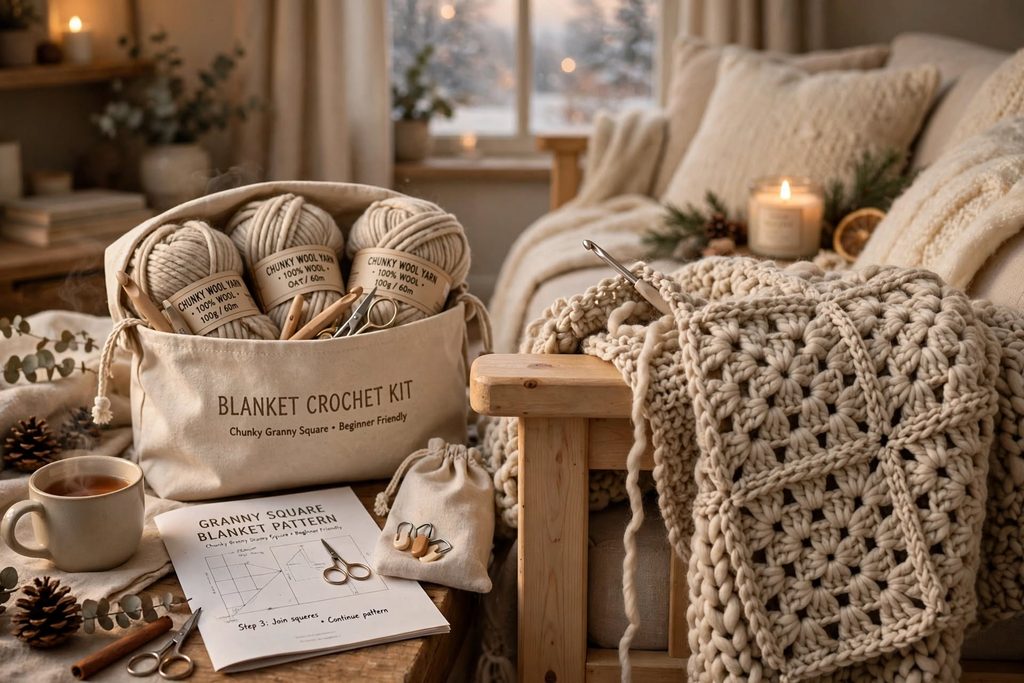
There is a particular kind of crocheter who needs a blanket kit. This person has a specific sofa in mind. They can already picture the finished blanket draped over the armrest, looking as though it has always belonged there.
They are not necessarily looking for a weekend project. They are looking for a winter companion.
A blanket can be wonderfully repetitive, but it is also a commitment. The right kit makes that commitment feel inviting rather than endless.
What to look for
- A yarn weight that suits your patience and your blanket. Chunky yarn creates visible progress relatively quickly, while lighter yarn produces a thinner fabric and often requires more stitches. Chunky yarn can also make a blanket heavier, so consider the finished size and intended use.
- A repeatable stitch pattern. Granny squares, moss stitch, and simple textured patterns can be satisfying once you learn the repeat. Choose something you will still enjoy after the hundredth row.
- Enough yarn for the entire project. Check the total quantity required, not simply the number of skeins pictured in the product listing. If possible, buy the complete amount at once to reduce the risk of dye-lot differences.
- Clear finished dimensions. A small lap blanket and a large bedspread require very different amounts of yarn, time, and storage space.
- Care instructions that fit your life. If the blanket will live on a family sofa, washability may matter more than the romance of a delicate fiber.
Merino and other wool blends can feel wonderfully soft, but care requirements vary. Acrylic and acrylic-blend yarns can be practical choices for everyday blankets, although their texture and durability also vary. Read the yarn label before buying.
And remember that the kit’s stated yarn quantity and finished dimensions are planning information, not a guarantee that every crocheter will use exactly the same amount. Tension, stitch choice, and modifications can change the result.
Best for: Adults who enjoy repetitive projects, want a handmade home accessory, or like having something to work on while listening to an audiobook or watching the rain.
Typical budget: $60–$150, with larger blankets and premium fibers potentially costing more.
4. The Garment Kit: An Act of Radical Optimism
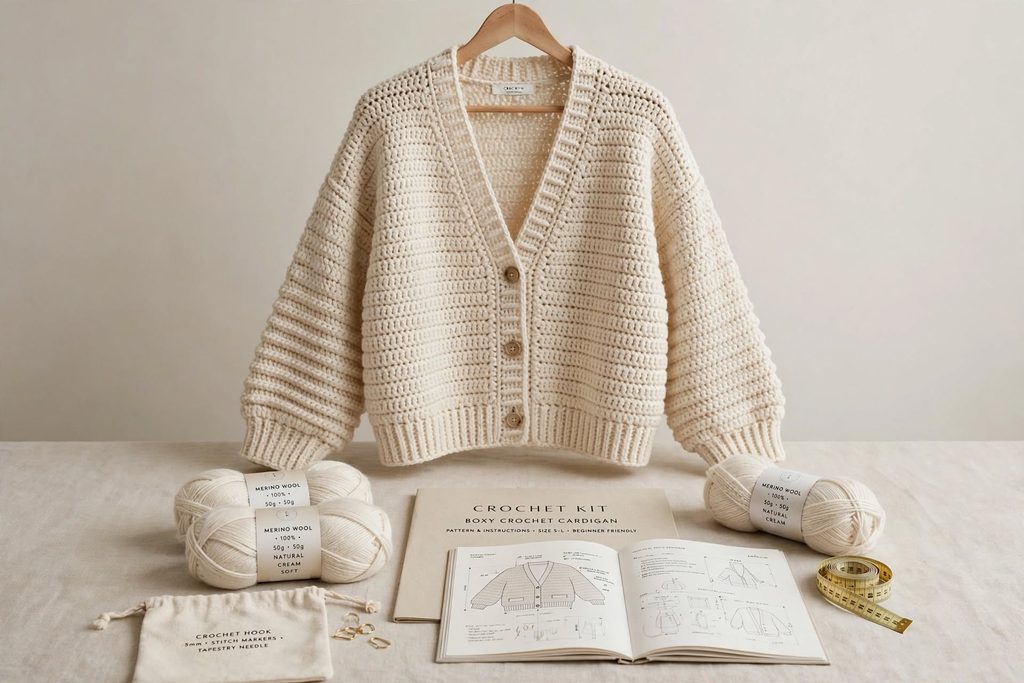
Crocheting a sweater or cardigan as an adult is an act of radical optimism.
It says: I believe I will still like this color in three months. I believe I can keep my tension reasonably consistent. I believe I deserve to wear something I made with my own hands.
Then comes the practical question of whether the finished garment will fit.
Clothing is less forgiving than a coaster. A small difference in gauge can affect the finished measurements, and a beautiful yarn can behave differently once it becomes a large piece of fabric.
That does not mean you should avoid garment kits. It means you should choose one that gives you enough information to succeed.
What to look for
- A genuine range of finished sizes. Look for a size chart with garment measurements, not just labels such as small, medium, and large. Check the intended ease — the difference between your body measurements and the finished garment measurements.
- A yarn that suits the design. Cotton can create beautiful garments, but some cotton fabrics feel heavy or stretch with wear. Wool, acrylic, and blended yarns all have different properties. Consider drape, elasticity, care, and the pattern’s recommendations.
- A construction method you understand. Top-down or seamless designs can make it easier to adjust length and check fit as you work. Seamed garments can also be excellent projects, especially when the instructions explain assembly clearly.
- Gauge instructions and a finished-size chart. These are especially important for garments. Make the recommended gauge swatch, measure it properly, and adjust your hook if needed before committing to the full project.
- Instructions for shaping and assembly. Look for clear explanations of sleeves, necklines, joining, and finishing.
For a first wearable project, consider a relaxed cardigan, boxy top, or simple shawl. A fitted blouse with intricate shaping can be a wonderful future challenge — but you do not need to begin with the crochet equivalent of a final exam.
Best for: Crocheters who already understand basic stitches and want to make something they can wear.
Typical budget: $50–$120, depending on yarn, garment size, and design.
5. The Luxury Crochet Kit: When the Materials Are Part of the Pleasure
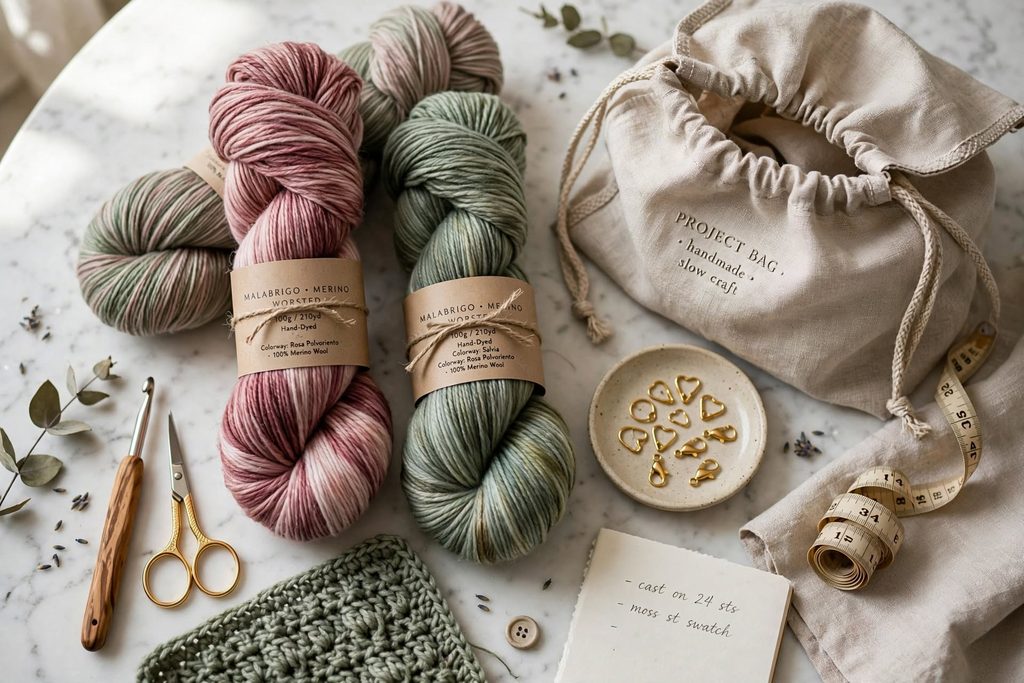
Sometimes you do not need a kit to learn. You need a kit to slow down.
You want yarn that feels lovely between your fingers, colors that change subtly in the light, and a project that gives you permission to concentrate on one small thing at a time.
The tactile pleasure is real, even if it does not need to be described as a cure for stress. Crochet can offer a calming routine for some people, especially when the project is manageable and the stitches become familiar.
What to look for
- Yarn you genuinely enjoy touching. Hand-dyed yarns can have beautiful variations in color, but every skein is different. If you need several skeins to match closely, check the dyer’s guidance on batch variation and alternating skeins.
- A project that lets the yarn shine. A linen-stitch wrap, moss-stitch cowl, or textured scarf can showcase interesting color without competing with it through complicated motifs.
- A pattern suited to the yarn. Beautiful fiber cannot rescue a pattern that uses the wrong hook size or produces a fabric you dislike. Check the recommended gauge and finished dimensions.
- Thoughtful extras. A useful project bag, stitch markers, or a well-designed printed pattern can make the experience feel special. They are bonuses, though, not substitutes for suitable materials and instructions.
Brands such as Malabrigo and Madelinetosh, along with independent dyers, are worth exploring if you are interested in premium yarn. However, a luxury yarn brand does not automatically mean a complete crochet kit. Check exactly what is included before you buy.
And there is no requirement to spend a fortune to make crochet feel special. Sometimes the most satisfying kit is simply a beautiful, affordable yarn in a color you keep reaching for.
Best for: Experienced beginners and established crocheters who value fiber, color, and the pleasure of the making process.
Typical budget: $40–$100 or more, depending on the yarn and included accessories.
Quick Comparison: Which Crochet Kit Fits Your Life?
| If you are… | Consider this kit | Most important feature | Typical budget |
|---|---|---|---|
| New and overwhelmed | Beginner square or dishcloth kit | Clear instructions and simple tools | $25–$40 |
| Looking for a playful challenge | Amigurumi kit | Dense stitches, suitable yarn, video support | $20–$35 |
| Planning a winter project | Blanket kit | Sufficient yarn and manageable repeats | $60–$150 |
| Ready to make something wearable | Garment kit | Gauge guidance and finished measurements | $50–$120 |
| Looking for a more sensory, premium experience | Luxury yarn kit | Fiber quality and a pattern suited to the yarn | $40–$100+ |
These are approximate budget ranges, not verified prices for specific products. Prices vary with location, shipping, yarn quantity, and what the kit includes.
Where to Buy Crochet Kits for Adults
The best place to shop depends on what you value most: convenience, design, yarn quality, or the ability to inspect the materials before committing.
Amazon: Convenience and beginner options
Amazon can be useful for comparing beginner kits, tool bundles, and small amigurumi projects. Read recent reviews carefully, paying attention to comments about yarn texture, missing components, and the clarity of the instructions.
A kit with hundreds of accessories may look like a bargain, but the more useful question is whether the included yarn and pattern suit the project you actually want to make.
Etsy: Independent designs and distinctive kits
Etsy is worth exploring for unusual amigurumi designs, handmade project bags, and kits assembled by independent sellers. The range can be creative, but quality and completeness vary.
Check the seller’s description, shipping information, customer reviews, and exactly what is included. Some listings are for a digital pattern only, not a physical kit.
LoveCrafts and WeCrochet: Yarn-focused projects
These specialist retailers are worth checking for projects where yarn choice and pattern support matter, particularly blankets and garments. Compare the required yarn quantity with the contents of the kit and confirm whether the pattern is included.
Product ranges, shipping options, and kit availability can change, so verify the details before ordering.
Local yarn shops: Advice you can touch
A local yarn shop offers something online listings cannot: the opportunity to feel the yarn and ask questions before buying.
If you are new to crochet, ask whether the kit includes beginner-friendly instructions and whether the staff can help you choose an appropriate hook. Some shops also run workshops or beginner sessions, which can make the first few projects considerably less intimidating.
Before You Buy: Five Questions Worth Asking
- Is this a complete kit? Check whether the yarn, hook, accessories, and pattern are included.
- Does the project match my skill level? A beginner-friendly label is useful, but the actual instructions matter more.
- Is there enough yarn? Check the quantity and intended finished size.
- Will I enjoy caring for the finished item? Consider washing, drying, and everyday use.
- Can I get help if I get stuck? Video demonstrations, clear photographs, and pattern support can be especially valuable when learning.
A few minutes spent checking these details can save you from buying a beautiful box that leaves you searching for half its contents.
Frequently Asked Questions
Are crochet kits good for adults who have never crocheted?
Yes, provided the kit is genuinely beginner-friendly. Look for basic stitches, clear instructions, a suitable hook, and a small first project. You do not need a huge tool collection to learn the fundamentals.
What is the easiest crochet kit for an adult beginner?
A simple square, coaster, or dishcloth kit is often a good starting point because the project is small and lets you practise basic stitches. A small amigurumi kit can also work if it includes excellent instructions and you are comfortable learning shaping techniques.
How much should I spend on my first crochet kit?
You can begin without buying an expensive set. A modest kit with comfortable tools, suitable yarn, and clear instructions is often a better investment than a large bundle of accessories you may never use. Spend according to the project you want to make and the materials included.
Are crochet kits worth buying compared with purchasing supplies separately?
They can be. A well-designed kit saves time choosing compatible materials and gives you a defined project to follow. Buying supplies separately may be more economical if you already own tools or want to choose your own yarn. Compare the kit’s contents and total cost before deciding.
Can crochet be a relaxing hobby?
Many people find repetitive crochet stitches calming or satisfying. Your experience will depend on the project, your skill level, and how you feel while learning. Start with something manageable rather than expecting a complicated project to deliver instant serenity.
The Final Stitch
The best crochet kit for adults is not defined by its price, its packaging, or how beautiful it looks in an Instagram photograph.
It is defined by what happens after you open it.
Do you make the first chain? Do you try again when the second row looks like a crumpled spiderweb? Do you begin to recognize the stitches without counting every single one?
You do not have to make something perfect. You do not even have to finish every project you start. You are allowed to discover that you prefer blankets to toys, shawls to sweaters, or simple squares to anything that requires assembling twelve tiny pieces.
The point is to begin with a kit that invites you in instead of overwhelming you.
Choose the yarn. Make the first stitch. Drop one, if you must, and learn how to fix it.
Eventually, you will have something that did not exist before you decided to begin.
And what if — just what if — that small act of making something with your own hands is exactly what you have been missing?