There is something especially comforting about a pair of knitted slippers waiting beside the bed on a cold morning. They are softer than ordinary house shoes, more personal than anything picked up from a store, and often made with the kind of yarn that feels lovely simply to hold.
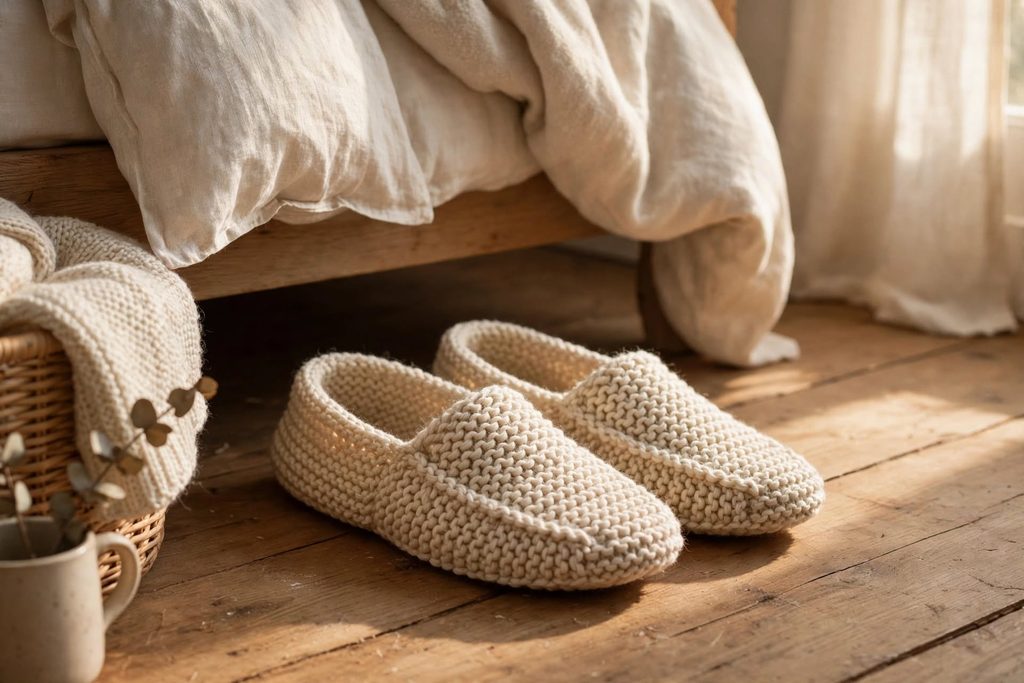
Knitted slippers are also a wonderful way to enjoy a practical knitting project without committing to a large blanket or a complicated sweater.
Among the many styles available, slippers knitted flat on two straight needles have a particular appeal. They are approachable, require very little equipment, and can be made in simple stitches that even relatively new knitters can enjoy.
Some designs are made from rectangles that fold into shape. Others use a more traditional construction with separate sections for the sole and upper. The finished results can look quite different, but they share one lovely quality: a small amount of knitting becomes something warm and useful.
Whether you are looking for a cozy project for yourself or a handmade gift for someone special, here are some ideas and practical tips to help you find the right pair.
The Charm of Slippers Knitted Flat
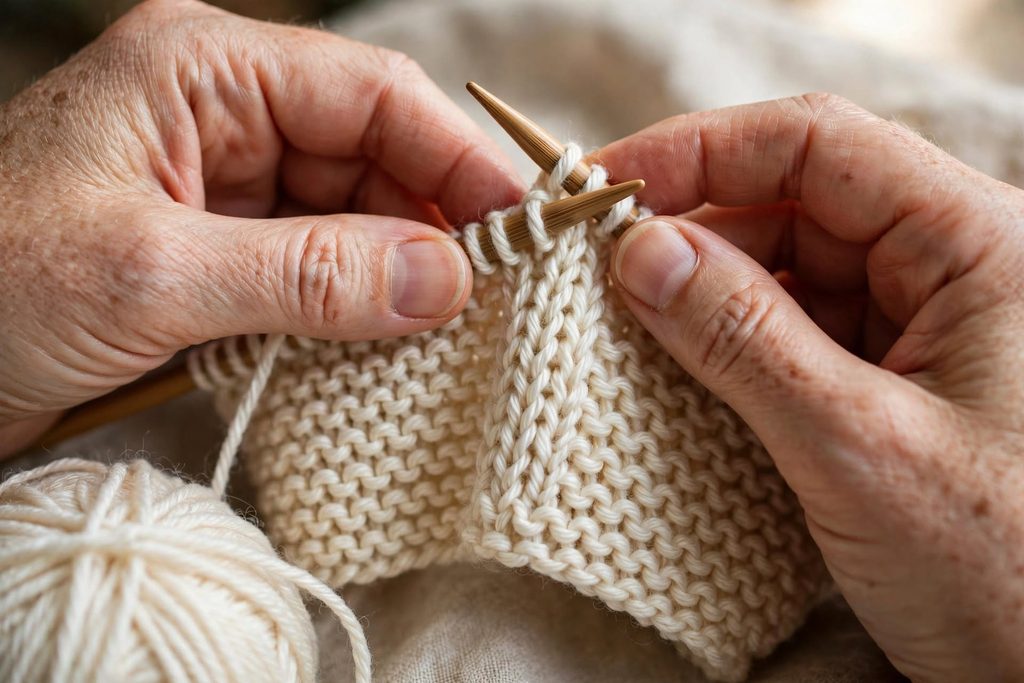
Not every knitting project needs circular needles or complicated shaping.
Flat-knitted slippers are worked back and forth on straight needles, making them particularly attractive to knitters who prefer familiar tools and straightforward techniques.
Many patterns use garter stitch, which is created by knitting every row. The resulting fabric has a soft, textured appearance and looks the same on both sides.
Other designs combine knit and purl stitches to create ribbing, simple patterns, or decorative details.
One of the most appealing styles is the folded-rectangle slipper. A flat knitted piece is folded and shaped to create the upper and sole. The construction can be surprisingly clever, although the exact folding method depends on the pattern.
This style is especially interesting because the finished slipper can look much more complicated than the knitting itself.
Beautiful Styles of Knitted Slippers
Classic Garter Stitch Slippers
Garter stitch is one of the simplest ways to create cozy handmade footwear.
The small ridges give the fabric a traditional knitted appearance, while the reversible texture makes it suitable for uncomplicated slipper designs.
Classic garter stitch slippers often look particularly attractive in natural shades such as oatmeal, cream, warm gray, and soft brown.
They are a lovely choice for anyone who prefers timeless handmade accessories rather than elaborate decoration.
Folded Rectangle Slippers
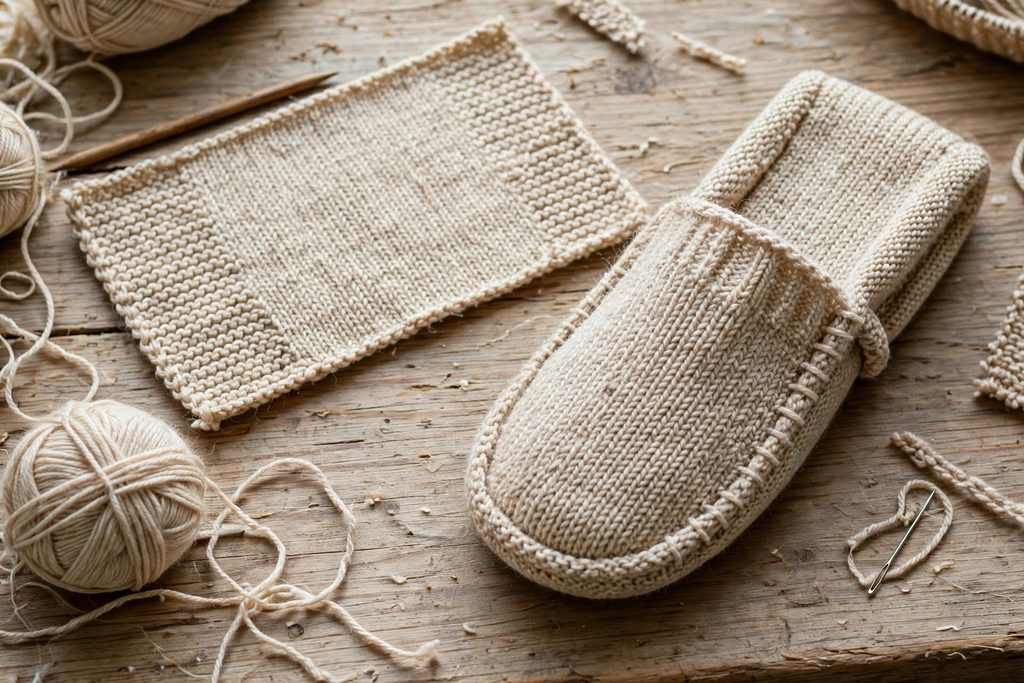
Folded-rectangle slippers have a wonderfully simple appearance before assembly.
The knitted fabric is shaped through folds and joins, transforming a flat piece into a three-dimensional slipper.
Some versions have a smooth upper, while others feature decorative ridges or folded sections that create an interesting textured effect.
Because the construction varies between patterns, it is worth checking the assembly photographs before choosing a design. A clear visual guide makes this style much easier to understand.
Chunky Wool Slippers
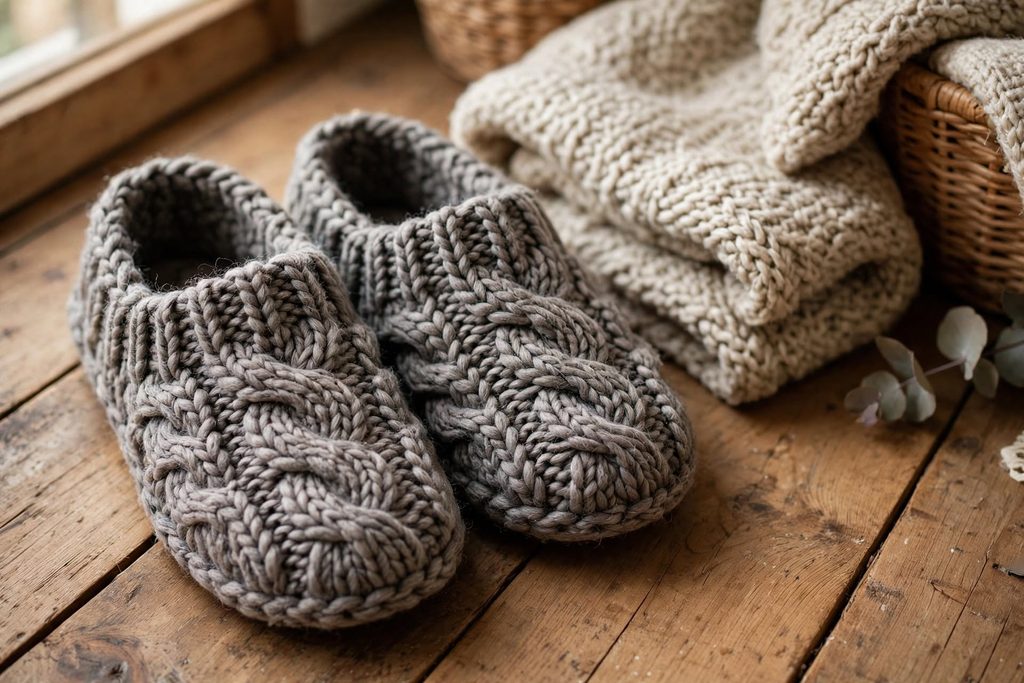
Thicker yarn creates a substantial fabric that feels especially inviting during colder months.
Chunky slippers can be knitted in simple stitches and often have a soft, substantial appearance.
They look beautiful in natural wool shades, but a thicker yarn does not automatically make a better slipper. The fabric still needs to be flexible enough to move comfortably with the foot.
Avoid knitting too loosely, as an overly open fabric may stretch and lose its shape.
Ribbed Knitted Slippers
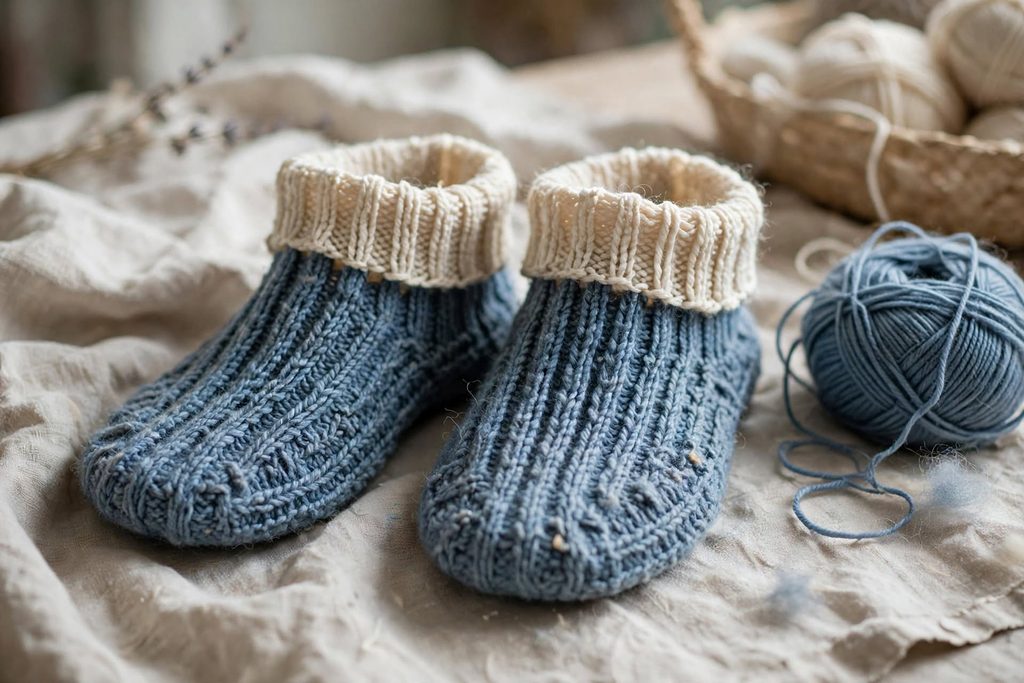
Ribbing adds texture and can help create a closer fit around the foot.
Alternating knit and purl stitches produces the familiar vertical lines found in knitted cuffs and socks.
A ribbed upper can look particularly attractive with a simple knitted sole and a contrasting cuff.
This style is a good option when you want something understated but a little more detailed than plain garter stitch.
Color-Block Slippers
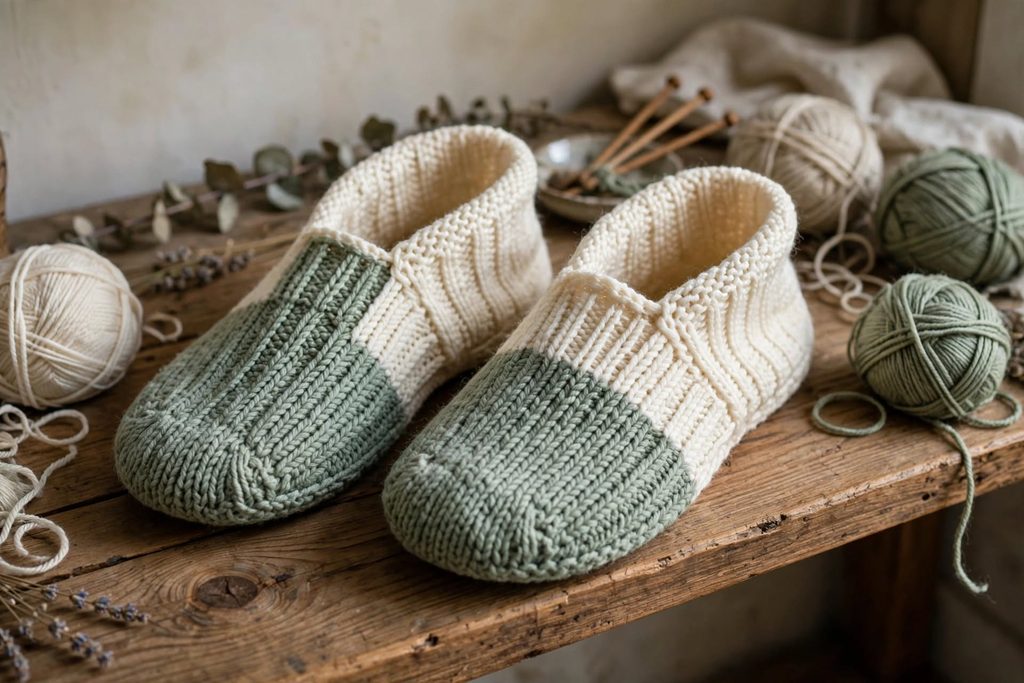
Two-color slippers offer an easy way to make a simple design more distinctive.
A neutral sole paired with a deeper-colored upper creates a subtle contrast, while stripes or contrasting cuffs can give the slippers a cheerful handmade appearance.
Soft combinations such as cream and dusty blue, oatmeal and sage, or charcoal and pale gray work beautifully for everyday footwear.
Color changes can also make use of leftover yarn from previous projects.
Choosing Yarn for Comfortable Slippers
Yarn choice has a considerable influence on how slippers feel and how well they hold their shape.
Wool and Wool Blends
Wool is a traditional choice because it provides warmth, resilience, and a comfortable natural feel.
Many wool yarns have some elasticity, which helps knitted fabric recover after being stretched.
Wool blends can also be useful. Depending on their composition, they may offer a balance of warmth, durability, and easier care.
For slippers that will be worn frequently, consider yarn with a suitable level of strength rather than choosing purely by softness.
Washable Yarn for Everyday Use
Slippers are practical items, so easy care can be important.
Superwash wool and washable wool blends may be convenient choices, particularly for gifts or footwear that will be used daily.
Always check the yarn label. Some natural fibers require gentle washing and careful drying, while others can tolerate machine washing.
Soft Yarn for a Cozy Finish
Alpaca blends, merino, and soft acrylic yarns can all produce comfortable fabrics.
However, very fluffy or slippery yarns may not be ideal for every slipper construction.
The best yarn is one that feels pleasant against the skin, has enough structure for the intended design, and suits the way the finished slippers will be used.
Finding the Right Fit
A beautiful pair of slippers is only successful if it feels comfortable.
Unlike decorative knitting projects, footwear needs to account for the shape and movement of the foot.
Foot length is an important starting point, but width and instep height also matter.
Some knitted slippers are designed to stretch around the foot, while others rely on a more structured shape. Always check the finished measurements and sizing guidance supplied with the pattern.
If you are choosing a pattern as a gift, it is worth finding out the recipient’s usual shoe size and whether they prefer a close or relaxed fit.
A little extra room can be comfortable, but slippers that are too loose may slip when walking.
In my home, my first pair of knitted slippers was far from perfect — one was a little tighter than the other. But they are still the pair I reach for on cold morning
Small Details That Make a Difference
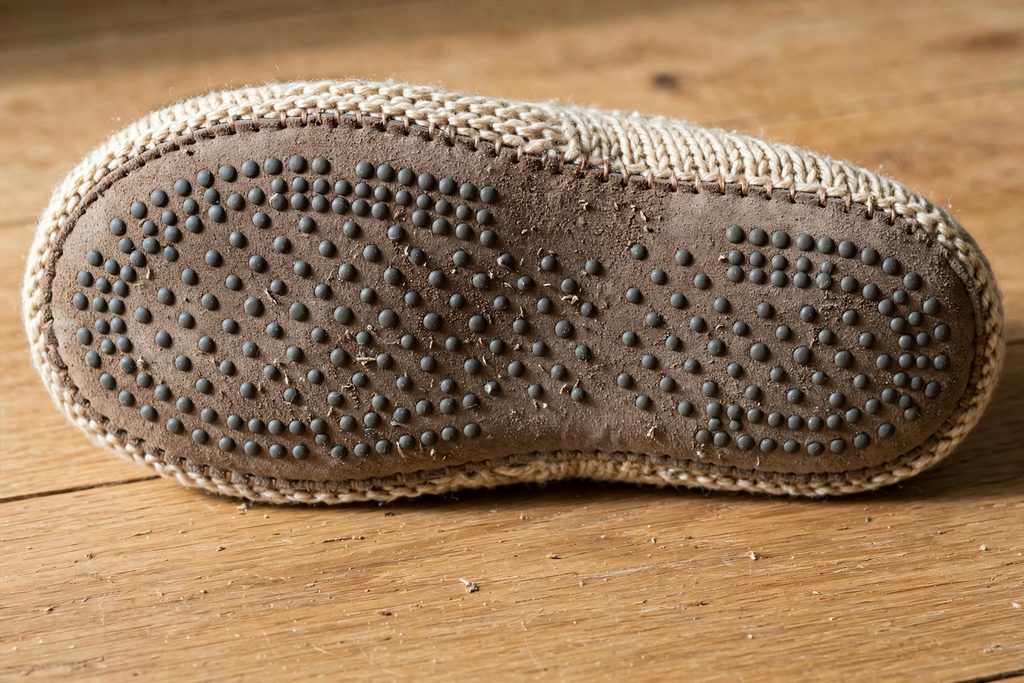
A More Secure Sole
Knitted fabric can be slippery on polished floors, especially when the underside is smooth or has become worn.
Non-slip sole grips can improve traction and make handmade slippers more practical.
Options include silicone grip products, suede slipper soles, and other materials designed specifically for footwear.
Choose a product compatible with your yarn and construction. The sole should remain flexible and comfortable rather than making the slipper stiff.
A Decorative Cuff
A small cuff can give a simple slipper a more finished appearance.
Ribbing, a contrasting color, or a softly folded edge can add character without making the design unnecessarily complicated.
A cuff can also help the slipper sit more securely around the ankle, depending on its construction.
A Touch of Texture
Small decorative details can make handmade slippers feel special.
A knitted bow, a contrasting stripe, a textured upper, or a simple button detail can personalize an otherwise minimal design.
The key is to keep decorations comfortable and securely attached, particularly when making slippers for children.
Knitted Slippers as Handmade Gifts
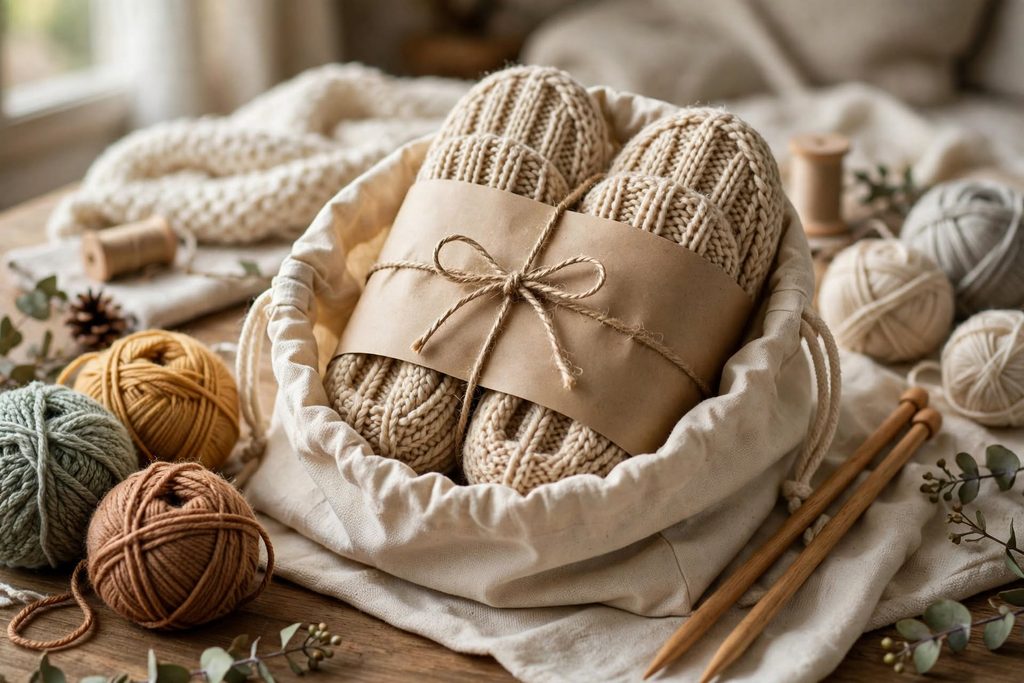
A pair of knitted slippers makes a thoughtful present for someone who enjoys comfortable things and appreciates handmade details.
They are particularly lovely for winter birthdays, Christmas, housewarming gifts, or a small surprise for someone who spends a lot of time at home.
Natural colors are often a safe choice. Cream, beige, gray, and muted green are easy to coordinate with pajamas, loungewear, and cozy home clothes.
For a more personal gift, consider the recipient’s favorite color or choose yarn that feels especially soft.
A simple fabric gift bag or a ribbon tied around the finished pair can make the presentation feel just as thoughtful as the knitting itself.
If the slippers are intended for someone with limited mobility or balance concerns, pay particular attention to the sole’s grip and the security of the fit.
Caring for Handmade Knitted Slippers
Good care helps knitted slippers remain comfortable for longer.
Follow the washing instructions for the yarn used. Wool and delicate blends may need gentle hand washing, while some washable yarns can be machine washed on an appropriate cycle.
Avoid excessive heat and rough handling, which can change the shape of knitted fabric.
Dry slippers flat and reshape them gently while damp. Keeping them away from direct heat helps preserve the fibers.
If the soles have non-slip grips, check their condition periodically and follow the manufacturer’s cleaning instructions.
A little care makes handmade footwear easier to enjoy season after season.
A Small Knitting Project With a Big Cozy Feeling
Knitted slippers are proof that a useful project does not need to be complicated.
Two straight needles, a comfortable yarn, and a simple construction can produce something that becomes part of everyday life.
Some knitters will prefer the traditional look of garter stitch. Others will enjoy chunky textures, folded designs, or colorful details. There is no single perfect style.
The best pair is the one that fits comfortably, feels lovely against the feet, and makes an ordinary evening at home a little more inviting.
And perhaps that is the nicest thing about handmade slippers: they are not simply something you wear. They are a small reminder that comfort can be made by hand.
You Might Also Love
More cozy, handmade ideas to try next