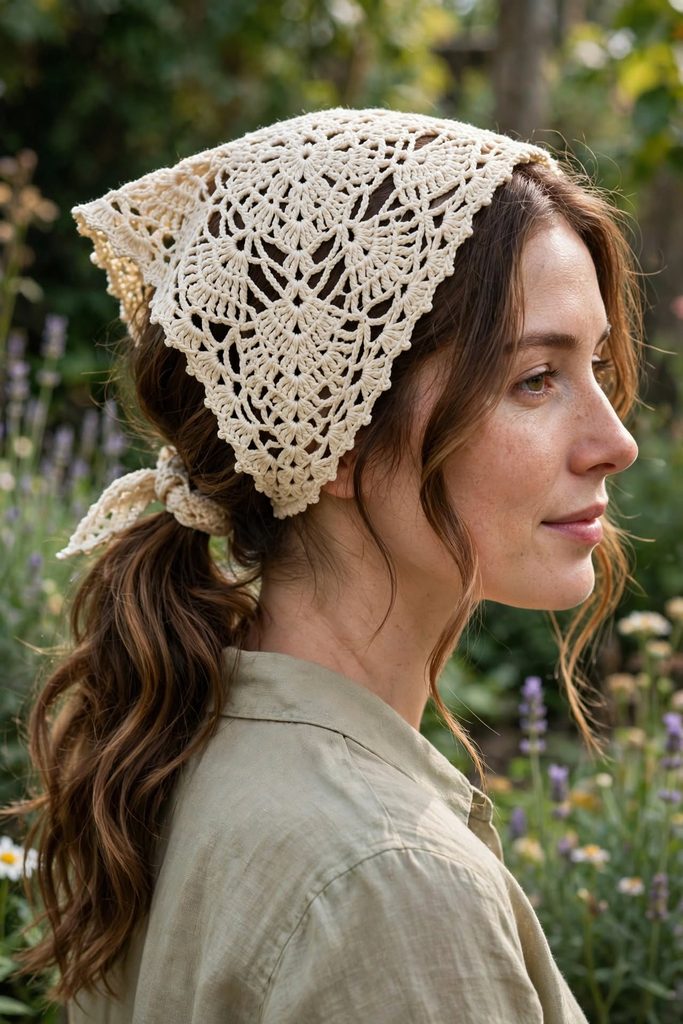
A breezy crochet head scarf, a little texture, and a simple triangle that can transform an everyday outfit into something entirely your own.
The Kerchief Paradox: How a Simple Triangle Became a Timeless Accessory
Some accessories come and go with the seasons. Others keep finding their way back into our wardrobes.
The kerchief belongs to the second category.
Worn over loose hair, tied around a ponytail, or folded into a narrow band, a triangular head scarf can look romantic, relaxed, vintage-inspired, or modern depending on how it is styled. It is a small accessory with a surprisingly wide range of possibilities.
Crochet gives the traditional kerchief another dimension. Instead of a printed piece of fabric, you get a surface built stitch by stitch, with texture, pattern, and the distinctive character of handmade work.
The result can be delicate without being overly formal, and decorative without requiring an elaborate outfit.
A crochet kerchief is also a satisfying project for anyone who wants to make something wearable. Its compact shape makes it easy to carry along, and the finished accessory can become a useful addition to a handmade wardrobe.
The appeal lies in its simplicity: a familiar shape, a pattern you can enjoy working on, and plenty of possibilities for personal expression.
Why Crochet Works So Well for a Boho Kerchief
The appeal of a crochet kerchief lies in the balance between its simple shape and its surface texture.
A triangle provides the basic silhouette. The stitch pattern determines whether the finished accessory feels delicate and airy, dense and structured, or somewhere in between.
Openwork designs create spaces between stitches that allow more light to pass through the fabric. Denser stitches provide greater coverage. A decorative border can give the edges a finished appearance and make the piece feel more intentional.
Here are three details that influence the final look:
- Texture: Lace stitches can create a light, intricate appearance, while simpler stitch patterns feel more understated.
- Drape: The yarn and stitch pattern affect how the kerchief falls over the head and around the face.
- Finishing: Neat edges and carefully finished ties help the accessory look polished.
The right combination depends on your preferences. A delicate lace kerchief may suit a romantic summer wardrobe, while a denser design in a deeper color can work beautifully with denim, knitwear, and autumn layers.
The Monaco Kerchief: A Handmade Accessory With Character
The Monaco Kerchief is the design that inspired this article. Rather than assuming particular materials, dimensions, or construction methods, focus on the qualities that make a crochet kerchief appealing: its silhouette, stitch texture, color, and versatility.
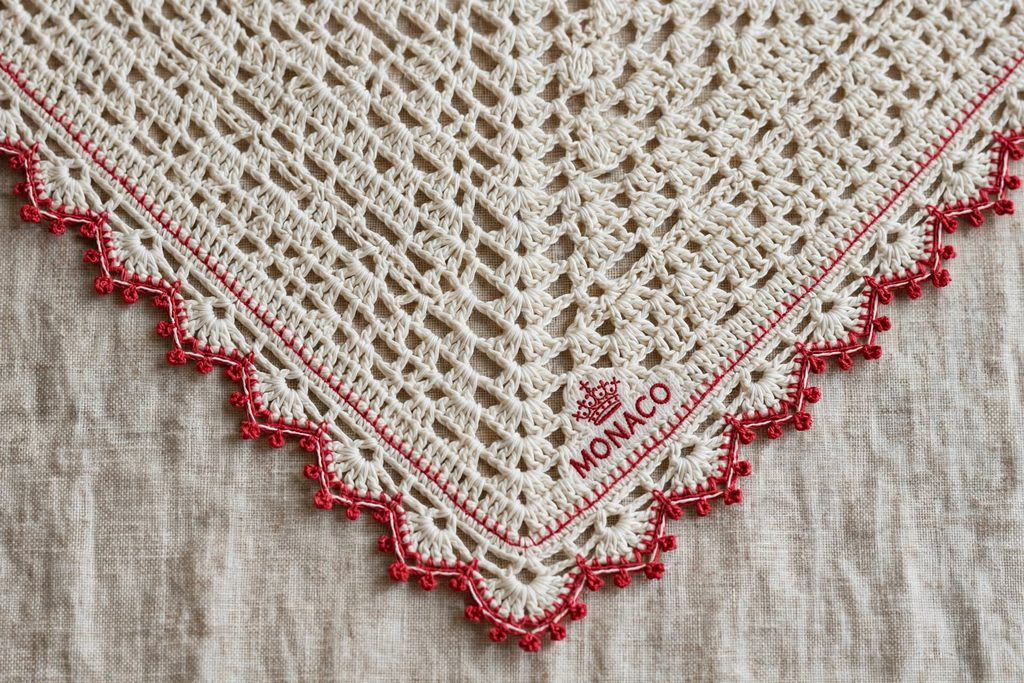
When choosing a crochet kerchief design, consider how you want to wear the finished piece.
If you prefer a light, delicate look, an open stitch pattern may appeal to you. If coverage is more important, a denser fabric may be a better choice. The shape and length of the ties also influence how easily the kerchief can be secured and styled.
Color matters, too. A cream kerchief can feel timeless and understated, while terracotta, sage, or mustard can add warmth and personality to a simple outfit.
The most successful design is not necessarily the most complicated one. It is the one that suits your style and feels comfortable to wear.
Three Ways to Wear a Crochet Kerchief
One of the best things about a crochet kerchief is that it can be styled in several ways without changing the accessory itself.
1. The Classic Head Scarf
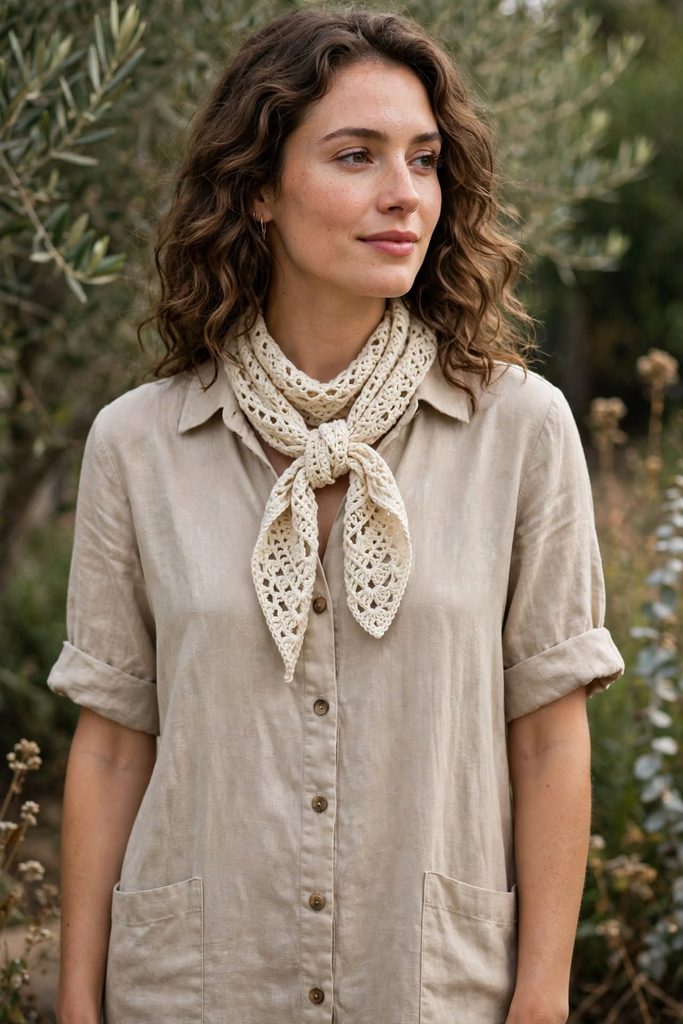
Position the triangle over your head and adjust the front edge to the placement you prefer. Bring the ties around the back and secure them comfortably.
This is an easy way to keep hair away from your face while adding a handmade detail to a simple outfit.
Pair the kerchief with a white shirt, a relaxed linen dress, or a basic tank and jeans. If the crochet is openwork, remember that more of your hair and scalp may show through the stitches.
For a softer look, allow a few strands of hair to frame your face. For a cleaner silhouette, tuck loose sections behind your ears.
2. The Neck Scarf
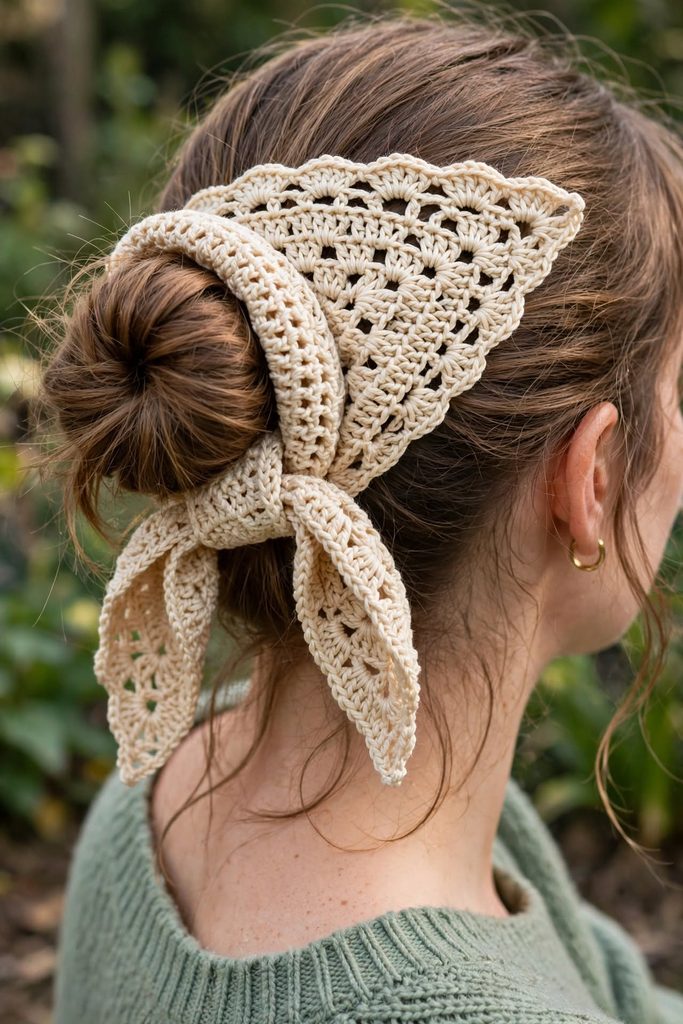
A kerchief doesn’t have to stay on your head.
Fold or position the triangle according to its shape, then tie it loosely around your neck. This styling option works especially well with simple tops because the crochet texture becomes the main decorative detail.
Try a cream kerchief with a striped shirt, a muted brown design with denim, or a soft pastel shade with a neutral dress.
The finished size and shape will determine how much room you have for folding and tying. Choose a style that sits comfortably without feeling restrictive.
3. The Ponytail or Bun Accent
[IMAGE 5 — PONYTAIL STYLE: Show the kerchief secured around a ponytail or bun, with the ends arranged neatly.]
ALT text: Crochet kerchief tied around a ponytail to create a relaxed handmade hair accessory.
For a casual alternative, tie the kerchief around a ponytail or bun.
This styling method can work particularly well when you want to introduce color or texture without covering your entire head. It also allows the accessory to become a small focal point in an otherwise simple hairstyle.
Secure it without pulling your hair too tightly. If the crochet fabric is delicate or loosely stitched, avoid forcing the ties or allowing them to catch on hair accessories.
A kerchief in terracotta, mustard, sage, or muted blue can add a gentle accent to neutral clothing. For a more understated look, choose a color that complements your hair or outfit.
Choosing Colors for Your Crochet Kerchief
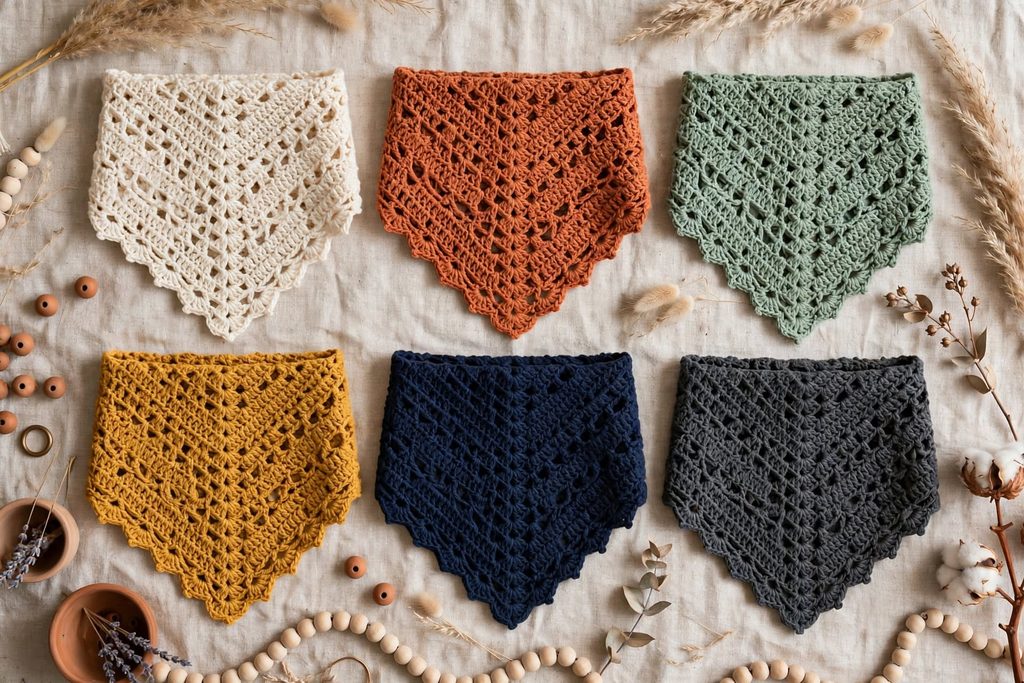
The same crochet design can look completely different depending on the color you choose.
Cream and ivory create a soft, classic look that works well with linen, denim, and natural fabrics.
Terracotta and rust add warmth and suit earthy, boho-inspired outfits.
Sage and muted green introduce color without overwhelming a neutral wardrobe.
Charcoal and navy create a more understated look and can complement darker clothing.
Mustard and dusty rose offer a more noticeable accent for anyone who enjoys color.
If you’re unsure which shade to choose, start with the clothes you already wear most often. A kerchief that coordinates with several outfits is more likely to become a regular accessory than one that works with only a single look.
You can also use color to change the mood of the same design. A pale neutral may feel romantic, while a rich, warm shade can make the accessory more expressive.
Getting a Neat, Comfortable Finish
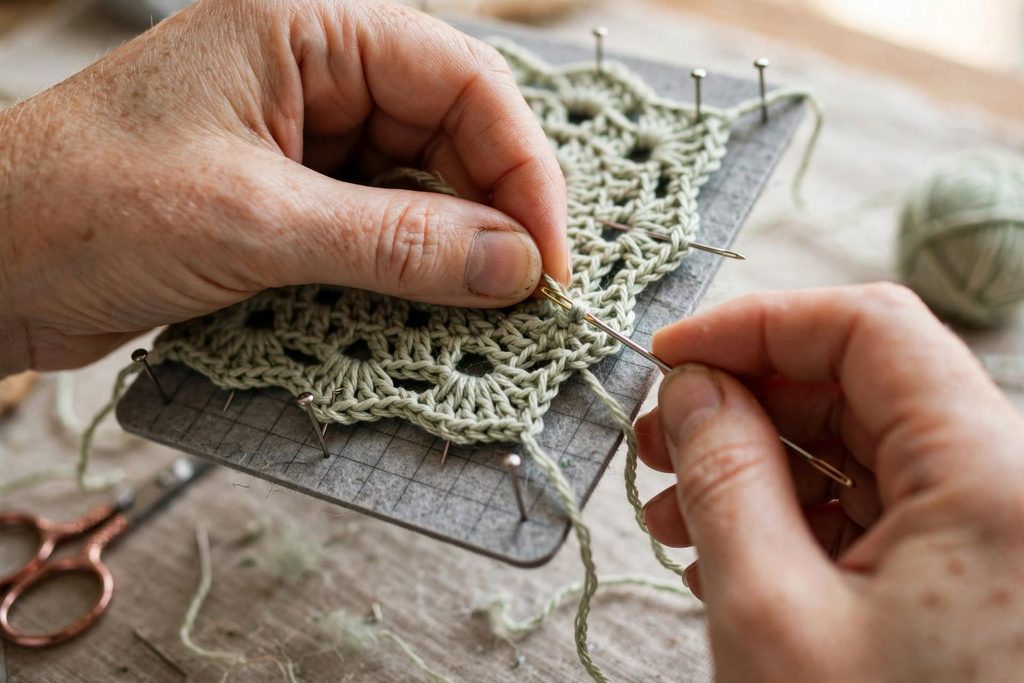
A beautiful stitch pattern is only part of the finished result. The edges, shape, and ties all influence how the kerchief looks and wears.
Keep your tension consistent
Try to maintain even tension throughout your project. Changes in tension can affect the appearance of repeated stitch patterns and the shape of the finished fabric.
If your work begins to curl or the edges look uneven, pause and check your stitches before continuing.
Check the shape as you work
Compare your work with the pattern instructions as you progress. If the design includes measurements or stitch counts, use them to check that your project is developing as intended.
Avoid changing stitch counts based on guesswork, because even small changes can affect the final shape.
Finish the edges carefully
A neat edge can make a handmade accessory look more polished. Follow the finishing instructions for your particular design, and weave in yarn ends securely without pulling the fabric out of shape.
Handle blocking with care
Blocking can help some crochet fabrics relax and display their stitch patterns more clearly. However, the appropriate method depends on the yarn and the construction of the piece.
Check the yarn care instructions before wetting, steaming, or pinning your finished kerchief. Avoid treatments that could stretch, flatten, or damage the fabric.
The Beauty of Handmade Imperfection
One of the pleasures of making a crochet accessory is watching a simple sequence of stitches become something you can wear.
Your first kerchief may not look exactly like the photograph that inspired it. The tension might vary slightly, or the edges may need a little more attention. These are normal parts of learning a craft.
Still, handmade does not mean that every imperfection should be ignored. Checking your work, correcting accidental gaps, and finishing the edges carefully can make a noticeable difference to the result.
The goal is not to make every stitch identical at any cost. It is to create an accessory that feels comfortable, holds its intended shape, and reflects the care you put into it.
With practice, you’ll become more confident about recognizing stitch patterns, working with different yarns, and finishing your projects neatly.
And when someone asks where you found your kerchief, you can tell them that you made it yourself.
Make a Crochet Kerchief Your Own
A crochet kerchief is a small accessory with plenty of room for personal expression. The shape is simple, but the possibilities are not.
You can choose a delicate lace design for summer, a denser style for cooler days, or a color that brings new life to clothes you already own. Wear it over your hair, tie it around your neck, or use it as an accent for a ponytail.
Choose a design that suits your experience, take your time with the stitches, and pay attention to the finishing.
The result doesn’t need to be complicated to feel special. Sometimes a simple triangular shape, a thoughtful color choice, and a little handmade texture are enough to create an accessory you’ll reach for again and again.
Happy hooking, and may your next project bring plenty of texture, color, and handmade character.