Affiliate disclosure: This article may contain affiliate links. If you purchase through them, Wool & Hook may earn a commission at no additional cost to you. Explore the Hanging Planter Pocket pattern here.
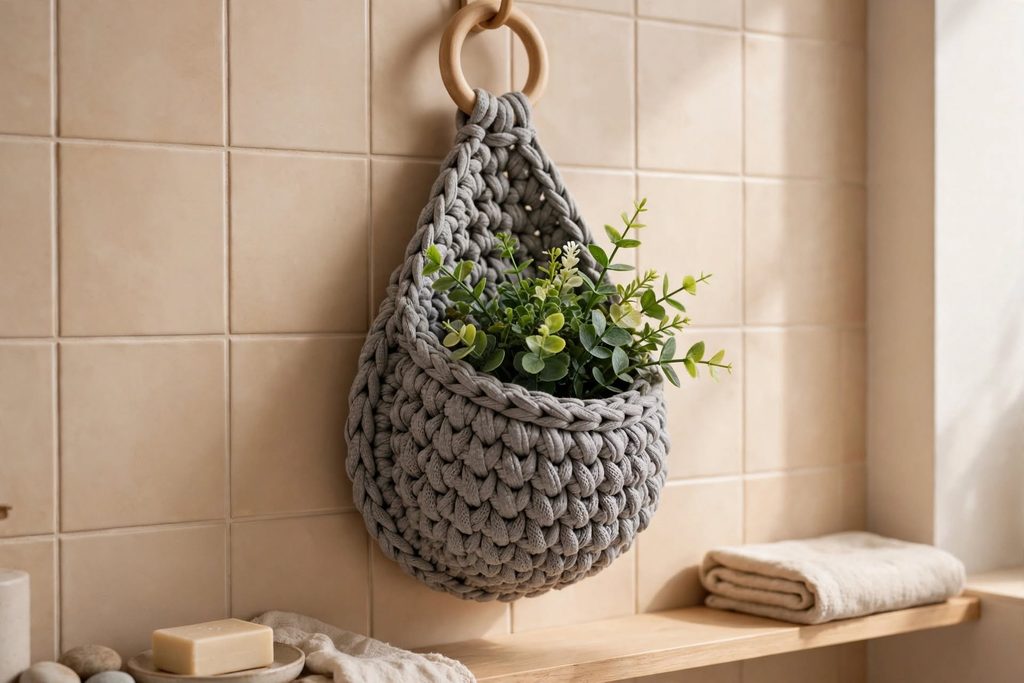
A blank wall does not always need another picture frame. Sometimes, it needs a little greenery, a touch of texture, and something handmade.
A crochet hanging planter pocket combines the softness of yarn with the natural appeal of plants. Its teardrop-shaped silhouette creates a small vertical display for faux greenery, dried flowers, or a lightweight plant pot. It can bring warmth to a kitchen, bathroom, entryway, or any corner where floor space is limited.
Love This Look? Make One Like Mine!
The exact pattern style I used for my hanging planter pocket
- • Teardrop pocket with flat back — sits close to the wall
- • Chunky t-shirt yarn / trapillo — bold woven texture
- • Wooden ring hanging — natural Scandinavian accent
- • For faux greenery, dried eucalyptus & lightweight pots
- • ✅ Digital PDF — instant download + photos & diagrams
Affiliate link — supports Wool & Hook at no extra cost to you. Thanks for keeping handmade alive!
Unlike a traditional hanging basket, a wall-mounted pocket is designed to sit closer to the wall. That makes it an interesting option for small rooms, narrow spaces, and interiors that could use a little more texture without another piece of furniture.
Here is what to know about the design, materials, construction, styling options, and practical considerations before starting your own crochet hanging planter pocket.
What Is a Crochet Hanging Planter Pocket?
Think of it as a cross between a small basket and a wall hanging.
A typical planter pocket has a flat or relatively flat back, a rounded front pouch, and a loop or ring for hanging. The front creates the space needed to hold a lightweight insert, while the back helps the piece sit neatly against a wall.
The exact construction depends on the pattern. Some designs are made from separate panels joined along the sides and bottom; others may use a different shaping method to create the pocket.
The appeal is in the combination of function and texture. Thick yarn gives the piece a sculptural appearance, while the simple shape allows it to fit into a range of interiors, from Scandinavian-inspired rooms to relaxed boho spaces.
One important distinction: a crochet pocket is a decorative textile holder, not automatically a waterproof or load-bearing planter. Its suitability for a real plant depends on the yarn, stitch density, construction, hanging hardware, and weight of the contents.
Why Wall Planters Work So Well in Small Spaces
Vertical decorating makes use of an area that often goes unnoticed: the wall.
A hanging pocket can add interest without taking up a shelf, windowsill, or section of the floor. It can also introduce a softer material into rooms dominated by hard surfaces such as tile, glass, metal, and wood.
There are three especially useful design ideas behind this project.
1. Bringing natural elements indoors
Greenery adds colour and visual contrast to a room. A small plant display can soften a plain wall, while trailing foliage introduces movement and a more organic shape.
Real plants are one option, but faux greenery and dried stems can create a similar decorative effect without the same watering requirements.
2. Decorating vertically
In a compact apartment, every shelf and surface may already have a job. A wall pocket offers another way to display small decorative objects without adding furniture.
Choose the location carefully, however. The wall, hook, and hanging hardware must be appropriate for the total load, especially if the insert contains a real plant and damp soil.
3. Adding handmade texture
Crochet brings a tactile quality that smooth plastic pots and mass-produced accessories may lack. The stitches become part of the design rather than simply a way to hold something.
A chunky neutral pocket can look understated and modern. A coloured version can become a small focal point. The same basic idea can be styled in several different ways.
Choosing the Right Yarn: Is T-Shirt Yarn a Good
Option?
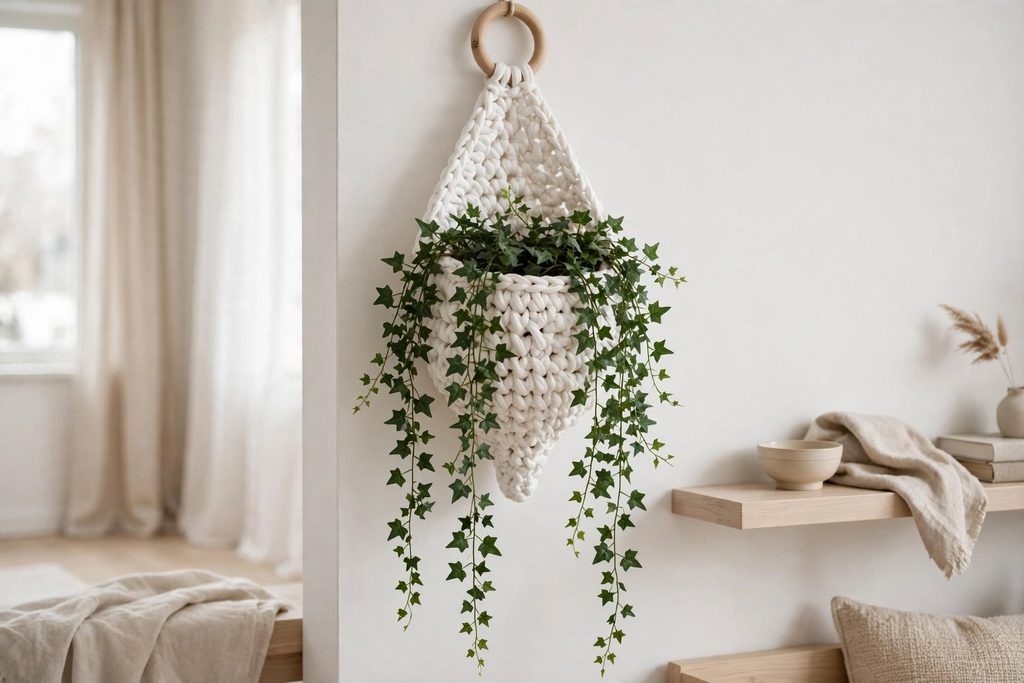
T-shirt yarn, also called fabric yarn or trapillo, is often used for chunky baskets, storage projects, and other home accessories. It is generally made from strips of knitted fabric, although the exact fibre content and construction vary by product.
Its substantial texture makes it an appealing choice for a crochet planter pocket, but there are a few things to consider before buying a ball.
Structure
Thick yarn can help a pocket keep a fuller shape, particularly when worked at a suitable tension. However, thickness alone does not guarantee that the finished piece will hold its shape under load.
A pocket containing a heavy pot may stretch, distort, or pull at its hanging loop. Follow the pattern’s material recommendations and consider the weight of the intended contents.
Texture
Fabric yarn creates a bold, almost woven appearance. This works particularly well with simple shapes because the texture provides visual interest without requiring elaborate stitch patterns.
The finished surface will depend on the yarn’s thickness, elasticity, and consistency, so the result may differ from one fabric yarn to another.
Moisture
Cotton and cotton-rich fabric yarn can absorb water. It should not be treated as waterproof simply because it is made from cotton.
For a real plant, use a separate, waterproof inner pot or nursery pot. Remove it from the crochet holder before watering, allow it to drain completely, and return it only when the outside is dry. Avoid leaving standing water inside the pocket.
Reusing old T-shirts
Old cotton T-shirts can sometimes be cut into strips and used as homemade fabric yarn. The result depends on the fabric, the cutting method, and the consistency of the strips.
This can be an interesting reuse project, but homemade strips may vary in thickness and stretch. Test a small sample first, particularly if the pattern was designed for commercially prepared t-shirt yarn.
How the Hanging Planter Pocket Is Constructed
The teardrop silhouette may look intricate, but many pocket-style designs use a small number of basic components. The exact method should always follow the chosen pattern.
The back panel
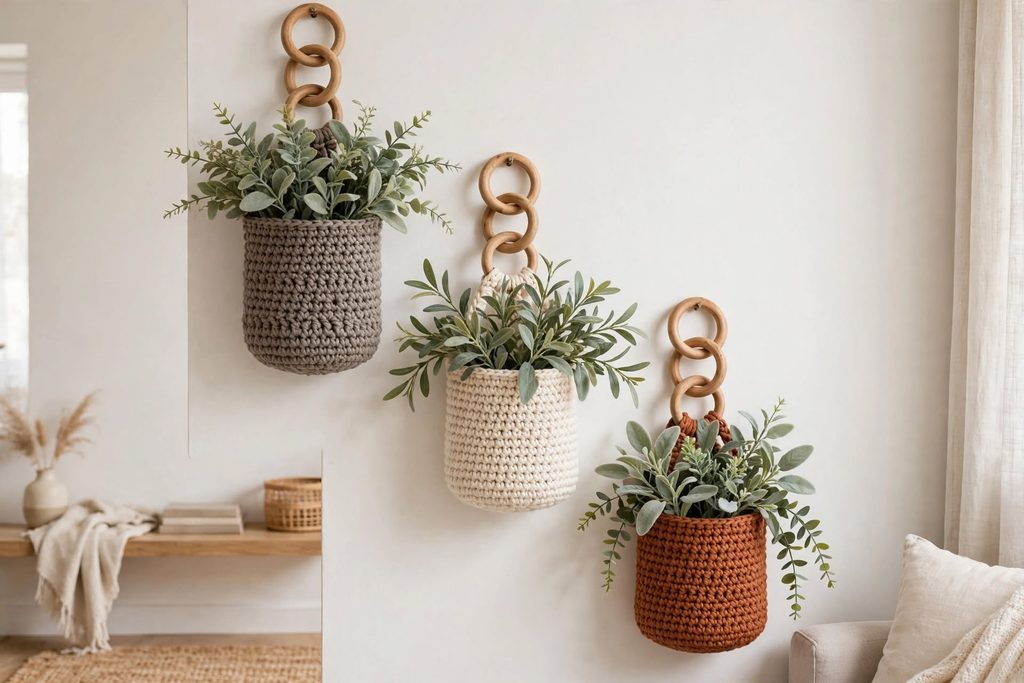
The back forms the part that sits against the wall. Depending on the design, it may be worked as an oval, a teardrop, or another shaped panel.
Its dimensions affect how the finished pocket sits, so accurate stitch counting and shaping matter.
The front pouch
The front creates the space for the insert. It may be shaped with increases or worked as a separate basket-like piece.
The depth should suit the intended contents. A shallow pocket might work well for faux foliage or dried stems, while a deeper design may accommodate a small lightweight container.
The joining
In a two-panel design, the front and back are joined around the sides and bottom, leaving an opening at the top. Other patterns may build the pocket in a different way.
The joining needs to be secure and even. Loose seams or weak attachment points can become problem areas when the pocket is filled.
The hanging loop or ring
A wooden ring can add a natural accent and give the design a finished look. Some patterns use a crocheted loop or cord instead.
The ring is a decorative component, not a guarantee that the planter can support a particular weight. The loop, its attachment, and the wall hardware all need to be suitable for the finished piece and its contents.
The Hanging Planter Pocket Crochet Pattern
If you prefer to work from a complete set of instructions rather than develop the shaping yourself, a dedicated crochet pattern can provide a useful starting point.
Pattern: Hanging Planter Pocket Crochet Pattern
Pattern link: [Insert the correct Creative Fabrica affiliate link here]
Before purchasing, check the listing for the information you need, including:
- Skill level and any assumed crochet knowledge
- Yarn type, recommended hook size, and approximate yarn quantity
- Finished dimensions
- Construction method and assembly instructions
- Whether photographs or diagrams are included
- Whether the pattern uses US or UK crochet terminology
Do not assume that every pattern includes the same level of guidance. Check the actual product description so you know what is supplied.
A confident beginner who understands single crochet, increases, and basic shaping may find this type of project approachable, but the difficulty depends on the specific instructions. If the pattern includes unfamiliar techniques, practise them with a small swatch before starting the main piece.
What Can You Put in a Crochet Wall Pocket?
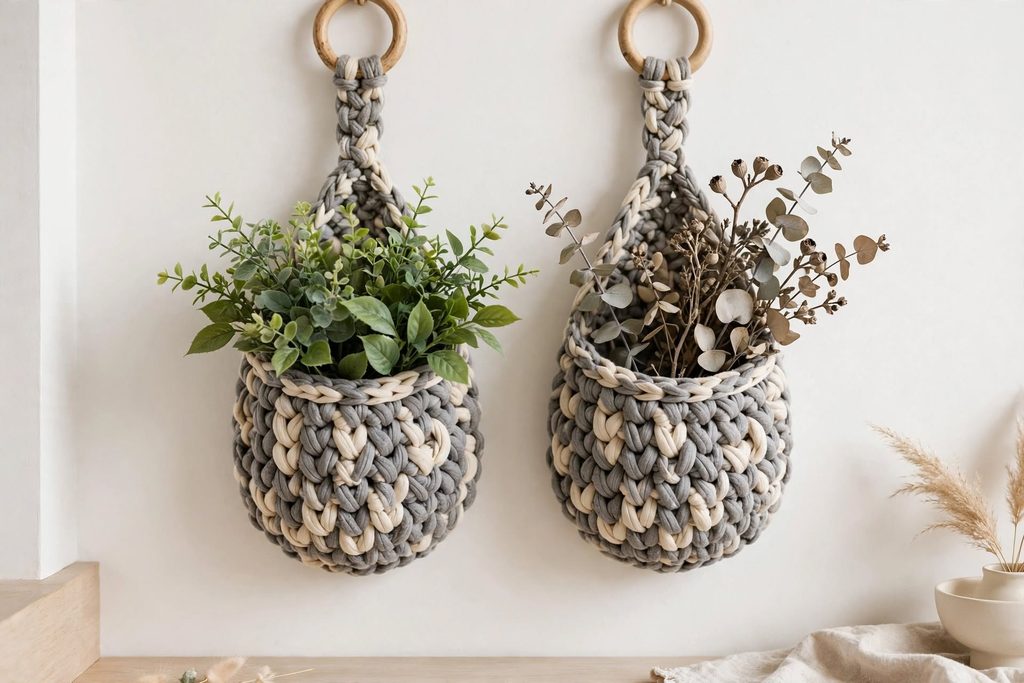
The pocket does not have to hold a conventional potted plant. Its shape can work for several lightweight decorative and storage ideas.
Faux plants
Faux greenery is one of the simplest options. There is no watering to worry about, and the arrangement can stay in place without exposing the yarn to moisture.
Choose stems that fit securely without stretching the pocket out of shape.
Dried flowers
Dried lavender, eucalyptus, and other lightweight stems can create a soft, natural display. Keep the arrangement proportionate to the pocket so it does not pull the holder forward.
Air plants
Air plants can be used as part of a decorative display, but they still require appropriate care. Do not mist or soak them while they are inside the crochet holder. Remove them first and allow them to dry properly before returning them.
Small real plants
A real plant can work only when the entire arrangement is sufficiently lightweight and the mounting system is suitable.
Keep the plant in a separate nursery pot or waterproof container. Do not place wet soil directly into the yarn, and never return a pot to the pocket while water is draining from it.
A plant that seems light when dry can become considerably heavier after watering, so account for the full weight rather than the empty pot alone.
Bathroom accessories
For a dry bathroom wall, a pocket can hold lightweight items such as rolled washcloths or spare hair accessories. Keep textiles away from persistent splashes and damp surfaces, and avoid storing items that could leak or stain the yarn.
Entryway essentials
A small pocket may be useful for lightweight items such as sunglasses or a few pieces of mail. Keys can be heavy and may snag the stitches, so a crochet pocket is better suited to light accessories than a general-purpose heavy-duty organiser.
Size and Placement Ideas
The best location depends on what the pocket will hold, how much space is available, and whether the wall can support the mounting hardware.
| Location | Suitable contents | Styling direction |
|---|---|---|
| Bathroom wall | Faux succulents or dry accessories | Calm, spa-inspired |
| Kitchen wall | Faux herbs or a lightweight herb display | Fresh, farmhouse |
| Bedroom corner | Faux trailing foliage | Soft, relaxed |
| Entryway | Dried stems or lightweight accessories | Welcoming and practical |
| Living room | Faux greenery | Natural, textured |
| Nursery | Lightweight faux foliage, positioned safely out of reach | Gentle, playful |
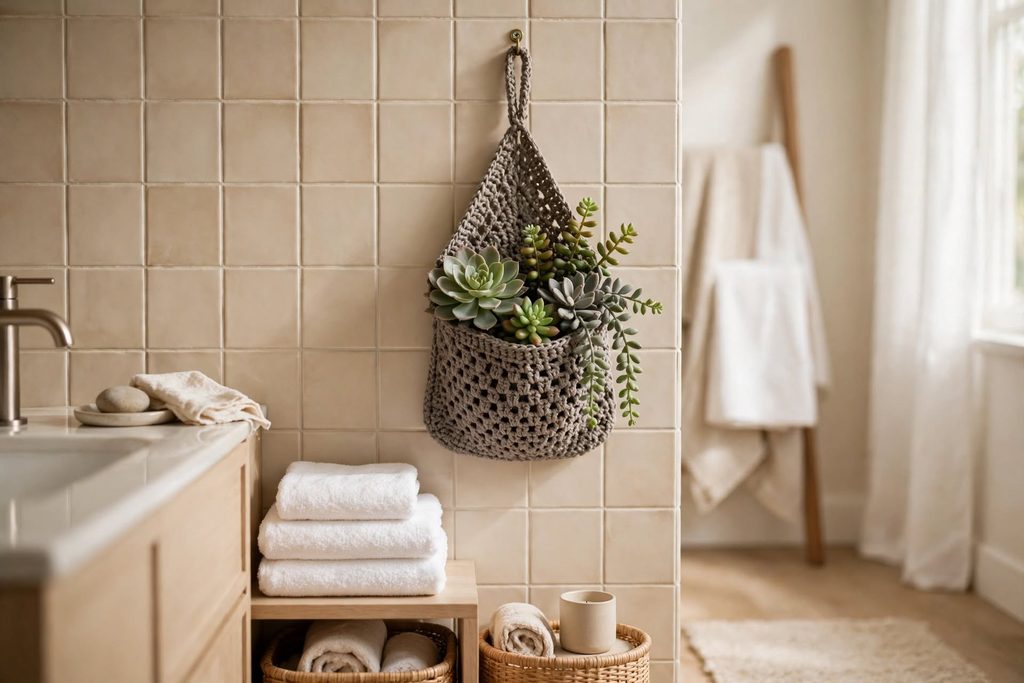
A group of two or three pockets can create a more deliberate display than a single piece. Try different heights or complementary colours, while leaving enough space around each pocket for the shapes to remain visible.
For real plants, also consider light, temperature, and access for watering. A beautiful location is not necessarily a suitable growing location.
Pro tip: Make the arrangement look cohesive by repeating one element, such as the yarn colour, the wooden rings, or the type of foliage. The pockets do not need to be identical to look as though they belong together.
Materials You’ll Need
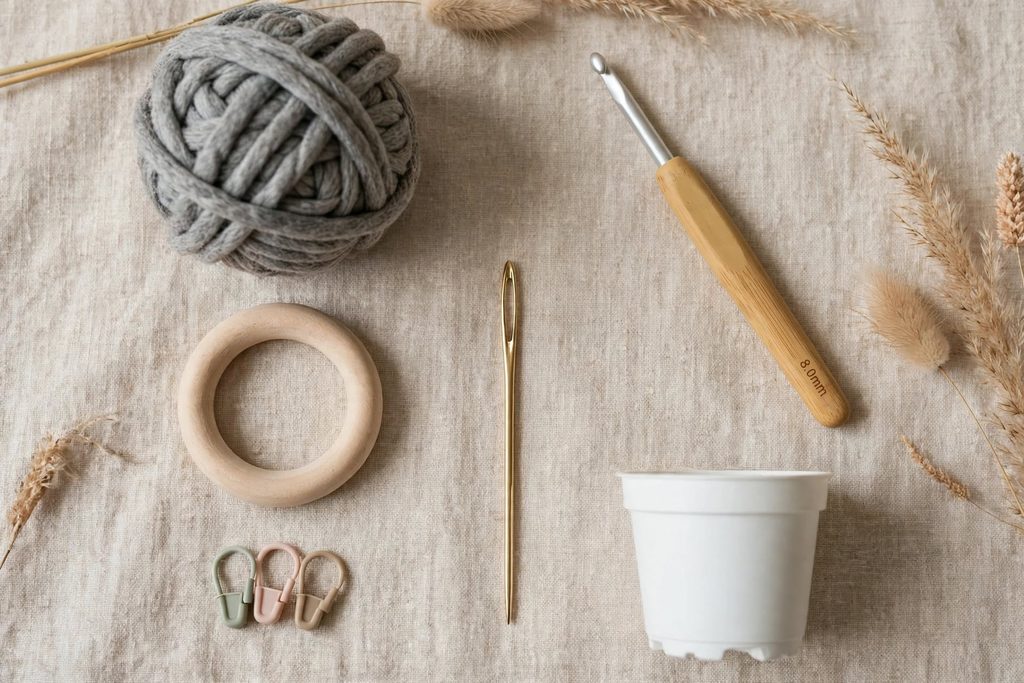
The exact materials and quantities depend on the pattern you choose. Use the pattern’s list as your primary guide rather than treating the following as a universal specification.
| Material | What to look for |
|---|---|
| T-shirt yarn or the specified yarn | A thickness and fibre content compatible with the pattern |
| Crochet hook | The size recommended by the pattern and suitable for your yarn |
| Wooden ring, if required | A size that matches the pattern and has a suitable attachment point |
| Stitch markers | Useful for tracking shaping and rounds |
| Tapestry needle | For weaving in ends and finishing |
| Inner pot or insert | Lightweight, appropriately sized, and waterproof if used with a real plant |
| Suitable wall hook and mounting hardware | Chosen for the wall type and the complete loaded weight |
A yarn quantity such as 200–250 g may be sufficient for some small designs, but it should not be presented as a guarantee without checking the actual pattern and finished dimensions. Buy according to the pattern’s stated requirements and allow for differences in yarn thickness and tension where appropriate.
Choosing a colour
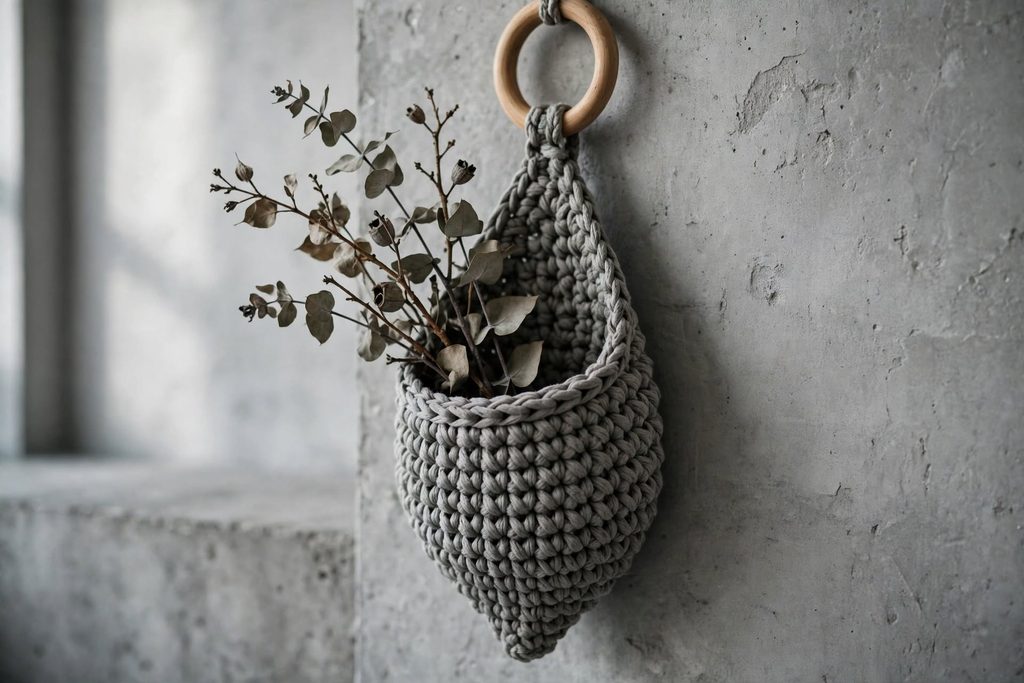
Colour changes the personality of the finished piece.
- Warm gray: understated and easy to combine with neutral interiors.
- Cream: light, simple, and well suited to Scandinavian-inspired rooms.
- Terracotta: brings warmth and an earthy, Mediterranean feel.
- Sage green: complements botanical displays without overwhelming them.
- Deep navy: creates a stronger contrast against pale walls.
If the pocket will hold green foliage, think about contrast. A cream or terracotta holder makes the leaves stand out, while a green or gray version creates a quieter, more blended look.
Hanging and Safety Considerations
A wall-mounted planter should be secure before it is filled. The combined weight of the crochet piece, insert, plant, soil, and retained water matters more than the weight of the empty pocket.
Keep these practical points in mind:
- Use a hook and mounting hardware appropriate for the wall material and the total loaded weight.
- Do not rely on a suction cup for a loaded planter unless the product is specifically rated for that use and the conditions are suitable.
- Check the hanging loop and its attachment for signs of stretching, loose stitches, or damage.
- Keep the pocket away from electrical outlets, heat sources, and places where dripping water could cause damage.
- Position it out of reach of small children and pets if the ring, pot, or other components could be pulled down or detached.
- If the wall, mounting hardware, or yarn construction is not suitable for a real plant, use lightweight faux greenery instead.
These precautions are especially important when using a textile holder that was designed primarily for decoration rather than for supporting a heavy, wet container.
Care and Maintenance
A little routine care helps keep a crochet planter pocket looking neat.
Remove dust. Use a soft brush or a suitable low-suction vacuum attachment. A lint roller may help with some yarn surfaces, but test it first to avoid pulling fibres or catching stitches.
Spot-clean carefully. Follow the yarn manufacturer’s care instructions. If appropriate, use a slightly damp cloth and mild detergent on a small, inconspicuous area. Avoid soaking the entire piece unless the yarn and construction can safely tolerate it.
Keep the yarn dry. For a real plant, remove the inner pot before watering and let it drain fully. Check the pocket and wall for moisture before rehanging it.
Inspect the hanging point. Look for stretched stitches, loose joins, fraying, or damage to the ring and loop. Stop using the pocket if the hanging point becomes unreliable.
Restore the shape gently. If the pocket loses its shape, remove its contents and reshape it by hand. Do not assume that stuffing it overnight will work for every yarn; follow the material’s care guidance.
Is a Crochet Hanging Planter Pocket Worth Making?
A crochet hanging planter pocket offers a useful combination of texture, colour, and vertical display. It can make a blank wall feel more considered without adding another shelf or taking up valuable floor space.
It is also a project where material choice matters. Thick yarn creates a strong visual statement, but the finished result depends on the construction, the weight of the contents, and the way the pocket is mounted.
For a first project, a lightweight faux plant or dried-flower arrangement is a practical place to start. Once you understand how the pocket behaves and how securely it hangs, you can decide whether another use suits the design.
The goal is simple: turn an overlooked patch of wall into a small display that feels personal, handmade, and at home in your space.
Ready to try the project? Explore the Hanging Planter Pocket Crochet Pattern here:
Choose the yarn and hook specified by the pattern, check the finished dimensions, and plan the hanging method before you begin.
If you make a crochet planter pocket, share a photo in the comments or tag @woolandhook on Instagram. We’d love to see how you style yours with faux greenery, dried flowers, or another lightweight decorative idea.
Related Articles from Wool & Hook
Spring Lace Crochet Shawl: One Skein, Infinite Elegance
Discover another crochet project that turns yarn into a decorative piece with plenty of personality.