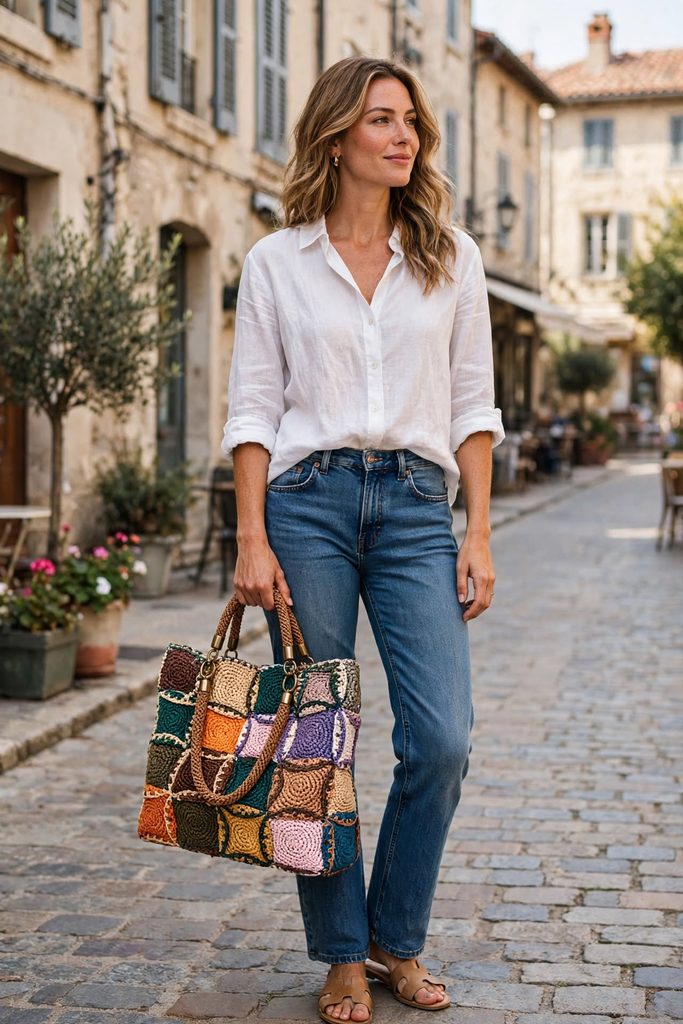
Some bags you carry because they are practical. And some you carry because they make an ordinary day feel a little bit more like you.
This bag is the second kind.
I have always loved raffia for summer. It has that straw-like, warm texture that cotton never really gives you. It is not soft and floppy. It holds its shape. It looks like something you picked up at a little market in Italy, even if you actually made it yourself at your kitchen table.
And when you add colour to it — not one colour, but a whole handful of them — it stops being just a bag. It becomes the one thing in your outfit that people ask about.
Why I love raffia for bags
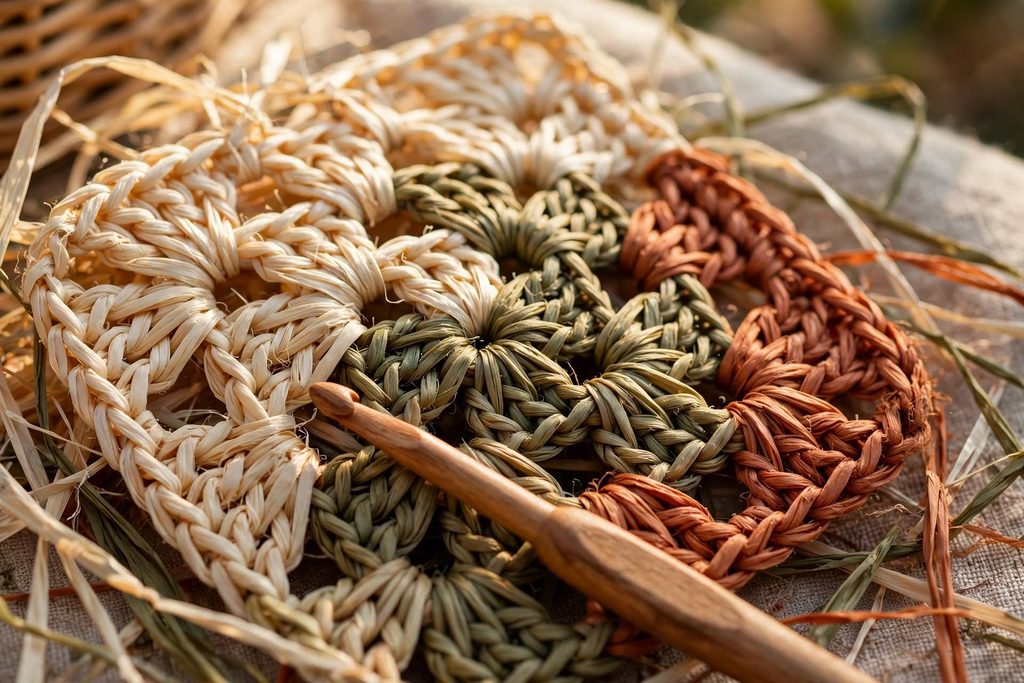
Raffia is not like wool. It does not stretch and bounce back in quite the same way. Its relatively firm structure makes it particularly interesting for bags.
That is exactly why I like it for summer accessories. A soft wool tote can relax and lose some of its shape under the weight of everyday things. A well-made raffia tote has a more defined appearance. It looks closer to woven straw than conventional crochet, even though you made it with a hook.
There are different kinds of raffia, and it is worth knowing this before you buy yarn. Natural raffia comes from palm leaves. Paper raffia comes in many more colours, while synthetic alternatives offer another option. They do not all feel the same, and they do not all react to water in the same way. So I always check what the yarn label says about hook size and care before I start.
For this bag, the designer used Fibranatura and Ispie raffia. You can choose other raffia yarns too, but check the meterage and make sure your chosen material works with the pattern’s recommended gauge.
The bag that caught my eye
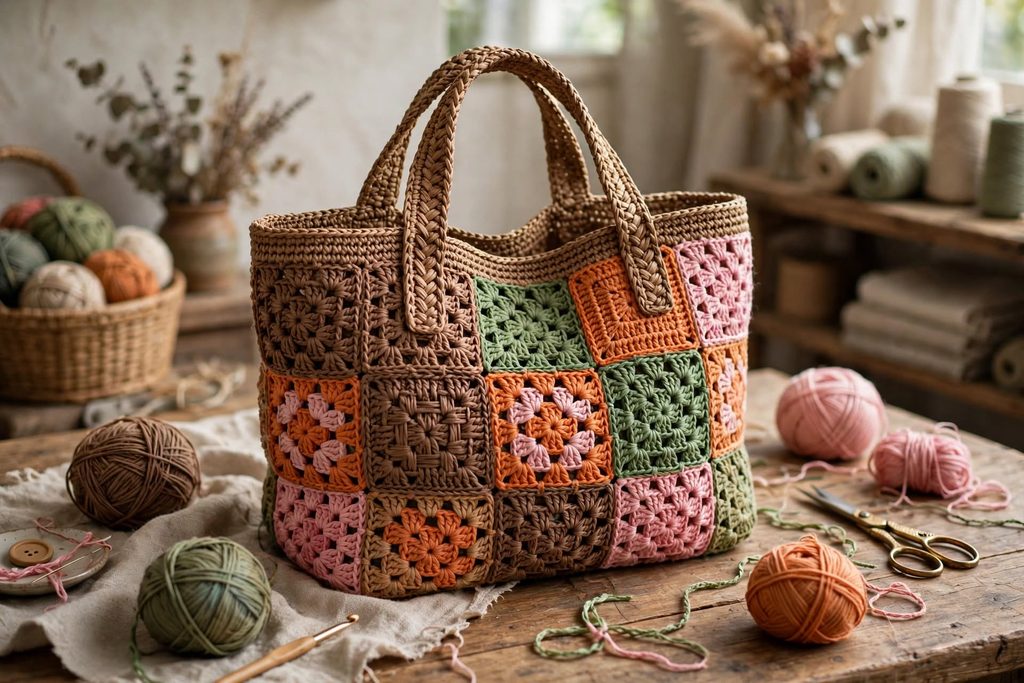
The bag I keep coming back to is the Big Bag with Raffia by A.more.nushka.
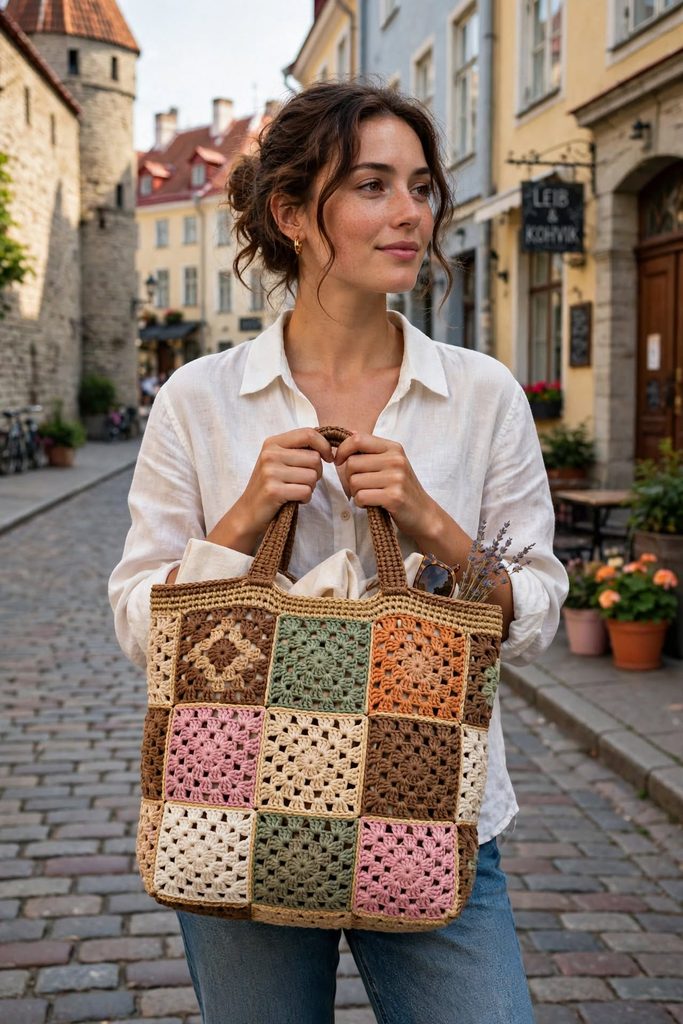
It is not a plain beige beach bag. It is a patchwork of small motifs, put together into a big, generous tote. Browns, muted greens, warm orange, dusty pink — it looks like a collection of small textile artworks brought together in one design.
I love this kind of design because there is no one right palette. You can make it exactly as in the photo. Or you can make it yours.
If I were making it for myself, I would probably go quieter. Cream, olive, terracotta. Something that goes with linen and denim and a white shirt. Something I could carry well beyond the height of summer.
But if you love colour, go for it. Rich blue, rust, mustard — this bag can handle it. That is the beauty of a multicolour design. It does not need extra decoration. The colour is the decoration.
What is inside the pattern
This is not a quick beginner make, and I want to be honest about that.
The pattern is listed as intermediate. You need to know the basics already:
- Chain stitch
- Slip stitch
- Single crochet
- Increasing
- Decreasing
If you know those, you have the basic skills needed to follow it. The pattern comes with written row-by-row instructions, photographs, and a link to a video tutorial about 48 minutes long. I love when a pattern has a video, because with raffia, sometimes you just need to see how the motif comes together.
The designer also says you can change the number of elements and the shape of the bag, using the master class as a starting point. So if you want it a little smaller, or a little taller, you have some room to experiment. That is the kind of freedom I like in a handmade project.
Interested in this colourful design?
You can find the Big Bag with Raffia pattern by A.more.nushka on Creative Fabrica.
A pattern I truly love
Big Bag with Raffia
by A.more.nushka
A big patchwork tote from colourful raffia motifs — with written instructions, photos and a 48-minute video to follow along.
Intermediate · 450 m raffia · 40 × 40 cm
View the Pattern on Creative Fabrica →
This post contains affiliate links. If you buy through them, I may earn a small commission at no extra cost to you. It helps me keep sharing patterns I truly love.
What you will need
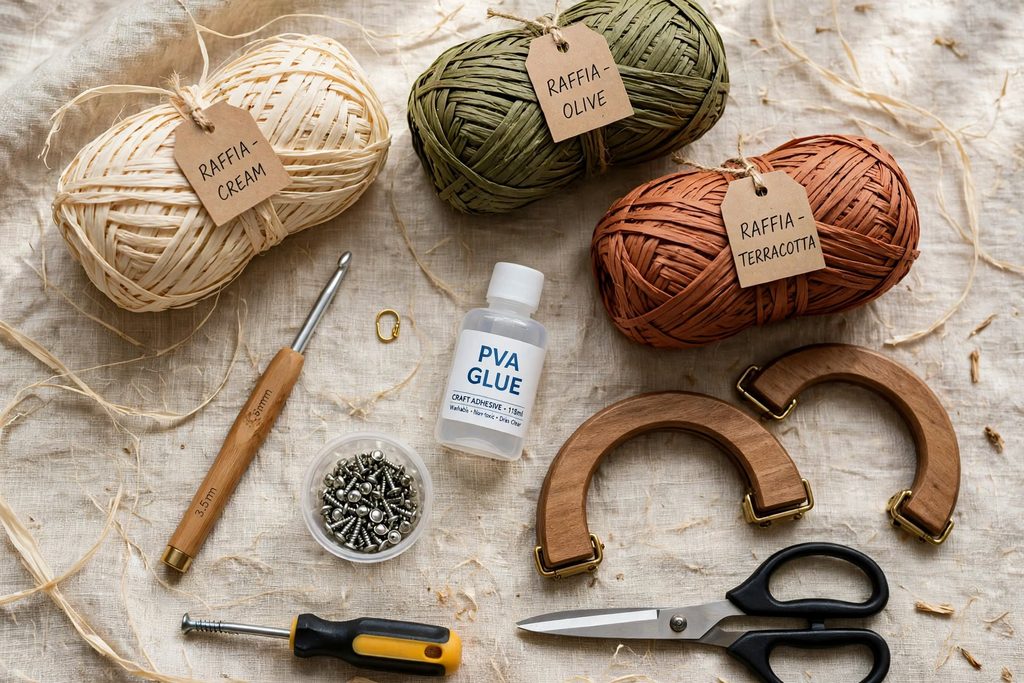
This bag needs a little more than yarn and a hook. When I first saw the materials list, I thought: glue? A screwdriver? For crochet?
But it makes sense once you look at the complete construction. This is not a simple floppy market bag. It is a structured tote with additional hardware and assembly materials. The designer includes PVA glue, rivets, handle holders, and a small screwdriver in the list, so this is a project where the finishing details matter just as much as the crochet itself.
Here is the full list from the designer:
| Material or tool | Listed quantity |
|---|---|
| Raffia yarn | Approximately 490 yards (450 m) |
| Crochet hook | 3–3.5 mm |
| Stitch marker | 1 |
| PVA glue | 200 ml |
| Rivets, 6 mm diameter | Approximately 100 |
| Handle holders, 5 mm diameter | 4 |
| Scissors | 1 pair |
| Small Phillips screwdriver | 1 |
| Iron | 1 |
450 metres is a lot for one bag. So before you buy, check the meterage on your skeins. The designer also mentions that each individual motif uses approximately 10–12 grams of raffia.
And choose your palette before you start — when a bag has this many colours, it looks so much more cohesive if you have planned them together, not picked them one by one as you go.
Size and how it feels to carry
The finished bag is generous:
- Width: 40 cm (16 inches)
- Height: 40 cm (16 inches)
- Depth: 10 cm (4 inches)
- Crocheted handle section: 55 cm (22 inches)
The listed gauge is 16 stitches and 16 rows over a 10 × 10 cm (4 × 4 inch) square.
In real life, that means a roomy tote with space for everyday essentials, a book, a light cardigan, and a few market finds. It is a proper statement bag, not a decorative mini purse.
With raffia, gauge really matters. Because the fibre has little stretch, a small difference in tension can change the size and the shape. I always make a small swatch first. It takes a little extra time, but it can save you from making a whole bag that turns out too stiff or too loose.
Working with raffia — what I have learned
Raffia feels different in your hands. It is firmer than cotton, and it does not forgive you if you crochet too tightly.
A few things that help me:
Keep your tension even. Very tight stitches can make the fabric rigid and harder to work with. Very loose stitches may affect the finished shape. A small swatch is a good way to find a comfortable balance.
Use the hook your yarn likes. The pattern specifies 3–3.5 mm, but always check your own yarn and compare your gauge with the designer’s measurements.
Take breaks. Raffia can feel firm against your hands. I prefer crocheting in comfortable sessions rather than working for hours without stopping. A cup of tea in between is part of the process for me.
Check care before you wash. Natural, paper, and synthetic raffia do not all react to water in the same way. Follow what your yarn manufacturer says rather than guessing.
How I would style it
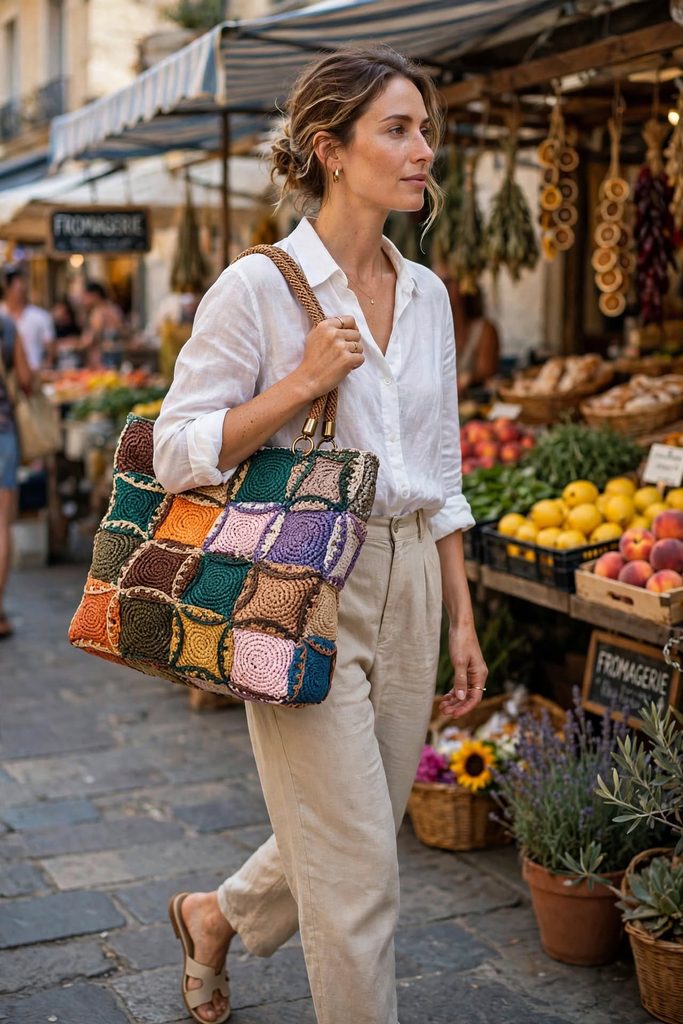
A colourful bag like this does not need a colourful outfit. In fact, it looks best when everything else is quiet.
With linen and neutrals
A white linen shirt, beige trousers, simple sandals. The bag becomes the focal point. Nothing competes with it.
With denim
Blue jeans and a plain cotton top. The texture of raffia adds warmth, the colours add personality. This is how I would wear it most days.
With a summer dress
A simple white or cream dress, with minimal pattern. The patchwork can really stand out then.
For the beach or market
This is where the size helps. A towel, a book, your shopping — it has the room for all sorts of summer essentials. Just remember that the weight it can comfortably carry depends on the finished construction and handles.
The rule I follow is simple: if the bag already has a lot of colour and texture, I keep my clothes simple.
How to care for it
Care depends on what kind of raffia you used. So again — check your yarn label first.
A few habits that help keep a raffia bag looking lovely:
- Avoid machine washing unless the manufacturer specifically allows it.
- Remove dust gently rather than soaking the bag.
- Be especially careful with paper raffia and water.
- Let it dry completely if it gets damp.
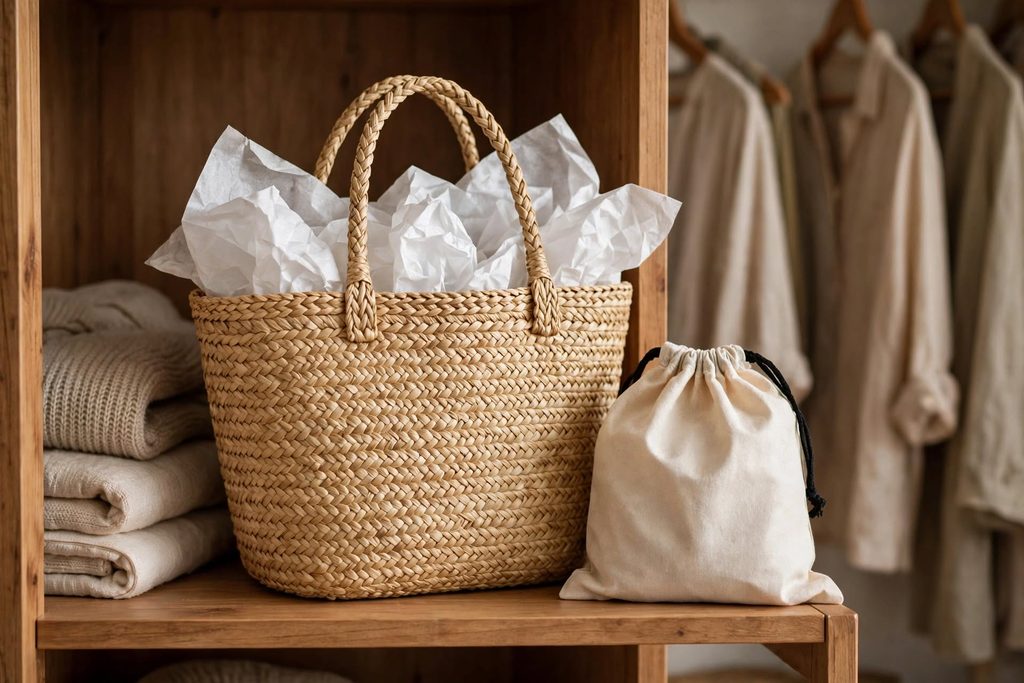
- Store it in a dry place, away from excessive heat.
- Avoid overloading it with very heavy things.
I like the idea of storing a bag lightly stuffed with tissue paper between seasons, so it keeps its shape instead of collapsing in the wardrobe.
Frequently Asked Questions
Is raffia suitable for crochet bags?
Yes. I love it for summer bags because of its natural look and relatively firm structure. The result depends on the fibre, the stitch pattern, and your tension.
Is the Big Bag with Raffia suitable for beginners?
The designer lists it as intermediate. You need to know chains, slip stitch, single crochet, increases, and decreases. If you already know those, you have the basic skills required. If you have never crocheted a bag, I would make a small motif first to get a feel for raffia.
How much raffia yarn does this bag require?
About 490 yards, or 450 metres. Check this against the meterage of the yarn you choose. The designer also estimates 10–12 grams for each motif.
What crochet hook size is recommended?
The recommended hook size is 3–3.5 mm. Your gauge and the type of raffia you choose are important too.
Does the pattern include a video tutorial?
Yes. It includes written instructions with photographs, plus a link to a video tutorial of approximately 48 minutes.
Can the bag design be customized?
Yes. The designer says you can change the number of elements and the shape, using the master class as a starting point. Just remember that changing the construction may also affect the finished size and material requirements.
A bag with personality
A colourful raffia tote is not like the bags you see in every shop window. It has texture. It has colour. It has those little details that make handmade things feel alive.
The Big Bag with Raffia is not the quickest project. It is intermediate, it needs hardware, and it takes patience. But you get written instructions, photos, and a video to follow along with. And at the end, you have a bag that is truly yours — in your colours, in your tension, in your hands.
For me, that is what makes it worth making.