Tag: crochet tote bag

  • The Crochet Tote That Carries Your Whole Aesthetic

    The Crochet Tote That Carries Your Whole Aesthetic

    Handmade color-blocked crochet tote bag in pink, peach and lavender with tassel, leather tag and QR code pattern label on marble surface You do not buy this bag.
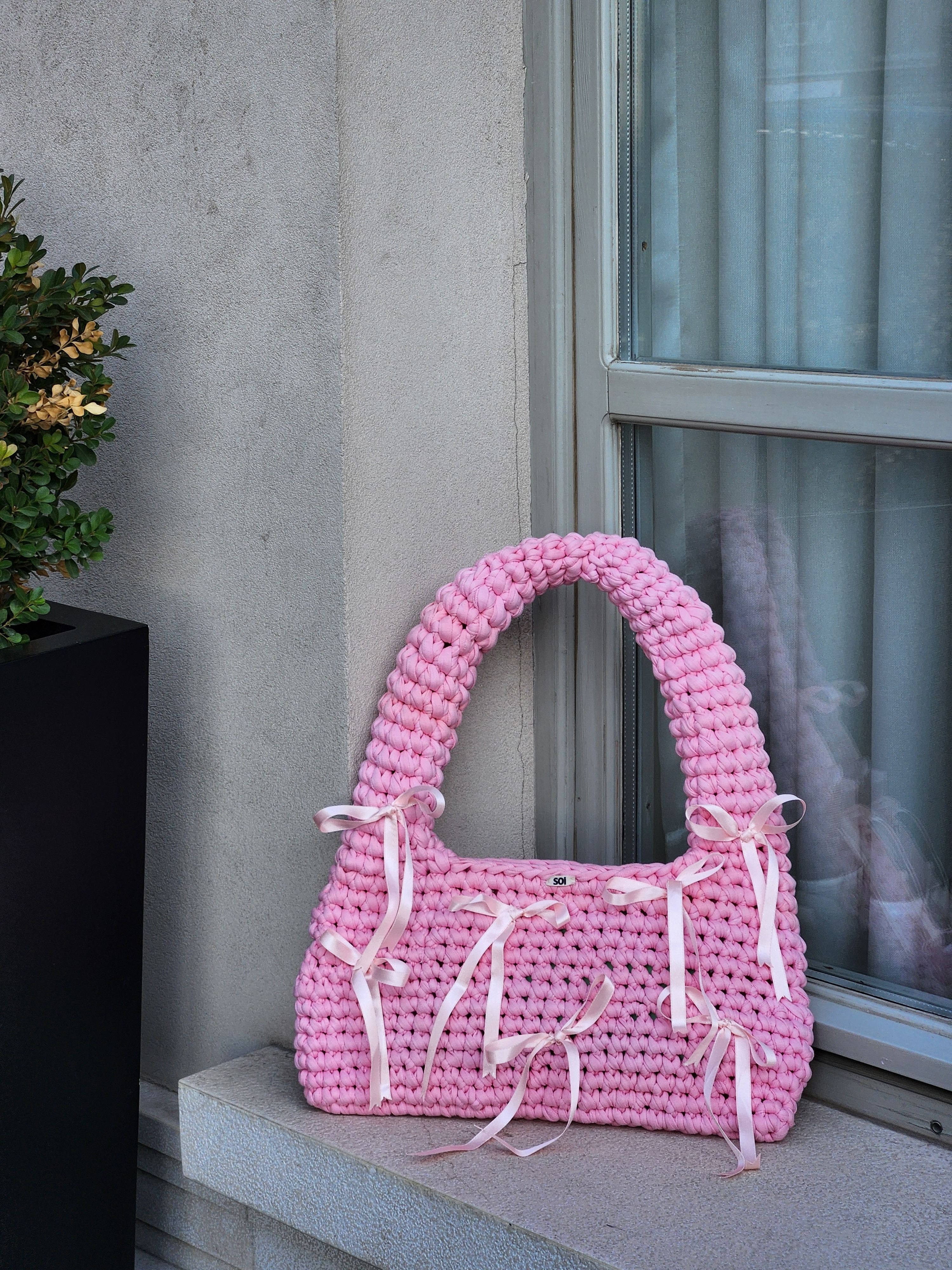
    You download its potential. You scan a code, open a PDF, and suddenly your evening has a purpose that has nothing to do with Netflix. Three hours later, your hands smell like cotton. Your couch is covered in yarn crumbs. And there — on the coffee table — is a tote bag in shades of strawberry, peach, and lavender that looks like it was born in a boutique, not on your lap.
    Welcome to the only accessory that comes with a QR code and a personality.
    In this article, you will learn:
    • Why color-blocked crochet totes are the easiest “wow” project for confident beginners
    • How to read a PDF pattern without throwing your hook across the room
    • The exact yarn weight and hook size for a structured bag that does not sag
    • How to attach a leather tag and tassel like a professional maker
    • The 5 mistakes that turn a boutique-style tote into a craft-fair casualty
    Now, let us talk about the bag that comes with homework.

    Part I: The Color Gradient Is a Mood Ring

    Look at it. Pink melting into peach melting into lavender — like a sunrise had a baby with a macaron. This is not just a color scheme. This is a mood gradient. The top is bubblegum optimism. The middle is peachy calm. The bottom is lavender introspection. You are not carrying a bag. You are carrying the emotional arc of a perfect Tuesday.
    Here is the paradox that breaks color theory: these three colors should clash. Pink and orange are neighbors on the wheel — they fight for attention. Purple is across the ring — it should create discord. But in pastel tones, at equal saturation, they form a truce. They become a gradient. And a gradient, in crochet, is the easiest way to look like you planned something complicated when you simply ran out of the first color and refused to go to the store.
    Practical tip: For a smooth color transition in a tote, work two rows of the new color while carrying the old color along the top of the stitches (tapestry crochet technique). This creates a clean line with no weaving-in later. Or — embrace the jogless stripe: change colors at the beginning of the row, chain one in the new color, and continue. The slight step is invisible after blocking.
    Yarn math: For a medium tote (12″ wide × 10″ tall × 3″ deep), you need approximately 200 yards of Color A, 150 yards of Color B, and 150 yards of Color C in worsted-weight cotton. Lily Sugar’n Cream or Paintbox Cotton DK work beautifully. Do not use acrylic — it stretches under weight and your tote will become a hammock by week three.

    Part II: The QR Code Is a Portal
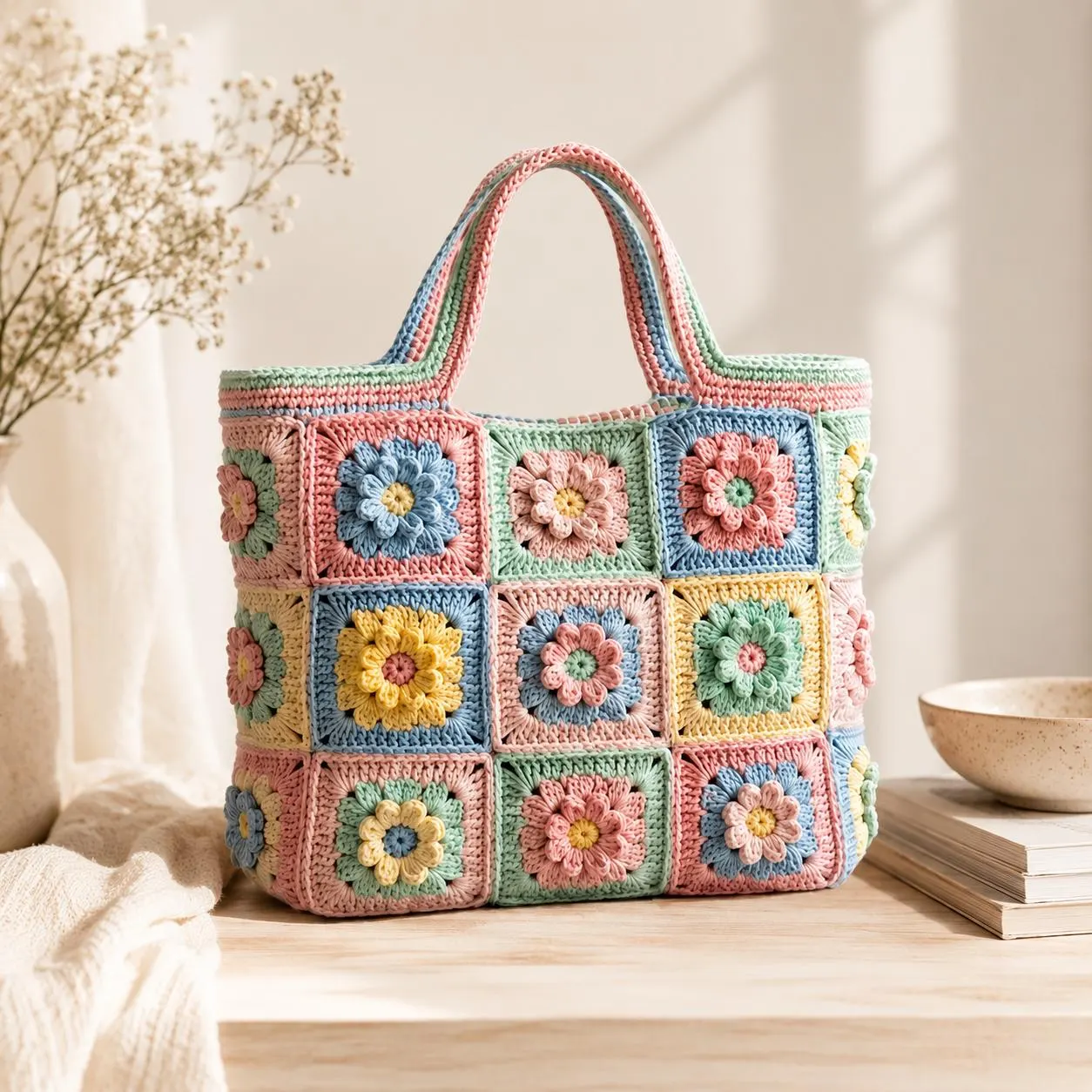
    Handmade pastel crochet tote bag with 3D flower granny squares in pink, blue, yellow and green — artisan floral crochet purse on wooden shelf with dried flowers
    There it is. A small paper tag, tied with twine, printed with a QR code that says “Download PDF Pattern.” This is the modern equivalent of a spell book. You point your phone at it, and a document appears — pages of abbreviations, stitch counts, and diagrams that look like hieroglyphics drawn by a very organized alien.
    But here is the twist: the QR code is not just a link. It is a permission slip. It gives you the right to make this exact thing. It transforms you from a consumer into a maker. Without the code, the bag is a product. With the code, it is a curriculum.
    How to read a PDF pattern without trauma:
    1. Print only the first page — the materials list and gauge swatch instructions. Everything else stays digital for zooming.
    2. Highlight your size — if the pattern offers multiple dimensions, highlight only your numbers. The rest is noise.
    3. Use a row counter app — your phone can track rows better than your memory, especially during Netflix.
    4. Stitch glossary first — if the pattern says “fpdc” and you do not know what that means, stop. Look it up. Do not guess. Front post double crochet is not intuitive.
    5. Save the PDF to a cloud folder named “Current Projects” so you can access it from any device when inspiration strikes at the dentist’s office.
    The megalogic of digital patterns: A PDF pattern costs $3–$8. The bag it produces would retail for $60–$90. That is a 1,000% return on investment — if you measure ROI in compliments per dollar.

    Part III: The Tassel Is a Signature
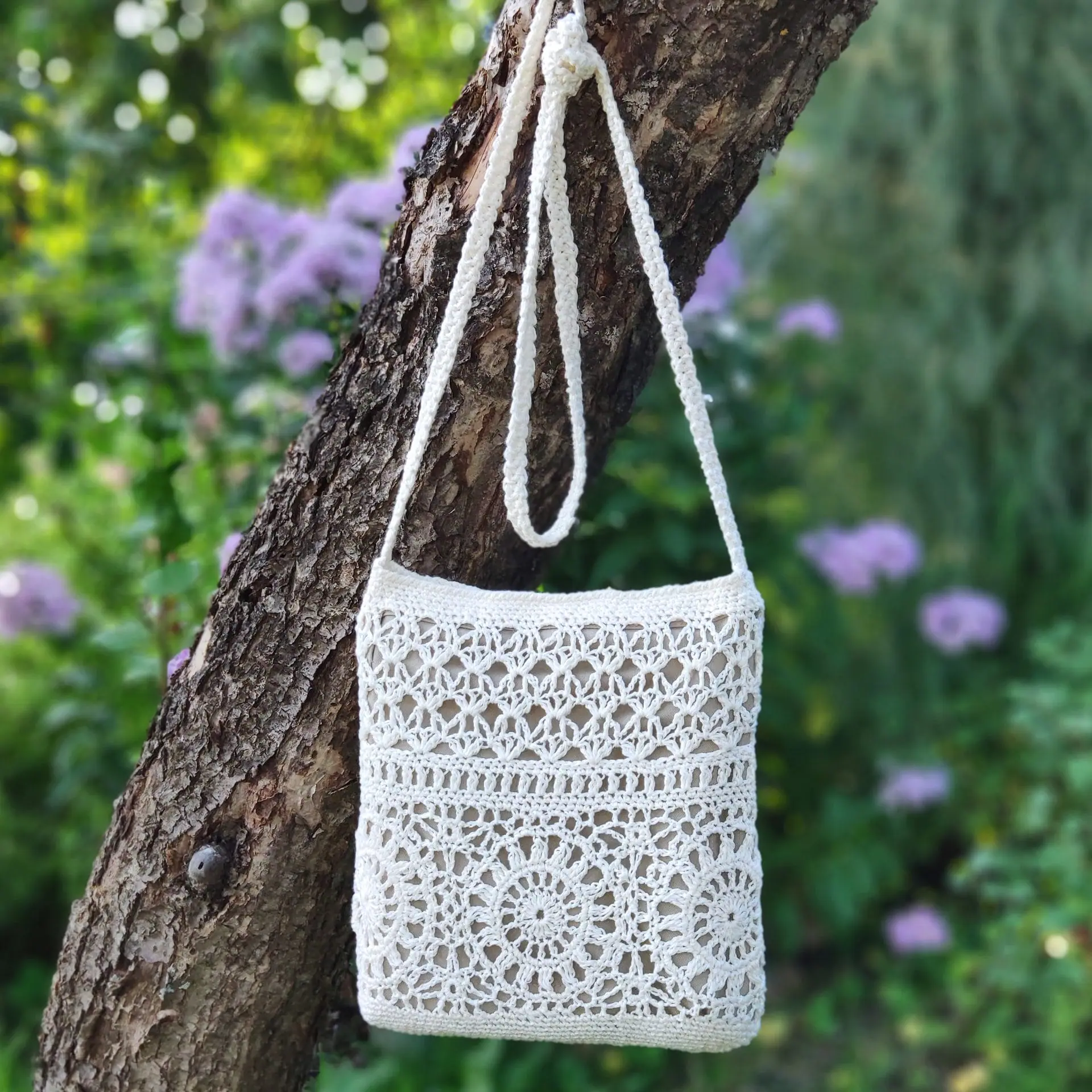
    Crochet summer small bag pattern Crochet handmade tutorial
    A tassel is not decoration. It is a period at the end of a sentence. It says, “This bag is finished, and I am proud enough to add one more thing.” The tassel on your tote — ombre, matching the gradient, tied with a leather cord — moves when you walk. It catches the breeze. It draws the eye downward, elongating the silhouette, making the bag look taller and more expensive than it is.
    Here is the practical magic: tassels take 10 minutes to make and add $20 to the perceived value. They are the cosmetic surgery of crochet accessories — minimal effort, maximum impact.
    How to make a professional tassel:
    1. Wrap yarn around a 4-inch piece of cardboard 30 times.
    2. Slide a separate 12-inch strand under the wraps and tie tightly at the top.
    3. Cut the bottom loops.
    4. Wrap another strand around the neck (1 inch below the top tie) 5 times. Knot. Hide ends inside.
    5. Attach to the bag with a jump ring (jewelry finding, $3 for 50 pieces) threaded through a reinforced stitch.
    The leather tag: If your bag has a “Handmade with Love” or “Download PDF” tag, attach it with a small brass screw post through a reinforced square of faux leather on the inside. Do not just sew it to the crochet — the weight will pull the stitches out. Create a leather sandwich: faux leather on the inside, crochet in the middle, tag on the outside, held together by the screw post.

    Part IV: From PDF to Shoulder — The Pattern Economy
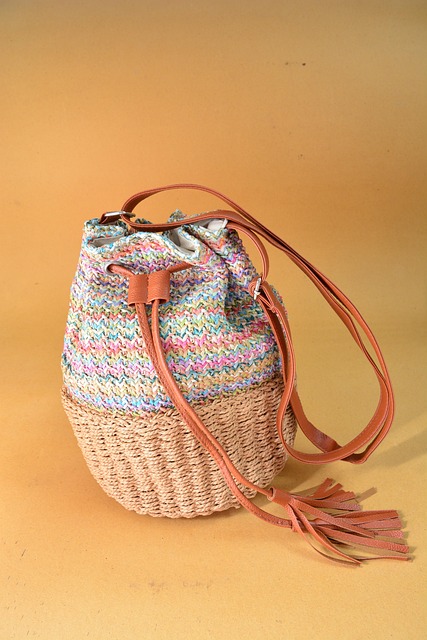
    Pastel striped crochet bucket bag with leather tassel straps on yellow background — handmade boho purse with woven texture
    This is where logic bends into entrepreneurship. You bought the PDF once. You made the bag. Your friend saw it. Your friend wants one. You have the PDF. You have the yarn. You have the Netflix subscription.
    The pattern economy works like this: one PDF = infinite bags. Unlike a physical book that wears out, a digital pattern is immortal. You can make the tote in pink for spring, in black for winter, in mustard for fall. You can make a mini version for your niece. You can omit the bottom panel and turn it into a pillowcase. The PDF is not a recipe for one meal. It is a cooking class.
    Sizing variations from one pattern:
    • Mini: Stop after Row 20. Add a zipper. Crossbody bag.
    • Maxi: Add 10 rows to the body and 4 rows to the depth. Market tote.
    • Clutch: Work only the front panel, fold in half, add a magnetic snap. Evening bag.
    Time investment: A color-blocked tote takes 6–8 hours for a confident beginner. That is two movies, one podcast series, or four episodes of a reality show you will not admit to watching. The bag outlasts all of them.

    The 5 Mistakes That Ruin a Boutique-Style Tote

    1. Skipping the gauge swatch
    If the pattern says 16 stitches = 4 inches and yours is 14 stitches = 4 inches, your bag will be a bucket. Not a tote. A bucket. Swatch. Block. Measure. Then proceed.
    2. Using the wrong yarn
    Worsted-weight cotton is non-negotiable for structure. DK will drape like a dress. Bulky will look like a dog bed. Sport weight will require a lining so thick it defeats the purpose.
    3. No bottom reinforcement
    A crochet tote without a base is a black hole. Cut a piece of plastic canvas or foam board to the bag’s bottom dimensions. Cover in fabric. Slip inside. Your bag will stand upright. Your dignity will remain intact.
    4. Loose handles
    Crocheted straps stretch. It is physics. It is destiny. Reinforce them with a fabric tube inside or use purchased leather/cotton webbing handles attached with metal hardware.
    5. Forgetting the lining
    Unlined crochet bags eat your keys, your lip balm, and your patience. A simple cotton muslin lining with a slip pocket takes 30 minutes and elevates the bag from “homemade” to “artisan.”

    Epilogue: Carry the Curriculum

    So here is the truth, delivered with the gentleness of pastel yarn against a marble table:
    You do not need another black bag from a factory. You need a bag that tells a story — about the evening you learned front post double crochet, about the podcast that made you laugh so hard you dropped a stitch, about the QR code that turned a Tuesday into a talent.
    Download the PDF. Buy the yarn in colors that make no logical sense together but somehow sing. Make the tassel. Attach the tag. Carry it to the farmers’ market. Carry it to the coffee shop. Carry it like the diploma it is.
    Because the crochet tote that carries your whole aesthetic is not an accessory. It is a transcript of your patience.
    Now grab your hook. The gradient is waiting.

    Happy crocheting.
  • 🪡 The Bag That Ate My Weekend

    🪡 The Bag That Ate My Weekend

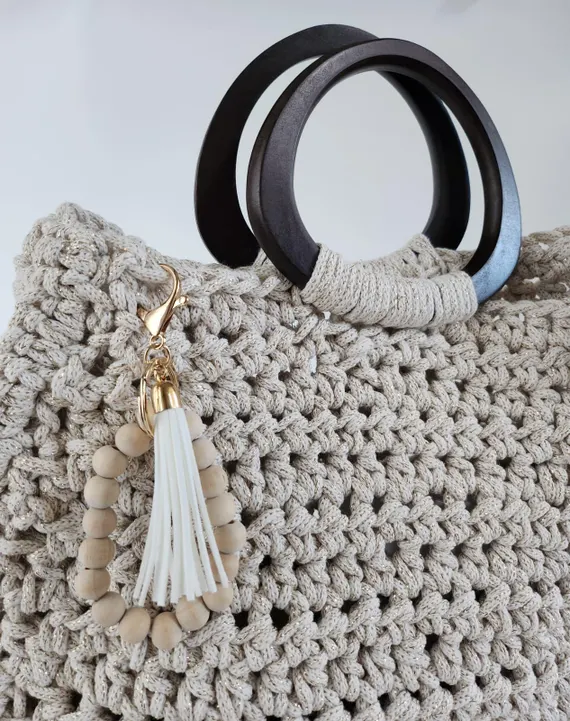
    White Crochet Bag With Wooden Handle Or: How 847 Beads and One Stubborn Thread Taught Me the Meaning of Life

      Disclosure: This post contains affiliate links to Creative Fabrica. I only recommend products I genuinely lovethis complete PDF and video crochet pattern for a beaded bag

    The bag that started it all. 847 beads. Zero regrets. Infinite chaos.

    Chapter 1: The Photo That Ruined My Life

    It was 2 AM. I was scrolling Instagram. You know the drill.
    And then — it appeared. A bag. Not just any bag. A bag that looked like it had been crocheted by a fairy godmother with a PhD in engineering. Tiny beads. Perfect texture. The kind of bag that whispers: “You could never make me.”
    I screenshot it. I stared at it. I did the thing where you zoom in on the stitches and try to reverse-engineer the pattern with your eyes.
    Then I did something stupid.
    I said: “I bet I could make that.”
    Famous last words.

    Chapter 2: The Anatomy of an Obsession

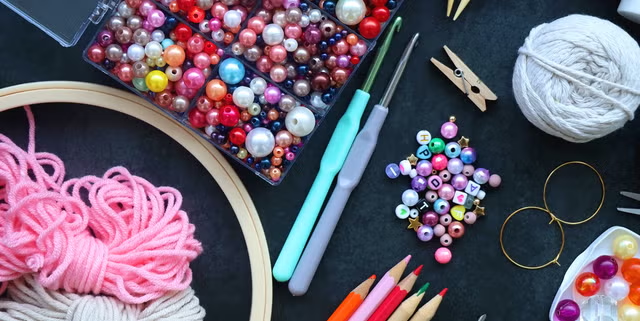
    Bead crochet: How to add beads to your next crochet project
    The tools of madness. Beads. Hooks. Yarn. And a dream that would soon become a nightmare.
    Here’s what nobody tells you about beaded crochet: it’s not crochet with beads. It’s beads with crochet.
    The beads come first. All 847 of them. One by one. Threaded onto the yarn like tiny, colorful prisoners being marched onto a fiber highway. My fingers went numb. My eyes crossed. I developed a weird relationship with a needle that I will not discuss in polite company.
    And then — the actual crocheting.
    Each stitch requires you to slide a bead into place, hold it with your thumb, loop the yarn, pull through, and pray. Pray that the bead doesn’t flip. Pray that the tension is right. Pray that you didn’t just miscount and ruin the entire row.
    I prayed a lot that weekend.
    Hour 1: This is fun! Look at the beads! So shiny!
    Hour 4: Why is my left hand cramping? Why do I smell like metal?
    Hour 8: I have become one with the bead. The bead is me. I am the bead.
    Hour 12: I can see through time.

    Chapter 3: The Physics of Impatience

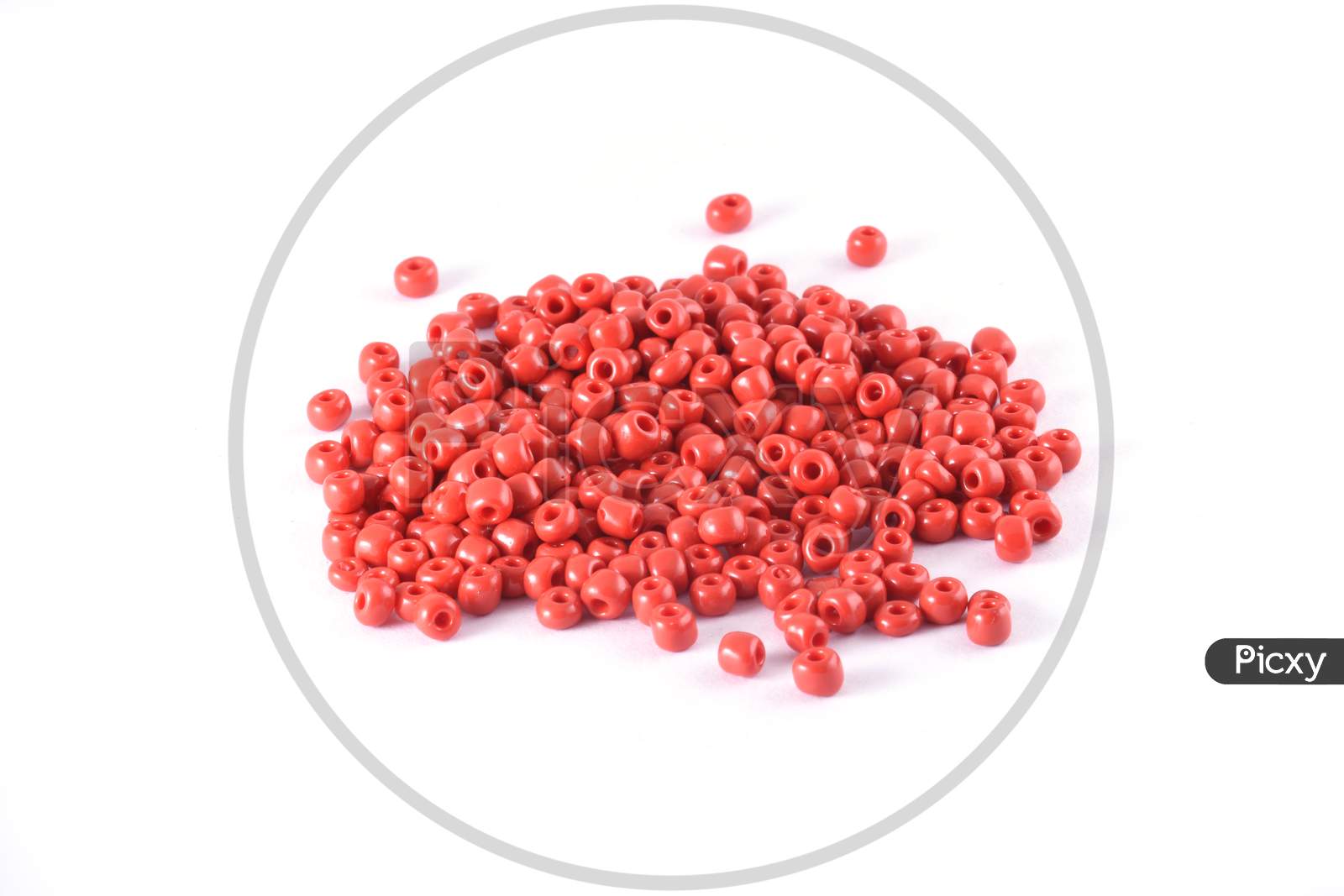
    Image of Beads Spread On White Background. Background Or Texture Of Beads. Close  Up, Macro,It Is Used In Finishing Fashion Clothes. Make Bead Necklace Or  Beads For Woman Of Fashion,Bead Crochet. Daily
    Close-up of beads — each one a tiny rebellion against instant gratification.
    Let me explain something about beaded crochet using math that I don’t understand.
    A regular crochet bag? Maybe 2,000 stitches. Each stitch takes, say, 2 seconds. That’s… checks calculator …a reasonable amount of time.
    A beaded crochet bag? Each stitch takes 8 seconds. Because of the bead. Because of the sliding. Because of the praying. That’s 16,000 seconds. Which is 4.4 hours. Which is just the stitching. Not counting the threading. Not counting the frogging. Not counting the existential crisis at hour 6 when you realize you threaded the beads in the wrong order and have to start over.
    I started over three times.
    Three.
    Times.
    But here’s the thing — and this is the part that breaks my brain — the struggle is the point.
    In a world where you can buy a bag in 3 clicks and get it tomorrow, the act of making one bead by bead is an act of rebellion. It’s saying: “I don’t want fast. I want mine.”
    And when you finish? When you hold that bag in your hands and feel the weight of every single bead? It’s not just a bag. It’s a time capsule. It’s proof that you can do hard things. Slowly. Deliberately. Beautifully.

    Chapter 4: The Reveal (AKA: Why I Cried in Public)

    Jute Crochet Bag Canvas Tote Bag Market Bag Beige Basket Bag Natural Jute Tote  Bag Wooden Handle Tote Bag Crochet Jute Tote Bag
    The finished object — proof that patience is still a thing that exists.
    I finished the bag on a Sunday evening. My apartment looked like a craft store had exploded. There were beads in the couch. Beads in my hair. Beads in places I didn’t know beads could go.
    I didn’t care.
    I hung the bag on my turquoise wooden wall — the one I’d painted specifically for Instagram photos because I’m that person now — and I just… stared at it.
    The texture. The drape. The way the beads caught the light like tiny diamonds. The way the bag looked both vintage and brand new at the same time. Like something from a grandmother’s attic that had been waiting for me to find it.
    I took a photo. Posted it. Went to bed.
    I woke up to 200 notifications.
    “Where did you buy that?!”
    “Is that handmade?!”
    “TEACH ME.”
    And my favorite: “That looks like it belongs in a boutique.”
    I didn’t tell them it belonged in a boutique. I told them it belonged in my hands first. That I made it. That they could make it too. That the thing that looks impossible is just a series of very small, very possible steps.
    I cried a little. Not gonna lie.

    Chapter 5: Where the Magic Actually Lives

    The bead crochet purse — where engineering meets obsession.
    Here’s what I learned from this whole beaded adventure: the magic isn’t in the finished bag.
    I know. Shocking. Bear with me.
    The magic is in hour 3, when your fingers finally learn the rhythm and you stop thinking about each stitch. The magic is in hour 7, when you look down and realize you’ve made 6 inches of fabric out of nothing but beads and stubbornness. The magic is in the moment you finish the last stitch and your brain goes: “Wait. I actually did that.”
    The bag is just the souvenir. The proof. The thing you carry to the grocery store so the cashier can say “I love your bag” and you can smile and say “Thanks, I made it” and watch their face do the thing.
    You know the thing. The “what do you mean you MADE it?!” thing.
    That thing is worth every single bead.

    Chapter 6: The Pattern That Saved My Sanity

    The workspace of a maker — where dreams are built one bead at a time.
    Okay, real talk. I didn’t wing this bag. I’m not a crochet wizard. I used a pattern.
    A good pattern for beaded crochet is like a GPS for a road trip through a country where you don’t speak the language. It tells you when to turn. When to stop. When to thread the beads and when to just crochet and when to question every life choice that led you to this moment.
    The pattern I used was perfect. It had diagrams. It had photos. It had that rare quality of being detailed enough to hold your hand but not so detailed that it treats you like a child who can’t be trusted with a hook.
    It also had a video tutorial. Which I watched approximately 47 times. At 0.5 speed. While pausing and rewinding and pausing and rewinding until I could do the stitch in my sleep.
    If you’re looking at this bag and thinking “I could never” — I thought the exact same thing. And I was wrong. The pattern proved me wrong.
    If you want to create your own version of this beaded beauty — whether for yourself, for a gift, or just to prove that you can do hard things — here’s the exact pattern that made it possible: this Crochet Bag with Beads Pattern in PDF format with video tutorial. It’s detailed, beginner-friendly, and walks you through every bead, every stitch, and every moment of doubt.

    Chapter 7: The Unexpected Side Effects

    The boho crochet bag on the beach — where handmade meets wanderlust.
    Making this bag had consequences I didn’t see coming.
    Consequence 1: I now notice beads everywhere. On dresses. On jewelry. On the curtains at my friend’s house. I have become a bead-detector. It’s a curse.
    Consequence 2: I have developed a reputation. I’m “the friend who makes things.” This means I get invited to more craft nights and fewer “let’s just go to the bar” nights. I’m not complaining.
    Consequence 3: My sister saw the bag and said “I want one but in blue.” I am now making a blue beaded bag. Send help. And more beads.
    Consequence 4: I have become emotionally attached to an inanimate object. I talk to my bag. I pat it before I leave the house. I get anxious when I can’t find it. This is fine. Everything is fine.

    Chapter 8: The Philosophy of Beads

    Yellow beads — each one a tiny decision, a tiny commitment, a tiny victory.
    Let me get philosophical for a second.
    Why does a beaded bag matter? In a world where you can buy a perfectly good bag for $30 at Target, why spend a weekend threading beads and crocheting until your fingers go numb?
    Here’s my theory: beaded bags are time made visible.
    Each bead is a moment. A decision. A tiny commitment to beauty over convenience. When you look at a beaded bag, you’re not just seeing an object. You’re seeing hours. Days. The Netflix episodes that played in the background. The coffee that went cold. the moment you almost gave up but didn’t.
    You can’t buy that. You can’t download it. You can’t subscribe to it.
    You can only make it.
    And that — that act of making, of choosing slowness in a fast world — is the most radical thing you can do with a weekend.

    Chapter 9: Your Turn to Make Time Visible

    The vintage crochet bag — proof that handmade never goes out of style.
    So here’s my challenge to you.
    Not “go buy beads.” Not “become a crochet master overnight.”
    Just this: make one thing. One hard thing. One thing that takes longer than you think it should. One thing that makes you want to quit at hour 4 but finish at hour 12.
    Start with a bag. A beaded crochet bag that looks impossible but isn’t. That looks boutique but is actually just you, a hook, and 847 tiny acts of patience.
    If you need a place to start — a pattern that holds your hand through the bead-threading, the stitch-learning, and the inevitable “why am I doing this” moments — here’s the one I used: this complete PDF and video crochet pattern for a beaded bag. It comes with step-by-step instructions, a video tutorial, and the kind of encouragement that makes you believe you can actually thread 847 beads without losing your mind.
    Because you can. I promise. If I can turn a 2 AM Instagram scroll into a bag that makes strangers stop me on the street, you can too.

    Epilogue: The Bag Lives On

    The bag that ate my weekend — and gave me something irreplaceable in return.
    It’s been two months since I finished the bag.
    The beads have settled into their places. The yarn has softened. The bag has developed that worn-in patina that only handmade things get — the kind that makes it look like it has stories to tell.
    And it does.
    It tells the story of a weekend spent making something instead of consuming something. Of fingers that learned a new language. Of a 2 AM impulse that turned into a tangible, beautiful, mine thing.
    I still carry it everywhere. To the grocery store. To coffee. To the park where I sit and crochet other things while people walk by and sometimes stop and ask: “Where did you get that bag?”
    And I always smile and say: “I made it.”
    And then I watch their face do the thing.
    The hook is in your hands now.
    What will you make?