
Or: Why Your $4 Skein Can Pass for a $400 Sweater
There is a quiet conspiracy in the yarn aisle. The expensive skeins whisper that they alone hold the secret to luxury. The hand-dyed merino batts its eyelashes. The baby alpaca plays hard to get. And we fall for it—every time—believing that price tag equals prestige.
It doesn’t.
The difference between a sweater that looks like it came from a boutique in Copenhagen and one that looks like a craft-fair leftover rarely has anything to do with the fiber. It has to do with decisions. Specific, deliberate choices that anyone can make, even with the most basic yarn on the bottom shelf.
Let me show you what they are.
Or: Why Your $4 Skein Can Pass for a $400 Sweater
There is a quiet conspiracy in the yarn aisle. The expensive skeins whisper that they alone hold the secret to luxury. The hand-dyed merino batts its eyelashes. The baby alpaca plays hard to get. And we fall for it—every time—believing that price tag equals prestige.
It doesn’t.
The difference between a sweater that looks like it came from a boutique in Copenhagen and one that looks like a craft-fair leftover rarely has anything to do with the fiber. It has to do with decisions. Specific, deliberate choices that anyone can make, even with the most basic yarn on the bottom shelf.
Let me show you what they are.
The 5 Stitches That Always Look Expensive
Google loves a list. Your wardrobe loves it even more. If you want your knitting to whisper money instead of screaming effort, these five stitches are your best friends:
1. Ribbing (1×1 or 2×2)
Clean, vertical lines. Ribbing creates structure. It pulls fabric inward, giving garments a tailored edge that reads as intentional design rather than homemade bulk. Use it at cuffs, hems, and collars. It frames the piece like a good haircut frames a face.
2. Stockinette
The plainest stitch in the book—and the most elegant when executed well. Stockinette demands tension discipline. Uneven rows show up immediately, which is exactly why perfect stockinette looks machine-made and high-end. It is the white T-shirt of knitting: simple, but only impressive when flawless.
3. Moss Stitch
Also called seed stitch, though purists will argue the difference. Tiny, alternating bumps create a pebbled texture that catches light like expensive bouclé fabric. It is visually busy without being chaotic, and it hides minor tension sins better than stockinette. A moss-stitch scarf in oatmeal yarn looks like it cost three times what you paid.
4. Fisherman Rib
Thick, plush, and deeply dimensional. Fisherman rib creates a fabric with natural weight and shadow. It eats yarn, yes, but the result is a sweater that looks like it was poured rather than knitted. It is the architectural equivalent of a cashmere overcoat—substantial, quiet, and undeniably expensive.
5. Cable Stitch (Simple Variations)
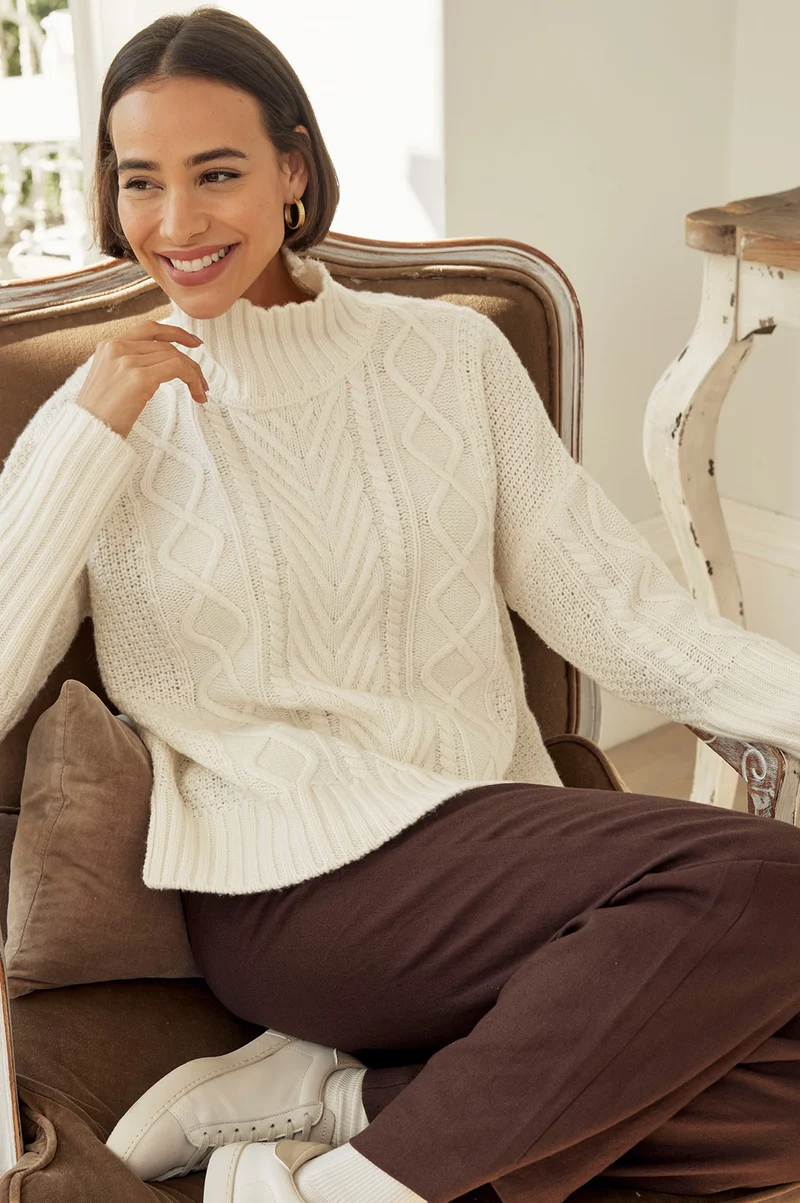
Not the rainbow fair-isle yoke. Not the lace doily. A single, bold cable running up the front of a cream cardigan is all you need. Cables add verticality and heritage. They reference Aran sweaters and Scottish estates. One strong cable panel beats a dozen fussy embellishments every time.
Master these five, and you have a toolkit that will outdress any novelty yarn on the market.
Google loves a list. Your wardrobe loves it even more. If you want your knitting to whisper money instead of screaming effort, these five stitches are your best friends:
1. Ribbing (1×1 or 2×2)
Clean, vertical lines. Ribbing creates structure. It pulls fabric inward, giving garments a tailored edge that reads as intentional design rather than homemade bulk. Use it at cuffs, hems, and collars. It frames the piece like a good haircut frames a face.
Clean, vertical lines. Ribbing creates structure. It pulls fabric inward, giving garments a tailored edge that reads as intentional design rather than homemade bulk. Use it at cuffs, hems, and collars. It frames the piece like a good haircut frames a face.
2. Stockinette
The plainest stitch in the book—and the most elegant when executed well. Stockinette demands tension discipline. Uneven rows show up immediately, which is exactly why perfect stockinette looks machine-made and high-end. It is the white T-shirt of knitting: simple, but only impressive when flawless.
The plainest stitch in the book—and the most elegant when executed well. Stockinette demands tension discipline. Uneven rows show up immediately, which is exactly why perfect stockinette looks machine-made and high-end. It is the white T-shirt of knitting: simple, but only impressive when flawless.
3. Moss Stitch
Also called seed stitch, though purists will argue the difference. Tiny, alternating bumps create a pebbled texture that catches light like expensive bouclé fabric. It is visually busy without being chaotic, and it hides minor tension sins better than stockinette. A moss-stitch scarf in oatmeal yarn looks like it cost three times what you paid.
Also called seed stitch, though purists will argue the difference. Tiny, alternating bumps create a pebbled texture that catches light like expensive bouclé fabric. It is visually busy without being chaotic, and it hides minor tension sins better than stockinette. A moss-stitch scarf in oatmeal yarn looks like it cost three times what you paid.
4. Fisherman Rib
Thick, plush, and deeply dimensional. Fisherman rib creates a fabric with natural weight and shadow. It eats yarn, yes, but the result is a sweater that looks like it was poured rather than knitted. It is the architectural equivalent of a cashmere overcoat—substantial, quiet, and undeniably expensive.
Thick, plush, and deeply dimensional. Fisherman rib creates a fabric with natural weight and shadow. It eats yarn, yes, but the result is a sweater that looks like it was poured rather than knitted. It is the architectural equivalent of a cashmere overcoat—substantial, quiet, and undeniably expensive.
5. Cable Stitch (Simple Variations)
Not the rainbow fair-isle yoke. Not the lace doily. A single, bold cable running up the front of a cream cardigan is all you need. Cables add verticality and heritage. They reference Aran sweaters and Scottish estates. One strong cable panel beats a dozen fussy embellishments every time.
Not the rainbow fair-isle yoke. Not the lace doily. A single, bold cable running up the front of a cream cardigan is all you need. Cables add verticality and heritage. They reference Aran sweaters and Scottish estates. One strong cable panel beats a dozen fussy embellishments every time.
Master these five, and you have a toolkit that will outdress any novelty yarn on the market.
The Color Trap
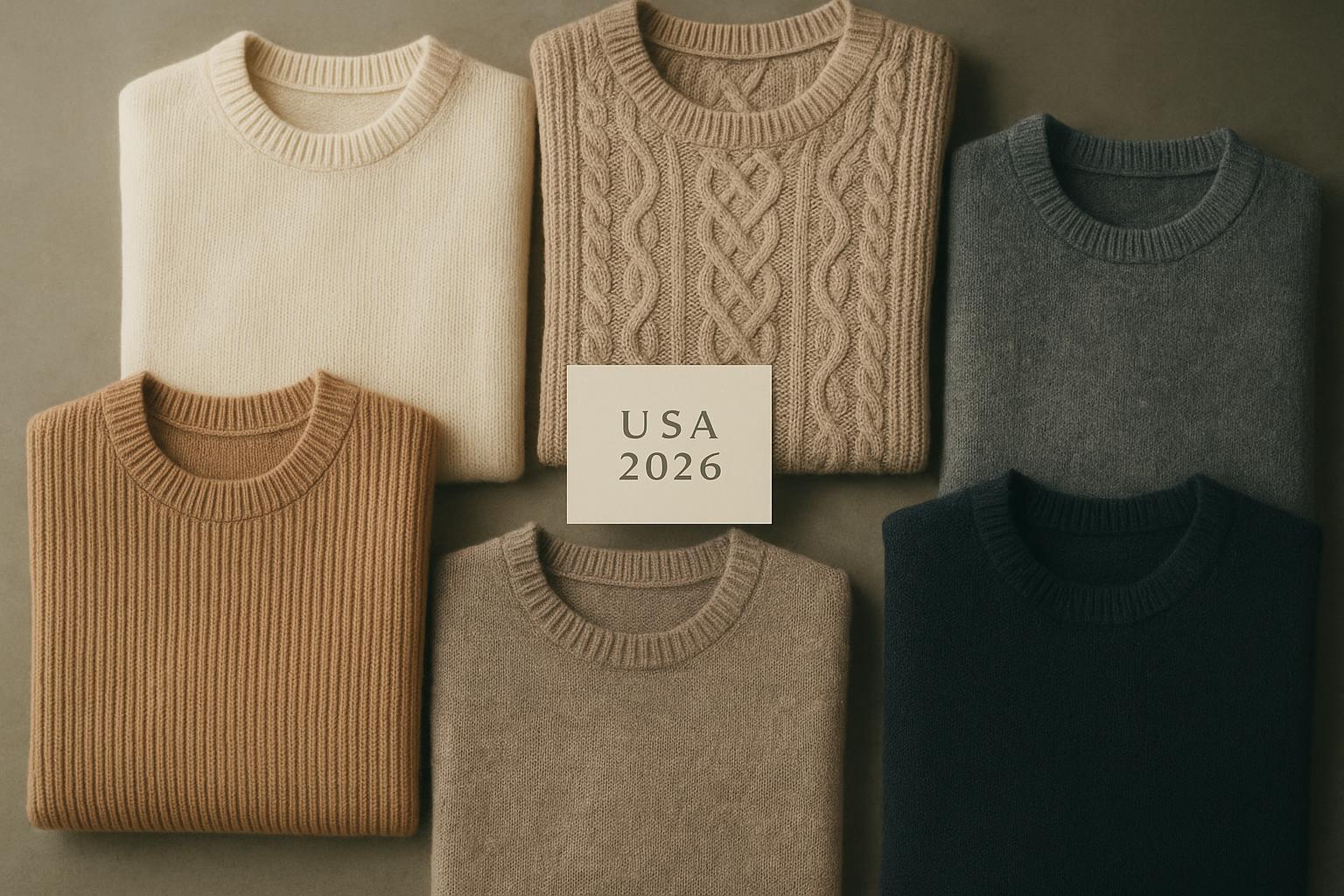
Walk into a luxury boutique. What do you see? Beige. Oatmeal. Charcoal. Bone. Navy. Camel. Maybe, if the designer is feeling wild, a dusty olive.
Now walk into a yarn store. It is a carnival of fuchsia, teal, and variegated rainbow sparkle. Here is the thing: that hand-dyed rainbow skein is beautiful. It is art. But it will never look expensive. It will look handmade. There is a difference.
Expensive-looking knitwear relies on neutrals because neutrals unify stitches. A complex cable in bright red looks busy. The same cable in oatmeal looks architectural. The stitches have not changed. Only the canvas has.
Your palette is small: cream, taupe, heather gray, black, navy, camel, rust. These colors let the texture speak. And texture, when it is good, does not need to shout.
Walk into a luxury boutique. What do you see? Beige. Oatmeal. Charcoal. Bone. Navy. Camel. Maybe, if the designer is feeling wild, a dusty olive.
Now walk into a yarn store. It is a carnival of fuchsia, teal, and variegated rainbow sparkle. Here is the thing: that hand-dyed rainbow skein is beautiful. It is art. But it will never look expensive. It will look handmade. There is a difference.
Expensive-looking knitwear relies on neutrals because neutrals unify stitches. A complex cable in bright red looks busy. The same cable in oatmeal looks architectural. The stitches have not changed. Only the canvas has.
Your palette is small: cream, taupe, heather gray, black, navy, camel, rust. These colors let the texture speak. And texture, when it is good, does not need to shout.
Density Over Decoration
Loose knitting looks cheap. Tight knitting looks expensive. This is not a judgment on style—it is a visual fact. Dense fabric creates shadows between stitches. Shadows create depth. Depth reads as weight, quality, and intention.
The simplest way to elevate basic yarn is to go down a needle size. If the pattern calls for a US 8, try a US 6. Your hands will work harder. The fabric will thank you. A dense stockinette in cheap cotton-blend can feel almost like a luxury knit when it has that compact, firm hand.
Conversely, the lacy, airy shawl you spent forty hours on? It might look like a dishcloth that had an identity crisis if the tension is uneven. Airiness is not the enemy, but it is harder to control. If you want foolproof elegance, knit tight.
Loose knitting looks cheap. Tight knitting looks expensive. This is not a judgment on style—it is a visual fact. Dense fabric creates shadows between stitches. Shadows create depth. Depth reads as weight, quality, and intention.
The simplest way to elevate basic yarn is to go down a needle size. If the pattern calls for a US 8, try a US 6. Your hands will work harder. The fabric will thank you. A dense stockinette in cheap cotton-blend can feel almost like a luxury knit when it has that compact, firm hand.
Conversely, the lacy, airy shawl you spent forty hours on? It might look like a dishcloth that had an identity crisis if the tension is uneven. Airiness is not the enemy, but it is harder to control. If you want foolproof elegance, knit tight.
The Blocking Secret
Here is the step most knitters skip, and it is the step that separates “nice” from bespoke.
Blocking is not optional. It is not a finishing touch. It is a transformation. When you block a hand-knit piece, you are not just washing it. You are setting the stitches into their final formation. You are telling the fabric: This is your shape. Remember it.
Wool has memory. Acrylic has stubbornness. Both benefit from blocking. Soak the finished piece in lukewarm water with a drop of wool wash. Press out moisture gently—never wring. Lay it flat on a towel or blocking mat. Pin the edges to the exact dimensions you want. Walk away. Let it dry completely.
A misshapen sweater becomes a garment with shoulders. A curling scarf becomes a clean rectangle. A wobbly hat becomes a structured beanie. Blocking is the difference between I made this and I had this made.
Here is the step most knitters skip, and it is the step that separates “nice” from bespoke.
Blocking is not optional. It is not a finishing touch. It is a transformation. When you block a hand-knit piece, you are not just washing it. You are setting the stitches into their final formation. You are telling the fabric: This is your shape. Remember it.
Wool has memory. Acrylic has stubbornness. Both benefit from blocking. Soak the finished piece in lukewarm water with a drop of wool wash. Press out moisture gently—never wring. Lay it flat on a towel or blocking mat. Pin the edges to the exact dimensions you want. Walk away. Let it dry completely.
A misshapen sweater becomes a garment with shoulders. A curling scarf becomes a clean rectangle. A wobbly hat becomes a structured beanie. Blocking is the difference between I made this and I had this made.
Fit & Silhouette
A poorly fitted hand-knit sweater looks like a well-meaning gift from a relative. A perfectly fitted one looks like it came from a tailor on Savile Row.
But here is a secret: the easiest shapes often look the most expensive. Drop shoulders. Slightly oversized but structured bodies. Cropped lengths with long sleeves. These silhouettes require minimal shaping—beginner-friendly construction—but they read as modern and editorial.
The boxy cardigan from 1998 is not coming back. But a boxy cardigan with clean ribbing, dense stockinette, and a neutral color? That is contemporary. That is intentional. That is what people pay $300 for in stores.
A poorly fitted hand-knit sweater looks like a well-meaning gift from a relative. A perfectly fitted one looks like it came from a tailor on Savile Row.
But here is a secret: the easiest shapes often look the most expensive. Drop shoulders. Slightly oversized but structured bodies. Cropped lengths with long sleeves. These silhouettes require minimal shaping—beginner-friendly construction—but they read as modern and editorial.
The boxy cardigan from 1998 is not coming back. But a boxy cardigan with clean ribbing, dense stockinette, and a neutral color? That is contemporary. That is intentional. That is what people pay $300 for in stores.

The Final Touch: Presentation
Your knitting is finished. It is blocked. It fits. Now what?
A hand-knit scarf stuffed in a plastic bag looks like a craft project. The same scarf folded neatly on a wooden hanger, photographed in morning light with a cup of coffee nearby, looks like an editorial spread. Context is the final ingredient.
If you are selling your work, photograph it on a real body or a good mannequin. Shoot in natural light. Use neutral backgrounds. If you are keeping it for yourself, store it folded in a cotton bag with a cedar block. Treat it like an heirloom, and it will become one.
Your knitting is finished. It is blocked. It fits. Now what?
A hand-knit scarf stuffed in a plastic bag looks like a craft project. The same scarf folded neatly on a wooden hanger, photographed in morning light with a cup of coffee nearby, looks like an editorial spread. Context is the final ingredient.
If you are selling your work, photograph it on a real body or a good mannequin. Shoot in natural light. Use neutral backgrounds. If you are keeping it for yourself, store it folded in a cotton bag with a cedar block. Treat it like an heirloom, and it will become one.
The Bottom Line
Expensive-looking knitwear is not about money. It is about restraint.
Dense stitches, not complicated ones.
Neutral colors, not loud ones.
Simple shapes, not fussy ones.
And the patience to block, fit, and present with care.
The most radical thing you can do as a knitter is to pick up that “boring” affordable yarn in the most neutral color on the shelf. Knit it tightly. Block it aggressively. Wear it with confidence.
The world will assume it is designer. And in a way, it is.
Expensive-looking knitwear is not about money. It is about restraint.
Dense stitches, not complicated ones.
Neutral colors, not loud ones.
Simple shapes, not fussy ones.
And the patience to block, fit, and present with care.
Neutral colors, not loud ones.
Simple shapes, not fussy ones.
And the patience to block, fit, and present with care.
The most radical thing you can do as a knitter is to pick up that “boring” affordable yarn in the most neutral color on the shelf. Knit it tightly. Block it aggressively. Wear it with confidence.
The world will assume it is designer. And in a way, it is.