Tag: crochet bag pattern

  • The Crochet Tote That Carries Your Whole Aesthetic

    The Crochet Tote That Carries Your Whole Aesthetic

    Handmade color-blocked crochet tote bag in pink, peach and lavender with tassel, leather tag and QR code pattern label on marble surface You do not buy this bag.
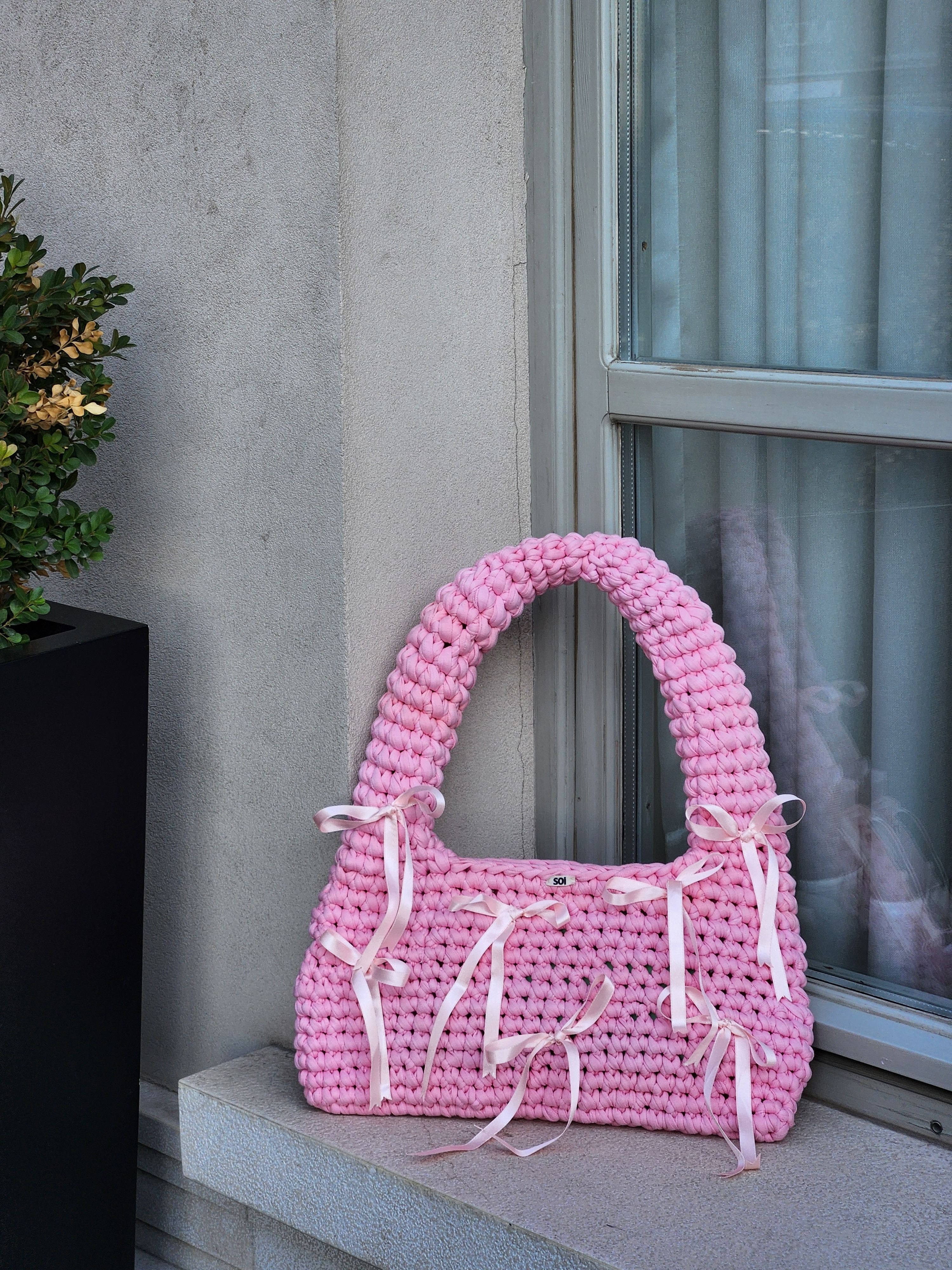
    You download its potential. You scan a code, open a PDF, and suddenly your evening has a purpose that has nothing to do with Netflix. Three hours later, your hands smell like cotton. Your couch is covered in yarn crumbs. And there — on the coffee table — is a tote bag in shades of strawberry, peach, and lavender that looks like it was born in a boutique, not on your lap.
    Welcome to the only accessory that comes with a QR code and a personality.
    In this article, you will learn:
    • Why color-blocked crochet totes are the easiest “wow” project for confident beginners
    • How to read a PDF pattern without throwing your hook across the room
    • The exact yarn weight and hook size for a structured bag that does not sag
    • How to attach a leather tag and tassel like a professional maker
    • The 5 mistakes that turn a boutique-style tote into a craft-fair casualty
    Now, let us talk about the bag that comes with homework.

    Part I: The Color Gradient Is a Mood Ring

    Look at it. Pink melting into peach melting into lavender — like a sunrise had a baby with a macaron. This is not just a color scheme. This is a mood gradient. The top is bubblegum optimism. The middle is peachy calm. The bottom is lavender introspection. You are not carrying a bag. You are carrying the emotional arc of a perfect Tuesday.
    Here is the paradox that breaks color theory: these three colors should clash. Pink and orange are neighbors on the wheel — they fight for attention. Purple is across the ring — it should create discord. But in pastel tones, at equal saturation, they form a truce. They become a gradient. And a gradient, in crochet, is the easiest way to look like you planned something complicated when you simply ran out of the first color and refused to go to the store.
    Practical tip: For a smooth color transition in a tote, work two rows of the new color while carrying the old color along the top of the stitches (tapestry crochet technique). This creates a clean line with no weaving-in later. Or — embrace the jogless stripe: change colors at the beginning of the row, chain one in the new color, and continue. The slight step is invisible after blocking.
    Yarn math: For a medium tote (12″ wide × 10″ tall × 3″ deep), you need approximately 200 yards of Color A, 150 yards of Color B, and 150 yards of Color C in worsted-weight cotton. Lily Sugar’n Cream or Paintbox Cotton DK work beautifully. Do not use acrylic — it stretches under weight and your tote will become a hammock by week three.

    Part II: The QR Code Is a Portal
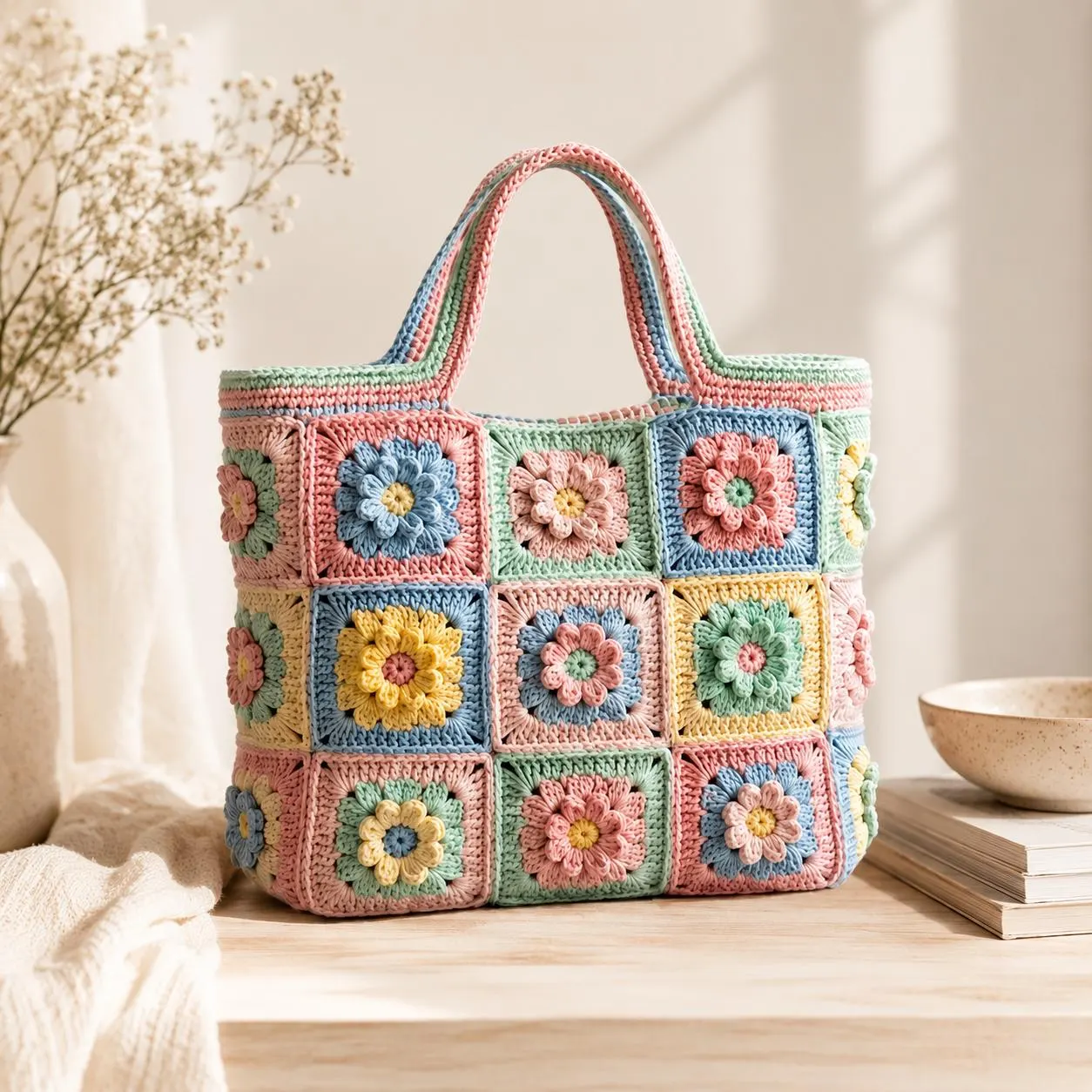
    Handmade pastel crochet tote bag with 3D flower granny squares in pink, blue, yellow and green — artisan floral crochet purse on wooden shelf with dried flowers
    There it is. A small paper tag, tied with twine, printed with a QR code that says “Download PDF Pattern.” This is the modern equivalent of a spell book. You point your phone at it, and a document appears — pages of abbreviations, stitch counts, and diagrams that look like hieroglyphics drawn by a very organized alien.
    But here is the twist: the QR code is not just a link. It is a permission slip. It gives you the right to make this exact thing. It transforms you from a consumer into a maker. Without the code, the bag is a product. With the code, it is a curriculum.
    How to read a PDF pattern without trauma:
    1. Print only the first page — the materials list and gauge swatch instructions. Everything else stays digital for zooming.
    2. Highlight your size — if the pattern offers multiple dimensions, highlight only your numbers. The rest is noise.
    3. Use a row counter app — your phone can track rows better than your memory, especially during Netflix.
    4. Stitch glossary first — if the pattern says “fpdc” and you do not know what that means, stop. Look it up. Do not guess. Front post double crochet is not intuitive.
    5. Save the PDF to a cloud folder named “Current Projects” so you can access it from any device when inspiration strikes at the dentist’s office.
    The megalogic of digital patterns: A PDF pattern costs $3–$8. The bag it produces would retail for $60–$90. That is a 1,000% return on investment — if you measure ROI in compliments per dollar.

    Part III: The Tassel Is a Signature
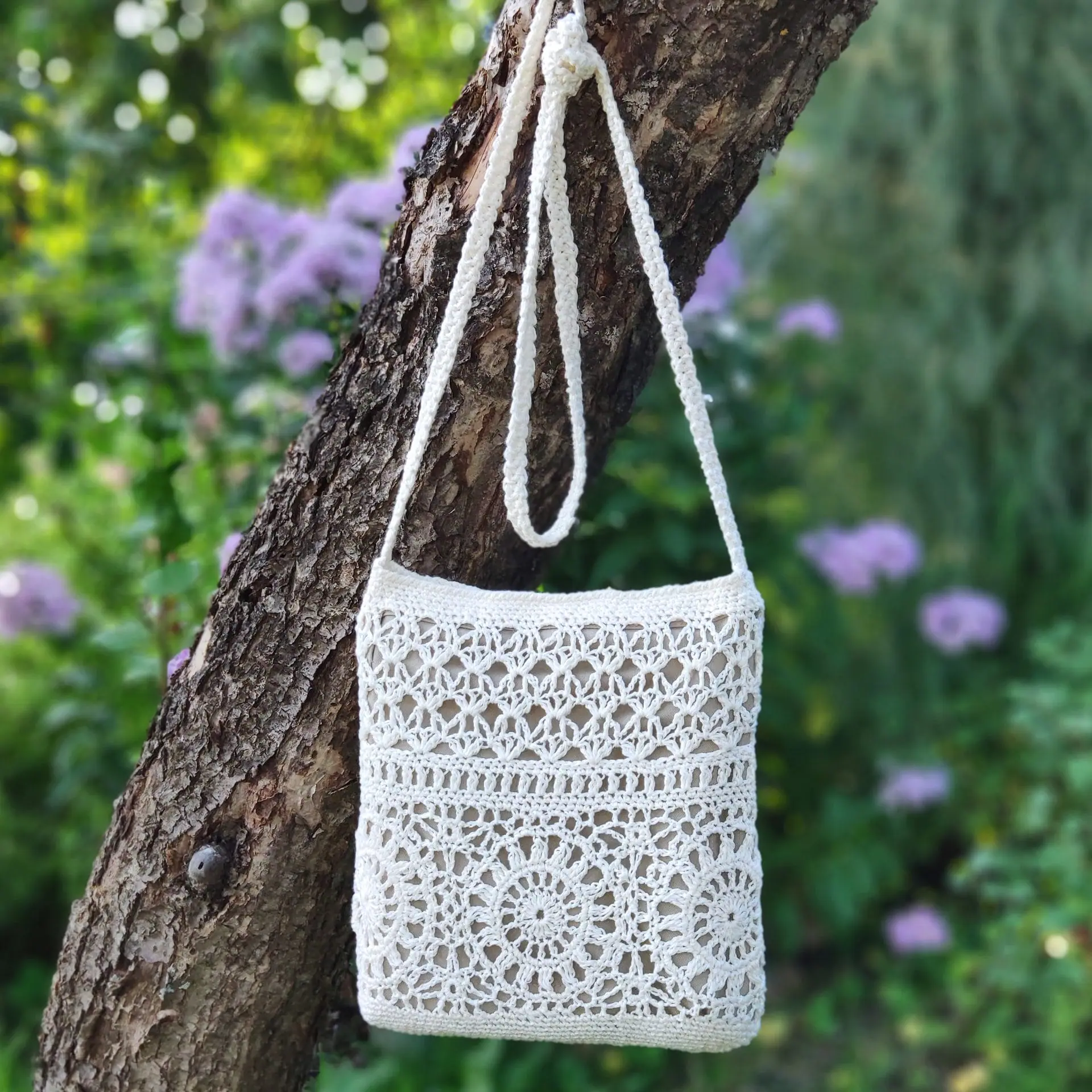
    Crochet summer small bag pattern Crochet handmade tutorial
    A tassel is not decoration. It is a period at the end of a sentence. It says, “This bag is finished, and I am proud enough to add one more thing.” The tassel on your tote — ombre, matching the gradient, tied with a leather cord — moves when you walk. It catches the breeze. It draws the eye downward, elongating the silhouette, making the bag look taller and more expensive than it is.
    Here is the practical magic: tassels take 10 minutes to make and add $20 to the perceived value. They are the cosmetic surgery of crochet accessories — minimal effort, maximum impact.
    How to make a professional tassel:
    1. Wrap yarn around a 4-inch piece of cardboard 30 times.
    2. Slide a separate 12-inch strand under the wraps and tie tightly at the top.
    3. Cut the bottom loops.
    4. Wrap another strand around the neck (1 inch below the top tie) 5 times. Knot. Hide ends inside.
    5. Attach to the bag with a jump ring (jewelry finding, $3 for 50 pieces) threaded through a reinforced stitch.
    The leather tag: If your bag has a “Handmade with Love” or “Download PDF” tag, attach it with a small brass screw post through a reinforced square of faux leather on the inside. Do not just sew it to the crochet — the weight will pull the stitches out. Create a leather sandwich: faux leather on the inside, crochet in the middle, tag on the outside, held together by the screw post.

    Part IV: From PDF to Shoulder — The Pattern Economy
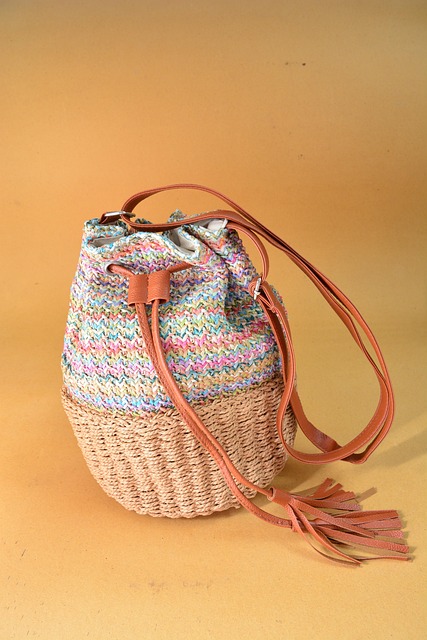
    Pastel striped crochet bucket bag with leather tassel straps on yellow background — handmade boho purse with woven texture
    This is where logic bends into entrepreneurship. You bought the PDF once. You made the bag. Your friend saw it. Your friend wants one. You have the PDF. You have the yarn. You have the Netflix subscription.
    The pattern economy works like this: one PDF = infinite bags. Unlike a physical book that wears out, a digital pattern is immortal. You can make the tote in pink for spring, in black for winter, in mustard for fall. You can make a mini version for your niece. You can omit the bottom panel and turn it into a pillowcase. The PDF is not a recipe for one meal. It is a cooking class.
    Sizing variations from one pattern:
    • Mini: Stop after Row 20. Add a zipper. Crossbody bag.
    • Maxi: Add 10 rows to the body and 4 rows to the depth. Market tote.
    • Clutch: Work only the front panel, fold in half, add a magnetic snap. Evening bag.
    Time investment: A color-blocked tote takes 6–8 hours for a confident beginner. That is two movies, one podcast series, or four episodes of a reality show you will not admit to watching. The bag outlasts all of them.

    The 5 Mistakes That Ruin a Boutique-Style Tote

    1. Skipping the gauge swatch
    If the pattern says 16 stitches = 4 inches and yours is 14 stitches = 4 inches, your bag will be a bucket. Not a tote. A bucket. Swatch. Block. Measure. Then proceed.
    2. Using the wrong yarn
    Worsted-weight cotton is non-negotiable for structure. DK will drape like a dress. Bulky will look like a dog bed. Sport weight will require a lining so thick it defeats the purpose.
    3. No bottom reinforcement
    A crochet tote without a base is a black hole. Cut a piece of plastic canvas or foam board to the bag’s bottom dimensions. Cover in fabric. Slip inside. Your bag will stand upright. Your dignity will remain intact.
    4. Loose handles
    Crocheted straps stretch. It is physics. It is destiny. Reinforce them with a fabric tube inside or use purchased leather/cotton webbing handles attached with metal hardware.
    5. Forgetting the lining
    Unlined crochet bags eat your keys, your lip balm, and your patience. A simple cotton muslin lining with a slip pocket takes 30 minutes and elevates the bag from “homemade” to “artisan.”

    Epilogue: Carry the Curriculum

    So here is the truth, delivered with the gentleness of pastel yarn against a marble table:
    You do not need another black bag from a factory. You need a bag that tells a story — about the evening you learned front post double crochet, about the podcast that made you laugh so hard you dropped a stitch, about the QR code that turned a Tuesday into a talent.
    Download the PDF. Buy the yarn in colors that make no logical sense together but somehow sing. Make the tassel. Attach the tag. Carry it to the farmers’ market. Carry it to the coffee shop. Carry it like the diploma it is.
    Because the crochet tote that carries your whole aesthetic is not an accessory. It is a transcript of your patience.
    Now grab your hook. The gradient is waiting.

    Happy crocheting.
  • The Crochet Bag That Carries Summer by the Handles

    The Crochet Bag That Carries Summer by the Handles

     You do not buy this bag.

    You harvest it. You harvest the color of late August wheat. The curve of bamboo that grew faster than your to-do list. The texture of stitches that look like they were pressed into clay by someone who had nowhere else to be.
    This is not an accessory. This is a season in bag form. And the season is now.

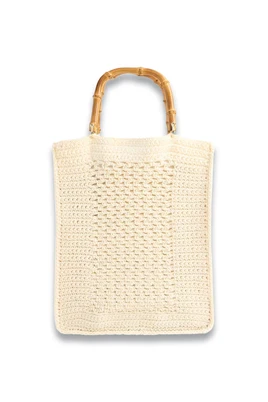
    Part I: Bamboo Handles Are a PhilosophyCream crochet tote bag with natural bamboo handles — minimalist handmade summer handbag on white background

    Look at the handles. Not leather. Not plastic. Not the cold aluminum of a thousand factory bags that all sigh the same sigh.
    Bamboo.
    Here is the first paradox: bamboo is technically a grass. It is not a tree. It does not grow rings or tell decades. It grows feet per day. It is the fastest-growing plant on earth, and yet — when you hold it — it feels ancient. Smooth. Warm. Slightly imperfect, with nodes that mark time the way a clock should: organically, unevenly, honestly.
    A plastic handle says: “I was molded in a mold.” A bamboo handle says: “I was a forest last year.” When you loop this bag over your arm, you are wearing evidence that speed and slowness can coexist. The bamboo grew in a hurry. The crochet took twelve hours. The bag is a treaty between them.
    And the weight distribution? Bamboo is hollow. It is light. It does not dig into your shoulder like a chain strap or a leather cord. It sits on your forearm like a bracelet made by a giant. You forget you are carrying anything — until someone stops you at the farmers’ market and asks where you got it.
    You smile. You say the four most satisfying words.

    Part II: The Texture Is a Lie Your Fingers Love

    Chunky neutral beige crochet bag with braided handles — textured handmade cotton tote in minimal style
    Now, the body. That raised, ridged pattern that looks like corduroy, like sand dunes, like the spine of a book you have not read yet.
    Here is the twist: this texture is functional deception. It looks heavy. It looks like it required industrial machinery and a patent. But it is just yarn. Cotton yarn, probably, or a cotton-linen blend, worked in front-post double crochet that pushes the stitches forward like bread rising.
    The ridges create shadows. In morning light, the bag looks carved. In afternoon light, it looks quilted. In evening light, it becomes a landscape of tiny valleys that your fingers cannot stop exploring. You will find yourself running your thumb across it while waiting in line, while talking on the phone, while pretending to listen to a podcast. It is tactile ASMR you can carry.
    But deeper than that: the texture hides wear. A smooth leather bag shows every scratch like a confession. This bag? A snag becomes part of the topography. A loose thread adds character. The texture is not just decoration. It is forgiveness made visible.
    You are not carrying a purse. You are carrying a geological formation that happens to hold your keys.

    Part III: Mustard Is the Color of Permission

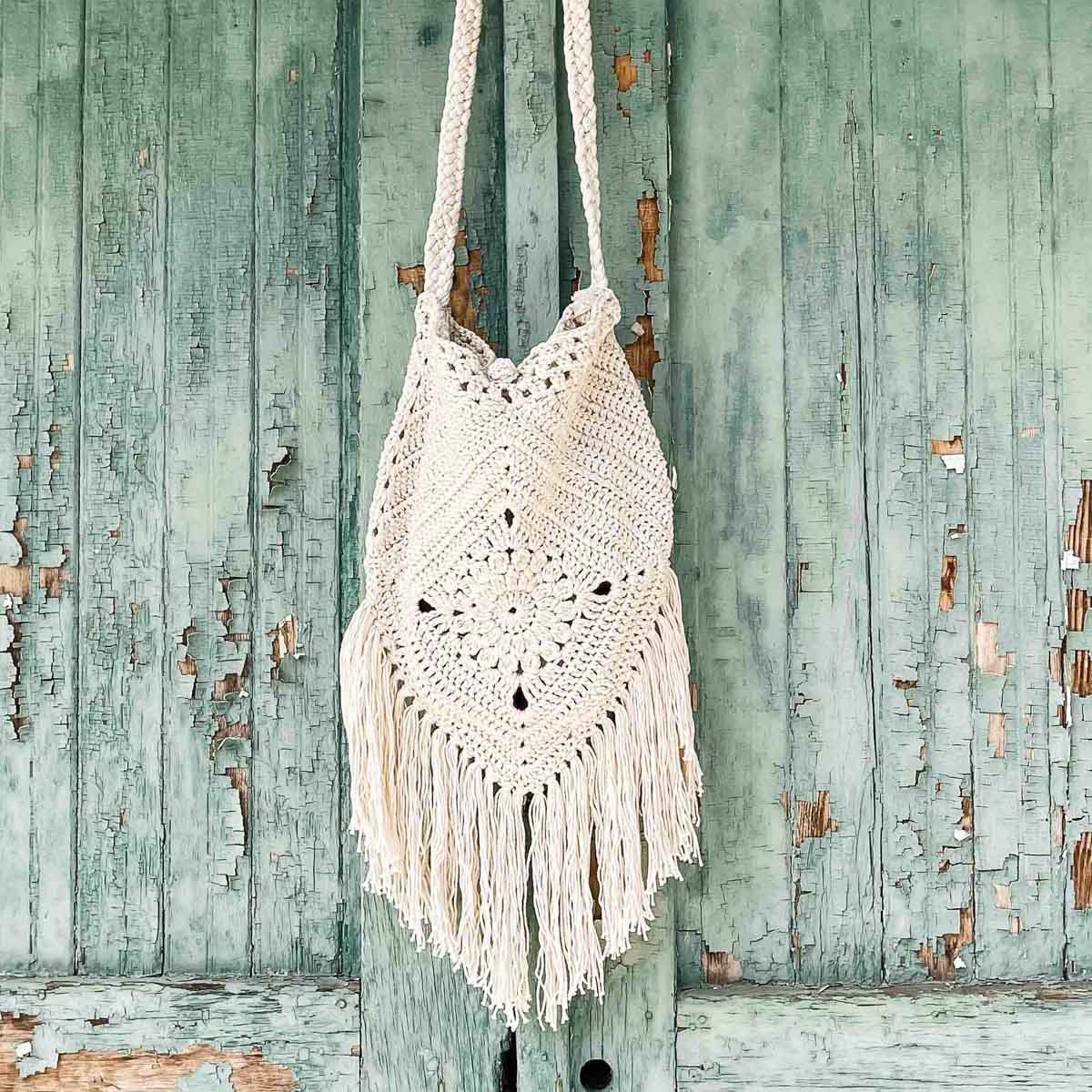
    White boho crochet bag with long fringe hanging on weathered turquoise wooden wall — handmade summer purse with tassels
    The color. Oh, the color.
    Not yellow. Yellow is a caution light, a sticky note, a child’s drawing. This is mustard. Olive-mustard. The color of Dijon in sunlight. The color of a field right before harvest. The color of “I am interesting but not trying to prove it.”
    Here is the megalogic that defeats the beige monopoly: mustard goes with everything you already own. With denim. With white. With black. With navy. With that floral dress you bought three summers ago and never knew what bag to pair it with. Mustard is not a statement color. It is a conversationalist color. It listens. It complements. It does not compete.
    And in crochet specifically, mustard has depth. The stitches catch light differently across the ridges, creating a gradient that factory dye cannot replicate. The top of a stitch is lighter. The shadow between stitches is darker. The bag is literally self-shading. It photographs like a painting. It ages like a spice — darker at the edges, richer in the center.
    You did not choose a color. You chose a mood that happens to be wearable.

    Part IV: The Bag That Gets Heavier (In the Best Way)

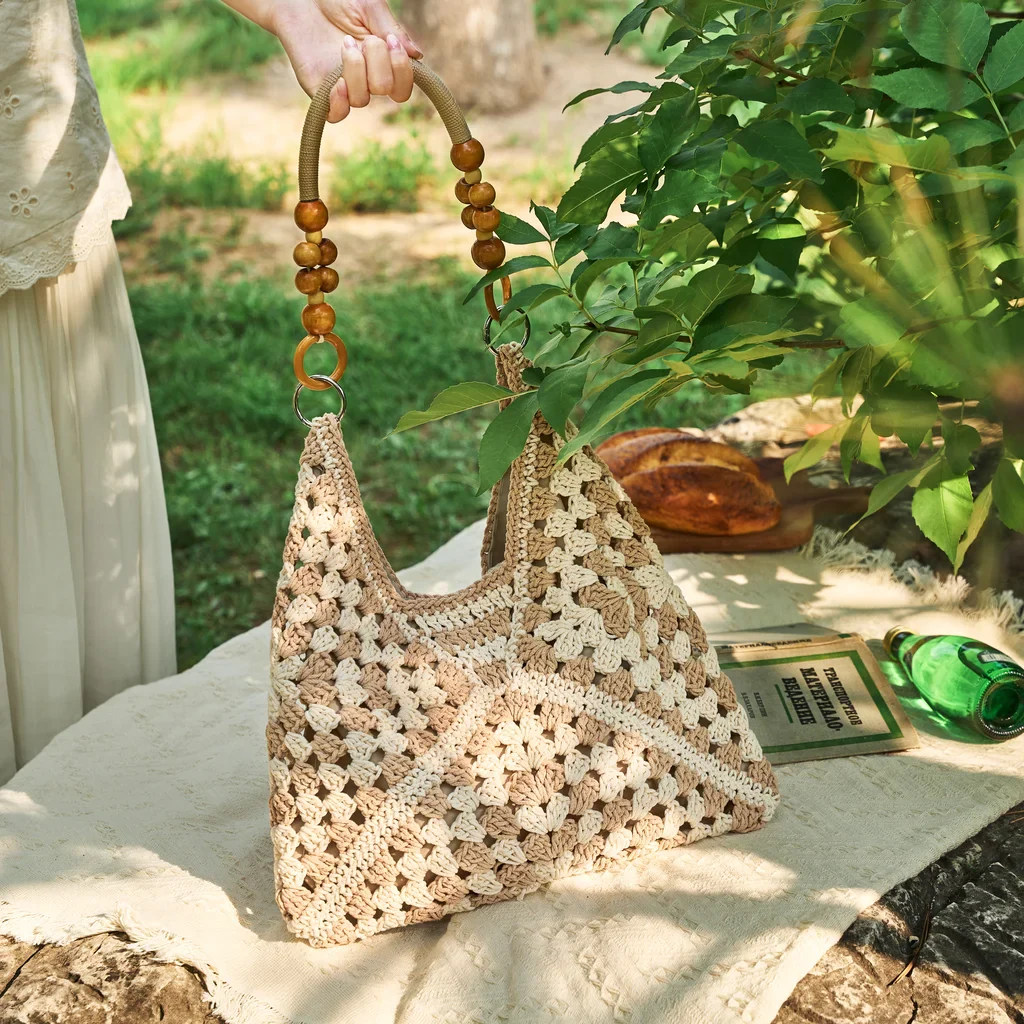
    Beige crochet bag with wooden bead handles on outdoor picnic blanket — handmade summer tote in garden setting
    A strange thing will happen to this bag over time.
    At first, it is empty. Light. A structure of air and cotton. But slowly — imperceptibly — it will fill with meaning. The ticket stub from the outdoor concert where it sat on the grass beside you. The pebble your niece gave you because it was “the color of your bag.” The lip balm you bought at a gas station in a town whose name you have already forgotten.
    The bag does not have pockets for these things. It has gravity. It attracts small memories the way a bamboo forest attracts mist.
    And because it is handmade — because someone (maybe you) looped every stitch while a kettle whistled and the world spun indifferently — the bag understands that carrying things is not just about weight. It is about witness. It was there. It held your sunscreen at the beach, your notebook at the café, your courage on the first date where you did not know what to wear.
    A factory bag holds objects. A crochet bag holds context.

    Epilogue: Carry the Season

    So here is the truth, delivered with the gentleness of bamboo on sun-warmed skin:
    Summer is not a date on a calendar. It is a frequency. And this bag — with its grass-grown handles, its ridged mustard landscape, its impossible lightness — is tuned to that frequency.
    Make it. Buy it. Inherit it from someone who understood that the best bags do not shout designer names. They whisper: “I was made slowly, with intention, and I will carry your season with the same care.”
    Now grab your hook. Or your wallet. Or simply your keys. The bag is waiting. And so is the sun.
    Happy crocheting.
    YOU MIGHT ALSO LOVE
  • Crochet Bags You’ll Want to Make This Fall

    Crochet Bags You’ll Want to Make This Fall

    Crochet Sunflower Pattern Tote Bag You do not need another bag.

    What you need is a portable autumn. A vessel that carries not just your keys and lip balm, but the entire philosophy of October — crisp edges, warm layers, and the quiet refusal to rush. You need something that holds your groceries and your grief with equal tenderness. You need a crochet bag.
    And not just any crochet bag. You need the one that makes strangers stop you on leaf-strewn sidewalks and ask, “Where did you get that?” so you can smile and say the four most addictive words in the English language: “I made it myself.”
    Welcome to the season of loops.

    Part I: The Bag That Harvests Light

    Look at this. Sunflowers frozen in wool. A tote that looks like it grew in a field instead of on a hook.
    Here is the first paradox: fall is a season of dying. Leaves surrender. Days shorten. The world pulls inward. And yet — we crave color more than ever. We do not want beige bags in October. We want gold, amber, rust, the exact yellow of a sunflower refusing to bow to frost.
    The granny-square bag understands this. Each square is a stained-glass window. Each join is a conversation between colors. When you carry a sunflower tote through a pumpkin patch, you are not accessorizing. You are echoing the landscape. The bag does not compete with autumn; it collaborates with it.
    And the logic that breaks retail: a bag this beautiful costs less than a latte in materials. One skein of mustard, one of cream, a few hours of your evening while the rain hits the window and something simmers on the stove. You are not crafting. You are harvesting joy with a hook.

    Part II: The Geometry of Empty Space

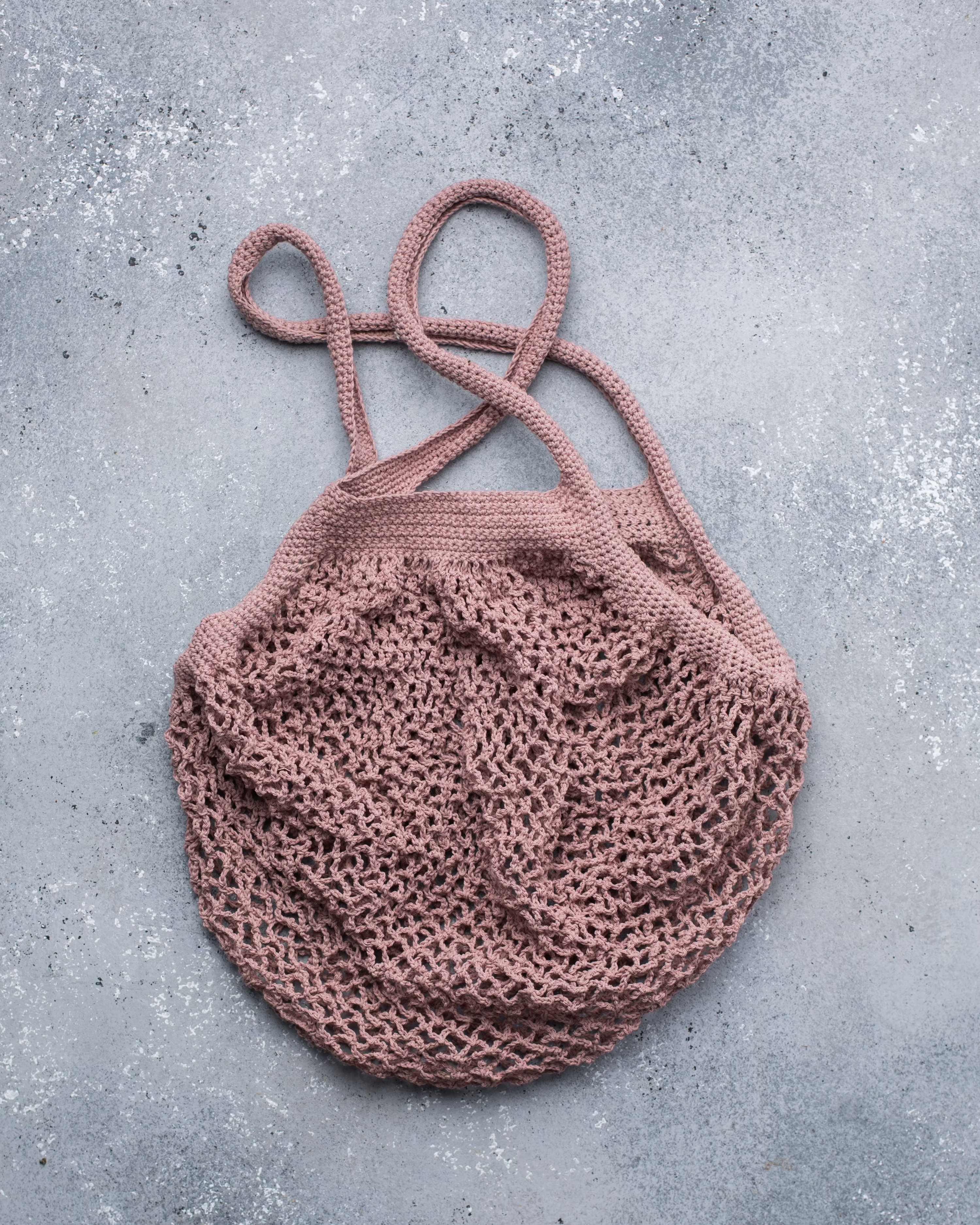
    Crochet Bag Pictures | Download
    Now, this. A bag made of holes.
    At first glance, it makes no sense. A bag with gaps. A container that leaks. A purse that confesses: “I cannot hold everything.”
    But that is exactly why it works.
    Fall is the season of strategic shedding. We let go of summer’s weight — the expectations, the SPF 50, the relentless pressure to be outdoors and radiant. We pare down. We choose layers that breathe. And this mesh bag? It breathes. It carries your essentials and nothing more. It forces you to ask: What do I actually need today?
    The holes are not a flaw. They are editorial decisions. The bag edits your life in real time. A wallet. A phone. A single perfect apple from the farmer’s market. The mesh bag says: “You have enough.” In a world designed to make you want more, a crochet bag that literally cannot hold excess is a radical act of minimalism.
    Plus — and here is the secret — the holes catch light. In the low, golden angles of October sun, this bag casts lace shadows on the sidewalk. You are not carrying a purse. You are carrying a sundial made of yarn.

    Part III: The Bag That Remembers

    Crochet Sunflower Pattern Tote Bag
    Two bags, side by side, resting in the grass like they have all the time in the world.
    Here is where logic bends into nostalgia. A store-bought bag has no memory. It was assembled by a machine that does not dream, shipped across an ocean it will never see, and sold to you with a price tag that includes someone else’s overtime.
    But a crochet bag? It remembers.
    It remembers the movie you were half-watching while your fingers found the rhythm. It remembers the tea that went cold because you were counting stitches. It remembers the moment you realized you had made a mistake ten rows back and chose — gloriously, humanly — to keep going anyway.
    The small bag with the embroidered flowers? That was the weekend your niece visited and asked what you were making. The larger one? That was the week you needed something to do with your hands because your mind would not stop spinning.
    You do not carry these bags. You carry time made tangible. Every loop is a timestamp. Every color choice is a mood ring. When you set your crochet bag on a café table, you are placing evidence that patience is still possible, that creation is still accessible, that you can still make something from nothing but string and stubbornness.

    Part IV: The Bag That Is Not Finished

    Crochet Bag Pictures | Download
    Two balls of yarn. A half-formed base. A leather label waiting to be claimed.
    This is the most honest photo of all. Because a crochet bag, like autumn itself, is always in process.
    Fall is not a destination. It is a transition. We do not arrive at October; we pass through it. And the bag on your hook right now? It is the same. It is becoming. The tension is imperfect. The edges are learning. The yarn is still deciding what it wants to be.
    That is the megalogic that defeats fast fashion: the making is the point. The finished bag is lovely, yes. But the half-finished bag — the one sitting in your project bag while you ride the train, while you wait for soup to boil, while you ignore a text you do not have the energy to answer — that bag is saving you. It is giving your hands a purpose and your mind a silence.
    And when it is done? When the last end is woven in and the leather tag is stitched on? You will carry it through orchards and bookstores and streets that smell like woodsmoke. You will fill it with pinecones and poetry and the small treasures fall leaves behind. And every time you reach inside, you will touch the stitches and remember: you built this. You built something that holds your life.

    Epilogue: Make the Big, Keep the Season

    So here is the truth, delivered with the gentleness of yarn slipping through fingers:
    Fall will end. The sunflowers will bow. The leaves will finish their performance and the world will turn toward winter. But the bag you make this October will outlast the season. It will carry you into November, into December, into the gray days when you need a reminder that you are still capable of color.
    Make the sunflower tote. Make the mesh market bag. Make the tiny crossbody that holds nothing but your courage. Make them all, or make just one. But make something.
    Because the crochet bag you’ll want to make this fall is not about fall at all. It is about proving to yourself that you can still create warmth — even as the world grows cold.
    Now grab your hook. The yarn is waiting. And so is the season.
    Happy crocheting. 🍂