Tag: winter slippers

  • The Slipper Revolution: How Two Needles and a Ball of Yarn Can Rewire Your Brain (and Your Winter)

    The Slipper Revolution: How Two Needles and a Ball of Yarn Can Rewire Your Brain (and Your Winter)

     There is a moment — every knitter knows it — when a chaotic tangle of wool suddenly becomes a sock. Not metaphorically. Literally. One row of loops, then another, and somewhere between the fourth episode of your favorite series and the bottom of a mug of tea, your hands have quietly manufactured warmth out of thin air. It’s the closest most of us will ever get to alchemy.

    And the humble knitted slipper? That’s the gateway spell.
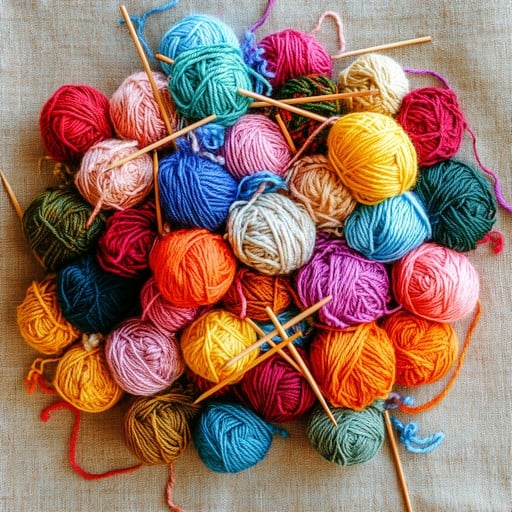
    alt="Colorful balls of wool yarn with wooden knitting needles — materials for handmade knitted slippers"

    Chapter One: Why Slippers, of All Things?

    Let’s be honest. Nobody dreams of knitting a cardigan first. Cardigans are commitments. Slippers are flirtations. They’re small, forgiving, and — here’s the beautiful secret — they don’t have to fit perfectly. A slightly roomy slipper is “cozy.” A slightly snug slipper is “snug.” Knitting doesn’t give you many free passes like that; take them.
    A pair of house slippers is essentially three decisions repeated with confidence:
    1. The sole — knit a rectangle or an oval, roughly the length of your foot plus a thumb’s width of wiggle room.
    2. The walls — pick up stitches around the sole and knit upward until the fabric kisses your ankle.
    3. The heart — the upper, where garter stitch, cables, or lazy stockinette turn plain wool into personality.
    That’s it. Three moves. The same three moves grandmothers on three continents have been making for centuries, often without written patterns, often while gossiping.
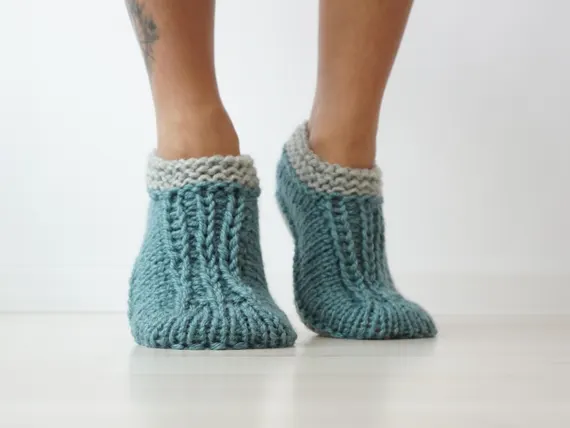
    alt="Cozy teal hand-knitted merino wool slippers with grey cuffs worn at home"

    Chapter Two: The Physics of Cozy

    Here’s something no one tells beginners: knitting is just controlled loops. Every stitch is a small lasso thrown by one needle and caught by the other, roughly 25 to 30 times per row, hundreds of times per slipper. Your brain, which spends all day juggling notifications and deadlines, is suddenly asked to do exactly one thing: pass the yarn, pull the loop, slide it off. Repeat.
    Neuroscientists call this a “flow state.” Knitters call it Tuesday. Heart rate slows. Shoulders drop. And the wool itself does half the work — merino fibers trap microscopic air pockets, holding heat like a thermostat with a soul. Wool is technically just sheep hair, and yet it outperforms most synthetic insulation humans have ever engineered. Sheep, it turns out, are geniuses.
    alt="Close-up of hands knitting with bright red wool yarn and wooden needles — knitting therapy and flow state"

    Chapter Three: The Pattern Logic (Yes, There Is Logic)

    “Creativity” and “logic” aren’t opposites — they’re dance partners, and the slipper is their ballroom. Here’s the elegant math hiding inside a simple slipper:
    • Gauge is destiny. Knit a small square first (about 10 × 10 cm). Count the stitches. Divide your foot length by that number. Congratulations — you’ve just done the exact calculation engineers use for load distribution, except your load is a foot and your material is joy.
    • Decreases are conversation. At the toe, you’ll “k2tog” — knit two stitches together — shaping the curve the way a sculptor removes marble. Every decrease is a decision: here, the fabric must turn.
    • The heel is a fold, not a puzzle. Most beginner slippers cheat beautifully: instead of turning a heel like a sock, you simply seam or graft the back. The slipper forgives. The slipper understands.
    Once you see the logic, you can’t unsee it. Scarves become boring — flat, endless, one-dimensional. Slippers are architecture.
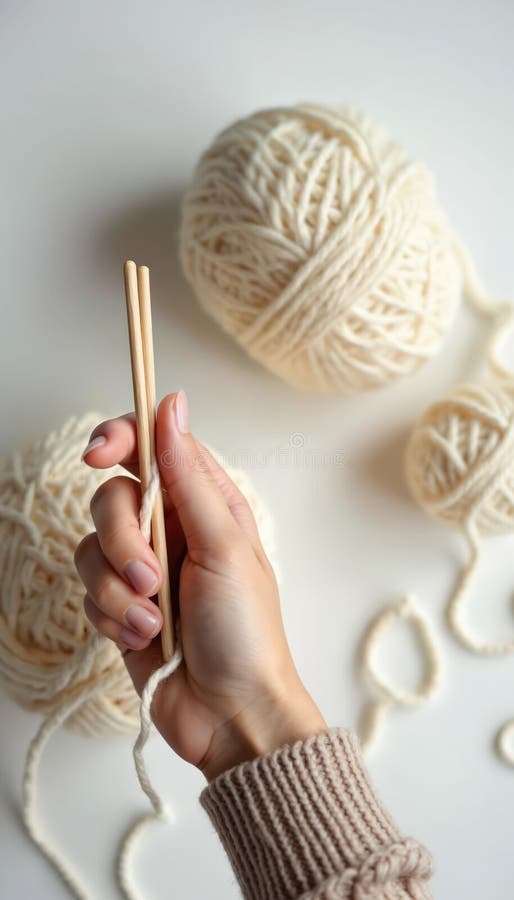
    alt="Woman holding wooden knitting needles with cream wool yarn — beginner slipper pattern and gauge swatch"

    Chapter Four: The Twist That Will Ruin Store-Bought Slippers for You Forever

    Ready for the revelation? A handmade slipper is the only footwear in your life that gets more comfortable the longer you own it. Machine-made foam flattens, cracks, and dies. Wool felts slightly with wear — the fibers interlock tighter, conforming to your exact foot shape. After a month, your slipper fits you like a fingerprint. No factory on Earth can do that.
    And then there’s the sole hack: knit the sole with a double strand of yarn, or add a layer of leather or suede underneath, and your slippers survive tile floors, morning dashes to the mailbox, and the occasional dance party. Functional. Rugged. Secretly luxurious.
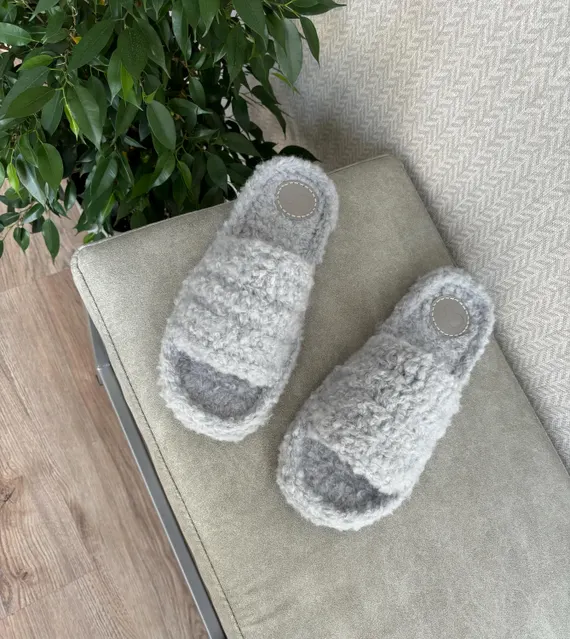
    alt="Fluffy handmade grey knitted wool slippers on soft soles — comfortable felted house shoes"

    Epilogue: Your First Pair Awaits

    So here’s the real tutorial, hidden inside the story: cast on, knit, trust, repeat. Make ugly slippers first — everyone does. The second pair will be better. The third, you’ll gift. And one winter evening, someone will slide their feet into your knitted wool and say, almost suspiciously, “You made these?”
    Yes. Yes, you did. With two sticks and a string, you built warmth from nothing.
    The ancients knitted to survive the winter. We knit to survive everything else.
    alt="Collection of handmade knitted wool slippers in different colors and patterns on wooden floor"

    Happy knitting.

  • The Crochet Slippers That Make Your Feet Feel Loved

    The Crochet Slippers That Make Your Feet Feel Loved

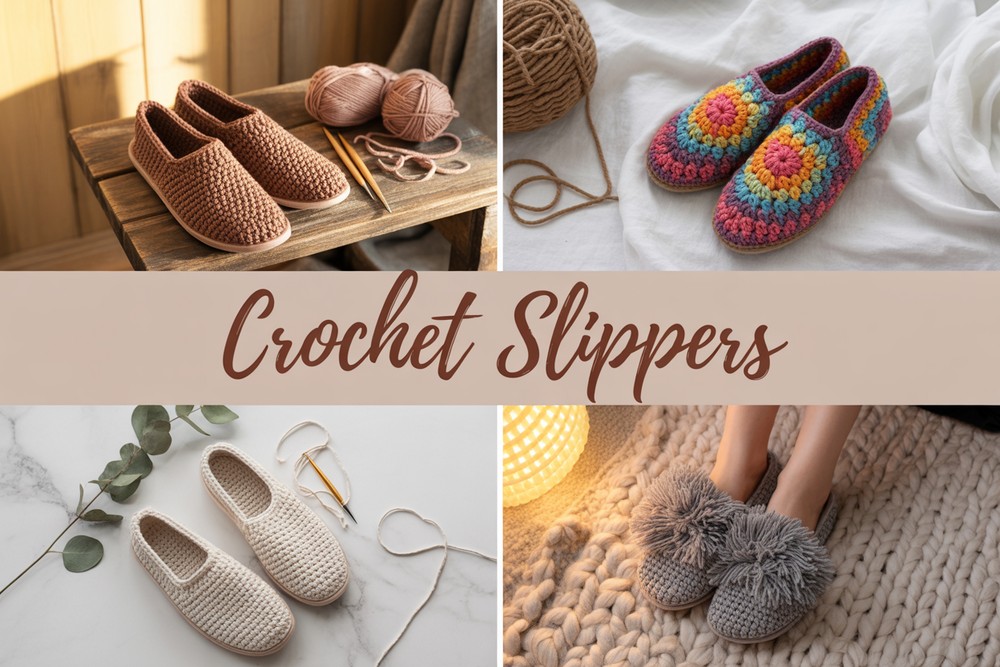
    Two handmade crochet slipper styles on wooden table — rainbow granny square slippers and textured blue-gray cable knit slippers with yarn balls You do not put on these slippers.

    You slip into a decision. A decision that the floor is no longer allowed to be cold. That your toes deserve a hug. That the 47 steps between your bed and the coffee maker should feel like walking on a cloud made of good intentions.
    Welcome to the only footwear that understands you are not going anywhere — and celebrates it.

    Part I: The Rainbow Is a Threat (to Bad Moods)

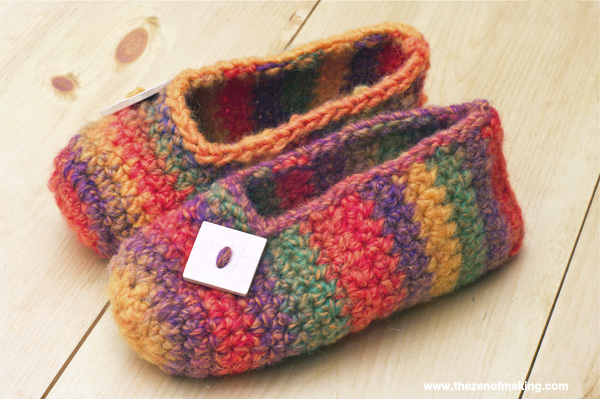
    Look at them. A granny square exploded into footwear. Red, orange, yellow, green, blue, purple — all the colors of a weather phenomenon, compressed into something that fits under your jeans.
    Here is the first paradox that breaks footwear logic: the louder the slipper, the quieter the morning. You wake up gray. The sky is gray. Your inbox is gray. And then — your feet are wearing a carnival. It is impossible to remain pessimistic when your toes are dressed like a pride parade. The rainbow slipper is not fashion. It is pharmaceutical fiber. It is a serotonin delivery system that happens to keep your soles warm.
    And the granny square? That is not just a pattern. That is geometry made by grandmothers. Each color change is a decision someone made while listening to a podcast, drinking tea, and refusing to rush. The center of the square is a mandala. The rounds radiate outward like ripples from a good decision. When you wear granny-square slippers, you are literally walking on someone’s patience — even if that someone was you, three Netflix episodes ago.
    The practical magic: granny squares are modular. You make two squares. You fold them. You seam the toe, the heel, the instep. That is it. No shaping. No increasing. No crying over a pattern that assumes you have a PhD in spatial reasoning. Two squares. Folded. Done. Your feet are now art galleries.

    Part II: The Texture Is a Secret Language

    Colorful rainbow striped crochet slippers with button detail on light wooden floor — handmade granny square house shoes
    Now, the other pair. Not rainbow. Not loud. But textured — deeply, satisfyingly textured — in shades of blue and gray that look like the ocean decided to knit itself a blanket for your feet.
    Here is the twist: this texture is not decoration. It is braille for the soul. When you run your thumb across the cables and bobbles, your nervous system receives a message it cannot translate into words. Something about safety. Something about being held. Something about the fact that your mother used to tuck you in, and now you are 34 and someone — maybe you — made you slippers that tuck in your feet.
    The cable stitch in crochet is a lie. It pretends to be complicated. It looks like it required a degree in textile engineering. But it is just front-post double crochet arranged in a sequence. You skip a stitch, you work around the post of the next, you go back and catch the skipped one. That is the entire secret. The slipper looks like it was made in an Irish cottage by a woman who has never heard of Wi-Fi. It was actually made in your living room while you watched a true-crime documentary.
    And the fit? Cable stitches have memory. They compress when you step, then expand when you lift. They learn your foot. After a week, these slippers do not just fit you — they recognize you. They are the closest thing to a footprint made of wool.

    Part III: The Yarn Is a Time Machine

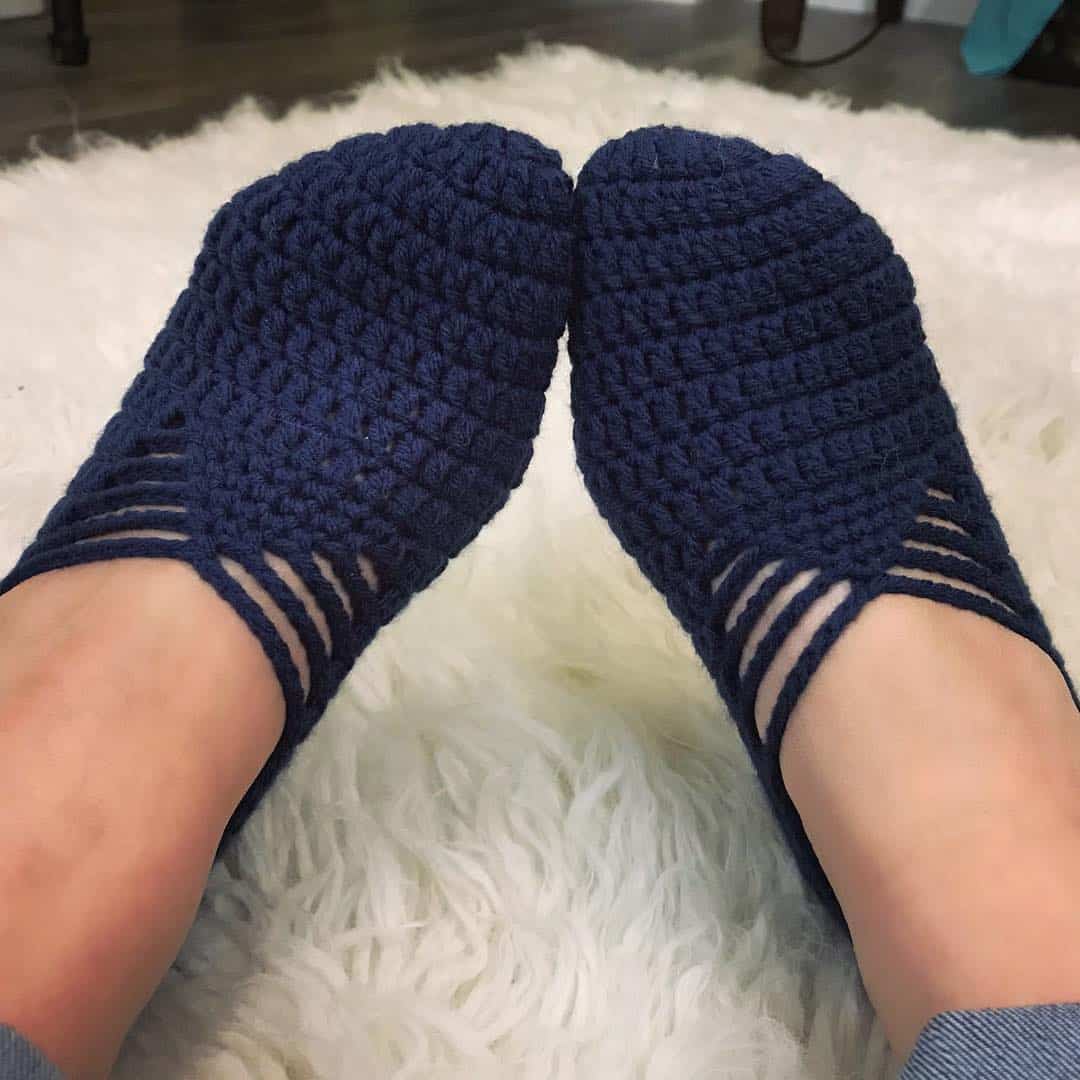
    Navy blue textured crochet ballet slippers on white fluffy rug — cozy handmade house shoes with cable knit pattern
    Look at the balls of yarn on the table. One is a rainbow swirl, still wound tight, still full of potential. The other is a variegated gray, half-used, trailing off like a sentence that does not need to end.
    Here is the megalogic that defeats fast fashion: yarn remembers. The rainbow ball remembers being a sheep, or a cotton plant, or a factory in Turkey — depending on its label. It remembers the dye bath. It remembers being wound. It remembers sitting in a craft store, waiting for someone brave enough to take it home.
    And when you crochet it into a slipper, you are not just making footwear. You are encoding time. The two hours it took to make the left slipper are now trapped in the stitches. They cannot be deleted. They cannot be optimized. They exist, permanently, as warmth. Every time you put on that slipper, you are stepping into two hours of your own life that you chose to spend slowly, deliberately, with your hands instead of your thumbs.
    A store-bought slipper costs time at a factory you will never see. A crochet slipper costs time at your own kitchen table. The difference is: one is anonymous. The other is autobiographical.

    Part IV: The Sole Is a Philosophy

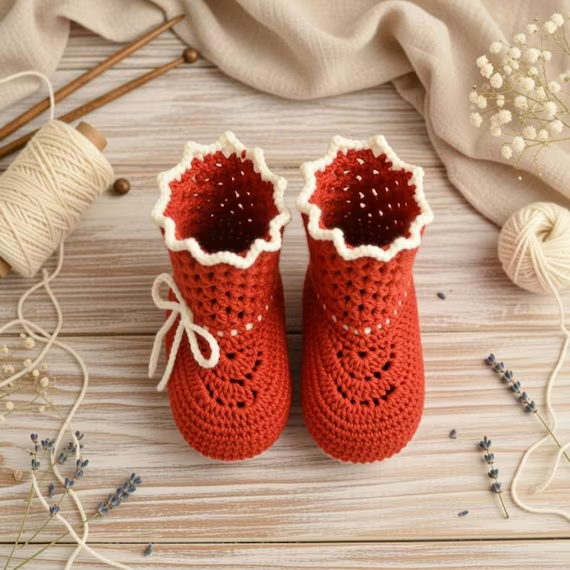
    Red crochet baby booties with white scalloped edges on wooden surface — handmade cozy footwear with yarn and lavender
    Now, look down. Your feet, inside these handmade vessels, touching the ground.
    Here is where logic completely dissolves. A crochet slipper has no sole — not really. It is just more yarn. It offers no arch support, no gel cushioning, no patented technology developed by NASA. And yet, people who wear them report feeling more grounded than in orthopedic inserts.
    Why? Because the ground is not the enemy. The cold floor is not attacking you. It is simply existing at a different temperature, and the crochet slipper mediates that conversation. It does not block the floor. It translates it. You still feel the wood grain. You still feel the tile’s coolness. But it is filtered through wool, through cotton, through the intention of someone who wanted your feet to be comfortable.
    And when the slipper finally wears thin — when the heel goes fuzzy and the toe goes transparent — you do not throw it away. You patch it. You add a new sole. You darn the hole. You extend its life because its life is intertwined with yours. You remember making it. You remember the movie that was on. You remember the cat sitting on the pattern.
    You are not wearing slippers. You are wearing a diary that walks.

    Epilogue: Choose Your Cozy

    So here is the truth, delivered with the gentleness of wool against morning-cold skin:
    You need these slippers. Not because your feet are cold — though they are. You need them because your soul is tired of speed. Tired of notifications. Tired of things that arrive in two days and break in two weeks.
    Make the rainbow pair. Make the textured pair. Make both, or make neither and simply buy them from someone who understood that the world needs more softness. But whatever you do, put them on. Stand up. Walk to the kitchen. Feel the floor through the filter of handmade patience.
    Your feet will thank you. Your morning will thank you. And the cold tiles will finally, mercifully, give up.

    Happy crocheting.