%20-%20Annie%20Design%20Crochet.png)
This post contains an affiliate link. If you click, you can check out and purchase the Spring Shawl Crochet Pattern on Creative Fabrica. New users get 10 free downloads.”
Let me tell you a story that probably sounds familiar. You walk into your favorite yarn shop. Your eyes land on a skein of hand-dyed yarn so beautiful it practically glows. You buy it. You bring it home. And then… it sits there. For months. Maybe years. Too precious to “waste” on the wrong pattern.
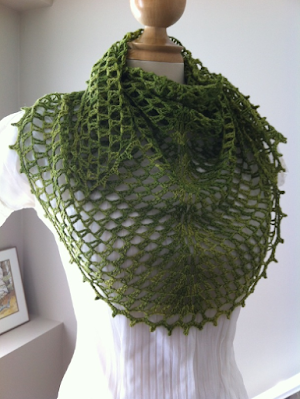
Sound like you? You’re not alone. And today, I’m sharing the shawl that finally broke my own “precious skein paralysis.” It’s the — and it might just change how you look at that single beautiful skein in your stash.
Why This Shawl Is the Perfect Project for Your Precious Yarn Stash
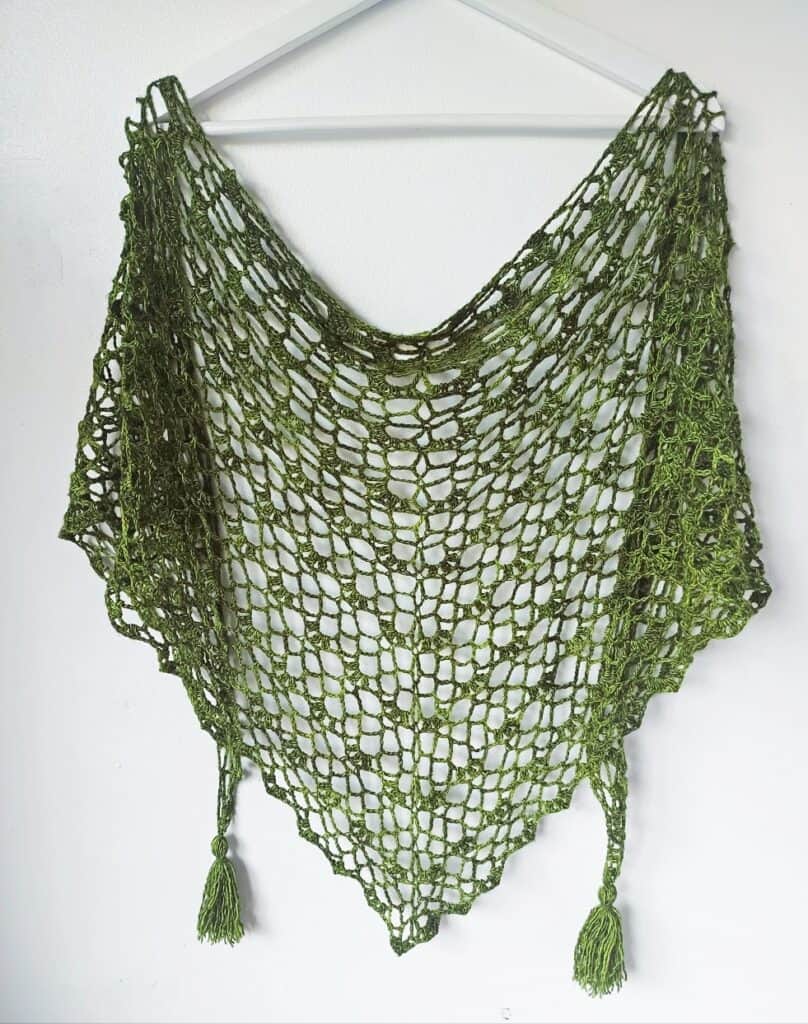
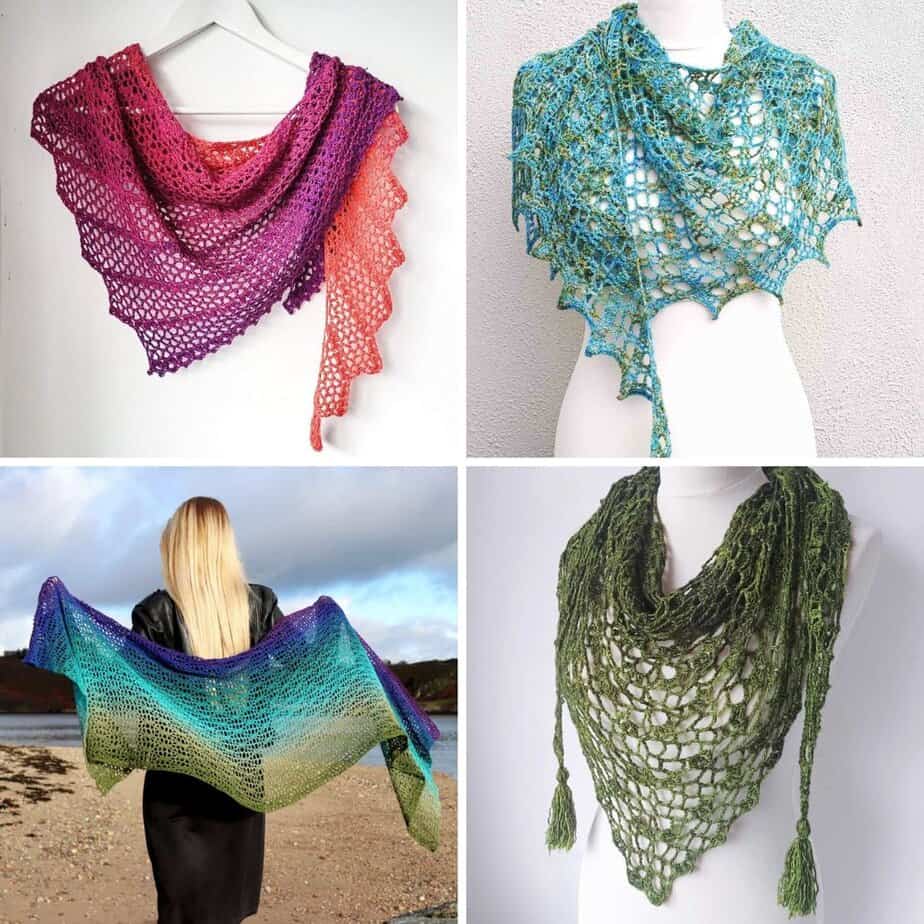
Look at this green beauty. It’s not just a shawl — it’s an entire forest landscape captured in stitches. Deep olive melts into lighter green, creating the effect of dense foliage with sunlight filtering through. The kind of piece that makes people stop you on the street and ask, “Did you make that?”
The secret? One skein. That’s it. Just 400 meters of fingering weight yarn (roughly 100 grams). No complicated calculations, no leftover bits that sit in a box for three years “just in case.” The Spring Shawl Crochet Pattern is specifically designed to make the most of a single precious skein.
💡 Pro tip from our craft table: If you’ve got mini-skeins hiding in your stash, this pattern will save the day. Switch colors every 2–4 rows, and you’ll get a unique gradient effect without any of the hassle of spinning your own color transitions.
Breaking Down the Stitch Pattern: What’s Really Going On
Let me be honest with you. When I first saw photos of lace shawls, I thought they were way beyond my skill level. I assumed you needed years of experience and some kind of magical crochet intuition. I was wrong.
This pattern is built on basic double crochet stitches and chain spaces. Only three “building blocks”:
-
V-stitch — (1 dc, ch 3, 1 dc) in the same space. Creates that beautiful “spine” down the center.
-
Shell — (dc2tog, ch 1, dc2tog, ch 1, dc2tog) in the same space. Adds volume and texture.
-
Chain-5 spaces — Those airy “windows” that let the light shine through.
The shawl is worked top-down, increasing evenly on both sides and in the center. It’s a classic triangle construction that even a beginner can master — the key is paying attention to your stitch count for the first 6 rows. After that, muscle memory takes over, and you’ll be crocheting on autopilot while gazing out the window.
If you’re ready to give it a try, grab the Spring Shawl Crochet Pattern and start with a small swatch. You’ll be amazed how quickly the rhythm clicks.
Why the Triangle Shape — and Why Right Now
Triangle shawls are back in style for a reason. Here are three reasons they’re topping Pinterest and Instagram feeds in 2026:
1. Versatile styling. Drape it over your shoulders for an elegant accessory. Tie it in front for a chic scarf look. Wrap it around your neck for a cozy cowl. One shawl, three outfits.
2. Perfect for transitional weather. The open stitches let air flow through, yet they protect against cool breezes. Throw it over a tank top on a summer evening — no jacket needed.
3. Quick gratification. Unlike a sweater that takes weeks, a fingering-weight shawl grows before your eyes. 2–3 evenings, and you’re already blocking your finished piece.
Blocking: The Step You Cannot Skip
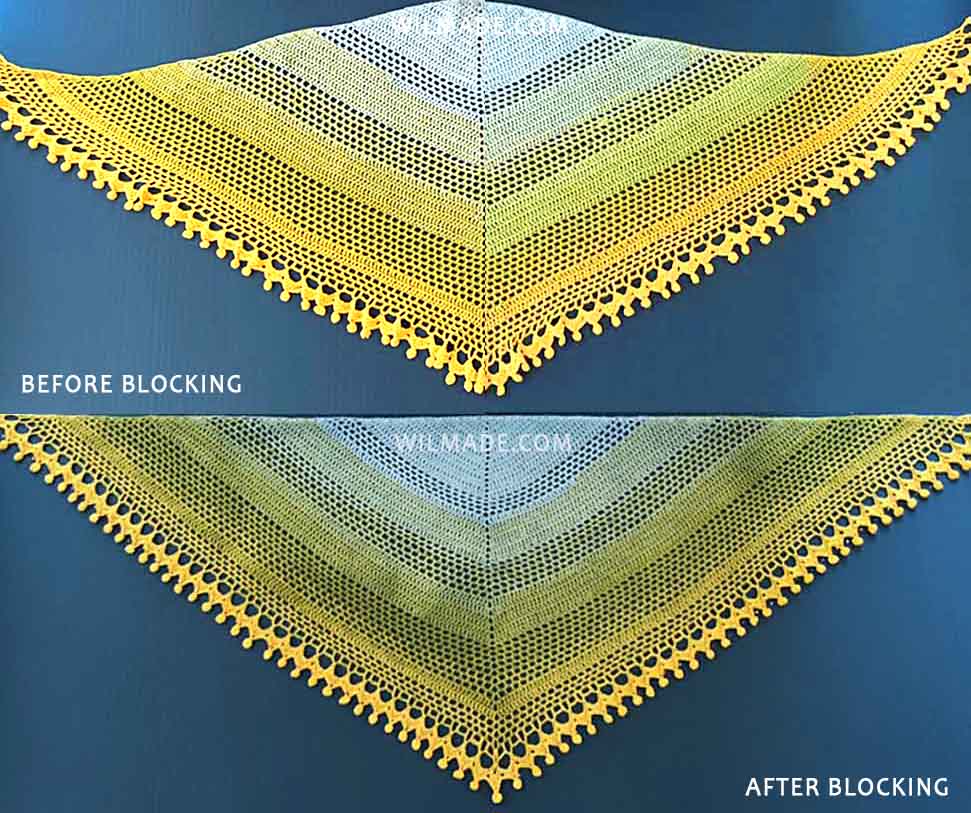
This is where the real magic happens. Right after crocheting, the shawl looks… let me be kind and say “modest.” Crumpled stitches, undefined shape, that sinking feeling of “does this even look like a shawl?”
Then you soak it in warm water, squeeze it in a towel, stretch it to the finished dimensions (72 inches wide, 27 inches deep), and pin every point along the edge…
Twenty-four hours later, you remove the pins. And you barely recognize your own creation.
The stitches opened up. The lace started breathing. The edges became crisp and clean. It’s like the difference between a raw photo and a professionally edited one — except this is real life. Don’t skip blocking. It is literally half the success of this project.
What You Need to Start Today
Table
| Material | Recommendation |
|---|---|
| Yarn | Fingering weight (4 ply), 400m. Merino, cotton, or a blend works beautifully. |
| Hook | 4mm. If you crochet tightly, go up to 4.5mm. |
| Stitch markers | 2 pieces for the center point. A contrasting strand of yarn works too. |
| Pins | For blocking. Lots of pins. Seriously, buy a pack in advance. |
About the color: the green in our photos is “The Shire” by La Bien Aimee. But don’t chase the brand. Any skein with a gradient or variegated dye will shine in this stitch pattern. The only rule — you should love looking at it.
Tassels: The Finishing Touch (Optional but Charming)
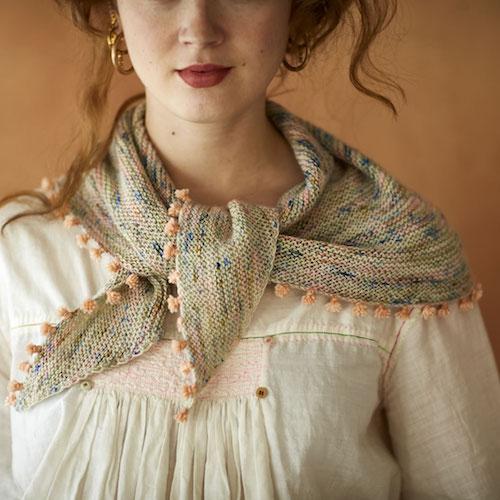
The shawl in our photos is adorned with two tassels at the corners. They’re optional, but they add so much character. Here’s how simple they are:
-
Wrap yarn around a 4–6 inch book 20–24 times.
-
Tie the top with a 12-inch strand.
-
Cut the bottom.
-
Wrap another strand around the “neck” about 1 inch from the top, 8 times. Knot securely.
-
Sew to the two corners of your shawl.
Prefer minimalism? Skip the tassels — the shawl looks complete without them.
Inspiration for Your Own Version
We’ve gathered a few ideas to make this shawl uniquely yours:
🎨 Monochrome — Solid pastel shades (blush, mint, lavender) for a romantic look.
🌈 Scrap-buster rainbow — New color every 2 rows. Perfect for clearing out those yarn leftovers.
✨ With beads — String beads onto your chain spaces in the final rows. The “dew on berries” effect is unforgettable.
🧶 Thicker = warmer — Use worsted weight yarn and a 5.5mm hook. You’ll get a cozy winter version.
Your Questions — Our Answers
“I’m a beginner. Can I handle this?”
Yes. The pattern uses only double crochet, single crochet, and chains. The first 6 rows require focus; after that, it becomes automatic.
Yes. The pattern uses only double crochet, single crochet, and chains. The first 6 rows require focus; after that, it becomes automatic.
“What if I mess up the stitch count?”
The pattern repeats every 4 rows. If you catch a mistake in one row, you can carefully frog just that row without touching the rest.
The pattern repeats every 4 rows. If you catch a mistake in one row, you can carefully frog just that row without touching the rest.
“How long does it take?”
At an average pace — 2–3 evenings. If you crochet on your commute, about a week.
At an average pace — 2–3 evenings. If you crochet on your commute, about a week.
Home Decor Meets Handmade Style
Here’s something we love: the same attention to detail you put into every stitch of your crochet shawl can transform your living space too. If you’re passionate about creating a warm, inviting home that reflects your personal style, you’ll find plenty of inspiration in our sister blog. Check out these 12 dining room decor ideas that make every meal feel special — because a beautifully set table deserves a beautifully crafted shawl draped over the chair, don’t you think?
Why This Shawl Is Worth Your Time
In a world that screams “faster, higher, stronger,” crochet is an act of slow creativity. This shawl won’t just warm your shoulders on a cool spring evening. It will remind you that from one simple skein, a few basic stitches, and a few hours of focused attention comes something you simply cannot buy in a store.
Because in every stitch — there’s your time. Your color choice. Your breathing rhythm