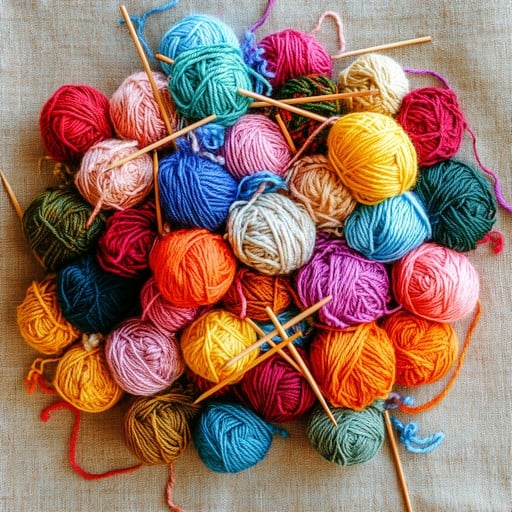
There is a moment — every knitter knows it — when a chaotic tangle of wool suddenly becomes a sock. Not metaphorically. Literally. One row of loops, then another, and somewhere between the fourth episode of your favorite series and the bottom of a mug of tea, your hands have quietly manufactured warmth out of thin air. It’s the closest most of us will ever get to alchemy.
And the humble knitted slipper? That’s the gateway spell.
Chapter One: Why Slippers, of All Things?
Let’s be honest. Nobody dreams of knitting a cardigan first. Cardigans are commitments. Slippers are flirtations. They’re small, forgiving, and — here’s the beautiful secret — they don’t have to fit perfectly. A slightly roomy slipper is “cozy.” A slightly snug slipper is “snug.” Knitting doesn’t give you many free passes like that; take them.
A pair of house slippers is essentially three decisions repeated with confidence:
-
The sole — knit a rectangle or an oval, roughly the length of your foot plus a thumb’s width of wiggle room.
-
The walls — pick up stitches around the sole and knit upward until the fabric kisses your ankle.
-
The heart — the upper, where garter stitch, cables, or lazy stockinette turn plain wool into personality.
That’s it. Three moves. The same three moves grandmothers on three continents have been making for centuries, often without written patterns, often while gossiping.
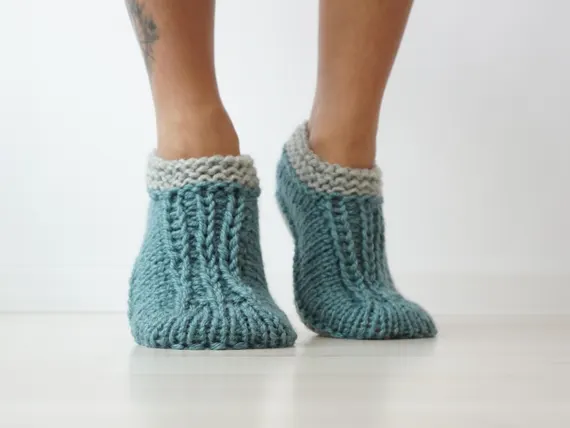
Chapter Two: The Physics of Cozy
Here’s something no one tells beginners: knitting is just controlled loops. Every stitch is a small lasso thrown by one needle and caught by the other, roughly 25 to 30 times per row, hundreds of times per slipper. Your brain, which spends all day juggling notifications and deadlines, is suddenly asked to do exactly one thing: pass the yarn, pull the loop, slide it off. Repeat.
Neuroscientists call this a “flow state.” Knitters call it Tuesday. Heart rate slows. Shoulders drop. And the wool itself does half the work — merino fibers trap microscopic air pockets, holding heat like a thermostat with a soul. Wool is technically just sheep hair, and yet it outperforms most synthetic insulation humans have ever engineered. Sheep, it turns out, are geniuses.

Chapter Three: The Pattern Logic (Yes, There Is Logic)
“Creativity” and “logic” aren’t opposites — they’re dance partners, and the slipper is their ballroom. Here’s the elegant math hiding inside a simple slipper:
-
Gauge is destiny. Knit a small square first (about 10 × 10 cm). Count the stitches. Divide your foot length by that number. Congratulations — you’ve just done the exact calculation engineers use for load distribution, except your load is a foot and your material is joy.
-
Decreases are conversation. At the toe, you’ll “k2tog” — knit two stitches together — shaping the curve the way a sculptor removes marble. Every decrease is a decision: here, the fabric must turn.
-
The heel is a fold, not a puzzle. Most beginner slippers cheat beautifully: instead of turning a heel like a sock, you simply seam or graft the back. The slipper forgives. The slipper understands.
Once you see the logic, you can’t unsee it. Scarves become boring — flat, endless, one-dimensional. Slippers are architecture.
Chapter Four: The Twist That Will Ruin Store-Bought Slippers for You Forever
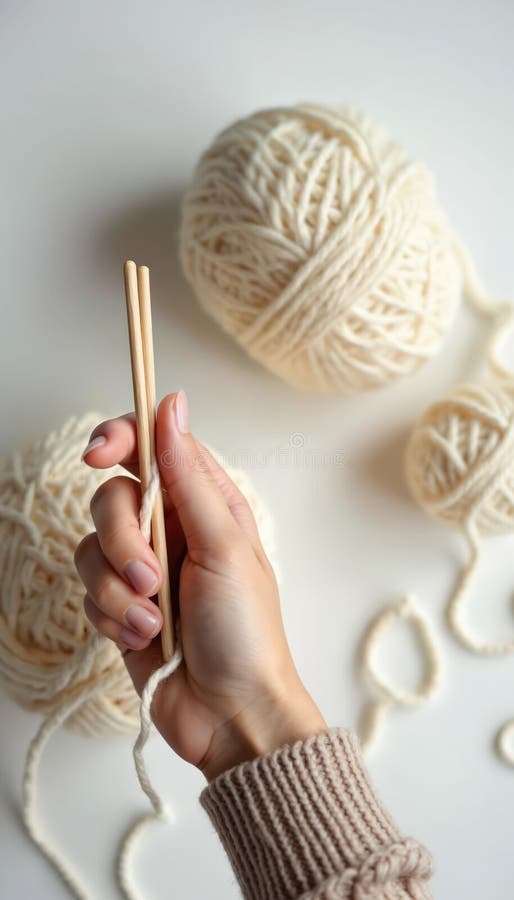
Ready for the revelation? A handmade slipper is the only footwear in your life that gets more comfortable the longer you own it. Machine-made foam flattens, cracks, and dies. Wool felts slightly with wear — the fibers interlock tighter, conforming to your exact foot shape. After a month, your slipper fits you like a fingerprint. No factory on Earth can do that.
And then there’s the sole hack: knit the sole with a double strand of yarn, or add a layer of leather or suede underneath, and your slippers survive tile floors, morning dashes to the mailbox, and the occasional dance party. Functional. Rugged. Secretly luxurious.
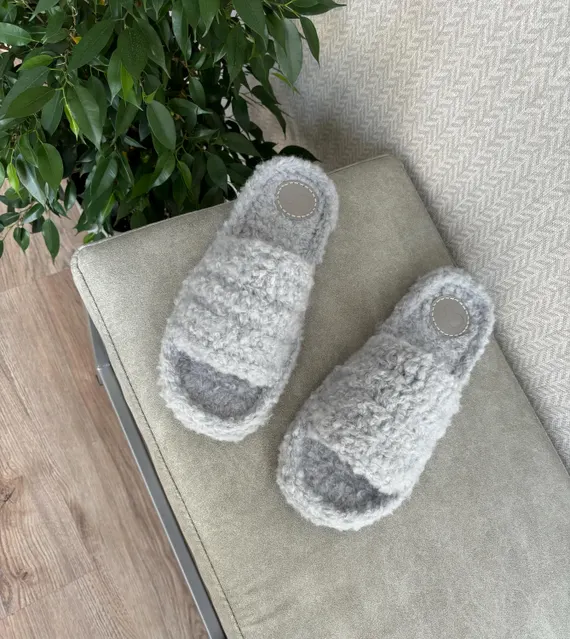
Epilogue: Your First Pair Awaits
So here’s the real tutorial, hidden inside the story: cast on, knit, trust, repeat. Make ugly slippers first — everyone does. The second pair will be better. The third, you’ll gift. And one winter evening, someone will slide their feet into your knitted wool and say, almost suspiciously, “You made these?”
Yes. Yes, you did. With two sticks and a string, you built warmth from nothing.
The ancients knitted to survive the winter. We knit to survive everything else.
